High-quality 3D assets at affordable prices — trusted by designers, engineers, and creators worldwide. Made with care to be versatile, accessible, and ready for your pipeline.
Included File Formats
This model is provided in 14 widely supported formats, ensuring maximum compatibility:
• - FBX (.fbx) – Standard format for most 3D software and pipelines
• - OBJ + MTL (.obj, .mtl) – Wavefront format, widely used and compatible
• - STL (.stl) – Exported mesh geometry; may be suitable for 3D printing with adjustments
• - STEP (.step, .stp) – CAD format using NURBS surfaces
• - IGES (.iges, .igs) – Common format for CAD/CAM and engineering workflows (NURBS)
• - SAT (.sat) – ACIS solid model format (NURBS)
• - DAE (.dae) – Collada format for 3D applications and animations
• - glTF (.glb) – Modern, lightweight format for web, AR, and real-time engines
• - 3DS (.3ds) – Legacy format with broad software support
• - 3ds Max (.max) – Provided for 3ds Max users
• - Blender (.blend) – Provided for Blender users
• - SketchUp (.skp) – Compatible with all SketchUp versions
• - AutoCAD (.dwg) – Suitable for technical and architectural workflows
• - Rhino (.3dm) – Provided for Rhino users
Model Info
• - All files are checked and tested for integrity and correct content
• - Geometry uses real-world scale; model resolution varies depending on the product (high or low poly)
• • - Scene setup and mesh structure may vary depending on model complexity
• - Rendered using Luxion KeyShot
• - Affordable price with professional detailing
Buy with confidence. Quality and compatibility guaranteed.
If you have any questions about the file formats, feel free to send us a message — we're happy to assist you!
Sincerely,
SURF3D
Trusted source for professional and affordable 3D models.
More Information About 3D Model :
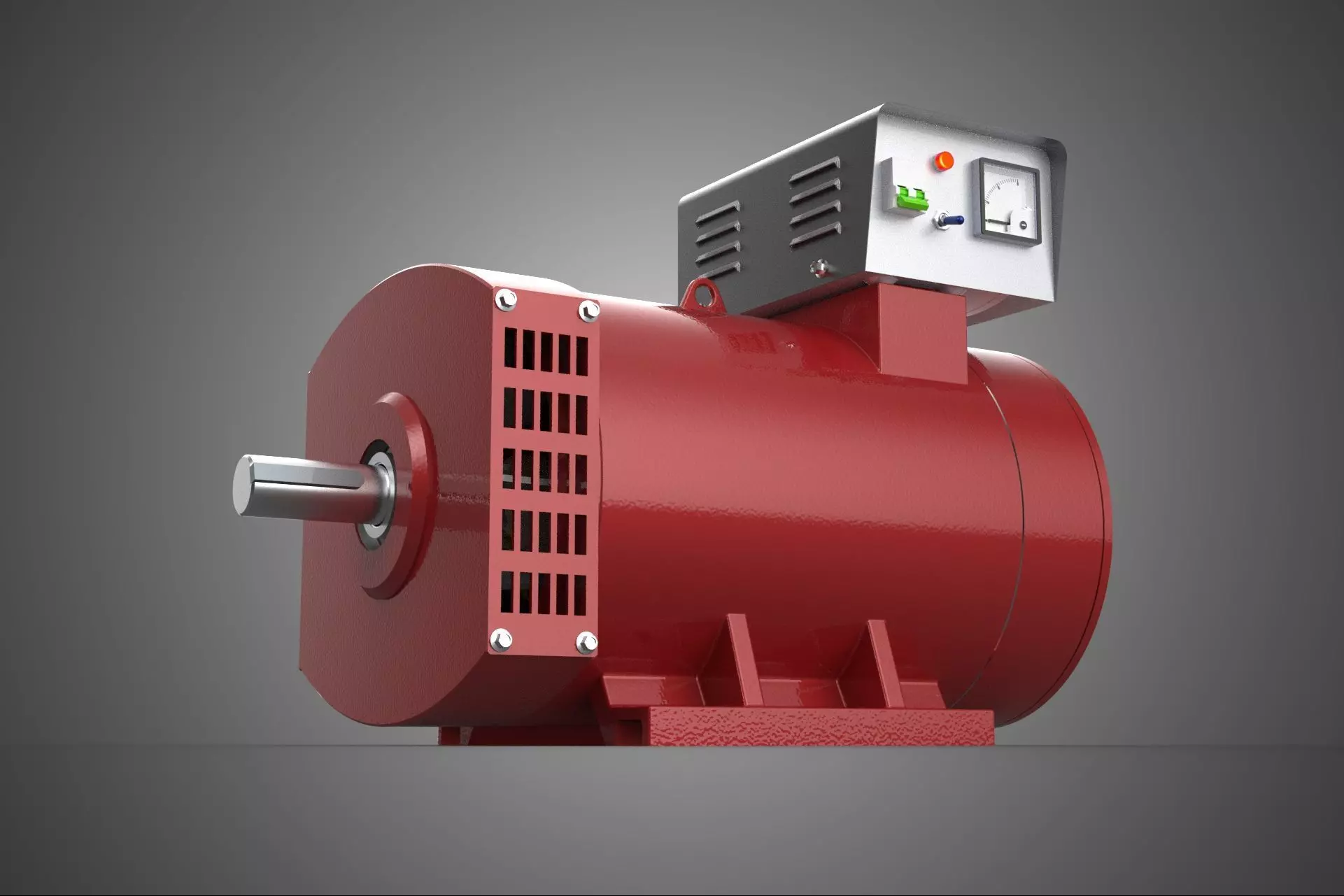
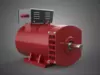
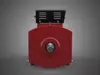
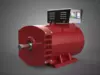
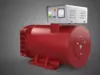
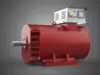
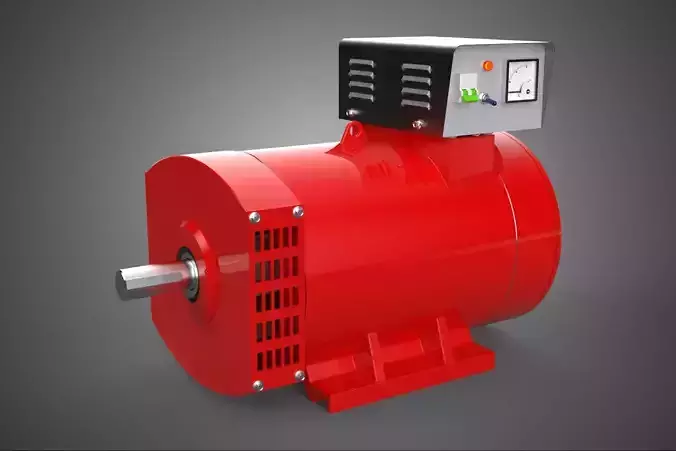
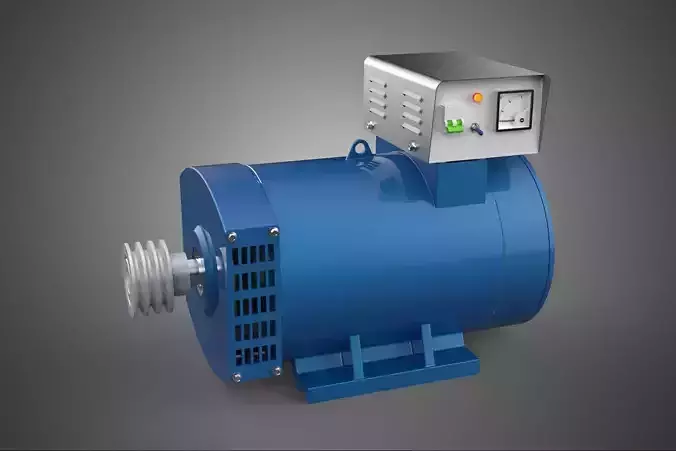
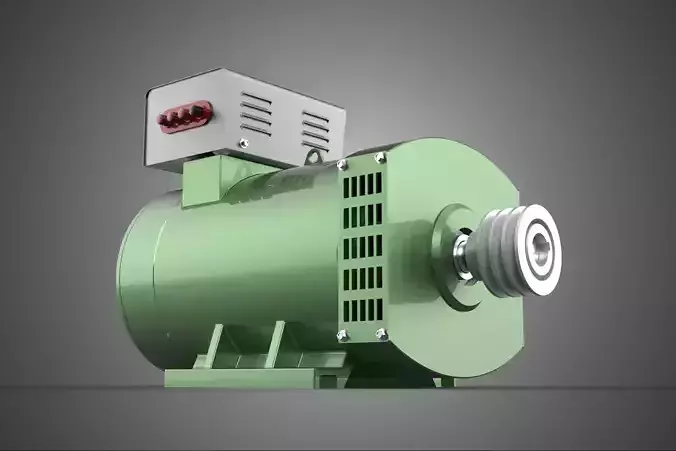
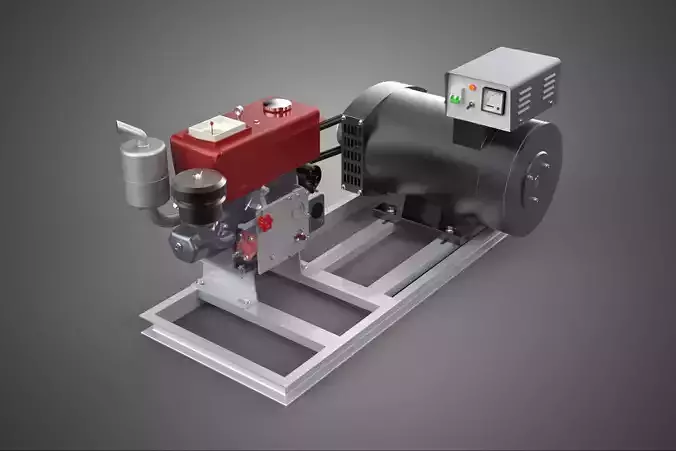
STANDARD ELECTRIC MOTOR GENERATOR ALTERNATOR DYNAMO GENERATION
The concept of standard electric motor, generator, alternator, and dynamo generation encompasses the fundamental principles of electromechanical energy conversion, wherein electrical energy is transformed into mechanical energy (motor action) or, conversely, mechanical energy is transformed into electrical energy (generator action). These devices operate on the principle of electromagnetic induction, primarily governed by Faraday's Law of Induction and the Lorentz force law. Despite their functional differences, all standard electric machines share a core physical duality, consisting generally of a stationary component (stator) and a rotating component (rotor), featuring magnetic field windings and conductive armature windings.
1. Fundamental Principles and Duality
Electromechanical machines are inherently reversible. The operational mode is determined by the direction of energy flow:
- Motor Action (Electrical to Mechanical): When current flows through the armature windings situated within a magnetic field, the resulting magnetic interaction produces a torque (Lorentz force, $F = q(E + v \times B)$) that causes rotation. This converts electrical input into rotational mechanical output.
- Generator Action (Mechanical to Electrical): When a conductor coil is mechanically rotated within a stationary magnetic field (or vice versa), the relative motion induces an electromotive force (EMF) across the conductors (Faraday's Law of Induction, $EMF = -N \frac{d\Phi_B}{dt}$). This conversion requires an external mechanical source, known as the prime mover (e.g., turbine, engine).
## 2. Classification of Generating Machines
Generators are classified based primarily on the type of electrical output they produce: direct current (DC) or alternating current (AC).
### A. The Dynamo (DC Generation)
Historically, the term dynamo refers specifically to a DC generator. A dynamo converts mechanical rotation into pulsing direct current. Its defining characteristic is the commutator—a segmented cylinder attached to the rotor—which mechanically reverses the connection of the armature coils to the external circuit precisely as the induced current changes direction. This rectification process ensures that the external circuit always receives current flowing in a single, though pulsating, direction. Standard dynamos are typically employed in specialized low-power applications or historically significant installations, having largely been superseded by AC generation coupled with electronic rectification.
### B. The Alternator (AC Generation)
An alternator is an AC generator that produces alternating current (sine wave output). Modern, large-scale power generation is almost exclusively accomplished via alternators.
- Structure: Unlike dynamos, standard alternators often employ a rotating magnetic field (rotor) induced by a smaller DC excitation current, while the primary power windings (armature) remain stationary in the stator. This configuration eliminates the need for commutators and allows the high-power output current to be collected directly from fixed terminals, avoiding wear on slip rings (which are only necessary for the low-power field excitation circuit).
- Output: Alternators inherently produce polyphase AC power (typically three-phase) suitable for efficient transmission across electrical grids.
- Types: Alternators are often categorized as synchronous generators because their rotational speed is mathematically synchronized with the frequency of the generated AC output ($N = (120 \times f) / P$, where $N$ is speed, $f$ is frequency, and $P$ is the number of magnetic poles).
## 3. Standard Motor Configurations
While the physics are reversible, electric motors are typically categorized based on their power input requirements and operational characteristics:
- DC Motors: Utilize a commutator (like a dynamo) to continually reverse the current direction in the armature windings, ensuring unidirectional torque. They are known for high starting torque and excellent speed control.
- AC Induction Motors (Asynchronous): The most common industrial motor. They derive torque from currents induced in the rotor windings by the rotating magnetic field of the stator. They operate at a speed slightly less than the synchronous speed (the slip).
- AC Synchronous Motors: Operate precisely at the synchronous speed defined by the input AC frequency. They are often structurally identical to alternators and are used in applications requiring highly precise speed control.
## 4. Generation and System Integration
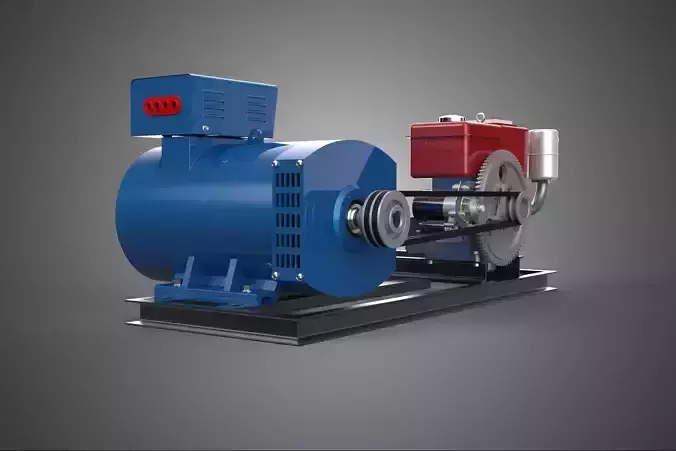
The standard generation process involves coupling the generator (typically a synchronous alternator) to a prime mover. Prime movers include steam turbines (for coal, nuclear, or natural gas plants), gas turbines (jet engines), hydraulic turbines (hydroelectric dams), or wind turbines. The generated electrical power is then transformed to high voltages for efficient transmission over the grid, a process facilitated by the inherent characteristics of alternating current. The global standardization of 50 Hz or 60 Hz frequencies dictates the operational speeds required for these generating units.
***
KEYWORDS: Electromagnetism, Faraday's Law, Lorentz Force, Electromechanical Conversion, Generator, Motor, Alternator, Dynamo, Synchronous Machine, Induction Motor, Commutator, Slip Ring, Prime Mover, Stator, Rotor, Armature Winding, Field Winding, Direct Current (DC), Alternating Current (AC), Three-Phase Power, Frequency, Torque, Electromotive Force (EMF), Power Generation, Electrical Grid, Rectification, Turbine, Magnetic Flux, Brushless Excitation.