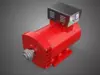
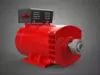
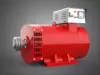
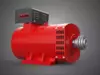
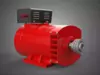
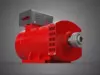
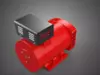
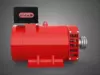
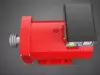
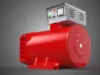
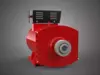
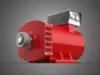
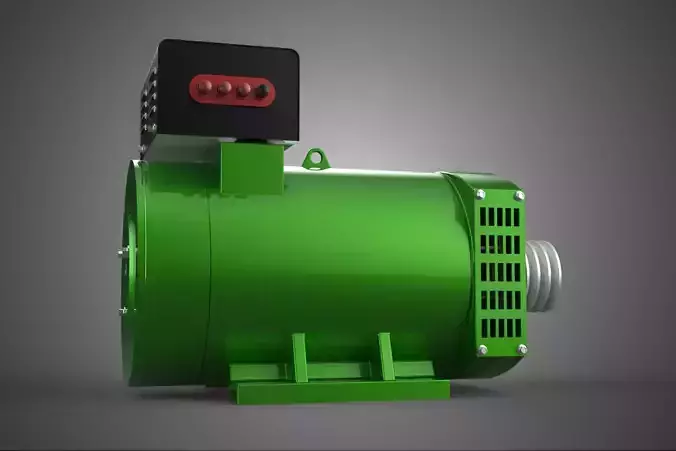
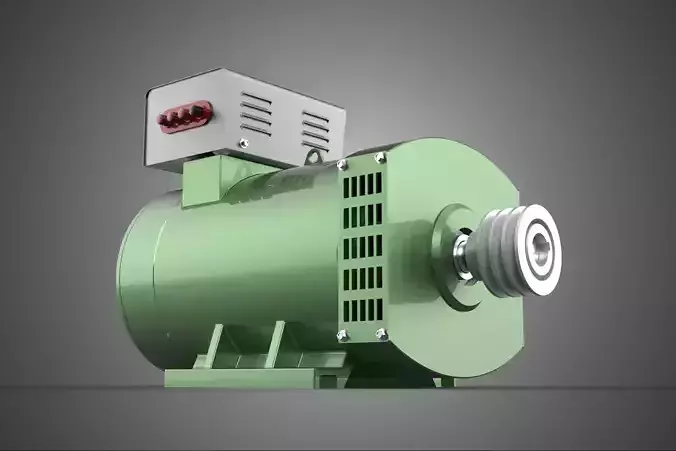
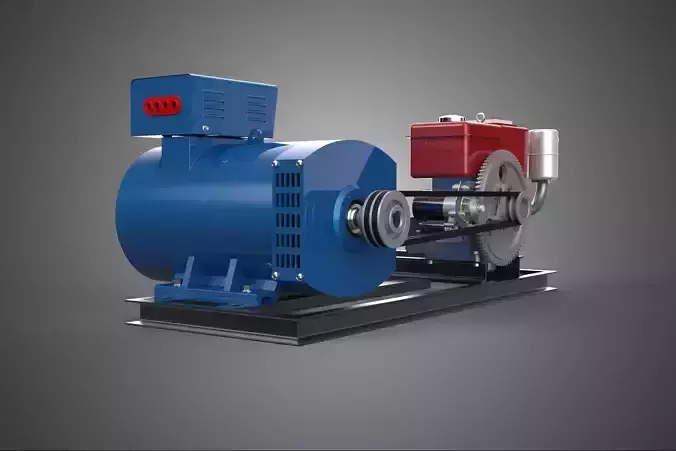
High-quality 3D assets at affordable prices — trusted by designers, engineers, and creators worldwide. Made with care to be versatile, accessible, and ready for your pipeline.
Included File Formats
This model is provided in 14 widely supported formats, ensuring maximum compatibility:
• - FBX (.fbx) – Standard format for most 3D software and pipelines
• - OBJ + MTL (.obj, .mtl) – Wavefront format, widely used and compatible
• - STL (.stl) – Exported mesh geometry; may be suitable for 3D printing with adjustments
• - STEP (.step, .stp) – CAD format using NURBS surfaces
• - IGES (.iges, .igs) – Common format for CAD/CAM and engineering workflows (NURBS)
• - SAT (.sat) – ACIS solid model format (NURBS)
• - DAE (.dae) – Collada format for 3D applications and animations
• - glTF (.glb) – Modern, lightweight format for web, AR, and real-time engines
• - 3DS (.3ds) – Legacy format with broad software support
• - 3ds Max (.max) – Provided for 3ds Max users
• - Blender (.blend) – Provided for Blender users
• - SketchUp (.skp) – Compatible with all SketchUp versions
• - AutoCAD (.dwg) – Suitable for technical and architectural workflows
• - Rhino (.3dm) – Provided for Rhino users
Model Info
• - All files are checked and tested for integrity and correct content
• - Geometry uses real-world scale; model resolution varies depending on the product (high or low poly)
• • - Scene setup and mesh structure may vary depending on model complexity
• - Rendered using Luxion KeyShot
• - Affordable price with professional detailing
Buy with confidence. Quality and compatibility guaranteed.
If you have any questions about the file formats, feel free to send us a message — we're happy to assist you!
Sincerely,
SURF3D
Trusted source for professional and affordable 3D models.
More Information About 3D Model :
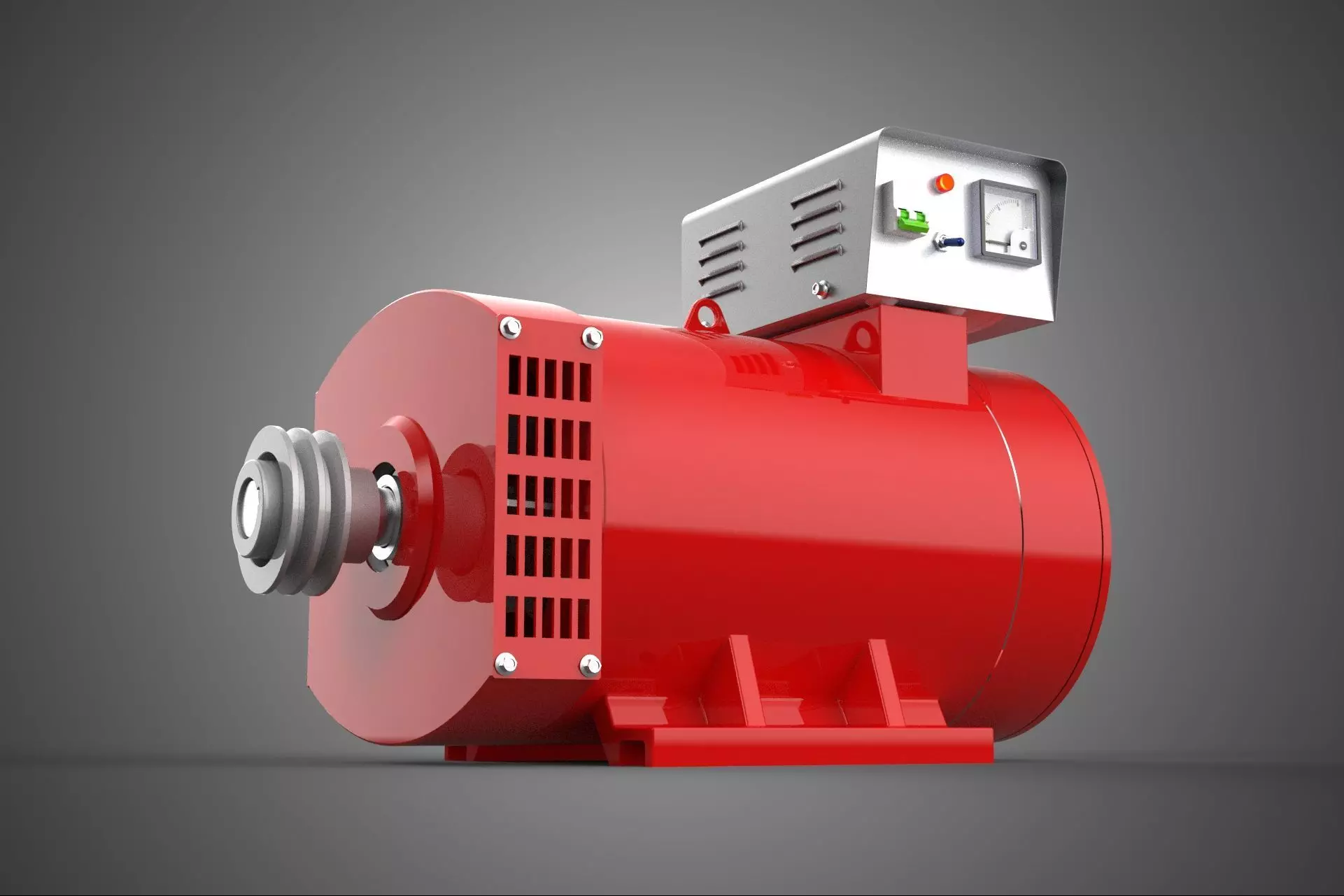
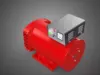
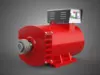
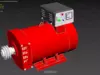
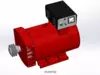
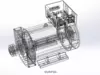
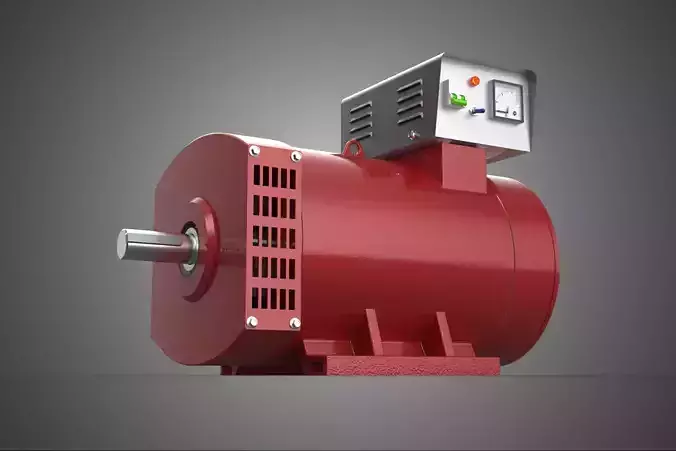
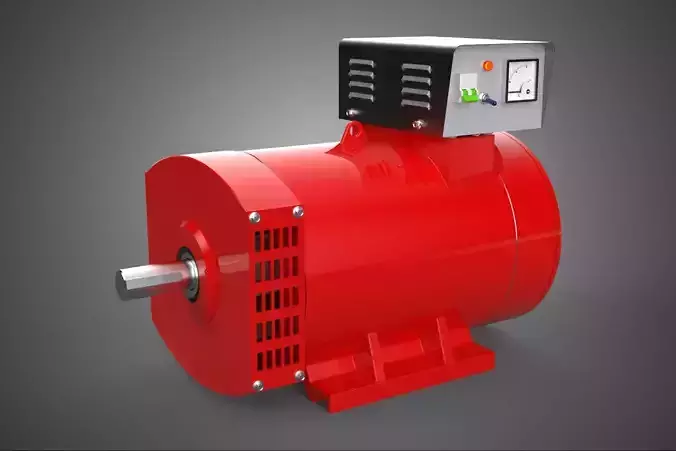
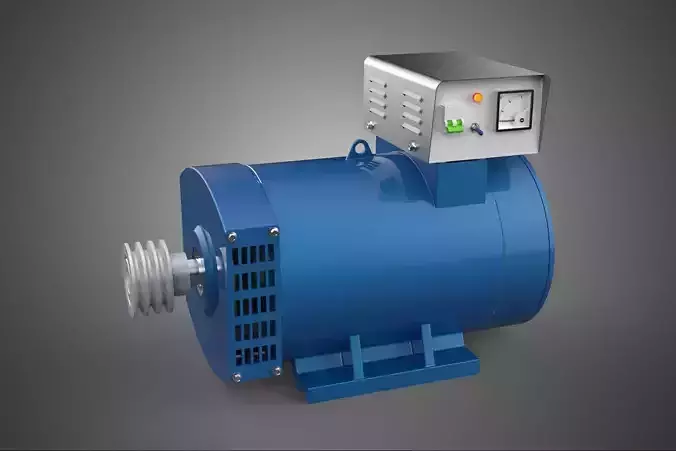
The interconnected concepts of the Electric Motor, Generator, Alternator, Dynamo, Generation, Pulley, and KVA describe the fundamental components, operational principles, and critical metrics associated with electromechanical energy conversion systems, which form the bedrock of modern electrical infrastructure.
I. Electromechanical Energy Conversion Devices
Electromechanical machines are devices that facilitate the reversible conversion of energy between the mechanical and electrical domains, governed primarily by the principles of electromagnetic induction (Faraday’s Law) and the Lorentz force.
A. Motor and Generator
The classification of a machine is determined by the direction of energy flow:
- Electric Motor: A device that converts electrical energy into mechanical energy (rotation or linear motion). This conversion relies on the interaction between magnetic fields and current-carrying conductors, producing torque.
- Electric Generator: A device that converts mechanical energy (supplied by a prime mover) into electrical energy. This conversion occurs when a conductor is moved relative to a magnetic field, inducing an electromotive force (EMF).
#### B. Dynamo and Alternator
These terms historically delineate the type of electrical output produced by a generator:
- Dynamo (DC Generator): Historically the earliest form of large-scale generator, the dynamo produces direct current (DC). It utilizes a mechanical switching apparatus called a commutator to continually reverse the connections to the rotating armature windings, ensuring unidirectional current flow to the external circuit.
- Alternator (AC Generator): The alternator produces alternating current (AC). Unlike the dynamo, it uses slip rings (or brushless excitation systems) to transfer the induced AC power. Alternators are the standard machine utilized in centralized power generation systems (e.g., utility power plants) due to the efficiency of transmitting AC over long distances and the structural simplicity of large AC machines.
Many modern electromechanical machines are designed to operate interchangeably as motors or generators, frequently categorized simply as synchronous or induction machines based on their internal winding and operational characteristics.
### II. Mechanical Coupling and Generation
Generation is the process by which mechanical work is transformed into electrical power. This process requires a continuous supply of rotational kinetic energy, typically provided by a prime mover (such as a steam turbine, gas turbine, hydro turbine, or internal combustion engine).
#### A. The Role of the Pulley
The pulley system, or more broadly, the mechanical coupling mechanism (which may include belts, gears, or direct drive shafts), is essential for transmitting torque and rotational speed from the prime mover to the generator or alternator shaft.
- Speed Matching: In many systems, particularly belt-driven generators (like those used in vehicles or smaller auxiliary power units), the pulley ratio is carefully selected to ensure the generator spins at the required operational speed. For AC alternators, maintaining a precise and consistent rotational speed (synchronous speed) is crucial to produce power at the desired electrical frequency (e.g., 50 Hz or 60 Hz).
- Torque Transfer: The pulley system must be robust enough to handle the maximum torque demanded by the generator, especially during start-up or heavy load conditions, preventing slippage or mechanical failure.
### III. Electrical Rating: KVA
The electrical output capability of an AC generator or alternator is quantified using the metric of KVA (Kilovolt-Ampere), which is the unit of apparent power ($S$).
#### A. Definition and Significance
- Apparent Power (S): KVA represents the total vector sum of true power (active power, measured in Kilowatts or kW) and reactive power (measured in kVAR).
- Rating Standard: AC generators are rated in KVA rather than kW because the load they will supply is often unknown. The actual power (kW) the generator can deliver is dependent on the load's power factor ($\text{PF} = \text{kW} / \text{KVA}$).
- Thermal Limits: KVA rating is fundamentally limited by the thermal constraints (heating) of the alternator's windings and insulation, which are determined by the magnitude of the voltage ($V$) and current ($I$), regardless of whether that current is resistive (kW) or reactive (kVAR).
In summary, a comprehensive electromechanical system involves a prime mover coupled via a Pulley mechanism to a rotating machine (either an Alternator or Dynamo), executing the process of power Generation. The machine's capability is formally quantified by its KVA rating, and the same fundamental physics governs its operation as an Electric Motor or Generator.
KEYWORDS: Electromechanical, Generator, Alternator, Dynamo, Motor, KVA, Kilovolt-Ampere, Apparent Power, Generation, Pulley System, Mechanical Coupling, Prime Mover, Torque, Synchronous Speed, Power Factor, AC Power, DC Power, Faraday’s Law, Commutator, Slip Rings, Electric Current, Induction, Rotor, Stator, Kilowatts, Reactive Power, Magnetic Field, Thermal Limits, Energy Conversion, Electrical Grid, Electromagnetism.