High-quality 3D assets at affordable prices — trusted by designers, engineers, and creators worldwide. Made with care to be versatile, accessible, and ready for your pipeline.
Included File Formats
This model is provided in 14 widely supported formats, ensuring maximum compatibility:
• - FBX (.fbx) – Standard format for most 3D software and pipelines
• - OBJ + MTL (.obj, .mtl) – Wavefront format, widely used and compatible
• - STL (.stl) – Exported mesh geometry; may be suitable for 3D printing with adjustments
• - STEP (.step, .stp) – CAD format using NURBS surfaces
• - IGES (.iges, .igs) – Common format for CAD/CAM and engineering workflows (NURBS)
• - SAT (.sat) – ACIS solid model format (NURBS)
• - DAE (.dae) – Collada format for 3D applications and animations
• - glTF (.glb) – Modern, lightweight format for web, AR, and real-time engines
• - 3DS (.3ds) – Legacy format with broad software support
• - 3ds Max (.max) – Provided for 3ds Max users
• - Blender (.blend) – Provided for Blender users
• - SketchUp (.skp) – Compatible with all SketchUp versions
• - AutoCAD (.dwg) – Suitable for technical and architectural workflows
• - Rhino (.3dm) – Provided for Rhino users
Model Info
• - All files are checked and tested for integrity and correct content
• - Geometry uses real-world scale; model resolution varies depending on the product (high or low poly)
• • - Scene setup and mesh structure may vary depending on model complexity
• - Rendered using Luxion KeyShot
• - Affordable price with professional detailing
Buy with confidence. Quality and compatibility guaranteed.
If you have any questions about the file formats, feel free to send us a message — we're happy to assist you!
Sincerely,
SURF3D
Trusted source for professional and affordable 3D models.
More Information About 3D Model :
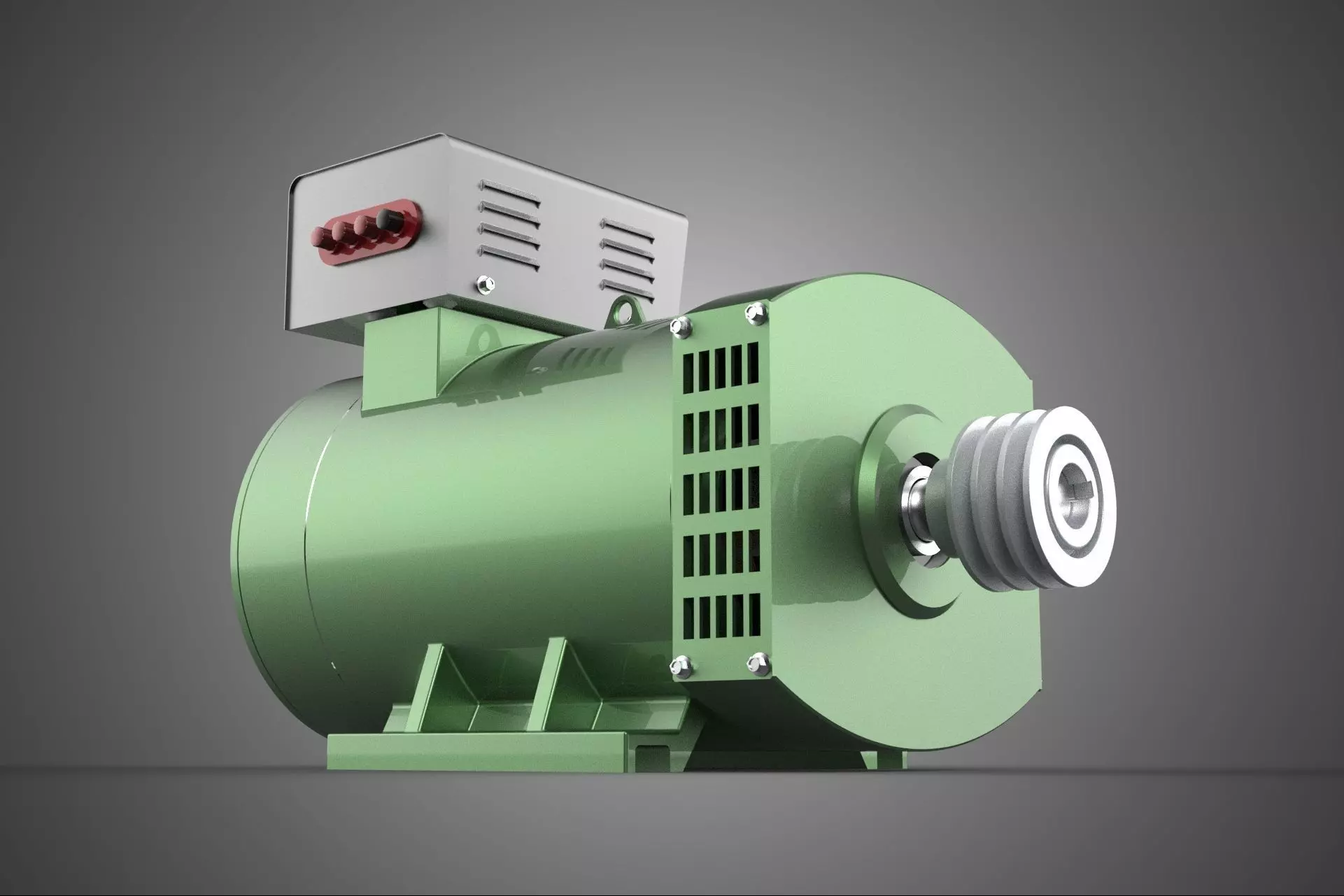
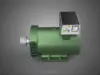
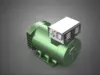
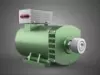
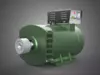
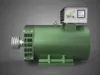
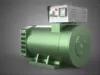
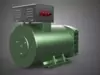
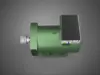
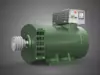
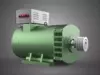
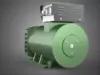
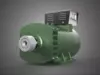
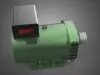
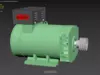
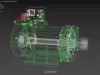
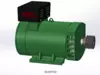
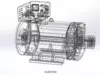
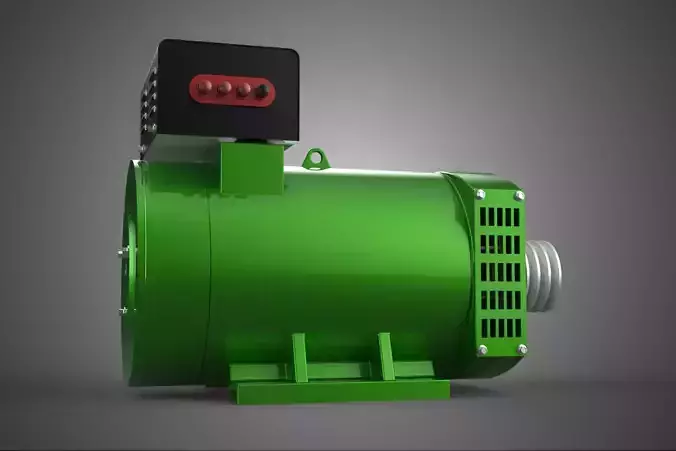
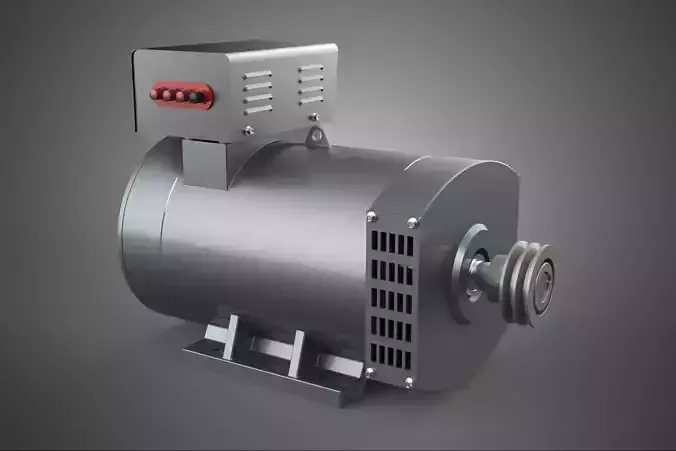
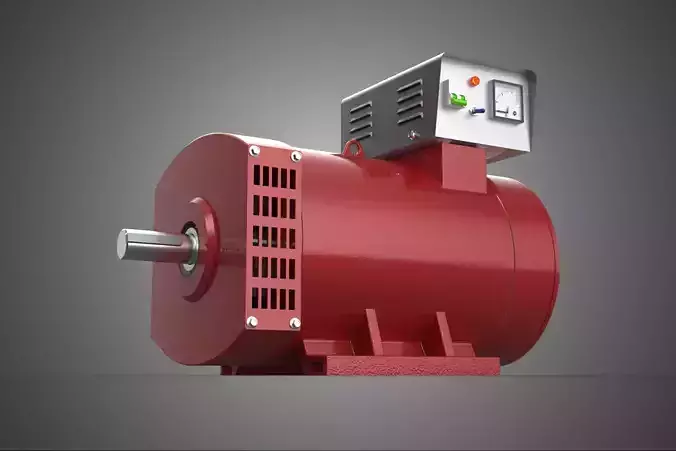
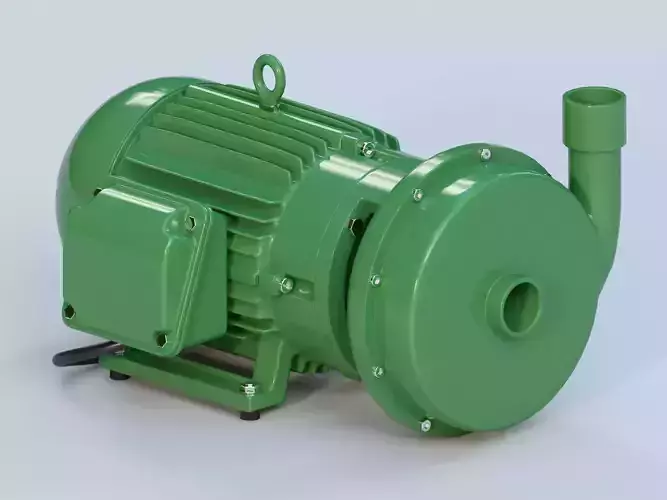
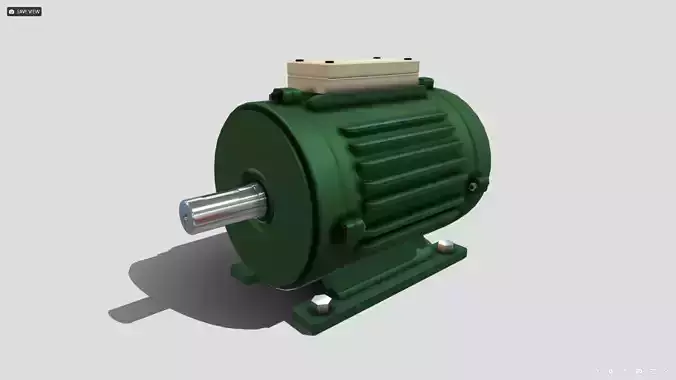
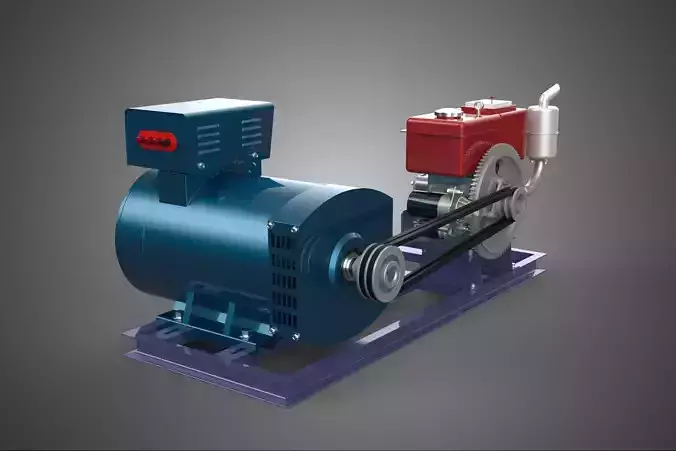
The collective title ELECTRICAL GENERATOR MOTOR ALTERNATOR DYNAMO TERMINAL BOX PULLEY describes a comprehensive rotating electric machine (REM) assembly, defining both its fundamental functional capabilities and the essential physical components required for its mechanical drive and electrical integration. These machines operate based on the principles of electromagnetic induction, facilitating the conversion between mechanical energy and electrical energy.
Functional Definitions (The Rotating Electric Machine)
The machine’s core function is determined by its operational mode and output type:
- Motor: In motoring mode, the device converts supplied electrical energy (AC or DC) into mechanical torque and rotational motion. This is governed by the Lorentz force law, where current flowing through conductors within a magnetic field produces a force.
- Generator (General Term): This refers to the operation mode where mechanical energy is converted into electrical energy. Mechanical input (typically via a prime mover like an engine or turbine) turns the rotor, inducing voltage in the stator windings.
- Alternator (AC Generator): Specifically generates Alternating Current (AC). Modern alternators typically utilize a stationary armature (stator) and a rotating field winding (rotor) supplied by excitation current through slip rings. Alternators are ubiquitous in modern power systems and automotive charging circuits.
- Dynamo (DC Generator): Historically and technically refers to a generator that produces Direct Current (DC). Dynamos achieve this through the use of a mechanical rectifier called a commutator, which reverses the connection to the external circuit every half-cycle, ensuring unidirectional current output.
The reversibility principle dictates that, subject to design constraints, a machine capable of operating as a motor can also operate as a generator, utilizing the same core structural components (rotor, stator, windings).
### Physical Interface Components
Two critical components facilitate the interaction of the REM with external systems: the Terminal Box and the Pulley.
- Terminal Box (Junction Box / Connection Box):
The terminal box serves as the secure, insulated interface where the machine’s internal winding leads (output for generation, input for motoring) are connected to the external electrical circuit or power grid.
- Function: It protects the critical electrical connections from environmental hazards (moisture, dust, foreign objects) and physical stress, ensuring safe and reliable operation. It also provides a defined point for grounding and phase connections, adhering to strict industry standards (e.g., NEMA or IP ratings).
- Structure: Typically constructed from rigid, protective material (often cast metal or high-impact plastic), the terminal box contains clearly labeled connection studs or terminals corresponding to the machine’s phases (e.g., U, V, W for three-phase AC) or polarity (+/- for DC).
- Pulley:
The pulley is the primary mechanical interface attached directly to the machine’s rotating shaft.
- Function: It enables the transmission of mechanical power via a belt drive system. When the machine functions as a generator, the pulley receives torque input from a prime mover. When functioning as a motor, the pulley transmits torque output to drive a mechanical load.
- Design Considerations: Pulleys are engineered to match specific belt profiles (V-belt, timing belt, etc.) and ratios, determining the mechanical coupling and rotational speed relationship between the machine and the connected system.
### Synthesis and Application
This assembly represents a robust electromechanical transducer package. Whether deployed in continuous industrial drive systems, emergency power generation units, or integrated vehicular charging systems (e.g., an automotive alternator/dynamo utilizing a pulley for engine coupling and a terminal box for battery connection), the integration of these specific components ensures efficient energy conversion, standardized mechanical coupling, and compliant electrical isolation.
KEYWORDS: Electrical Generator, Motor, Alternator, Dynamo, Terminal Box, Pulley, Rotating Electric Machine, Energy Conversion, Prime Mover, Torque Transfer, AC Power, DC Power, Stator, Rotor, Armature, Field Winding, Commutator, Slip Rings, Junction Box, Mechanical Interface, Electrical Interface, Power Train, Electromechanical System, Transducer, Wiring Harness, NEMA Standards, Speed Reduction, Belt Drive, Load Application, Reversibility Principle.