High-quality 3D assets at affordable prices — trusted by designers, engineers, and creators worldwide. Made with care to be versatile, accessible, and ready for your pipeline.
Included File Formats
This model is provided in 14 widely supported formats, ensuring maximum compatibility:
• - FBX (.fbx) – Standard format for most 3D software and pipelines
• - OBJ + MTL (.obj, .mtl) – Wavefront format, widely used and compatible
• - STL (.stl) – Exported mesh geometry; may be suitable for 3D printing with adjustments
• - STEP (.step, .stp) – CAD format using NURBS surfaces
• - IGES (.iges, .igs) – Common format for CAD/CAM and engineering workflows (NURBS)
• - SAT (.sat) – ACIS solid model format (NURBS)
• - DAE (.dae) – Collada format for 3D applications and animations
• - glTF (.glb) – Modern, lightweight format for web, AR, and real-time engines
• - 3DS (.3ds) – Legacy format with broad software support
• - 3ds Max (.max) – Provided for 3ds Max users
• - Blender (.blend) – Provided for Blender users
• - SketchUp (.skp) – Compatible with all SketchUp versions
• - AutoCAD (.dwg) – Suitable for technical and architectural workflows
• - Rhino (.3dm) – Provided for Rhino users
Model Info
• - All files are checked and tested for integrity and correct content
• - Geometry uses real-world scale; model resolution varies depending on the product (high or low poly)
• • - Scene setup and mesh structure may vary depending on model complexity
• - Rendered using Luxion KeyShot
• - Affordable price with professional detailing
Buy with confidence. Quality and compatibility guaranteed.
If you have any questions about the file formats, feel free to send us a message — we're happy to assist you!
Sincerely,
SURF3D
Trusted source for professional and affordable 3D models.
More Information About 3D Model :
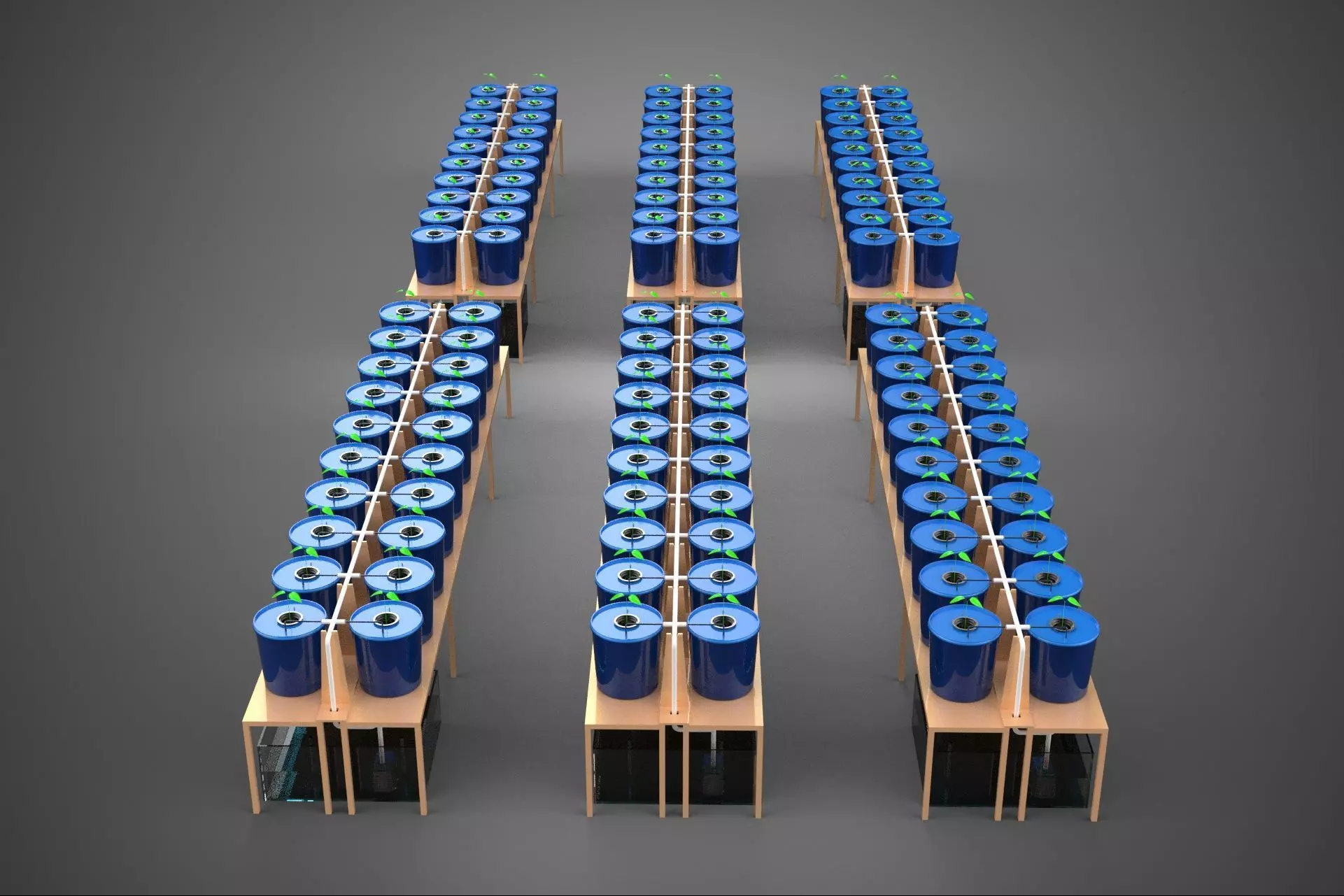
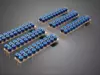
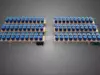
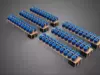
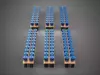
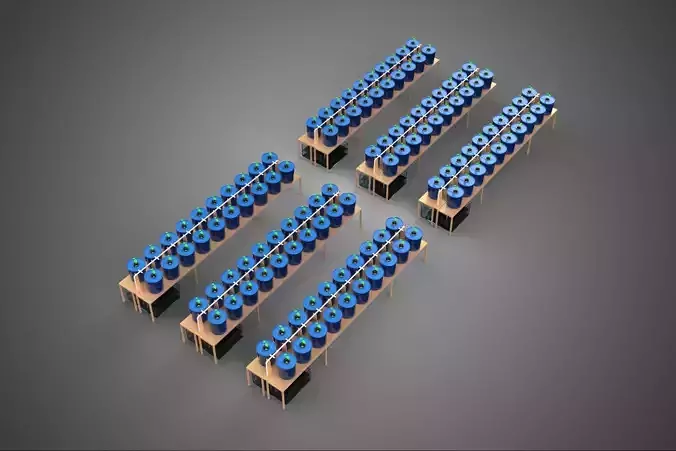
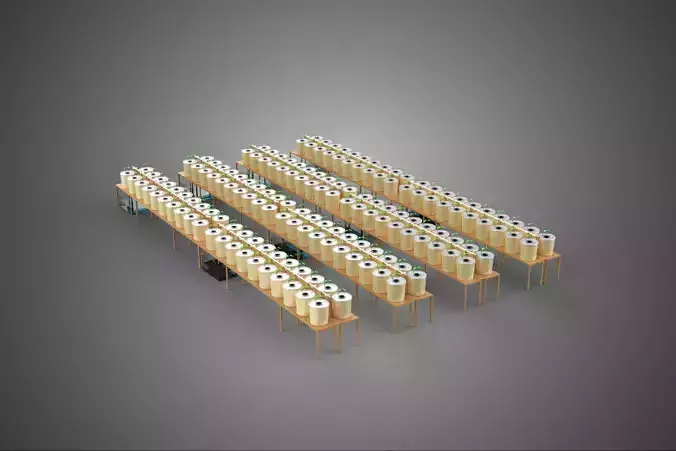
A large-scale Dutch Bucket (also known as the Bato Bucket) hydroponic system industrial farm plant represents a highly optimized form of Controlled Environment Agriculture (CEA) designed for high-density commercial production of fruiting vegetables and perennial crops. This industrialized methodology integrates advanced hydrologic and atmospheric controls to maximize yield, resource efficiency, and harvest consistency, typically surpassing the productivity achievable in traditional soil-based or less sophisticated soilless culture systems.
System Definition and Operation
The Dutch Bucket system is a specific type of recirculating hydroponics utilizing individual containers (buckets) filled with an inert, non-soil growth medium, such as perlite, coco coir, or rockwool. It operates on the principle of drip irrigation combined with controlled drainage (drain-to-waste or recirculating drip).
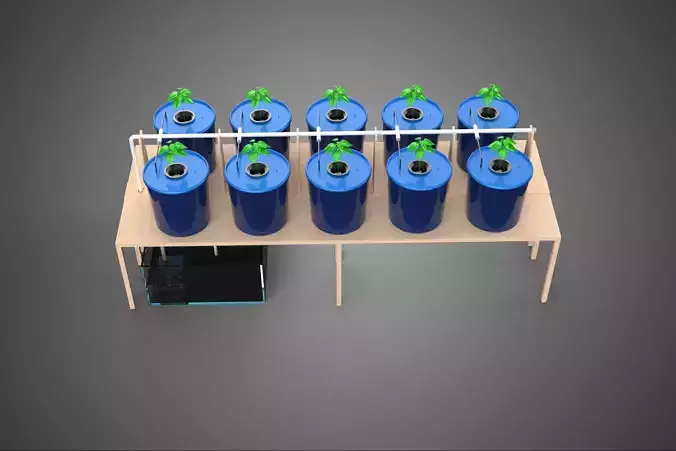
In an industrial setting, plants are cultivated in rows of buckets connected by a common drainage manifold (gully). A precision fertigation system delivers a calibrated nutrient solution directly to the base of each plant via drip emitters. The frequency and duration of these irrigation cycles are determined by factors including the crop stage, substrate moisture retention, ambient temperature, and light intensity (Daily Light Integral).
Crucially, the Bato bucket design incorporates a unique drainage feature: an elbow or siphon placed slightly above the bottom of the container. This mechanism prevents waterlogging while ensuring a small reservoir of nutrient solution remains at the base, optimizing root aeration and nutrient uptake. Excess solution not utilized by the plant flows out of the drainage elbow and is channeled back through the return lines to a central reservoir for filtration, sterilization, and rebalancing (in a closed-loop system), or diverted (in an open-loop system, common for specific disease control strategies).
Infrastructure and Industrial Requirements
Industrial-scale implementation necessitates extensive and complex infrastructure for environmental stabilization and nutrient management:
- Nutrient Management: Large-scale operations rely on massive central reservoirs (sumps), often thousands of liters, connected to high-capacity pumps. Computerized dosing systems—fertigation controllers—continuously monitor and adjust the pH (potential hydrogen) and EC (electrical conductivity) of the solution. These systems automate the injection of concentrated stock nutrients (A, B, and pH buffer solutions) to maintain optimal nutrient ratios crucial for crop development.
- Environmental Control: The facility operates as a climate-controlled plant, utilizing advanced HVAC (Heating, Ventilation, and Air Conditioning) systems, humidity regulators, and carbon dioxide (CO₂) enrichment systems to maintain ideal atmospheric conditions. Supplementary lighting, typically high-pressure sodium (HPS) or high-efficiency LED fixtures, ensures consistent light provision independent of external weather conditions, facilitating year-round production.
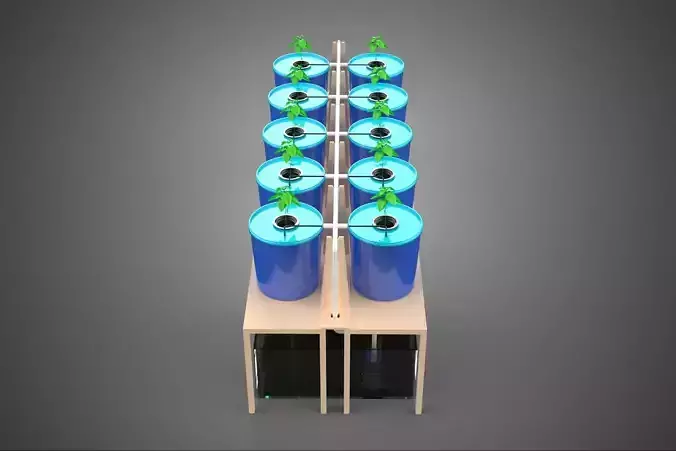
- Physical Layout: Buckets are often placed on elevated supports or specialized troughs to ensure efficient gravity drainage and to prevent direct contact with the floor, minimizing the risk of pathogen spread. The layout prioritizes maintenance access and worker efficiency, utilizing specialized carts or automated logistical systems for harvesting and plant care.
### Commercial Advantages and Crop Suitability
The large-scale Dutch Bucket system is particularly favored for crops requiring robust physical support and a sustained growing period, distinguishing it from shallow-rooted systems like Nutrient Film Technique (NFT).
Primary advantages include:
- Disease Isolation: Since each plant occupies an individual container, the localized nature of the substrate provides an effective barrier against the rapid spread of root-borne pathogens (e.g., Pythium, Fusarium) across the entire crop, unlike interconnected systems.
- Root Zone Flexibility: The system accommodates a greater volume of substrate, offering enhanced buffer capacity against irrigation errors and enabling the cultivation of crops with extensive root systems.
- Yields: The precise control over nutrient delivery and environmental factors leads to significantly higher yields per unit area compared to traditional field farming.
Primary crops optimally cultivated in industrial Dutch Bucket facilities include tomatoes, bell peppers, chili peppers, eggplants, long English cucumbers, and various vine crops.
KEYWORDS: Hydroponics, Dutch Bucket, Bato Bucket, Controlled Environment Agriculture, CEA, Industrial Farming, Soilless Culture, Recirculating Drip, Fertigation, Commercial Greenhouse, Substrate Culture, High-Yield Farming, Perlite, Coco Coir, Tomatoes, Bell Peppers, Cucumbers, Nutrient Film Technique, EC Monitoring, pH Control, HVAC, Automated Dosing, Drip Irrigation, Root Zone Control, Disease Mitigation, Recirculation System, Greenhouse Technology, Vertical Farming, Protected Horticulture, Sustainable Agriculture.