High-quality 3D assets at affordable prices — trusted by designers, engineers, and creators worldwide. Made with care to be versatile, accessible, and ready for your pipeline.
Included File Formats
This model is provided in 14 widely supported formats, ensuring maximum compatibility:
• - FBX (.fbx) – Standard format for most 3D software and pipelines
• - OBJ + MTL (.obj, .mtl) – Wavefront format, widely used and compatible
• - STL (.stl) – Exported mesh geometry; may be suitable for 3D printing with adjustments
• - STEP (.step, .stp) – CAD format using NURBS surfaces
• - IGES (.iges, .igs) – Common format for CAD/CAM and engineering workflows (NURBS)
• - SAT (.sat) – ACIS solid model format (NURBS)
• - DAE (.dae) – Collada format for 3D applications and animations
• - glTF (.glb) – Modern, lightweight format for web, AR, and real-time engines
• - 3DS (.3ds) – Legacy format with broad software support
• - 3ds Max (.max) – Provided for 3ds Max users
• - Blender (.blend) – Provided for Blender users
• - SketchUp (.skp) – Compatible with all SketchUp versions
• - AutoCAD (.dwg) – Suitable for technical and architectural workflows
• - Rhino (.3dm) – Provided for Rhino users
Model Info
• - All files are checked and tested for integrity and correct content
• - Geometry uses real-world scale; model resolution varies depending on the product (high or low poly)
• • - Scene setup and mesh structure may vary depending on model complexity
• - Rendered using Luxion KeyShot
• - Affordable price with professional detailing
Buy with confidence. Quality and compatibility guaranteed.
If you have any questions about the file formats, feel free to send us a message — we're happy to assist you!
Sincerely,
SURF3D
Trusted source for professional and affordable 3D models.
More Information About 3D Model :
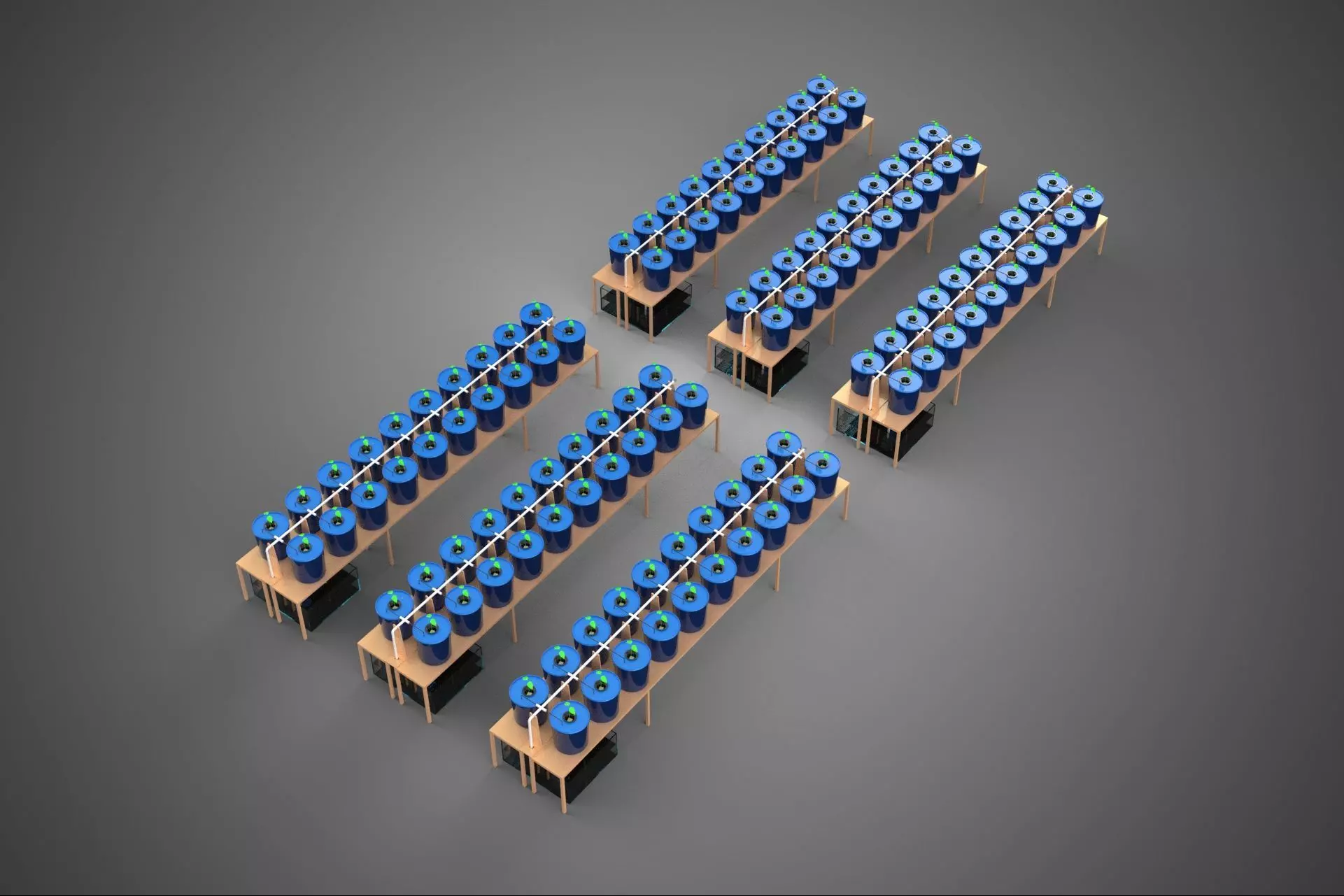
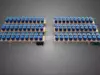
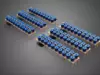
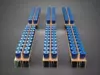
The Dutch Bucket Barrel Hydroponic System, frequently identified by its more common nomenclature as the Bato Bucket System, constitutes a highly scalable and widely implemented method within recirculating hydroponics, specialized for the cultivation of large, indeterminate plant species. This system is optimally utilized in commercial farming contexts for crops demanding extensive root zone stability and consistent nutrient delivery.
Nomenclature and Operational Principles
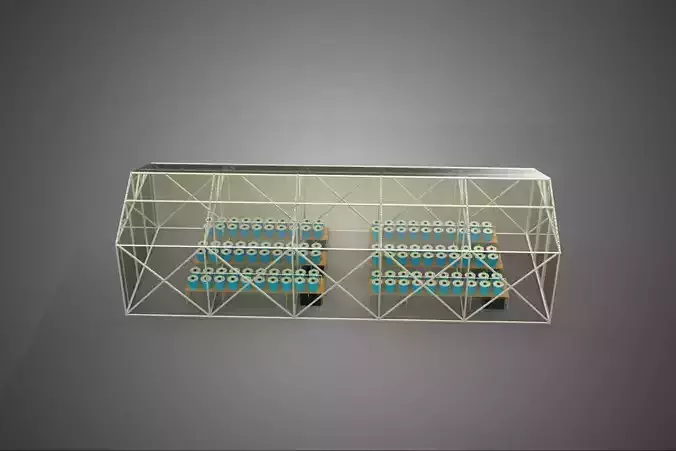
The system is termed Dutch Bucket due to its historical prevalence and development in high-intensity greenhouse operations in the Netherlands. It operates on a drip-irrigation framework, where nutrient solution (hydroponic fluid) is pumped from a centralized reservoir (often a repurposed barrel or large tank) to individual growing containers—the buckets.
Each bucket typically utilizes an inert, porous growing medium, such as perlite, coco coir, rockwool, or clay pellets (hydroton), which provides structural support and moderate moisture retention but contributes negligible nutritional value. The medium is selected for its high aeration capacity and drainage efficiency.
The defining operational characteristic of the Dutch Bucket is its optimized drainage mechanism. The nutrient solution is delivered through a dripper or emitter positioned near the base of the plant. Unlike non-recirculating systems (run-to-waste), excess solution does not saturate the root zone permanently. Instead, it is collected via an elbow drain at the bottom of the bucket, maintaining a shallow nutrient reserve (a small sump) within the container before exiting. This continuous, timed flushing prevents salt buildup and ensures adequate oxygenation of the roots. The drained solution is returned via a common gravity manifold (the return line) back to the main reservoir for pH and Electrical Conductivity (EC) adjustments and subsequent recirculation.
System Configuration and Barrel Integration
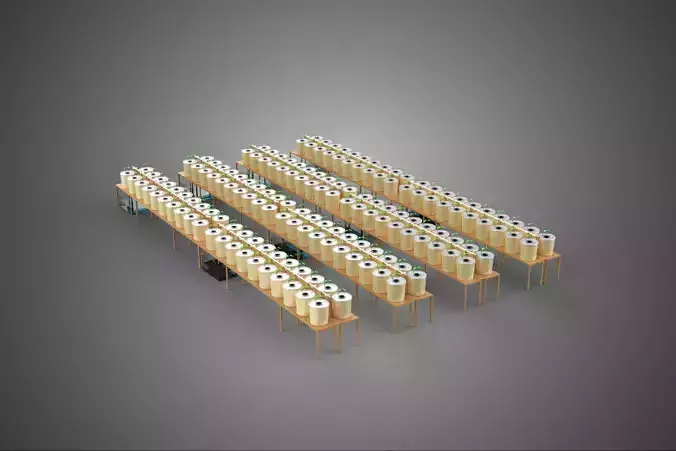
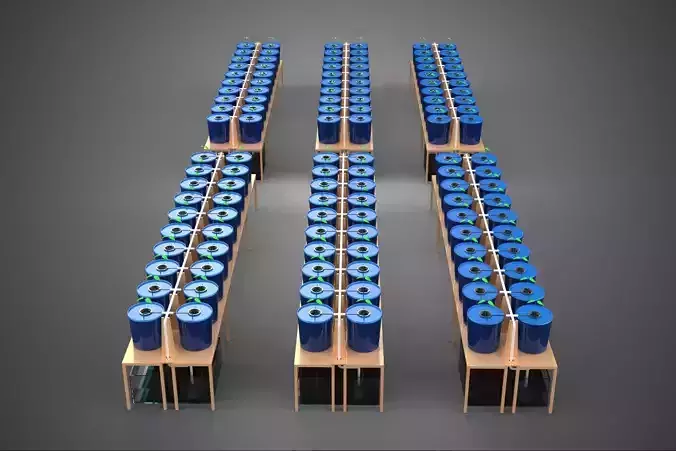
In commercial agricultural settings (the Farm context), buckets, which typically range in size from 10 to 20 liters, are spaced linearly along cultivation rows. The inclusion of the term Barrel in the system description often denotes the utilization of large, durable plastic containers (e.g., 200-liter or 55-gallon drums) serving multiple structural purposes:
- Reservoir: Used as the primary nutrient solution storage tank due to their affordability, durability, and standardized size, necessary to manage the volumetric requirements of large crop installations.
- Container Repurposing: In smaller or DIY configurations, barrels may be sectioned and repurposed directly as the growing containers themselves, although purpose-built Bato Buckets are preferred for long-term consistency due to their superior drainage fittings.
This modular, gravity-driven configuration makes the DBS highly scalable, capable of efficiently supporting hundreds or thousands of large, fruiting crops such as tomatoes, cucumbers, peppers, eggplants, and vine squashes.
### Distinction from Aeroponics
It is critical to formally distinguish the Dutch Bucket methodology from aeroponic systems.
Dutch Bucket Hydroponics: This is a substrate-based, drip-fed, recirculating system. Root systems are housed within a physical medium, and nutrient delivery relies on flow rate and absorption by the medium.
Aeroponics: A method whereby plant roots are suspended in an enclosed, air-filled environment and intermittently misted with a fine aerosolized nutrient solution, typically utilizing high-pressure pumps. True aeroponics employs no physical growing medium other than collars for stem support.
While the phrase Dutch Bucket Barrel Hydroponic System Farm Plant Crop Aeroponic may imply a hybrid technology, the standard Dutch Bucket system is fundamentally hydroponic and drip-based, not aeroponic. If an aeroponic component were present, it would typically manifest as a specialized hybrid system, perhaps utilizing a separate chamber for clone propagation via misting before transplanting into the buckets. In the general context of large-scale farming, the Dutch Bucket is almost exclusively deployed as a media-based drip system.
KEYWORDS: Dutch Bucket, Bato Bucket, Recirculating Hydroponics, Drip System, Substrate Culture, Commercial Farming, Greenhouse Horticulture, Indeterminate Crops, Perlite, Coco Coir, Rockwool, Hydroton, Nutrient Recirculation, Closed-Loop System, Gravity Drainage, Reservoir Barrel, High-Density Cultivation, Tomato Cultivation, Cucumber Farming, Pepper Farming, Water Culture, Nutrient Film Technique, Deep Water Culture, Emitter, Manifold, Run-to-Waste, Growing Medium, Oxygenation, Crop Yield, Scalability.