High-quality 3D assets at affordable prices — trusted by designers, engineers, and creators worldwide. Made with care to be versatile, accessible, and ready for your pipeline.
Included File Formats
This model is provided in 14 widely supported formats, ensuring maximum compatibility:
• - FBX (.fbx) – Standard format for most 3D software and pipelines
• - OBJ + MTL (.obj, .mtl) – Wavefront format, widely used and compatible
• - STL (.stl) – Exported mesh geometry; may be suitable for 3D printing with adjustments
• - STEP (.step, .stp) – CAD format using NURBS surfaces
• - IGES (.iges, .igs) – Common format for CAD/CAM and engineering workflows (NURBS)
• - SAT (.sat) – ACIS solid model format (NURBS)
• - DAE (.dae) – Collada format for 3D applications and animations
• - glTF (.glb) – Modern, lightweight format for web, AR, and real-time engines
• - 3DS (.3ds) – Legacy format with broad software support
• - 3ds Max (.max) – Provided for 3ds Max users
• - Blender (.blend) – Provided for Blender users
• - SketchUp (.skp) – Compatible with all SketchUp versions
• - AutoCAD (.dwg) – Suitable for technical and architectural workflows
• - Rhino (.3dm) – Provided for Rhino users
Model Info
• - All files are checked and tested for integrity and correct content
• - Geometry uses real-world scale; model resolution varies depending on the product (high or low poly)
• • - Scene setup and mesh structure may vary depending on model complexity
• - Rendered using Luxion KeyShot
• - Affordable price with professional detailing
Buy with confidence. Quality and compatibility guaranteed.
If you have any questions about the file formats, feel free to send us a message — we're happy to assist you!
Sincerely,
SURF3D
Trusted source for professional and affordable 3D models.
More Information About 3D Model :
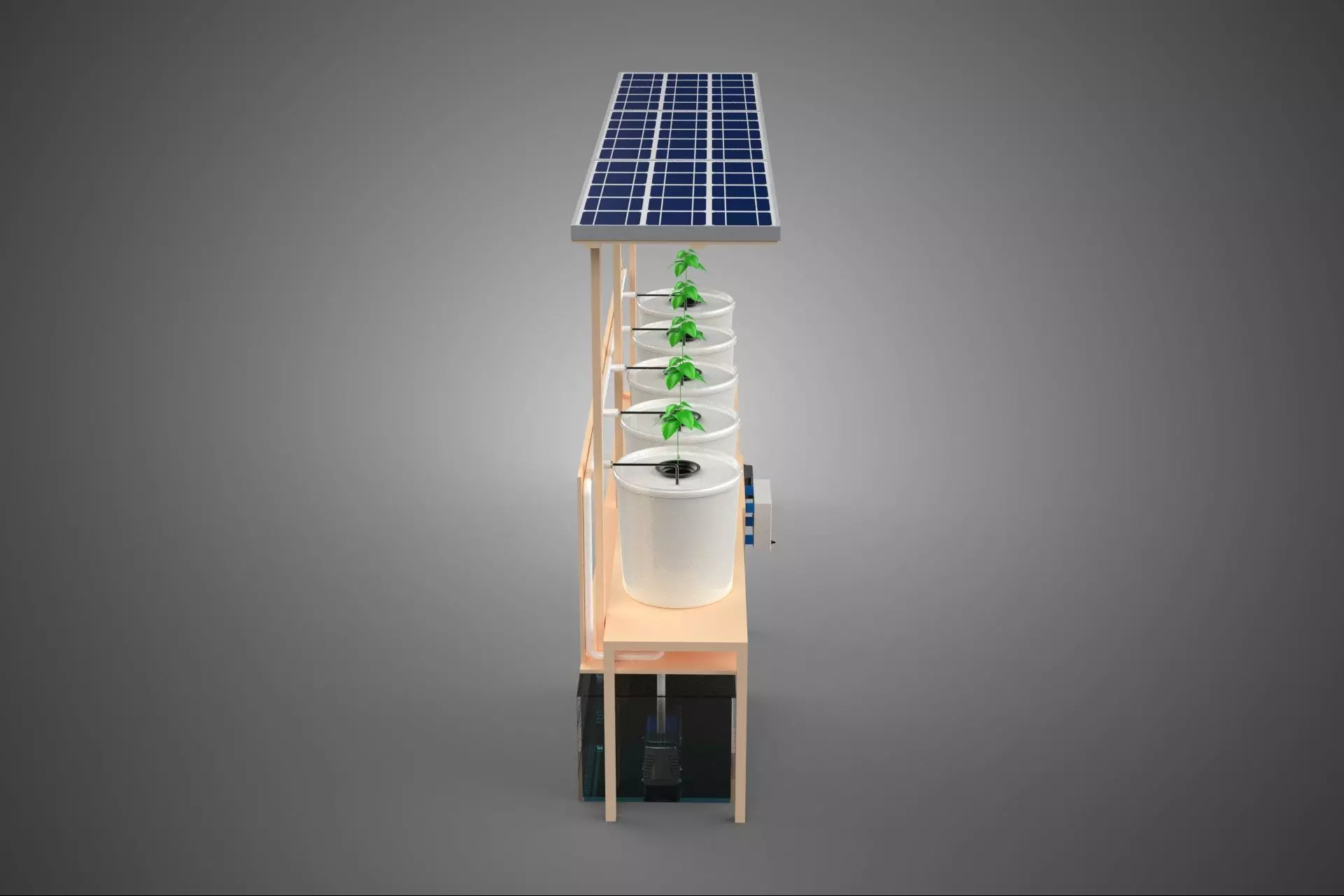
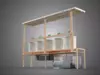
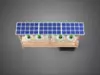
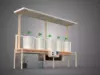
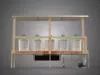
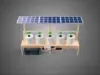
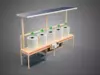
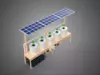
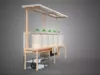
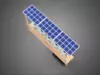
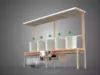
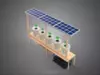
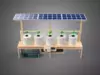
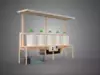
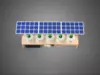
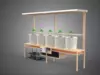
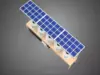
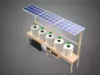
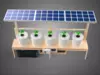
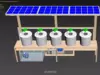
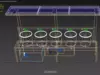
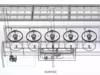
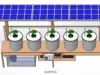
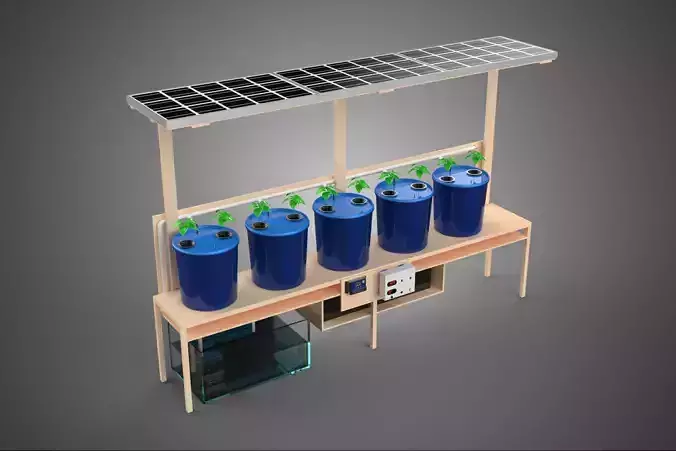
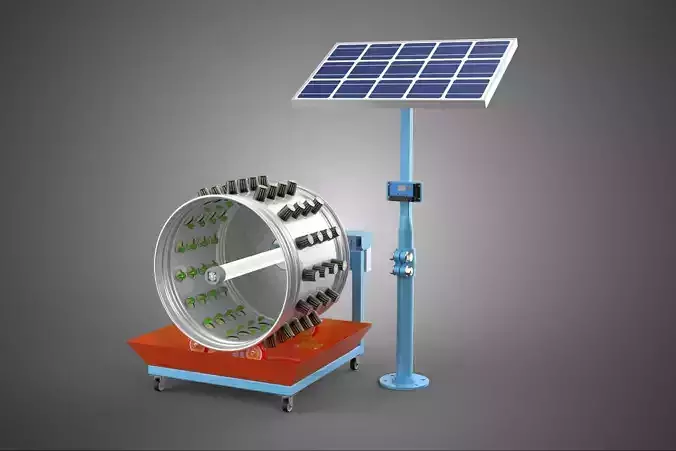
IOT SOLAR ENERGY HYDROPONIC PLANT BUCKET POT GARDEN CULTIVATION
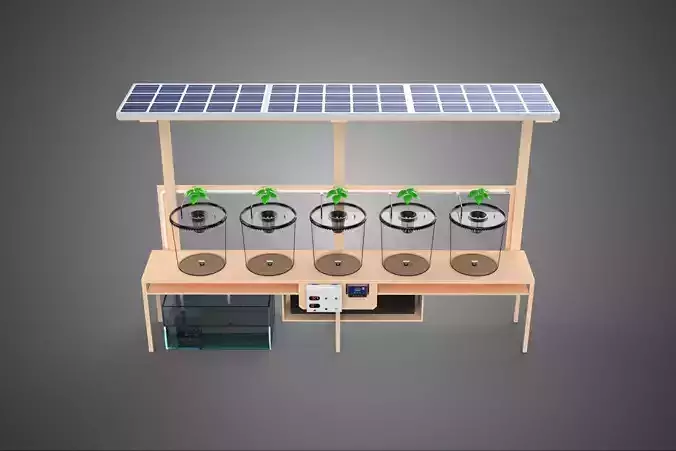
This integrated system refers to a sophisticated agricultural methodology combining soilless cultivation techniques (hydroponics) with sustainable photovoltaic (PV) power generation and advanced remote management via the Internet of Things (IoT). The system is typically deployed in a decentralized or modular fashion, utilizing individual plant buckets or pots, often configured for Deep Water Culture (DWC), Drip Irrigation, or customized recirculating methods. It represents a convergence of smart agriculture (SmartAg) principles, focusing on maximizing resource efficiency and providing autonomous operational capability, particularly in areas lacking reliable grid power or suitable arable land.
Hydroponic System Design and Methodology
The core cultivation method is hydroponics, which eliminates the need for soil and relies instead on delivering a precisely formulated nutrient solution directly to the plant roots. The Bucket Pot Garden configuration implies a modular, scalable architecture, frequently employing opaque containers (buckets) to prevent light penetration and inhibit algal growth in the nutrient reservoir.
Typical system components include: a nutrient reservoir, delivery and aeration pumps, inert growing media (e.g., rockwool, perlite, hydroton), and the plant containers themselves. Water and nutrient consumption are significantly reduced—often by 70% to 90% compared to traditional soil farming—as the nutrient solution is generally recirculated (closed-loop system), mitigating runoff and waste. The modular nature allows for easy maintenance, crop rotation, and specific environmental zoning (e.g., controlling microclimates for individual plants or clusters).
Solar Energy Integration
The system operates autonomously using solar photovoltaic (PV) panels as its primary energy source. This integration ensures energy independence, making the system suitable for off-grid applications, urban rooftops, or remote areas. DC power generated by the PV array is used to charge battery storage units and directly power system components, including:
- Pumps: Circulation pumps (to move nutrient solution) and air pumps (to oxygenate the root zone).
- Actuators: Solenoid valves necessary for automated dosing of pH adjusters and nutrient concentrates.
- IOT Hardware: Microcontrollers, sensors, communication modules (Wi-Fi, GSM, LoRa), and data loggers.
The inclusion of a deep-cycle battery bank ensures continuous operation of critical components, such as aeration and sensor monitoring, during periods of low solar irradiance (nighttime or heavy cloud cover). This reliance on renewable energy minimizes the carbon footprint associated with the cultivation process.
### Internet of Things (IOT) Monitoring and Control
The technological cornerstone of this system is the integration of the Internet of Things, enabling highly granular monitoring, data-driven decision-making, and automation. A network of dedicated sensors continuously measures critical parameters essential for plant health and optimal growth:
- Nutrient Parameters: Electrical Conductivity (EC) to measure total dissolved solids (TDS) and nutrient concentration, and pH levels to ensure optimal nutrient bioavailability.
- Environmental Factors: Air and water temperature, ambient humidity, and light intensity (Photosynthetically Active Radiation - PAR).
- Operational Status: Water level in the reservoir and pump functionality.
A central microcontroller unit (MCU) processes the sensor data. This data is transmitted via an integrated communication module to a cloud-based server or local gateway. Users can access system dashboards remotely via web or mobile applications to monitor real-time conditions, review historical performance logs, and receive alerts if parameters drift outside predetermined thresholds.
Automation is executed via actuators linked to the MCU. Based on sensor feedback, the system can automatically adjust parameters—for instance, triggering peristaltic pumps to inject nutrient concentrates when EC drops, or cycling pH buffers to maintain the target acidity range. This level of precision cultivation reduces human error, optimizes nutrient delivery, and enhances crop yield predictability.
### Applications and Advantages
The IOT Solar Energy Hydroponic Bucket system is highly advantageous for sustainable urban farming, educational purposes, and agricultural research. Its key benefits include:
- Sustainability: Reduced water usage, elimination of pesticides (in typical closed-loop hydroponics), and reliance on clean energy.
- Scalability: Modular design allows systems to be scaled vertically or horizontally to fit available space.
- Efficiency: Precision nutrient delivery leads to faster growth cycles and higher yields per square meter compared to traditional agriculture.
- Resilience: Off-grid capability ensures cultivation can proceed irrespective of local power infrastructure limitations.
KEYWORDS: Hydroponics, IOT, Solar Energy, Smart Agriculture, Photovoltaic, Deep Water Culture, Recirculating System, Off-Grid, Automation, Sensors, Electrical Conductivity, pH Monitoring, Urban Farming, Precision Cultivation, Nutrient Solution, Microcontroller, Cloud Computing, Modular Design, Sustainable Agriculture, Actuators, Renewable Energy, PV Array, Soilless Culture, Energy Independence, Data Logging, Plant Bucket, Crop Yield, Telemetry, Agritech, Water Efficiency.