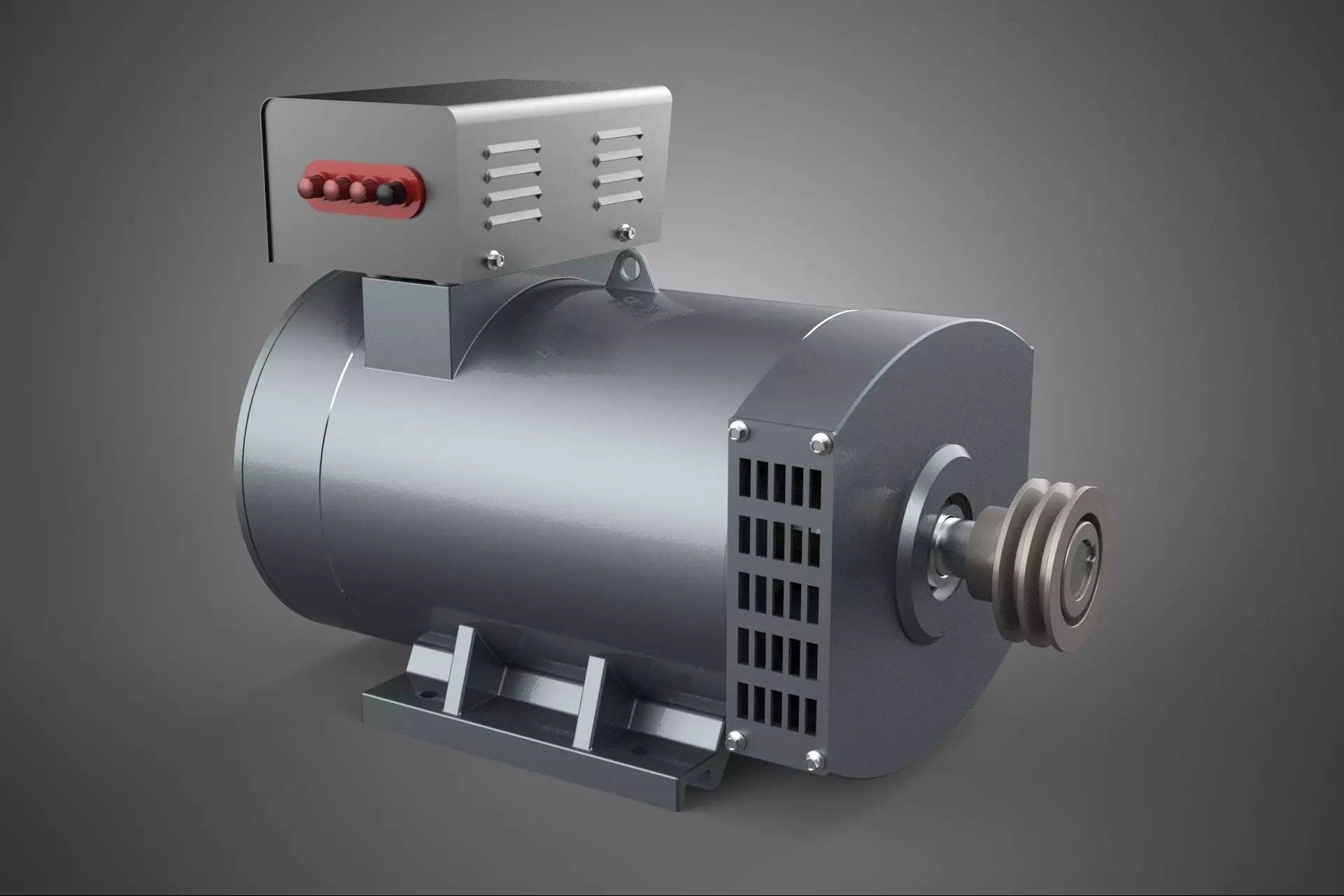
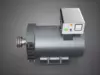
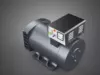
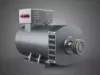
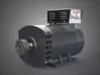
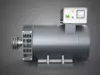
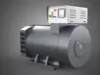
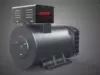
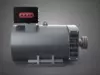
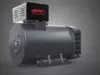
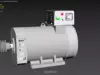
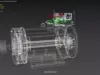
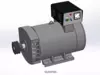
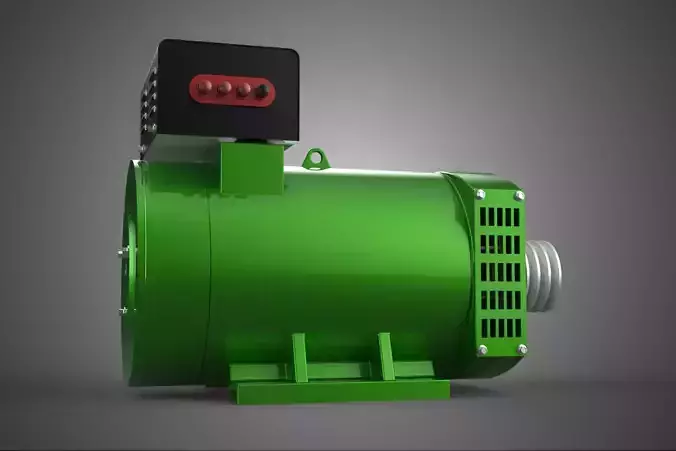
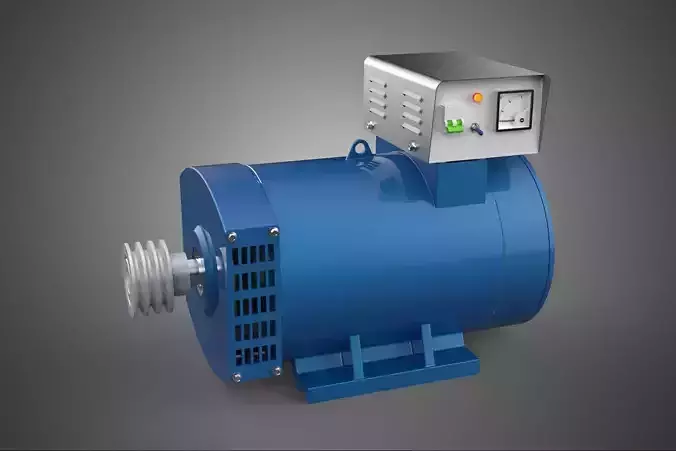
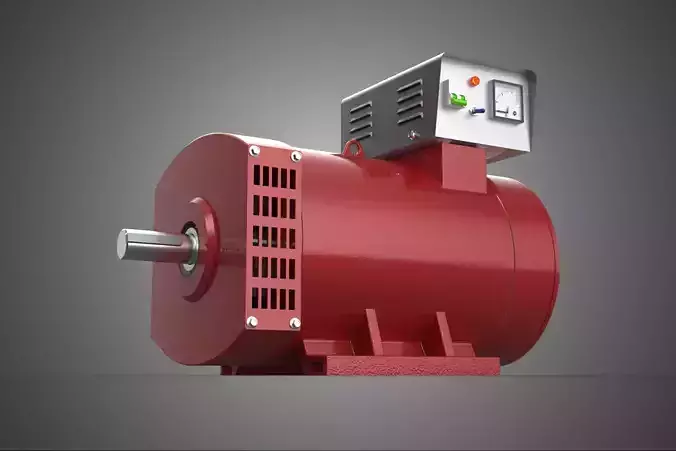
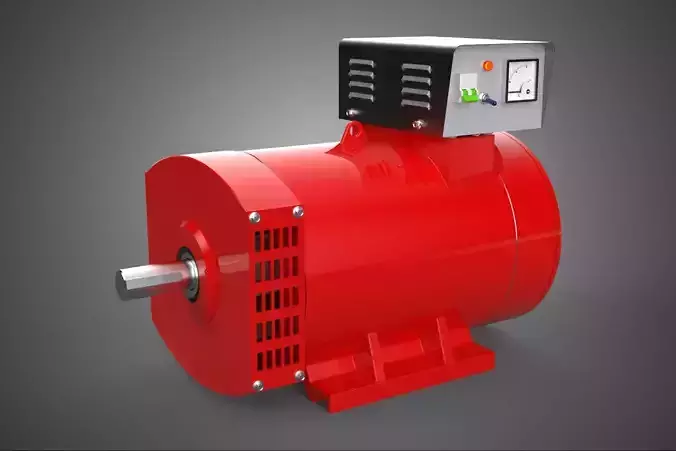
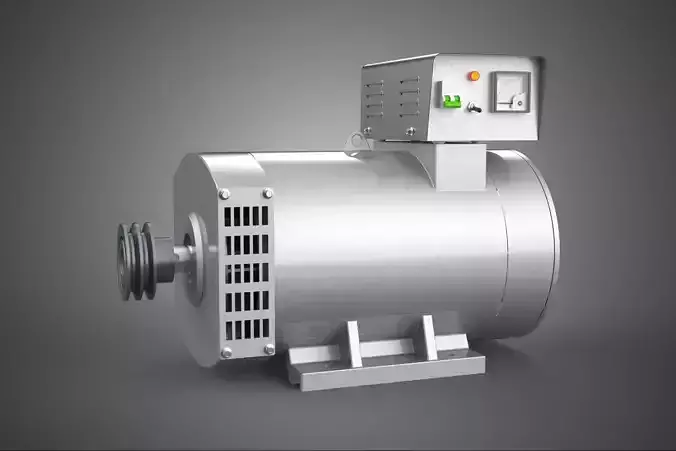
High-quality 3D assets at affordable prices — trusted by designers, engineers, and creators worldwide. Made with care to be versatile, accessible, and ready for your pipeline.
Included File Formats
This model is provided in 14 widely supported formats, ensuring maximum compatibility:
• - FBX (.fbx) – Standard format for most 3D software and pipelines
• - OBJ + MTL (.obj, .mtl) – Wavefront format, widely used and compatible
• - STL (.stl) – Exported mesh geometry; may be suitable for 3D printing with adjustments
• - STEP (.step, .stp) – CAD format using NURBS surfaces
• - IGES (.iges, .igs) – Common format for CAD/CAM and engineering workflows (NURBS)
• - SAT (.sat) – ACIS solid model format (NURBS)
• - DAE (.dae) – Collada format for 3D applications and animations
• - glTF (.glb) – Modern, lightweight format for web, AR, and real-time engines
• - 3DS (.3ds) – Legacy format with broad software support
• - 3ds Max (.max) – Provided for 3ds Max users
• - Blender (.blend) – Provided for Blender users
• - SketchUp (.skp) – Compatible with all SketchUp versions
• - AutoCAD (.dwg) – Suitable for technical and architectural workflows
• - Rhino (.3dm) – Provided for Rhino users
Model Info
• - All files are checked and tested for integrity and correct content
• - Geometry uses real-world scale; model resolution varies depending on the product (high or low poly)
• • - Scene setup and mesh structure may vary depending on model complexity
• - Rendered using Luxion KeyShot
• - Affordable price with professional detailing
Buy with confidence. Quality and compatibility guaranteed.
If you have any questions about the file formats, feel free to send us a message — we're happy to assist you!
Sincerely,
SURF3D
Trusted source for professional and affordable 3D models.
More Information About 3D Model :
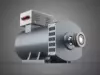
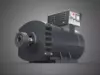
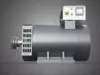
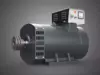
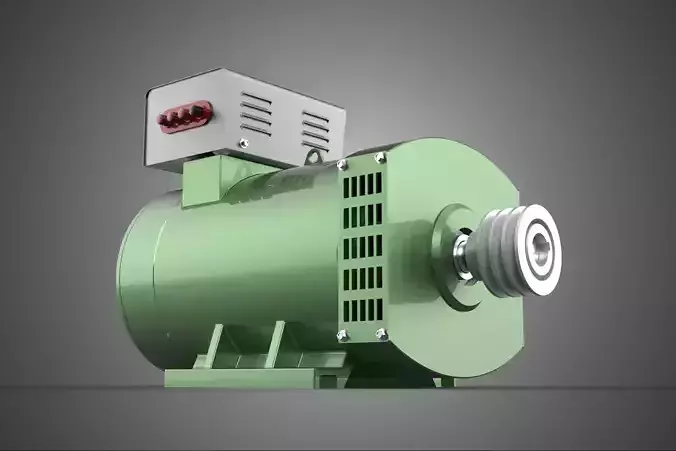
The terminology encompassing Electric Motor, Generator, Alternator, and Dynamo describes the foundational technology of electromechanical energy conversion, central to modern global infrastructure, particularly within the context of Power Plant operations, measured universally in units of Energy and Power (KW). These devices facilitate the reversible transduction between electrical energy and mechanical energy based on fundamental principles of electromagnetism, notably Faraday’s Law of Induction and the Lorentz force.
Principles of Electromechanical Conversion
Rotating electrical machines operate under two primary modes: motoring and generating.
- Electric Motor: A device that converts electrical energy supplied via a circuit into rotational mechanical energy (torque). The operational principle relies on the Lorentz force, where a current-carrying conductor placed within a magnetic field experiences a force orthogonal to both the current direction and the magnetic flux lines. This force is harnessed to produce continuous rotation.
- Electric Generator (or Dynamo): A device that converts mechanical energy (supplied by a prime mover) into electrical energy. The principle is electromagnetic induction: when a conductor moves relative to a magnetic field, an electromotive force (EMF) is induced within the conductor.
Structurally, generators and motors are often identical, with the designation determined solely by the direction of energy flow.
### Differentiation of Generating Devices
While ‘generator’ is the umbrella term for mechanical-to-electrical conversion, specific terms distinguish output type:
- Dynamo: Historically and formally, a dynamo refers specifically to a Direct Current (DC) generator. DC output is achieved through the use of a mechanical rectifier called a commutator, which reverses the connections to the armature windings every half-cycle to ensure unidirectional current output. Though largely superseded by AC systems for grid-scale transmission, dynamos remain vital in specific industrial and vehicular applications requiring DC power.
- Alternator: An alternator is an Alternating Current (AC) generator. It produces sinusoidally varying voltage and current. Alternators utilize slip rings (or a brushless excitation system) rather than a commutator, allowing the output voltage to naturally alternate direction as the rotor spins. Due to the superior efficiency and ease of voltage transformation, alternators are the standard machine used for large-scale power generation and transmission.
- Generator (General): In contemporary usage, particularly in discussions related to power utility, the term generator is frequently used synonymously with alternator due to the overwhelming dominance of AC systems.
### Power Plant Integration
A Power Plant (or generating station) is an industrial facility engineered for the bulk production of electrical energy. In a power plant, massive industrial alternators are coupled to high-capacity mechanical prime movers, such as steam turbines (fossil, nuclear, geothermal), gas turbines, hydraulic turbines (hydroelectric), or wind turbines.
The key role of the power plant is to convert primary energy sources (chemical, thermal, kinetic) into electrical energy suitable for transmission across the electrical grid. Efficiency, stability, synchronization with the grid frequency (typically 50 Hz or 60 Hz), and reliability are paramount concerns in power plant design.
### Energy and Power Measurement
The production and consumption of electricity are quantified using standardized international units:
- Power (P): The rate at which electrical energy is generated or consumed. The standard unit is the watt (W). For utility and industrial scales, power is measured in kilowatts (kW) (1,000 W) or megawatts (MW) (1,000,000 W). Kilowatts specifically denote real power—the useful power that performs work (e.g., drives a motor or lights a bulb).
- Energy (E): The total amount of work done or energy delivered over a period of time. Energy is the time integral of power. The standard unit for billing and consumption tracking is the kilowatt-hour (kWh), representing the energy of 1 kW sustained for one hour.
The overall operational effectiveness of motors, generators, and power plants is measured by their efficiency, defined as the ratio of useful power output to total power input.
KEYWORDS: Electromechanical, Transduction, Alternating Current, Direct Current, Commutator, Armature, Stator, Rotor, Kilowatt, Kilowatt-hour, Power Grid, Prime Mover, Turbine, Efficiency, Synchronous, Induction, Magnetic Field, Faraday's Law, Lorentz Force, Voltage, Frequency, Power Generation, Transmission, Excitation System, Hydroelectric, Thermal Power, Generator Set, Renewable Energy, Slip Ring, Magnetism.