High-quality 3D assets at affordable prices — trusted by designers, engineers, and creators worldwide. Made with care to be versatile, accessible, and ready for your pipeline.
Included File Formats
This model is provided in 14 widely supported formats, ensuring maximum compatibility:
• - FBX (.fbx) – Standard format for most 3D software and pipelines
• - OBJ + MTL (.obj, .mtl) – Wavefront format, widely used and compatible
• - STL (.stl) – Exported mesh geometry; may be suitable for 3D printing with adjustments
• - STEP (.step, .stp) – CAD format using NURBS surfaces
• - IGES (.iges, .igs) – Common format for CAD/CAM and engineering workflows (NURBS)
• - SAT (.sat) – ACIS solid model format (NURBS)
• - DAE (.dae) – Collada format for 3D applications and animations
• - glTF (.glb) – Modern, lightweight format for web, AR, and real-time engines
• - 3DS (.3ds) – Legacy format with broad software support
• - 3ds Max (.max) – Provided for 3ds Max users
• - Blender (.blend) – Provided for Blender users
• - SketchUp (.skp) – Compatible with all SketchUp versions
• - AutoCAD (.dwg) – Suitable for technical and architectural workflows
• - Rhino (.3dm) – Provided for Rhino users
Model Info
• - All files are checked and tested for integrity and correct content
• - Geometry uses real-world scale; model resolution varies depending on the product (high or low poly)
• • - Scene setup and mesh structure may vary depending on model complexity
• - Rendered using Luxion KeyShot
• - Affordable price with professional detailing
Buy with confidence. Quality and compatibility guaranteed.
If you have any questions about the file formats, feel free to send us a message — we're happy to assist you!
Sincerely,
SURF3D
Trusted source for professional and affordable 3D models.
More Information About 3D Model :
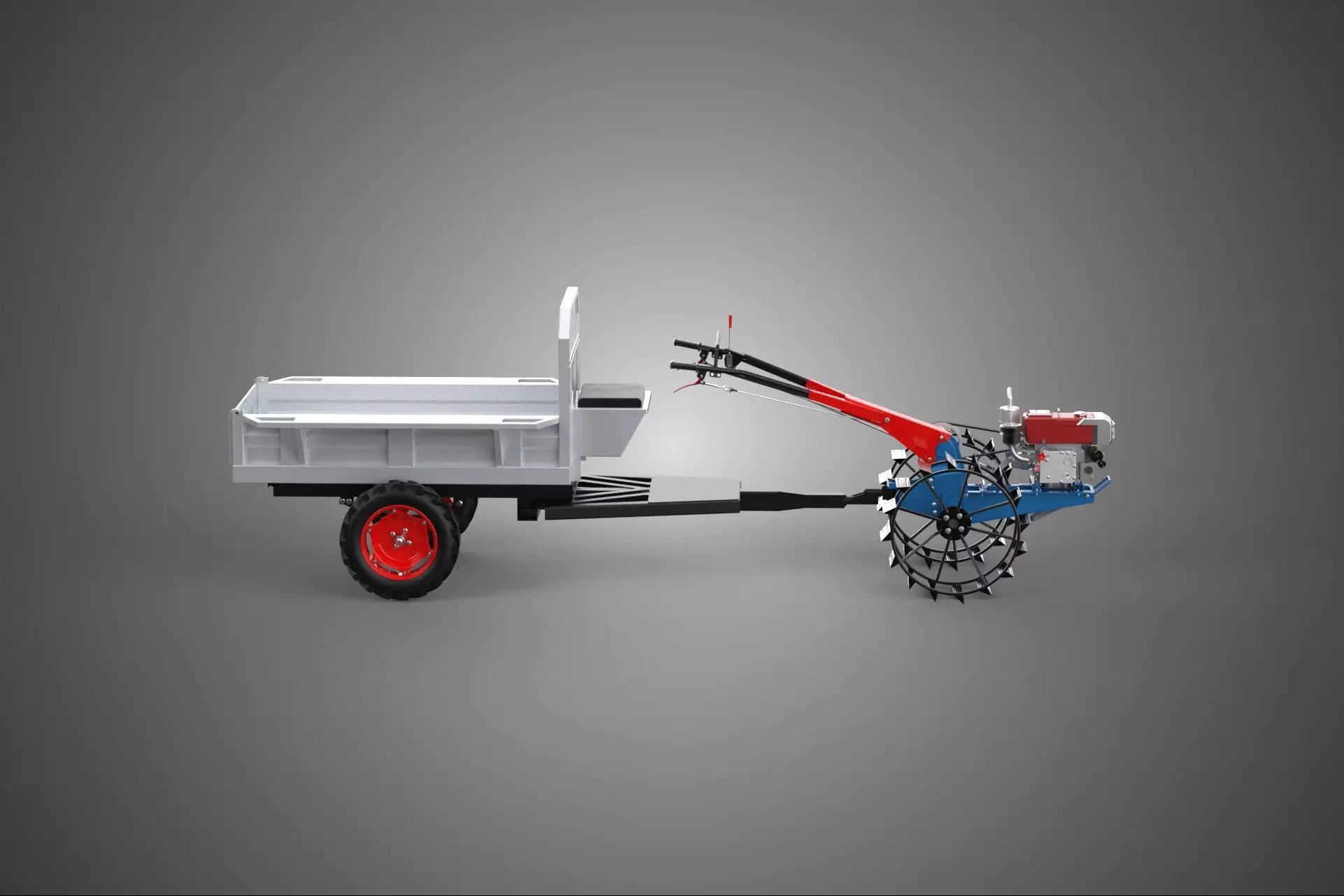
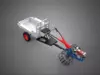
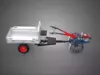
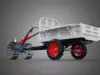
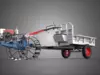
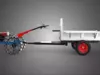
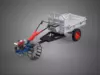
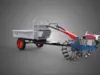
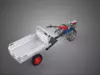
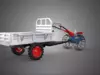
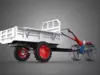
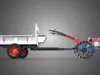
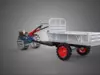
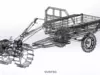
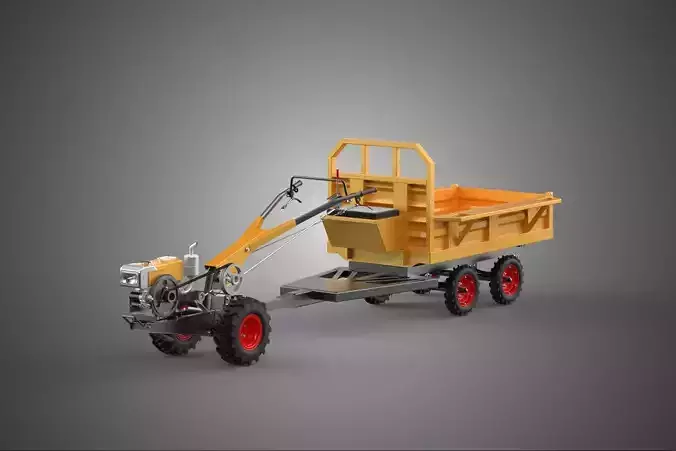
The Agricultural Utility Trailer, commonly referred to as a Farm Haulage Wagon or Farmer’s Hauler, is a heavy-duty, non-motorized chassis designed specifically for the transport of agricultural commodities, inputs, and equipment within rural environments. Functionally, it serves as the critical link between field operations (harvesting, planting) and central storage facilities, distribution points, or processing centers. While fundamentally a trailer, the nomenclature distinguishes these specialized implements from commercial over-the-road semi-trailers, emphasizing their low-speed, high-stress utility and primary use in farm logistics.
Design and Mechanical Characteristics
The structure of the agricultural trailer is optimized for stability and durability across uneven terrain, capable of managing significant dynamic loads.
Towing and Connection: The prime mover for the trailer is almost exclusively a farm tractor, connecting via a robust drawbar mechanism. Light-to-medium-duty trailers often utilize a standard drawpin hitch. However, larger capacity haulers employ specialized connections, such as high-strength ball hitches or pintle hooks, often integrated with hydraulic suspension systems to dampen shocks and improve road handling. The weight of the implement is entirely borne by its own axle system, requiring only tractive effort from the tractor.
Axle and Chassis Configuration: Capacity determines the configuration of the undercarriage. Single-axle designs are common for lower-volume loads, offering maximum maneuverability. Tandem-axle and tri-axle configurations are requisite for high-capacity trailers (e.g., grain carts or large silage wagons), distributing the immense gross vehicle weight (GVW) to minimize ground pressure and improve stability. Many modern heavy-duty trailers feature steerable rear axles, passively actuated by the tractor’s turn angle, to reduce tire scrub and prevent damage when turning in tight field conditions.
Braking Systems: Due to the substantial mass of fully loaded farm trailers—often exceeding 20 metric tons—adequate braking capacity is mandatory for safety, particularly when traversing public rural roadways. Braking systems are typically integrated with the towing tractor’s hydraulics or pneumatics, ensuring synchronized stopping power. Overrun brakes, which activate based on the forward pressure exerted by the trailer on the drawbar, are occasionally utilized on lighter models.
Functional Applications and Variants
Agricultural trailers are categorized by their body type, dictated by the specific material being transported:
- Grain Wagons (Gravity Boxes): Characterized by V-shaped hopper bottoms that rely on gravity for discharge. High-capacity grain carts (often exceeding 1,000 bushels) utilize integrated augers, hydraulically powered by the tractor’s power take-off (PTO) or auxiliary hydraulics, for rapid, controlled unloading into transport trucks or storage bins.
- Silage and Forage Wagons: Extremely large, high-sided volume boxes designed for the low-density, high-bulk transport of chopped forage, hay, and silage. These often feature moving front or rear end-gates, driven by heavy chains or hydraulics, to push the material out swiftly.
- Flatbed Trailers (Bale Wagons): Low-profile platforms used for transporting large rectangular or round bales of hay, pallets, or farm machinery. These frequently use robust, manually secured tie-down systems and often incorporate a four-wheel steering mechanism (wagon steering) where the front axle pivots independently for sharp turning radii.
- Tipping (Dump) Trailers: Equipped with powerful hydraulic rams capable of tilting the entire bed upward to discharge materials like manure, soil, aggregate, root crops, or silage. These are fundamental for efficiently moving materials requiring a fast, vertical off-load.
### Operational Context and Regulations
Agricultural transport is defined by operations that frequently bridge private farmland and public rural road networks. Because farm haulers are often significantly wider and heavier than standard road vehicles, they are subject to specific safety regulations, including stringent requirements for reflective striping, adequate lighting, and regulatory speed limitations (often capped around 40 km/h or less, depending on jurisdiction and tire rating). The utilization of the agricultural utility trailer is foundational to the efficiency and scale of modern mechanized farming operations, permitting the swift accumulation and movement of high-yield harvests.
KEYWORDS: Agriculture, Farm Implement, Utility Trailer, Haulage Wagon, Rural Transport, Tractor Towing, Grain Cart, Silage Wagon, Hydraulic Dump Trailer, Drawbar, Axle Configuration, Farm Logistics, Bulk Material Handling, Non-motorized Vehicle, Harvest Equipment, Agricultural Machinery, Braking System, Tandem Axle, Chassis, Farm Safety, Agricultural Engineering, Bale Wagon, Transport Wagon, Field Operations, Pneumatic Tires, Pintle Hitch, Low-Speed Transport, Rural Vehicle, Farmer, Farm Equipment