High-quality 3D assets at affordable prices — trusted by designers, engineers, and creators worldwide. Made with care to be versatile, accessible, and ready for your pipeline.
Included File Formats
This model is provided in 14 widely supported formats, ensuring maximum compatibility:
• - FBX (.fbx) – Standard format for most 3D software and pipelines
• - OBJ + MTL (.obj, .mtl) – Wavefront format, widely used and compatible
• - STL (.stl) – Exported mesh geometry; may be suitable for 3D printing with adjustments
• - STEP (.step, .stp) – CAD format using NURBS surfaces
• - IGES (.iges, .igs) – Common format for CAD/CAM and engineering workflows (NURBS)
• - SAT (.sat) – ACIS solid model format (NURBS)
• - DAE (.dae) – Collada format for 3D applications and animations
• - glTF (.glb) – Modern, lightweight format for web, AR, and real-time engines
• - 3DS (.3ds) – Legacy format with broad software support
• - 3ds Max (.max) – Provided for 3ds Max users
• - Blender (.blend) – Provided for Blender users
• - SketchUp (.skp) – Compatible with all SketchUp versions
• - AutoCAD (.dwg) – Suitable for technical and architectural workflows
• - Rhino (.3dm) – Provided for Rhino users
Model Info
• - All files are checked and tested for integrity and correct content
• - Geometry uses real-world scale; model resolution varies depending on the product (high or low poly)
• • - Scene setup and mesh structure may vary depending on model complexity
• - Rendered using Luxion KeyShot
• - Affordable price with professional detailing
Buy with confidence. Quality and compatibility guaranteed.
If you have any questions about the file formats, feel free to send us a message — we're happy to assist you!
Sincerely,
SURF3D
Trusted source for professional and affordable 3D models.
More Information About 3D Model :
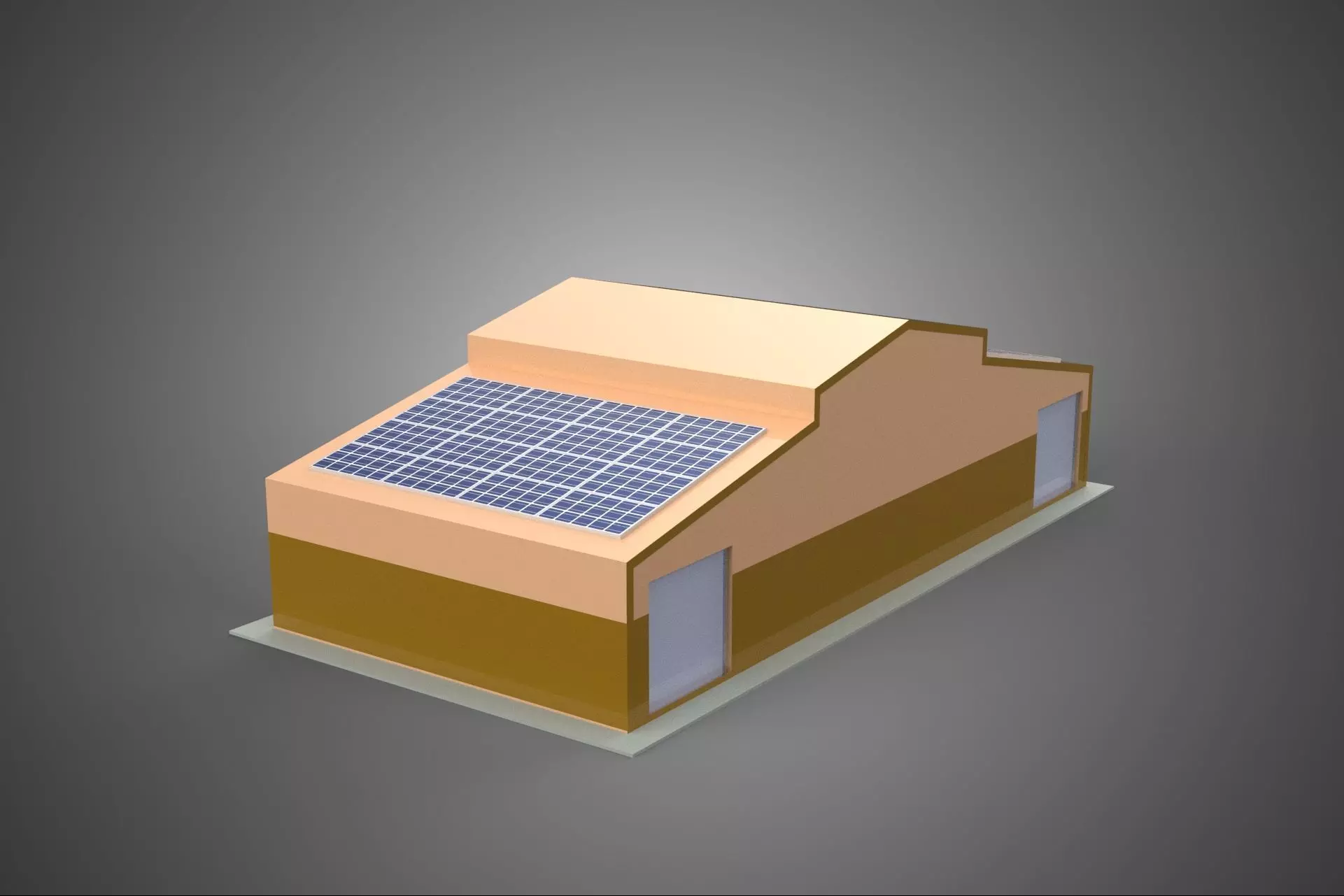
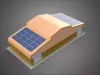
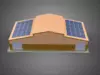
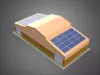
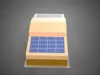
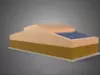
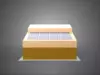
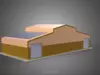
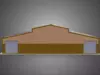
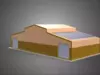
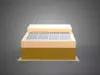
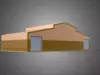
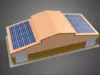
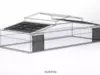
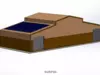
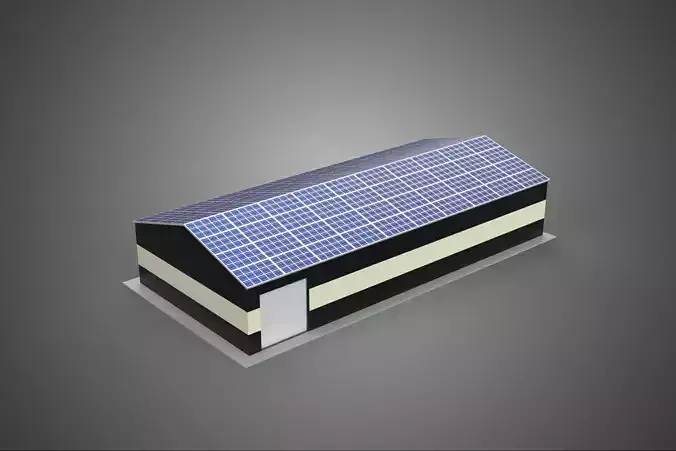
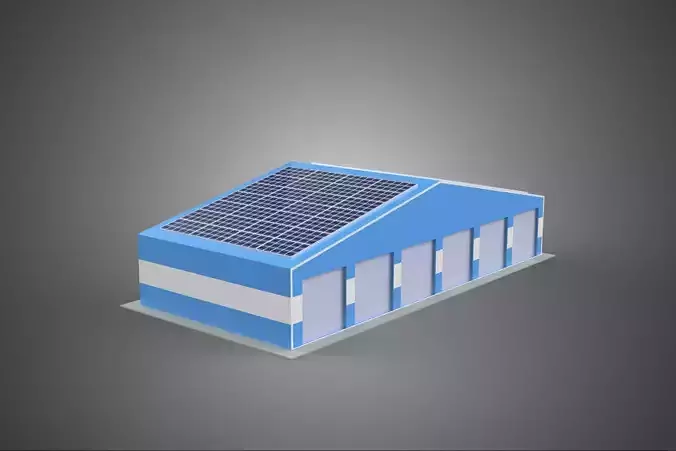
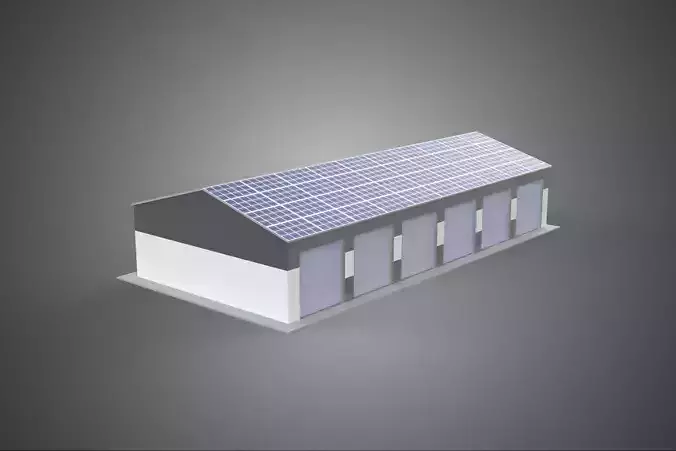
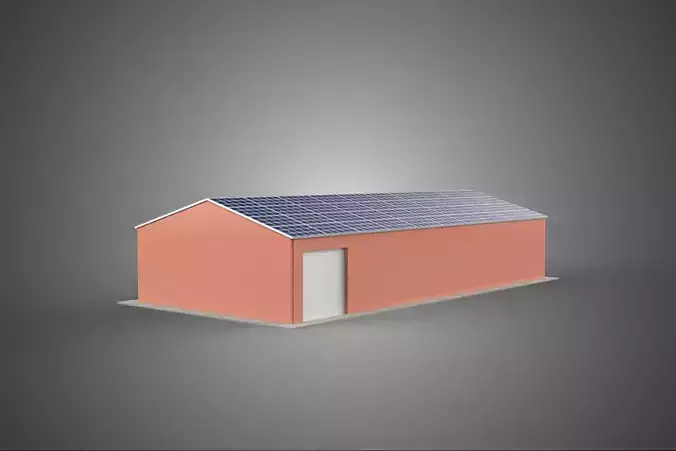
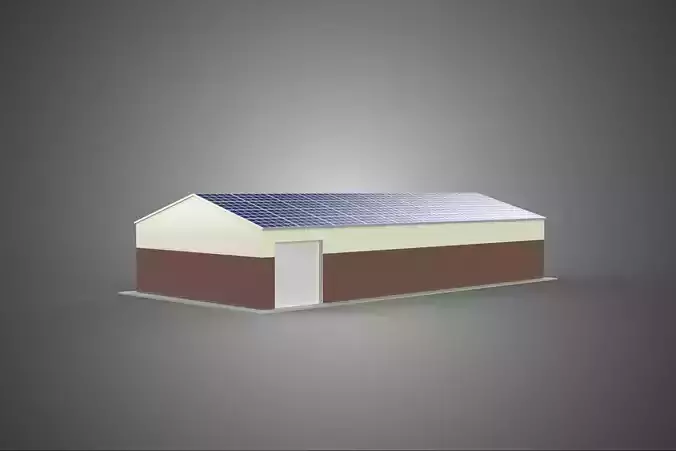
ROOFTOP SOLAR PANEL POWER SHED WAREHOUSE STOREHOUSE DEPOT BARN
The integration of photovoltaic (PV) energy generation assets onto the expansive roof surfaces of commercial, industrial, and agricultural storage infrastructure—including warehouses, storehouses, depots, sheds, and barns—constitutes a critical element of modern distributed energy resource (DER) deployment. This concept, often categorized within the Commercial and Industrial (C&I) solar sector, leverages existing, non-productive architectural space to generate utility-scale or microgrid electricity, typically achieving high energy efficiency and significantly reducing the Levelized Cost of Energy (LCOE) for the facility operator.
Nomenclature and Scope
The broad designation encompasses varied structural types defined by their function:
- Commercial/Industrial (C&I) Facilities (Warehouse, Storehouse, Depot): These structures are characterized by large footprints, minimal roof obstructions (such as vents or HVAC units common on conventional office buildings), and often feature flat or low-sloped roofs (e.g., membrane, standing-seam metal). These facilities often have significant, concentrated daytime electricity demand related to logistics, refrigeration, or processing, making them ideal candidates for high self-consumption rates. System capacities frequently range from 100 kW to multiple megawatts (MW).
- Agricultural Structures (Barn, Shed): Often slightly smaller in scale, these applications are crucial for Agri-PV initiatives. They contribute to farm energy independence, powering irrigation, climate control, and mechanized processes. The integration must often accommodate the specific ventilation needs of livestock or crop storage.
### Technical and Structural Considerations
Rooftop PV systems deployed on these structures necessitate specialized engineering to address structural loads and roof integrity.
System Architecture: The majority of installations are grid-tied systems, exporting surplus electricity under various regulatory frameworks, such as net metering or feed-in tariffs (FITs). Components include high-efficiency crystalline silicon modules, string or central inverters for DC-to-AC conversion, and monitoring equipment. Battery Energy Storage Systems (BESS) are increasingly co-located to enhance resiliency, manage peak demand charges, and increase self-consumption.
Mounting Systems: Selection of the mounting system is contingent upon the roof material and structural capacity:
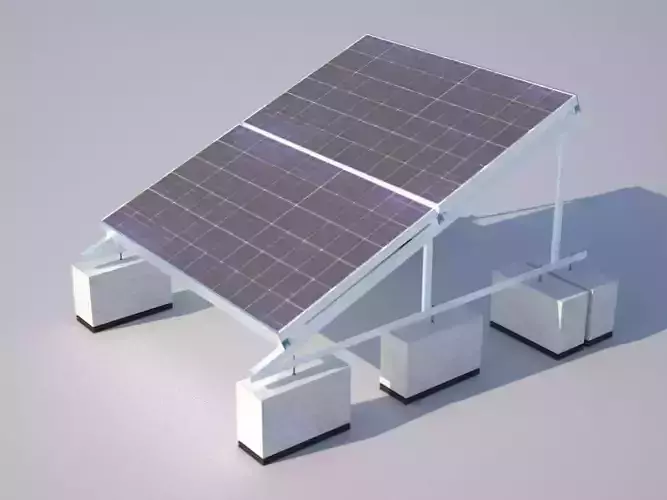
- Ballasted Systems: Predominantly used on flat membrane or gravel roofs. These utilize concrete blocks or similar weighted anchors to secure the array, minimizing penetrations and preserving roof warranty, but requiring rigorous assessment of the maximum dead load capacity.
- Penetrating Systems: Used on metal or shingle roofs where direct fastening to purlins or trusses is required. These systems require careful sealing to prevent water ingress.
- Clamped Systems: Employed specifically on standing-seam metal roofs, utilizing non-penetrating clamps that grip the seams, offering rapid deployment and high resistance to shear forces.
A key challenge is the determination of permissible structural loads, accounting for dynamic factors such as wind uplift and snow load, which can influence module tilt angles and array layout.
### Economic and Environmental Significance
Rooftop solar integration on storage infrastructure provides significant financial and strategic advantages. Economically, it transforms a passive structural asset into a productive generating asset, reducing operational expenditures through reduced utility bills and providing a hedge against volatile energy prices. Operationally, these facilities contribute to energy resilience and power quality by serving as Decentralized Energy Resources (DERs), reducing transmission losses inherent in centralized generation. Environmentally, the utilization of existing roof space avoids the consumption of valuable greenfield land, a primary criticism leveled against utility-scale ground-mounted solar farms. Furthermore, these projects help large corporations achieve Environmental, Social, and Governance (ESG) compliance and decarbonization targets.
KEYWORDS: Commercial Solar, Industrial Roof, Photovoltaic (PV), Distributed Generation, Warehouse, Storehouse, Depot, Barn, Grid-Tied System, Self-Consumption, Net Metering, Structural Load, Renewable Energy, Logistics Center, ESG Compliance, Energy Resilience, System Integration, Inverter Technology, Ballasted Array, Mounting System, Decarbonization, Agri-PV, LCOE, Power Purchase Agreement (PPA), Battery Energy Storage System (BESS), Solar Infrastructure, Roof Warranty, Utility Interconnection, Load Calculation, Renewable Asset.