High-quality 3D assets at affordable prices — trusted by designers, engineers, and creators worldwide. Made with care to be versatile, accessible, and ready for your pipeline.
Included File Formats
This model is provided in 14 widely supported formats, ensuring maximum compatibility:
• - FBX (.fbx) – Standard format for most 3D software and pipelines
• - OBJ + MTL (.obj, .mtl) – Wavefront format, widely used and compatible
• - STL (.stl) – Exported mesh geometry; may be suitable for 3D printing with adjustments
• - STEP (.step, .stp) – CAD format using NURBS surfaces
• - IGES (.iges, .igs) – Common format for CAD/CAM and engineering workflows (NURBS)
• - SAT (.sat) – ACIS solid model format (NURBS)
• - DAE (.dae) – Collada format for 3D applications and animations
• - glTF (.glb) – Modern, lightweight format for web, AR, and real-time engines
• - 3DS (.3ds) – Legacy format with broad software support
• - 3ds Max (.max) – Provided for 3ds Max users
• - Blender (.blend) – Provided for Blender users
• - SketchUp (.skp) – Compatible with all SketchUp versions
• - AutoCAD (.dwg) – Suitable for technical and architectural workflows
• - Rhino (.3dm) – Provided for Rhino users
Model Info
• - All files are checked and tested for integrity and correct content
• - Geometry uses real-world scale; model resolution varies depending on the product (high or low poly)
• • - Scene setup and mesh structure may vary depending on model complexity
• - Rendered using Luxion KeyShot
• - Affordable price with professional detailing
Buy with confidence. Quality and compatibility guaranteed.
If you have any questions about the file formats, feel free to send us a message — we're happy to assist you!
Sincerely,
SURF3D
Trusted source for professional and affordable 3D models.
More Information About 3D Model :
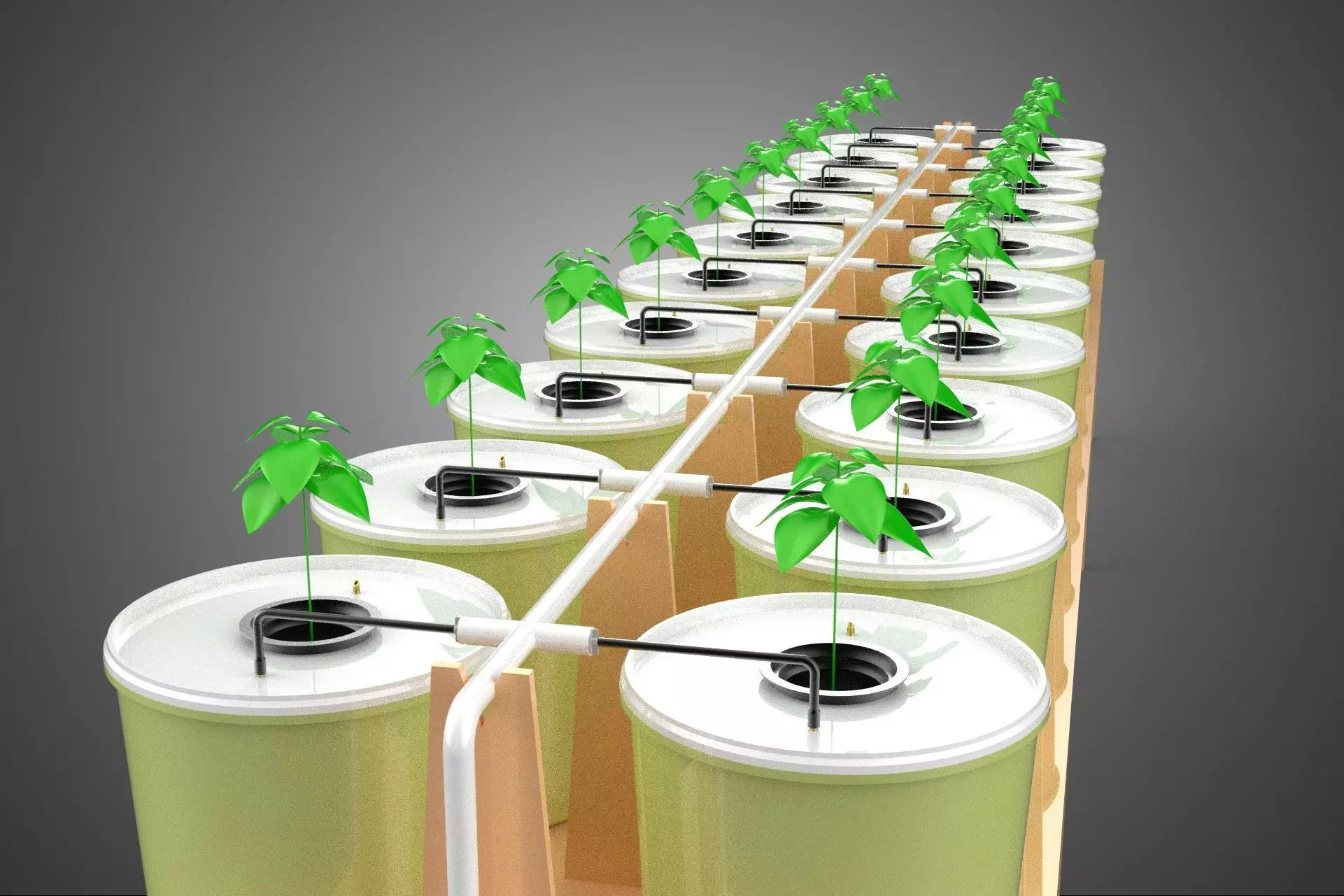
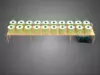
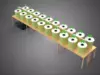
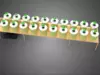
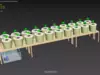
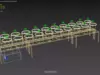
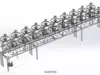
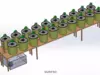
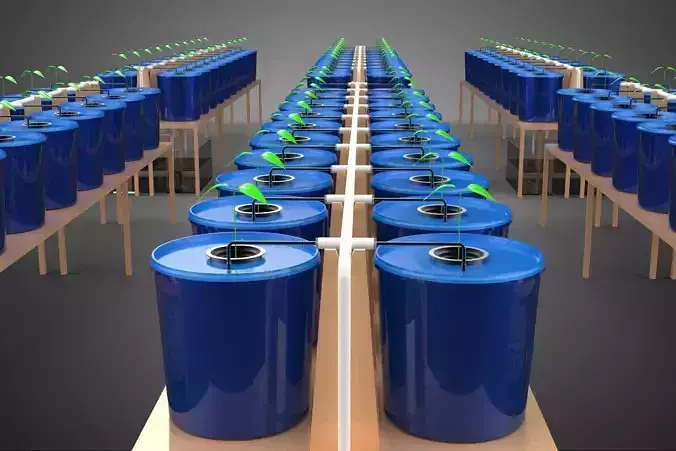
The Dutch Bucket System, formally known as the Bato Bucket System, is an advanced, recirculating drip-irrigation hydroponic technique extensively utilized for the cultivation of large, vining crops such as tomatoes, cucumbers, peppers, eggplants, melons, and certain berry varieties (e.g., strawberries, cane fruits). This method facilitates high-density, controlled environment agriculture (CEA) and is a commercially viable solution for year-round, intensive vegetable and fruit production.
Principles of Operation
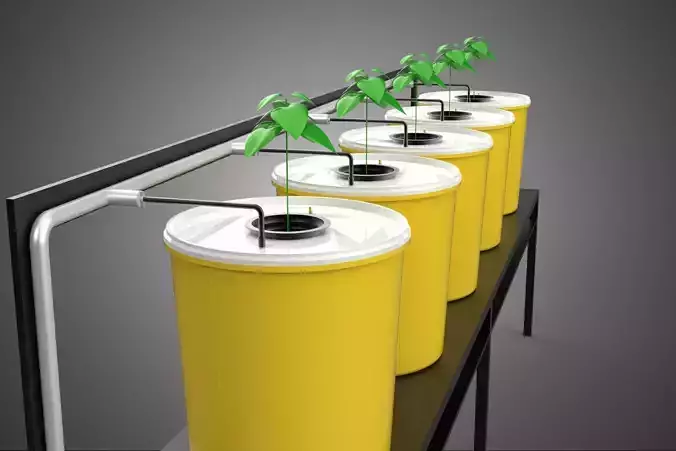
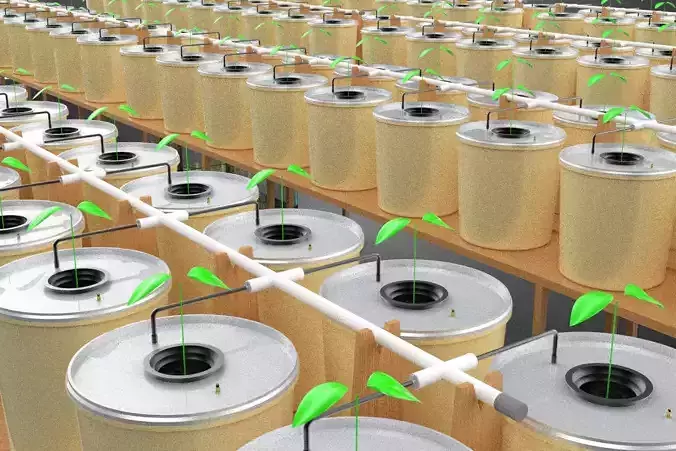
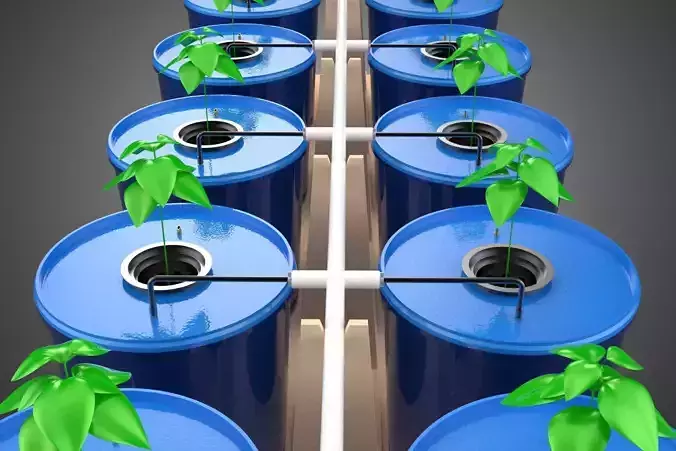
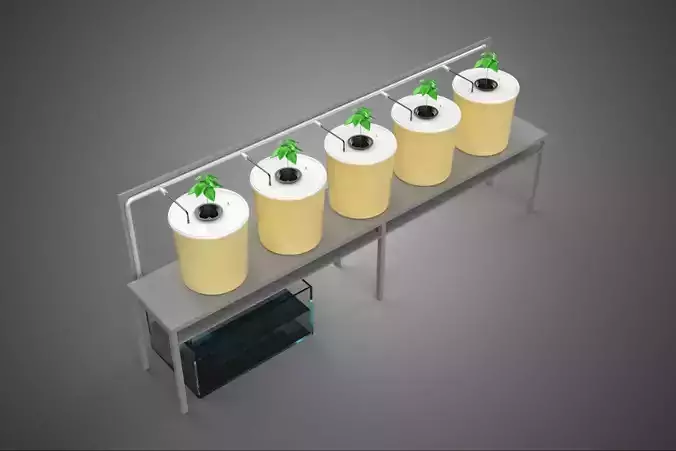
The Dutch Bucket system operates on a closed-loop principle, maximizing water and nutrient efficiency. It consists of individual containers (the Bato Buckets), typically constructed from UV-resistant plastic, which are connected via a shared drain line (return manifold) and a pressurized nutrient delivery line.
- Buckets and Substrate: Each bucket typically holds 10 to 12 liters of inert growing medium, such as perlite, vermiculite, coco coir, rockwool cubes, or expanded clay pebbles (hydroton). The substrate provides mechanical support for the plant roots and maintains adequate aeration, though it contributes minimally to the plant's nutrient uptake, which is primarily derived from the nutrient solution.
- Nutrient Delivery: A submersible pump draws a complete, balanced nutrient solution from a central reservoir. This solution is delivered to the individual buckets via the pressurized drip line and small emitter stakes positioned at the base of each plant. The irrigation schedule is controlled by a timer, allowing for precise delivery tailored to the plant’s developmental stage, environmental conditions (temperature, humidity, light intensity), and evapotranspiration rates.
- Recirculation and Drainage: The crucial differentiating feature of the Bato Bucket system is its efficient drainage mechanism. Each bucket has a siphon elbow or a drain fitting positioned a few centimeters above the bottom. This design maintains a shallow reservoir of nutrient solution within the base of the bucket, preventing the growing medium from fully drying out and promoting oxygen exchange in the root zone. Excess nutrient solution, after percolating through the substrate and bathing the roots, exits the bucket through the siphon elbow and flows via gravity into the common drain line. This drain line returns the effluent solution directly back to the central reservoir for replenishment, pH adjustment, and eventual recirculation.
### Horticultural Advantages
The adoption of the Dutch Bucket system offers several significant advantages in controlled agricultural environments:
- Precision Nutrient Management: The recirculating nature allows for continuous monitoring and adjustment of the nutrient solution’s electrical conductivity (EC) and pH, ensuring optimal nutrient availability and uptake, which is critical for maximizing yield and quality.
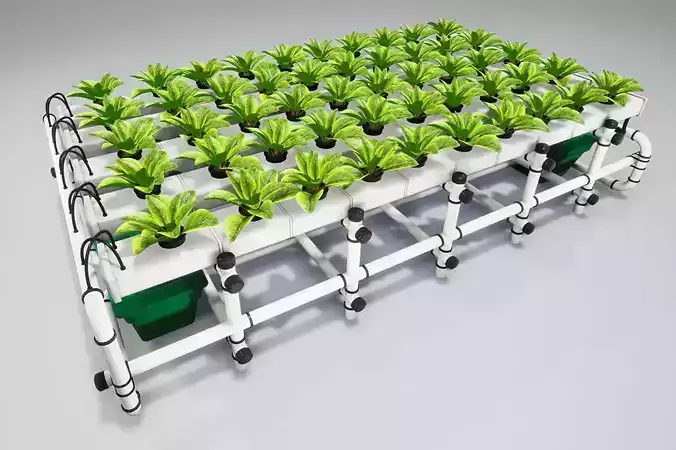
- Disease Isolation: Because plants are grown in separate, modular buckets, localized root diseases (such as Pythium or Fusarium) are less likely to spread rapidly throughout the entire cultivation area compared to deep water culture (DWC) or nutrient film technique (NFT) systems.
- Crop Flexibility: The modular design permits the cultivation of different plant species or varieties with distinct nutrient requirements within the same physical installation by grouping buckets with separate nutrient lines, though typically it is optimized for high-demand, large fruiting crops.
- Water and Resource Conservation: By recycling the nutrient solution, the system drastically reduces water consumption and nutrient waste compared to traditional soil cultivation or non-recirculating (run-to-waste) hydroponic methods.
### Applications and Scale
The Bato Bucket system is highly scalable, ranging from small-scale educational or hobbyist setups to vast, multi-acre commercial greenhouses operating under sophisticated environmental control (e.g., HVAC, supplemental lighting, CO2 injection). It is particularly effective in regions where water scarcity is a concern or where soil quality is poor or compromised. The system’s robustness and ability to support heavy, productive plants make it a staple in advanced hydroponic fruit and vegetable farming globally.
KEYWORDS: Hydroponics, Bato Bucket, Dutch Bucket System, Recirculating Hydroponics, Controlled Environment Agriculture, Drip Irrigation, Soilless Cultivation, CEA, Commercial Hydroponics, Vegetable Farming, Fruit Cultivation, Greenhouse Technology, Perlite, Coco Coir, Nutrient Film Technique, Deep Water Culture, Substrate Hydroponics, Closed-Loop System, Precision Agriculture, Vining Crops, Tomatoes, Cucumbers, Peppers, Nutrient Solution, EC Monitoring, pH Adjustment, Water Efficiency, Modular Farming, High-Yield Farming, Environmental Control.