High-quality 3D assets at affordable prices — trusted by designers, engineers, and creators worldwide. Made with care to be versatile, accessible, and ready for your pipeline.
Included File Formats
This model is provided in 14 widely supported formats, ensuring maximum compatibility:
• - FBX (.fbx) – Standard format for most 3D software and pipelines
• - OBJ + MTL (.obj, .mtl) – Wavefront format, widely used and compatible
• - STL (.stl) – Exported mesh geometry; may be suitable for 3D printing with adjustments
• - STEP (.step, .stp) – CAD format using NURBS surfaces
• - IGES (.iges, .igs) – Common format for CAD/CAM and engineering workflows (NURBS)
• - SAT (.sat) – ACIS solid model format (NURBS)
• - DAE (.dae) – Collada format for 3D applications and animations
• - glTF (.glb) – Modern, lightweight format for web, AR, and real-time engines
• - 3DS (.3ds) – Legacy format with broad software support
• - 3ds Max (.max) – Provided for 3ds Max users
• - Blender (.blend) – Provided for Blender users
• - SketchUp (.skp) – Compatible with all SketchUp versions
• - AutoCAD (.dwg) – Suitable for technical and architectural workflows
• - Rhino (.3dm) – Provided for Rhino users
Model Info
• - All files are checked and tested for integrity and correct content
• - Geometry uses real-world scale; model resolution varies depending on the product (high or low poly)
• • - Scene setup and mesh structure may vary depending on model complexity
• - Rendered using Luxion KeyShot
• - Affordable price with professional detailing
Buy with confidence. Quality and compatibility guaranteed.
If you have any questions about the file formats, feel free to send us a message — we're happy to assist you!
Sincerely,
SURF3D
Trusted source for professional and affordable 3D models.
More Information About 3D Model :
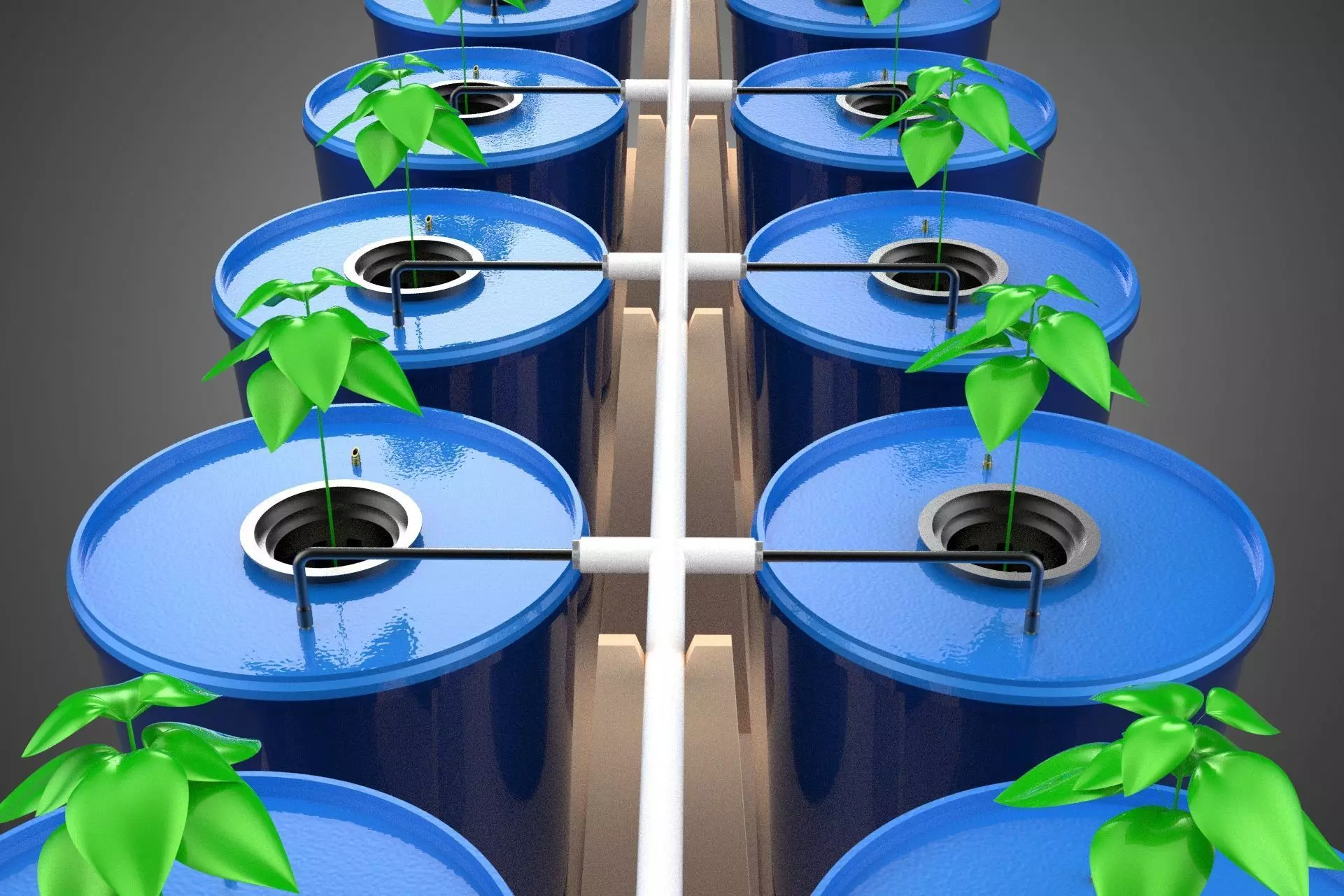
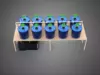
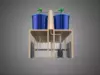
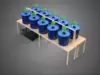
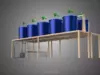
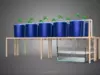
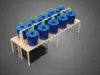
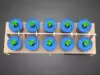
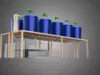
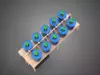
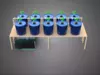
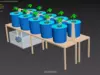
Bato Cultivation: Inert Substrate Hydroponics for Controlled Environment Agriculture
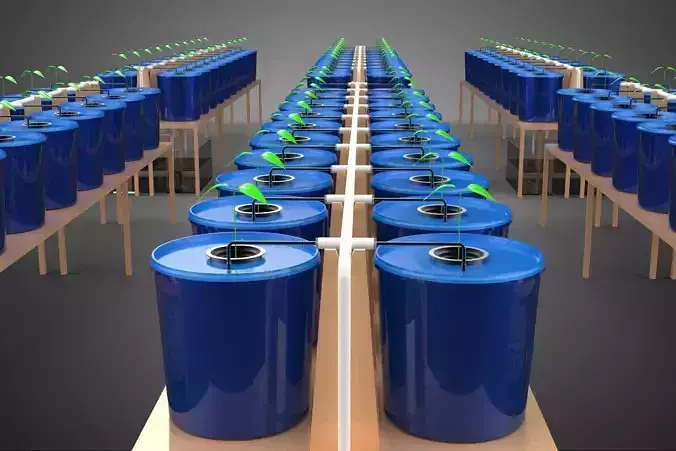
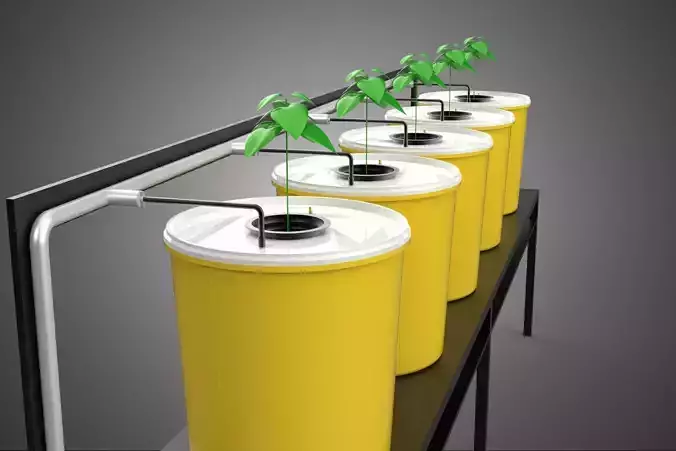
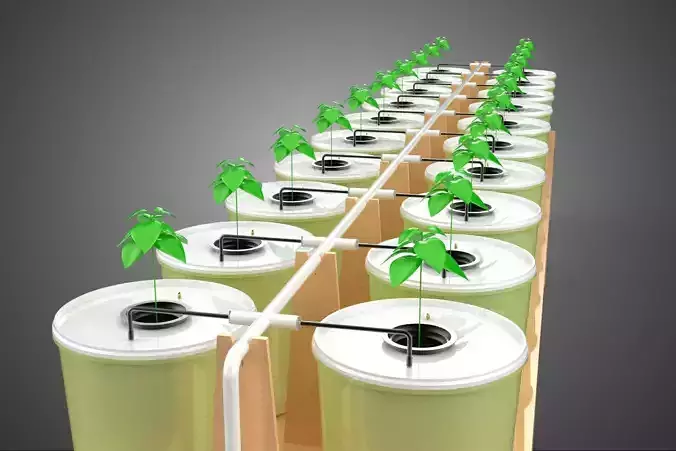
Bato cultivation, often referred to as Bato culture, denotes a specific methodology within controlled environment agriculture (CEA) utilizing inert, granular mineral substrates for the soilless production of fruits, vegetables, and ornamental plants. This system is a subtype of hydroponics, characterized by the use of solid media, typically comprised of expanded clay aggregates (ECA), porous rockwool cubes, or other chemically neutral, high-porosity materials, collectively termed bato (a term often localized to mean ‘rock’ or ‘aggregate’ when used in this horticultural context). It facilitates the growth of crops in commercial farm settings and intensive home garden environments, providing physical support while ensuring optimal aeration and moisture management for the root system.
Nomenclature and Medium Characteristics
The core component of Bato cultivation is the inert growth medium. In industrialized operations, this substrate commonly consists of Light Expanded Clay Aggregate (LECA), frequently marketed under proprietary names like Hydroton. These clay balls are formed by heating natural clay to extreme temperatures, causing them to expand into lightweight, porous spheres. Key characteristics of these media include:
- Chemical Inertness: The media do not break down chemically, ensuring they do not contribute unwanted pH fluctuations or mineral imbalances to the nutrient solution.
- High Porosity and Aeration: The granular structure provides excellent drainage and maintains high levels of oxygen within the root zone, crucial for preventing anaerobic conditions and root diseases.
- Reusability: The substrate can often be sterilized and reused for multiple crop cycles, contributing to the system's sustainability.
- Capillary Action: While inert, the surface texture retains a thin film of moisture, providing a stable environment for nutrient uptake.
System Mechanism and Operation
Bato cultivation is generally implemented using two primary hydroponic configurations: drip-to-waste (open system) or recirculation (closed system).
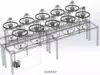
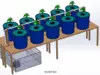
In the open system, the plants are grown in individual containers, troughs, or long bags filled with the bato substrate. A meticulously formulated nutrient solution (fertigation) is delivered to the base of each plant via drip emitters at scheduled intervals. Excess solution is collected beneath the containers and discarded or treated, preventing the buildup of salts and ensuring precise control over the root environment for each feeding cycle.
In the closed system, the nutrient solution that drains from the substrate is filtered, pH and nutrient levels are adjusted, and the solution is recirculated back to the reservoir for subsequent feedings. This method maximizes water and nutrient use efficiency but requires rigorous monitoring to mitigate the risk of pathogen spread.
Bato systems are highly effective for large, high-value fruiting vegetables, such as tomatoes, bell peppers, cucumbers, and strawberries, which require substantial root support that techniques like Nutrient Film Technique (NFT) or Deep Water Culture (DWC) often cannot provide adequately without auxiliary supports.
Advantages in Production Agriculture
The integration of Bato culture into modern farming practices offers several distinct advantages aligned with precision agriculture:
- Water Efficiency: Recirculating systems significantly reduce water consumption compared to traditional soil farming.
- Disease Management: Since the substrate is inert and sterile, the risk of soil-borne pathogens (e.g., Fusarium, Verticillium) is virtually eliminated.
- Nutrient Control: The inert nature of the medium allows growers absolute control over the ratio, concentration, and pH of the mineral nutrients delivered to the plant, facilitating crop-specific nutrient scheduling tailored to different growth stages.
- Yield Consistency: Stable environmental parameters in the root zone translate to predictable growth rates and higher, more consistent yields per unit area.
Bato cultivation remains a cornerstone of large-scale commercial hydroponic farms globally, balancing the efficiency of soilless culture with the necessary physical stability for crops requiring substantial root anchorage.
KEYWORDS: Hydroponics, Bato Culture, Inert Substrate, Expanded Clay Aggregate, LECA, Controlled Environment Agriculture, CEA, Soilless Cultivation, Fertigation, Precision Agriculture, Commercial Farming, Vegetable Cultivation, Fruit Production, Tomato, Bell Pepper, Strawberry, Root Zone Management, Nutrient Solution, Recirculating Hydroponics, Drip Irrigation, Aggregate Culture, Rockwool Alternative, Porous Medium, Aeroponics, Greenhouse Technology, Substrate Hydroponics, Root Aeration, Crop Yield, Water Efficiency, High-Value Crops.