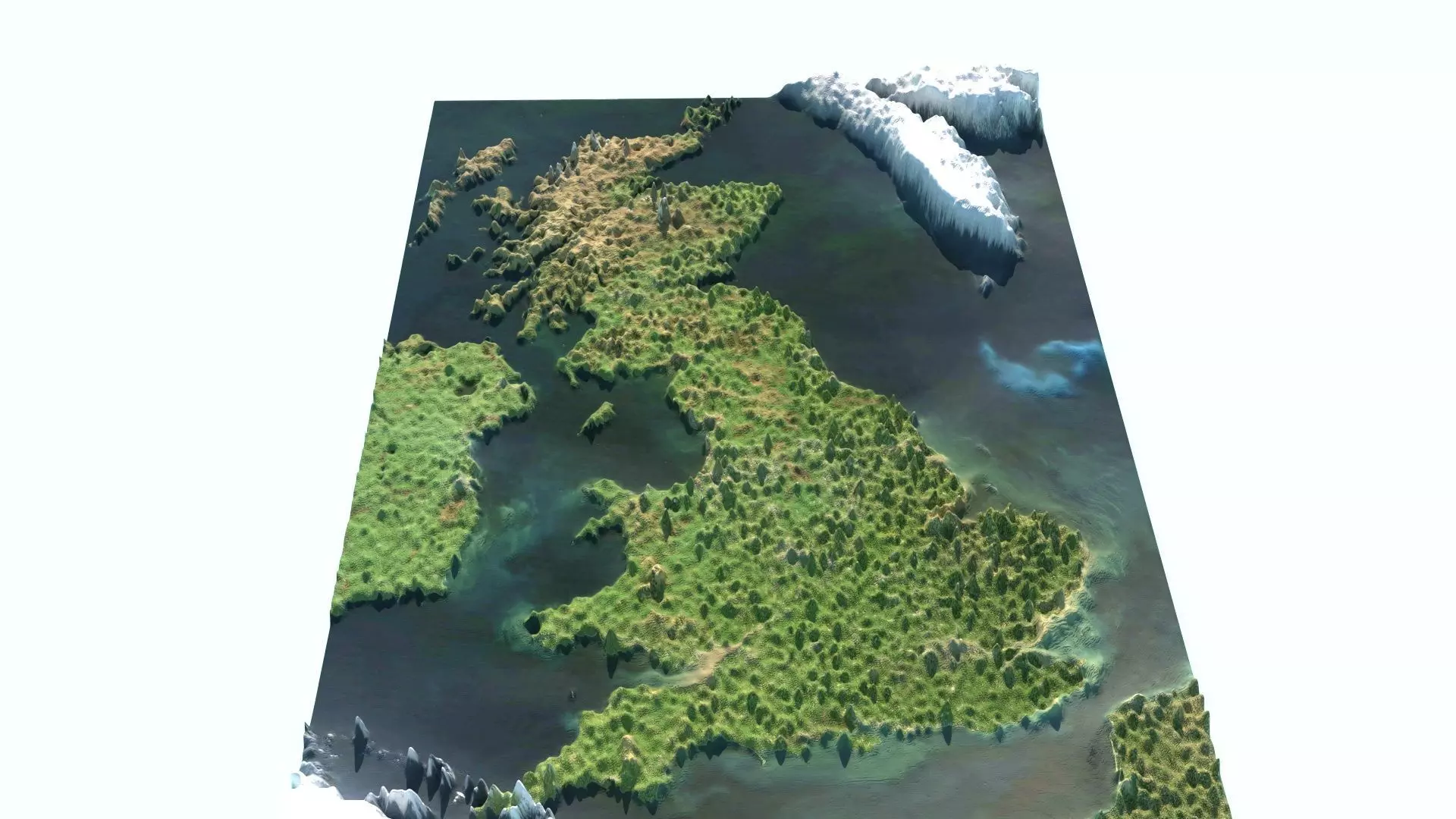
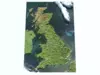
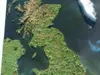
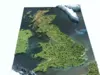
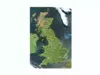
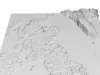
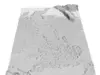
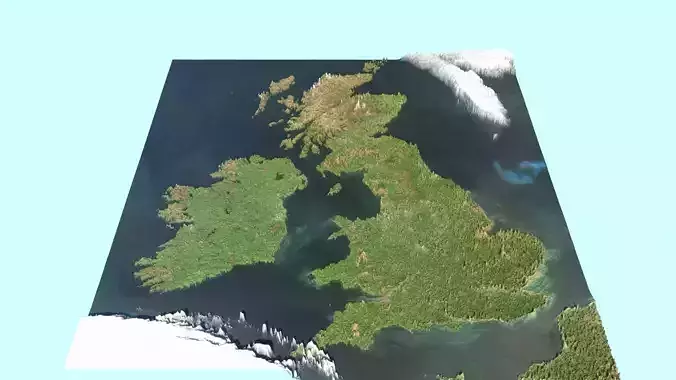
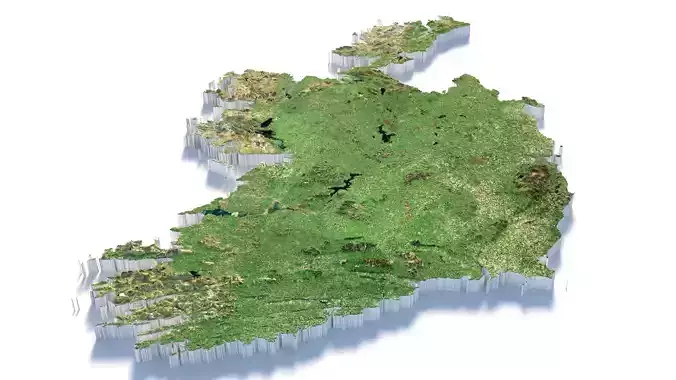
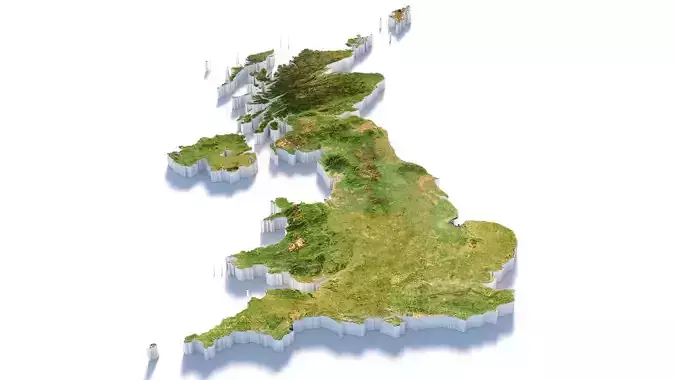
DesctiptionGreat Britain is an island in the North Atlantic Ocean off the north-west coast of continental Europe, consisting of the countries England, Scotland and Wales. With an area of 209,331 km2 (80,823 sq mi), it is the largest of the British Isles, the largest European island, and the ninth-largest island in the world. It is dominated by a maritime climate with narrow temperature differences between seasons. The island of Ireland, with an area 40 per cent that of Great Britain, is to the west – these islands, along with over 1,000 smaller surrounding islands and named substantial rocks, comprise the British Isles archipelago. Connected to mainland Europe until 9,000 years ago by a land bridge now known as Doggerland, Great Britain has been inhabited by modern humans for around 30,000 years. In 2011, it had a population of about 61 million, making it the world's third-most-populous island after Honshu in Japan and Java in Indonesia and the most populated island outside of Asia. The term Great Britain can also refer to the political territory of England, Scotland and Wales, which includes their offshore islands. This territory, together with Northern Ireland, constitutes the United Kingdom.
TerminologyThe archipelago has been referred to by a single name for over 2000 years: the term 'British Isles' derives from terms used by classical geographers to describe this island group. By 50 BC, Greek geographers were using equivalents of Prettanikē as a collective name for the British Isles. However, with the Roman conquest of Britain, the Latin term Britannia was used for the island of Great Britain, and later Roman-occupied Britain south of Caledonia. The earliest known name for Great Britain is Albion (Greek: Ἀλβιών) or insula Albionum, from either the Latin albus meaning white (possibly referring to the white cliffs of Dover, the first view of Britain from the continent) or the island of the Albiones. The oldest mention of terms related to Great Britain was by Aristotle (384–322 BC), or possibly by Pseudo-Aristotle, in his text On the Universe, Vol. III. To quote his works, There are two very large islands in it, called the British Isles, Albion and Ierne. The first known written use of the word Britain was an ancient Greek transliteration of the original Proto-Celtic term in a work on the travels and discoveries of Pytheas that has not survived. The earliest existing records of the word are quotations of the periplus by later authors, such as those within Strabo's Geographica, Pliny's Natural History and Diodorus of Sicily's Bibliotheca historica. Pliny the Elder (AD 23–79) in his Natural History records of Great Britain: Its former name was Albion; but at a later period, all the islands, of which we shall just now briefly make mention, were included under the name of 'Britanniæ.' The name Britain descends from the Latin name for Britain, Britannia or Brittānia, the land of the Britons. Old French Bretaigne (whence also Modern French Bretagne) and Middle English Bretayne, Breteyne. The French form replaced the Old English Breoton, Breoten, Bryten, Breten (also Breoton-lond, Breten-lond). Britannia was used by the Romans from the 1st century BC for the British Isles taken together. It is derived from the travel writings of Pytheas around 320 BC, which described various islands in the North Atlantic as far north as Thule (probably Norway). The peoples of these islands of Prettanike were called the Πρεττανοί, Priteni or Pretani. Priteni is the source of the Welsh language term Prydain, Britain, which has the same source as the Goidelic term Cruithne used to refer to the early Brythonic-speaking inhabitants of Ireland. The latter were later called Picts or Caledonians by the Romans. Greek historians Diodorus of Sicily and Strabo preserved variants of Prettanike from the work of Greek explorer Pytheas of Massalia, who travelled from his home in Hellenistic southern Gaul to Britain in the 4th century BC. The term used by Pytheas may derive from a Celtic word meaning the painted ones or the tattooed folk in reference to body decorations.According to Strabo, Pytheas referred to Britain as Bretannikē, which is treated a feminine noun. Marcian of Heraclea, in his Periplus maris exteri, described the island group as αἱ Πρεττανικαὶ νῆσοι (the Prettanic Isles).
Texture Resolution: 2671 x 4291