High-quality 3D assets at affordable prices — trusted by designers, engineers, and creators worldwide. Made with care to be versatile, accessible, and ready for your pipeline.
Included File Formats
This model is provided in 14 widely supported formats, ensuring maximum compatibility:
• - FBX (.fbx) – Standard format for most 3D software and pipelines
• - OBJ + MTL (.obj, .mtl) – Wavefront format, widely used and compatible
• - STL (.stl) – Exported mesh geometry; may be suitable for 3D printing with adjustments
• - STEP (.step, .stp) – CAD format using NURBS surfaces
• - IGES (.iges, .igs) – Common format for CAD/CAM and engineering workflows (NURBS)
• - SAT (.sat) – ACIS solid model format (NURBS)
• - DAE (.dae) – Collada format for 3D applications and animations
• - glTF (.glb) – Modern, lightweight format for web, AR, and real-time engines
• - 3DS (.3ds) – Legacy format with broad software support
• - 3ds Max (.max) – Provided for 3ds Max users
• - Blender (.blend) – Provided for Blender users
• - SketchUp (.skp) – Compatible with all SketchUp versions
• - AutoCAD (.dwg) – Suitable for technical and architectural workflows
• - Rhino (.3dm) – Provided for Rhino users
Model Info
• - All files are checked and tested for integrity and correct content
• - Geometry uses real-world scale; model resolution varies depending on the product (high or low poly)
• • - Scene setup and mesh structure may vary depending on model complexity
• - Rendered using Luxion KeyShot
• - Affordable price with professional detailing
Buy with confidence. Quality and compatibility guaranteed.
If you have any questions about the file formats, feel free to send us a message — we're happy to assist you!
Sincerely,
SURF3D
Trusted source for professional and affordable 3D models.
More Information About 3D Model :
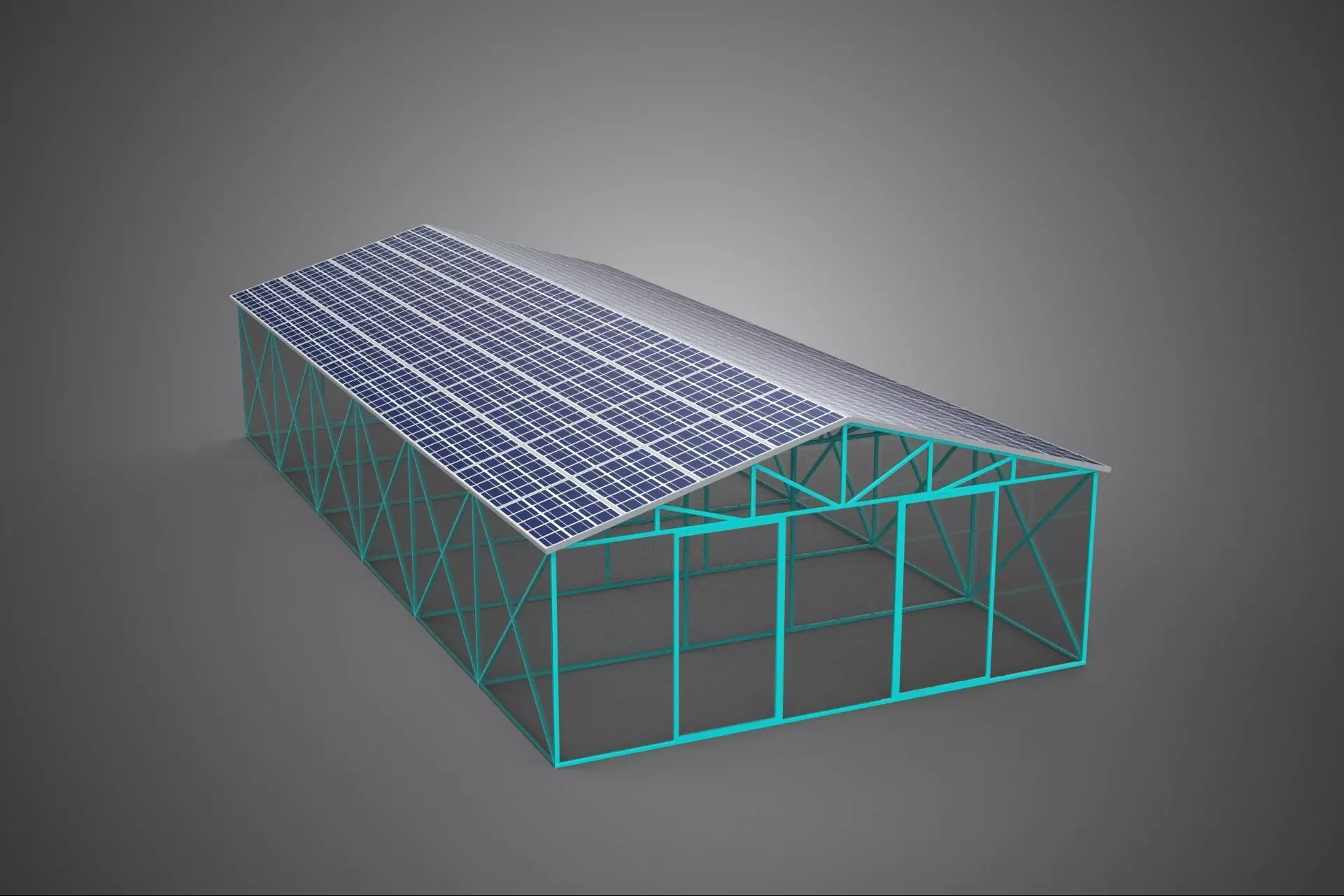
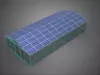
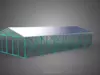
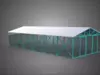
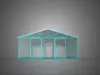
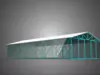
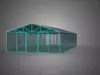
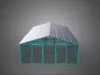
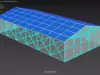
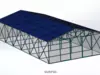
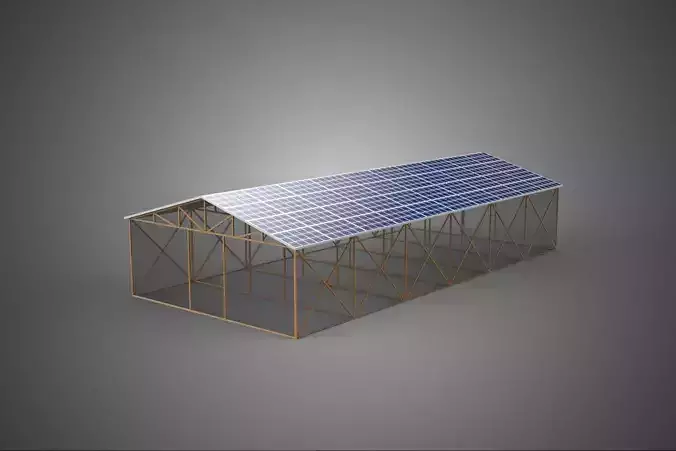
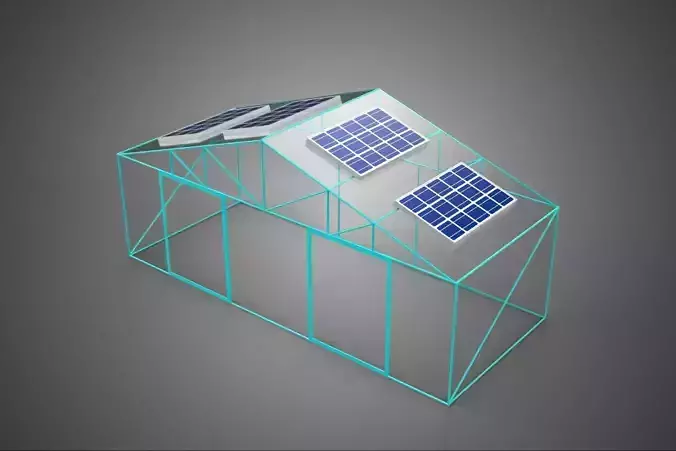
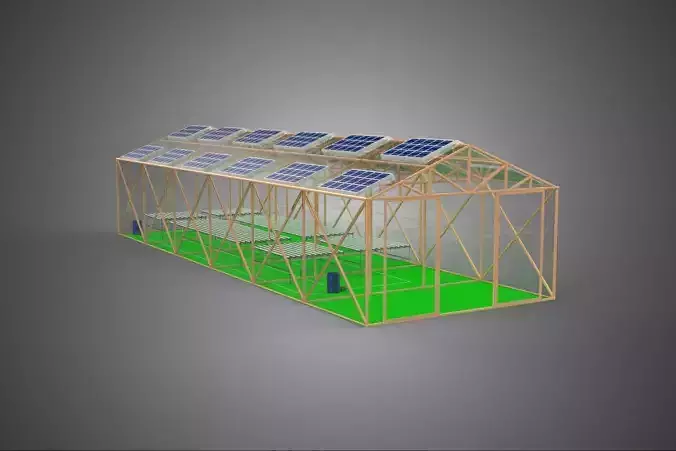
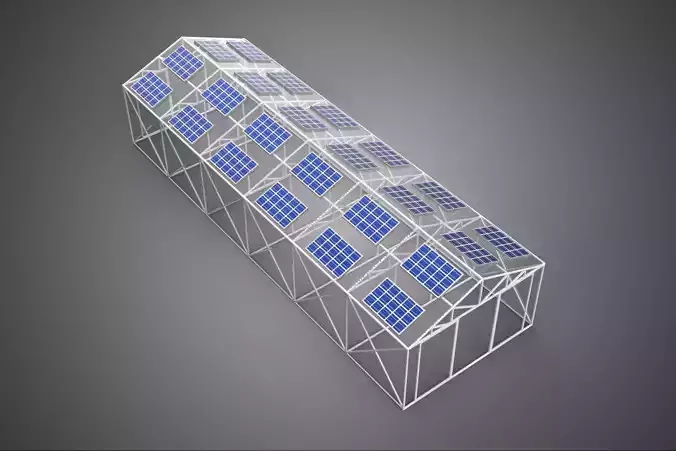
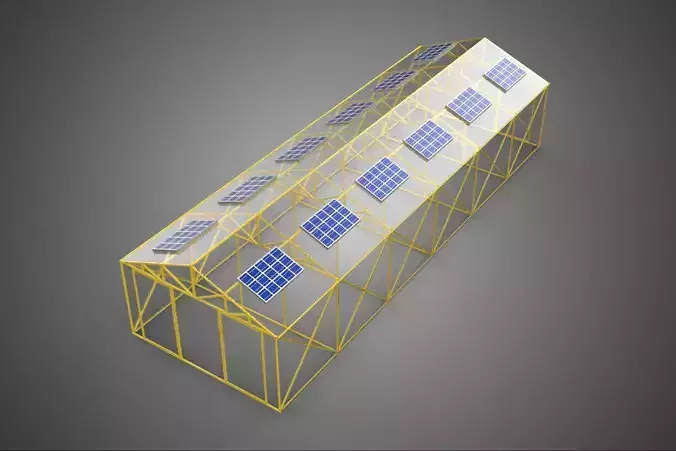
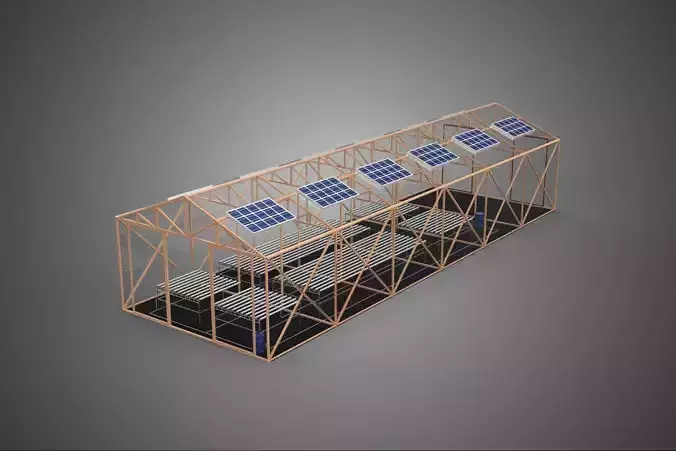
A PVS Solar Panel Roof Greenhouse, often designated as a Photovoltaic Greenhouse (PVG), represents a specialized integration of agrivoltaic principles and Controlled Environment Agriculture (CEA). This architectural and engineering system utilizes photovoltaic (PV) modules—commonly crystalline silicon or thin-film arrays—as the primary roofing material for horticultural structures, such as glasshouses or hothouses. The system is fundamentally designed for dual functionality: the generation of electrical energy and the cultivation of crops within a climate-controlled environment.
Nomenclature and Typology
While various terms are used (Hothouse, Glasshouse, Garden Farm), the core system falls under the umbrella of Building-Integrated Photovoltaics (BIPV) specifically adapted for agricultural structures. PVGs differ from traditional solar farms by integrating the energy infrastructure directly into the building envelope required for cultivation, thereby maximizing land efficiency (dual-use land).
Typologies are generally classified based on light transmission methods:
- Inter-row Spaced Arrays: Standard opaque PV modules mounted with spacing to allow sunlight penetration to the crops below.
- Semitransparent PV (STPV): Modules designed with lower opacity, often utilizing amorphous silicon or organic photovoltaics (OPV), allowing diffuse light to pass through the cells and substrate.
- Spectrally Selective PV: Modules engineered to absorb wavelengths primarily outside the Photosynthetically Active Radiation (PAR) spectrum (400–700 nm) while transmitting wavelengths optimal for plant growth.
### Design and Engineering Constraints
The primary engineering challenge of the PVG system is the optimization of the inherent trade-off between electrical yield and photosynthetic yield. PV panels inherently reduce the solar radiation entering the greenhouse, which is critical for photosynthesis.
Light Management: Depending on the density of the PV array, light transmission can be reduced by 30% to 60%. Design must account for the specific light requirements of the cultivated crops (e.g., high-light crops like tomatoes versus moderate-light crops like lettuce or leafy greens). The roofing structure must be designed to manage the resulting microclimate, which typically involves:
- Reduced Illumination: Requiring optimization of planting density and potentially supplemental artificial lighting (LEDs) powered by the PV array.
- Thermal Regulation: PV modules absorb infrared radiation, leading to heat accumulation within the structure (Hothouse effect). Advanced ventilation, cooling systems, and thermal screens are required to prevent overheating and maintain optimal temperatures.
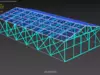
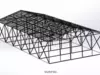
- Structural Integrity: The supporting framework must withstand the increased static load of the PV modules, wiring, and maintenance access points, exceeding the requirements of conventional plastic or glass greenhouses.
Materials: Modern PVGs often employ glass-on-glass modules for BIPV applications, offering enhanced durability and integration aesthetics. Specialized wiring protocols and moisture-resistant electrical components are mandatory due to the high humidity typical of CEA environments.
### Operational Benefits and Applications
PVGs offer a unique synergistic balance of ecological and economic advantages:
- Energy Independence and Revenue: The electricity generated can be used to power all internal greenhouse operations (irrigation pumps, heating, cooling, ventilation, and supplementary lighting). Excess energy can be fed back into the electrical grid, establishing a critical dual-revenue stream (crop sales and energy sales).
- Climate Moderation: The PV roof provides inherent shading, reducing peak summer temperatures and decreasing the need for active cooling in arid or high-insolation climates. This passive shading can also mitigate crop damage from excessive solar radiation (photoinhibition).
- Resource Efficiency: By controlling the environment, PVGs allow for highly efficient use of water (through closed-loop or hydroponic systems) and nutrients.
- Extended Growing Seasons: The climate control enabled by the robust structure allows for year-round cultivation, increasing annual yield potential compared to open-field farming.
PVGs are principally applied in commercial high-value crop production, specialized research facilities studying light-stress environments, and increasingly in regions facing severe land or water scarcity, where the integration of energy generation and food production is strategically essential.
KEYWORDS: Agrivoltaics, Photovoltaic Greenhouse, Controlled Environment Agriculture, BIPV, Solar Agriculture, Semitransparent PV, Dual-Use Land, Energy Crop Integration, Microclimate Management, Photosynthetically Active Radiation, CEA Structure, Hothouse Technology, Glasshouse Farming, Renewable Energy, Sustainable Agriculture, Thin-Film PV, Grid-Tied System, Crop Yield Optimization, Energy Independence, Thermal Regulation, Supplemental Lighting, Hydroponics, Integrated Systems, Land Use Efficiency, Solar Shading, Horticultural Engineering, Amorphous Silicon, Structural Loading, Food Security, Distributed Generation.