High-quality 3D assets at affordable prices — trusted by designers, engineers, and creators worldwide. Made with care to be versatile, accessible, and ready for your pipeline.
Included File Formats
This model is provided in 14 widely supported formats, ensuring maximum compatibility:
• - FBX (.fbx) – Standard format for most 3D software and pipelines
• - OBJ + MTL (.obj, .mtl) – Wavefront format, widely used and compatible
• - STL (.stl) – Exported mesh geometry; may be suitable for 3D printing with adjustments
• - STEP (.step, .stp) – CAD format using NURBS surfaces
• - IGES (.iges, .igs) – Common format for CAD/CAM and engineering workflows (NURBS)
• - SAT (.sat) – ACIS solid model format (NURBS)
• - DAE (.dae) – Collada format for 3D applications and animations
• - glTF (.glb) – Modern, lightweight format for web, AR, and real-time engines
• - 3DS (.3ds) – Legacy format with broad software support
• - 3ds Max (.max) – Provided for 3ds Max users
• - Blender (.blend) – Provided for Blender users
• - SketchUp (.skp) – Compatible with all SketchUp versions
• - AutoCAD (.dwg) – Suitable for technical and architectural workflows
• - Rhino (.3dm) – Provided for Rhino users
Model Info
• - All files are checked and tested for integrity and correct content
• - Geometry uses real-world scale; model resolution varies depending on the product (high or low poly)
• • - Scene setup and mesh structure may vary depending on model complexity
• - Rendered using Luxion KeyShot
• - Affordable price with professional detailing
Buy with confidence. Quality and compatibility guaranteed.
If you have any questions about the file formats, feel free to send us a message — we're happy to assist you!
Sincerely,
SURF3D
Trusted source for professional and affordable 3D models.
More Information About 3D Model :
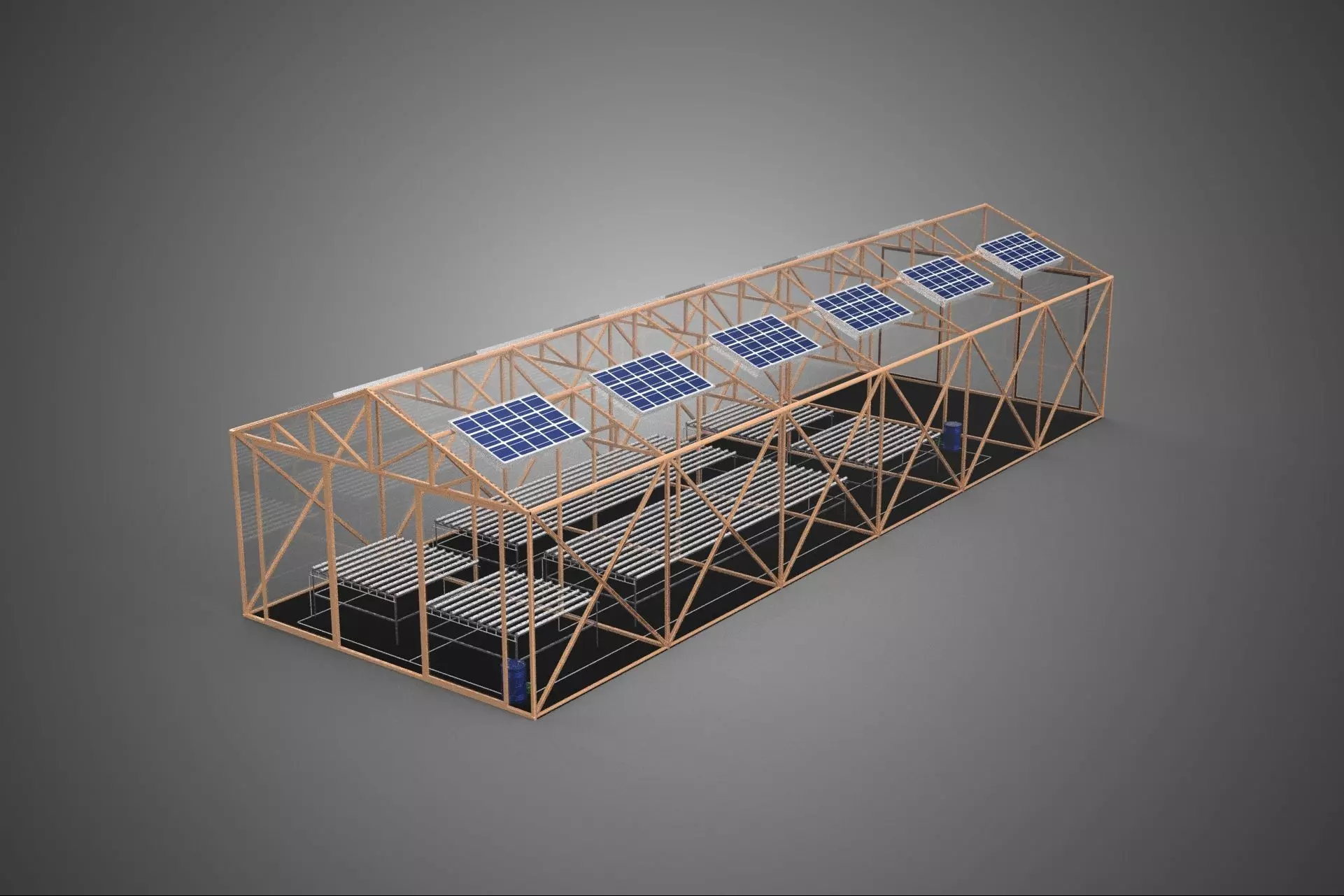
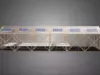
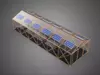
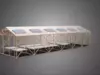
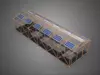
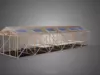
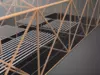
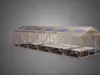
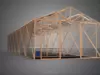
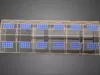
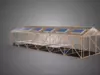
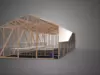
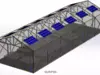
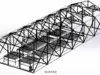
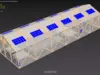
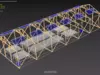
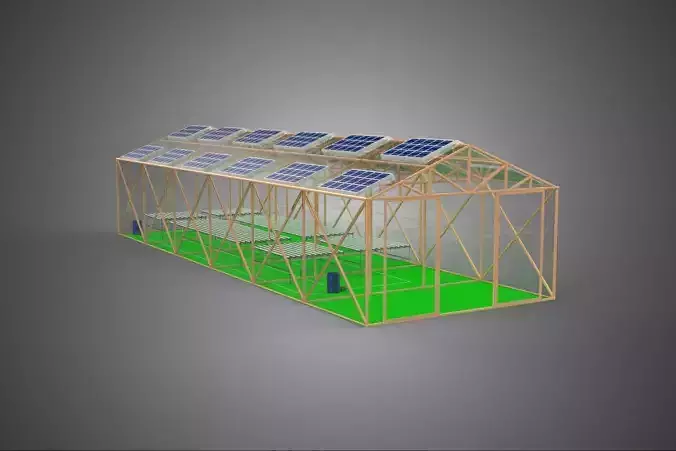
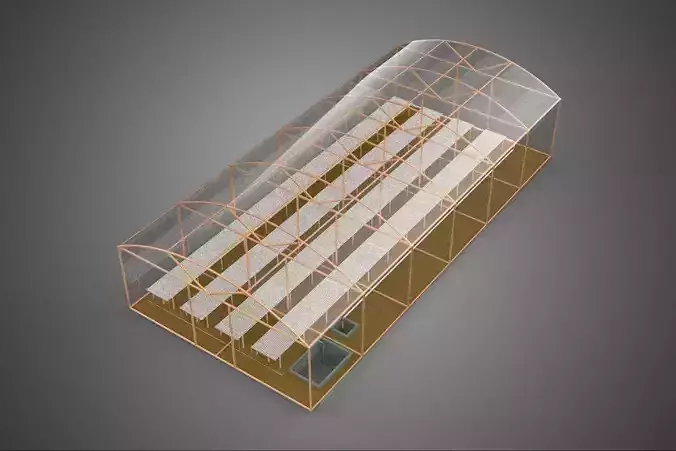
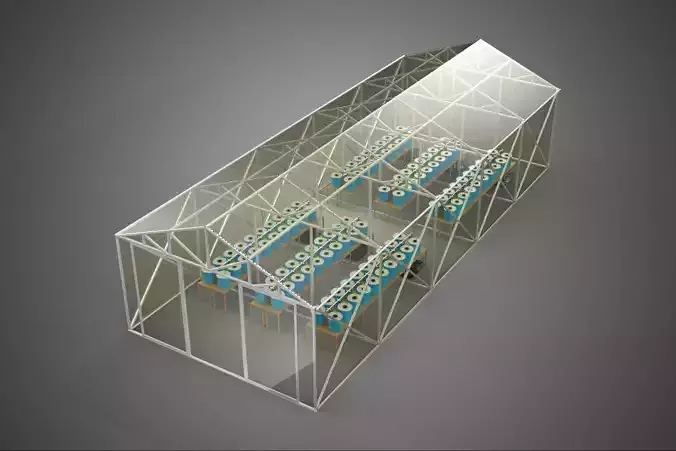
A SOLAR PANEL HYDROPONIC AEROPONIC GREENHOUSE GLASSHOUSE FARM GARDEN (often abbreviated as SPAHAG) represents an integrated, highly controlled environment agricultural (CEA) system designed for optimized resource utilization and maximum crop yield, regardless of external climatic conditions. This system fuses advanced renewable energy technology (solar photovoltaics) with sophisticated soilless culture techniques (hydroponics and aeroponics) within a protective horticultural structure (greenhouse or glasshouse).
Structural and Environmental Control Components
1. Glasshouse/Greenhouse Structure:
The system is fundamentally housed within a glasshouse (typically utilizing tempered glass or high-quality polycarbonate) or a robust greenhouse structure. The design prioritizes maximizing natural light transmission while enabling precise climate control. Key structural features include automated ventilation systems (side vents and roof vents), thermal screens for heat retention during cooling periods, and evaporative cooling pads or mechanical air conditioning for temperature regulation in warmer climates. The structure maintains controlled parameters for temperature, humidity, and atmospheric CO2 concentration, crucial for enhancing photosynthesis.
2. Solar Photovoltaic (PV) Panels:
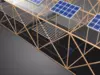
Solar panels are the primary, and often exclusive, source of electrical power for the entire operation. These PV arrays are typically installed either on the roof structure (often using semi-transparent or BIPV – Building-Integrated Photovoltaics – to balance light transmission with energy generation) or adjacent ground-mounted tracking systems. The generated electricity powers pumps, nutrient delivery systems, environmental control actuators, supplemental LED or high-pressure sodium (HPS) grow lights, and computerized monitoring equipment. Integrating solar power significantly reduces the operational carbon footprint and dependence on grid electricity, contributing to the system's economic and environmental sustainability.
Soilless Culture Systems
The SPAHAG system incorporates both hydroponics and aeroponics to maximize versatility and efficiency based on crop type.
3. Hydroponic Systems:
Hydroponics involves growing plants in mineral nutrient solutions delivered directly to the roots without soil. Common methods integrated include:
- Deep Water Culture (DWC): Plants suspended with roots immersed in a reservoir of oxygenated nutrient solution.
- Nutrient Film Technique (NFT): A shallow stream of nutrient solution flows over the bare roots in specialized channels (gullies).
- Drip Systems: Automated delivery of nutrient solution to individual containers or growth media (e.g., rockwool, coco coir).
4. Aeroponic Systems:
Aeroponics is the most advanced form of soilless culture, often preferred for high-value crops and rapid propagation. Plant roots are suspended in air within a sealed chamber and periodically misted with a fine fog or aerosol of nutrient solution. This method offers superior oxygenation to the root zone (rhizosphere), promoting faster growth rates and nutrient uptake efficiency compared to traditional hydroponics. Low-pressure or high-pressure spray nozzles are crucial components, requiring precise maintenance and high-quality pumping systems.
### Integration and Management
The successful operation of a SPAHAG system relies heavily on automated monitoring and control. Sensors continuously track parameters such as pH, Electrical Conductivity (EC) of the nutrient solution, dissolved oxygen levels, root zone temperature, ambient humidity, and light intensity (DLI – Daily Light Integral). These data points are processed by a central computer system (often utilizing IoT principles) which automatically adjusts the dosing pumps, irrigation cycles, climate controls, and supplemental lighting to maintain optimal plant growth conditions (phenotype optimization). Water use efficiency (WUE) is exceptionally high due to the recirculation of nutrient solutions in closed-loop systems, often achieving 90-95% less water usage than conventional field agriculture.
### Applications and Significance
These integrated farm gardens are primarily used for year-round production of high-density crops, including leafy greens, herbs, strawberries, tomatoes, and other specialty produce. They offer significant advantages in areas facing water scarcity, limited arable land, or extreme climates. The decentralized, self-sufficient energy source allows for implementation in remote locations, contributing to localized food security and supply chain resilience.
KEYWORDS: Controlled Environment Agriculture, Soilless Culture, Solar Energy, Photovoltaics, Hydroponics, Aeroponics, Greenhouse, Glasshouse, Sustainable Farming, Resource Efficiency, Crop Yield Optimization, Nutrient Film Technique, Deep Water Culture, Recirculating Systems, Climate Control, Automated Irrigation, Renewable Energy Integration, High-Density Farming, Water Use Efficiency, Agri-Tech, Vertical Farming, Root Zone Oxygenation, Environmental Sustainability, Phenotype Optimization, Building-Integrated Photovoltaics, Remote Operation, Food Security, Agricultural Technology, Closed-Loop System, Energy Independence.