High-quality 3D assets at affordable prices — trusted by designers, engineers, and creators worldwide. Made with care to be versatile, accessible, and ready for your pipeline.
Included File Formats
This model is provided in 14 widely supported formats, ensuring maximum compatibility:
• - FBX (.fbx) – Standard format for most 3D software and pipelines
• - OBJ + MTL (.obj, .mtl) – Wavefront format, widely used and compatible
• - STL (.stl) – Exported mesh geometry; may be suitable for 3D printing with adjustments
• - STEP (.step, .stp) – CAD format using NURBS surfaces
• - IGES (.iges, .igs) – Common format for CAD/CAM and engineering workflows (NURBS)
• - SAT (.sat) – ACIS solid model format (NURBS)
• - DAE (.dae) – Collada format for 3D applications and animations
• - glTF (.glb) – Modern, lightweight format for web, AR, and real-time engines
• - 3DS (.3ds) – Legacy format with broad software support
• - 3ds Max (.max) – Provided for 3ds Max users
• - Blender (.blend) – Provided for Blender users
• - SketchUp (.skp) – Compatible with all SketchUp versions
• - AutoCAD (.dwg) – Suitable for technical and architectural workflows
• - Rhino (.3dm) – Provided for Rhino users
Model Info
• - All files are checked and tested for integrity and correct content
• - Geometry uses real-world scale; model resolution varies depending on the product (high or low poly)
• • - Scene setup and mesh structure may vary depending on model complexity
• - Rendered using Luxion KeyShot
• - Affordable price with professional detailing
Buy with confidence. Quality and compatibility guaranteed.
If you have any questions about the file formats, feel free to send us a message — we're happy to assist you!
Sincerely,
SURF3D
Trusted source for professional and affordable 3D models.
More Information About 3D Model :
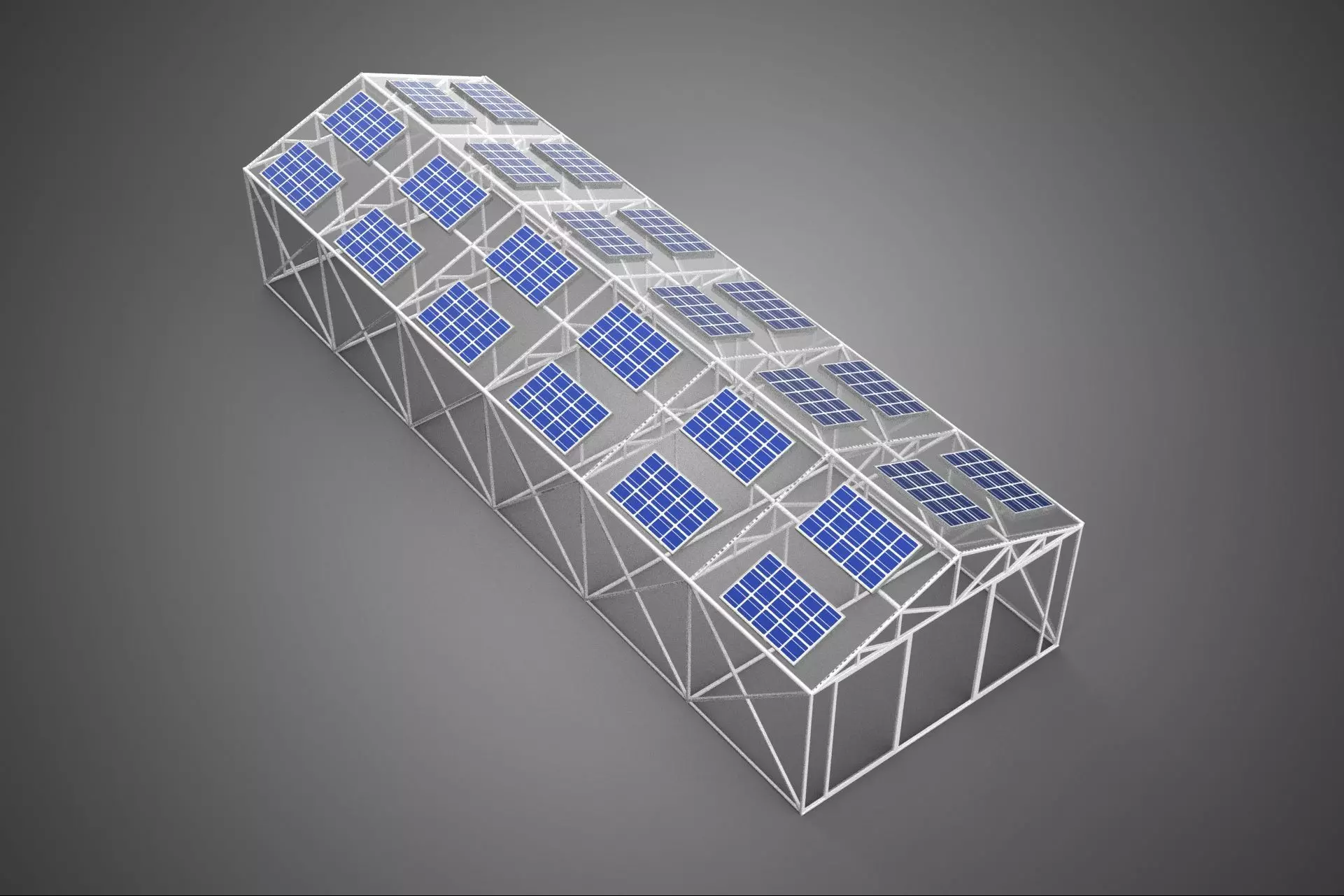
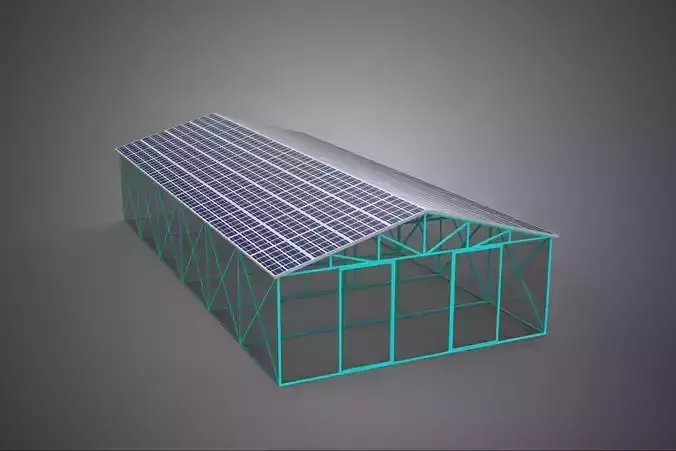
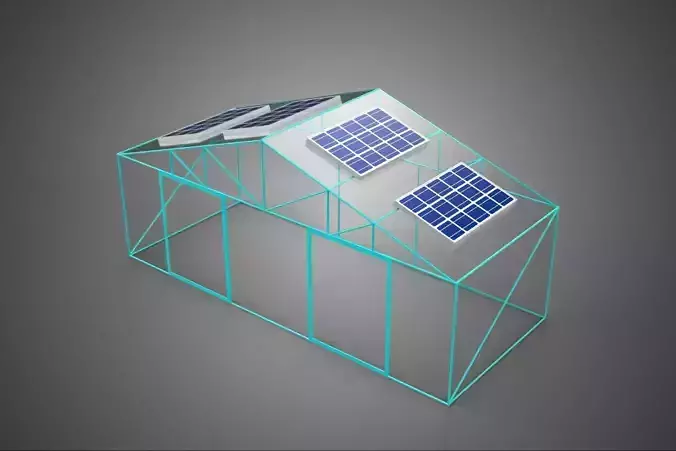
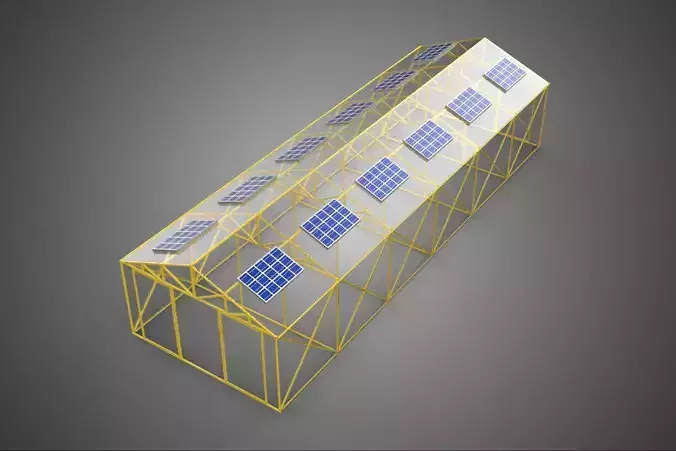
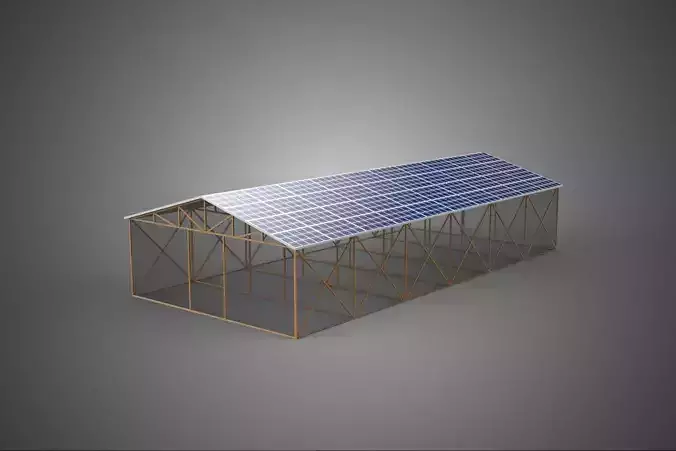
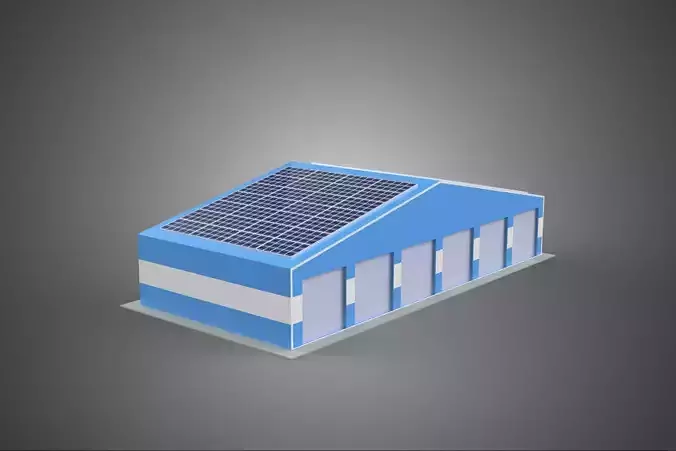
PHOTOVOLTAIC SOLAR PANEL ROOF TOP GREENHOUSE GLASSHOUSE HOTHOUSE
A photovoltaic (PV) solar panel rooftop greenhouse, glasshouse, or hothouse refers to a specialized structural integration where electricity-generating solar modules form a significant component of the enclosure’s roof system, serving the dual purposes of controlled environment agriculture (CEA) and sustainable energy generation. This application falls under the broader field of Agrivoltaics, or more specifically, Building-Integrated Photovoltaics (BIPV) applied to horticultural structures (PV-Greenhouse Systems, or PVGS).
Fundamental Design and Integration
The primary challenge in integrating PV modules onto the roof of a horticultural structure is the inherent conflict between energy generation, which requires maximizing insolation capture, and plant cultivation, which requires sufficient transmission of photosynthetically active radiation (PAR, typically 400–700 nm) to the crops below.
Design strategies are employed to mitigate light obstruction and ensure crop viability:
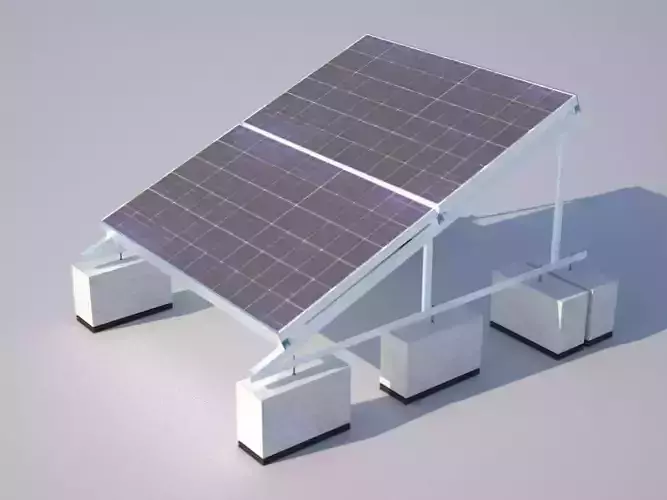
- Partial Coverage and Spacing: The most common approach involves installing opaque crystalline silicon PV panels in defined arrays, leaving specific gaps or transparent sections between rows. The density and orientation of the panels are meticulously calibrated based on the geographical location’s solar geometry, requisite irradiance levels for the specific crop variety, and seasonal variations. This design provides controlled partial shading, which can be beneficial for high-insolation environments or for cultivating shade-tolerant crops.
- Semi-Transparent Photovoltaics (STPV): Advanced designs utilize materials such as amorphous silicon (a-Si) thin-film PV, organic photovoltaics (OPV), or specialized crystalline cells embedded in transparent substrates. These modules allow a percentage of light transmission (typically 10% to 50%) across the entire roof surface.
- Spectral Tuning: Emerging technologies focus on wavelength-selective PV materials, which preferentially harvest non-PAR light (e.g., ultraviolet or near-infrared wavelengths) for energy conversion, while transmitting the PAR spectrum necessary for photosynthesis. This approach maximizes both electrical efficiency and horticultural productivity.
The structural integrity must accommodate the load-bearing requirements of the PV modules, replacing or supplementing traditional glazing materials (glass or polymer sheeting). In hothouse applications, where elevated temperatures must be maintained, the PV modules can also contribute to thermal insulation, reducing the energy demand required for heating during cold periods.
### Operational Synergies and Applications
The synergistic capacity of the PV-Greenhouse system yields several key operational benefits:
1. Energy Independence and Cost Reduction: The electricity generated by the rooftop PV array offsets the significant operational demands of the CEA infrastructure. Modern greenhouses and hothouses require substantial energy for internal systems, including heating, ventilation, air conditioning (HVAC), dehumidification, supplementary lighting (e.g., LED grow lights), and mechanized irrigation systems. Self-generation reduces reliance on grid power and minimizes utility costs, especially critical for high-intensity, year-round production facilities.
2. Climate Control Enhancement: The PV modules act as dynamic shading elements. In hot climates, the shading reduces the thermal load on the structure, thereby lowering the cooling energy requirements and mitigating potential crop damage from excessive heat and direct solar radiation. The panels also reduce water stress on plants by decreasing evapotranspiration rates.
3. Land Use Efficiency: By combining energy generation and food production on the same land footprint, PVGS improves overall land utilization efficiency compared to separate installations of conventional ground-mounted solar farms and traditional greenhouses.
4. Sustainability and Environmental Impact: The integration promotes sustainable agriculture by reducing carbon emissions associated with electricity consumption and aligning agricultural practices with renewable energy mandates.
### Nomenclature Distinction
While the terms are often used interchangeably, contextually:
- Greenhouse is the general term for a structure designed to protect plants from excessive weather conditions.
- Glasshouse specifically denotes a structure constructed primarily with glass glazing, often implying permanence and scale.
- Hothouse refers to a structure maintained at a consistently high internal temperature and humidity, necessary for tropical or non-native crops, necessitating higher auxiliary energy inputs often covered by the integrated PV system.
PV-Greenhouse systems represent a key transition point toward zero-energy or energy-plus agricultural facilities, contributing to localized food security and renewable energy mandates simultaneously.
KEYWORDS: Agrivoltaics, Photovoltaics, Greenhouse, Glasshouse, Hothouse, Controlled Environment Agriculture, BIPV, Building-Integrated Photovoltaics, Semi-Transparent PV, Thin-Film Solar, Energy Generation, Horticulture, Crop Production, Spectral Tuning, PAR, Photosynthetically Active Radiation, Shade Management, Sustainable Agriculture, Zero-Energy Greenhouse, Energy Efficiency, Dual-Use Land, Hothouse Technology, Climate Control, Solar Geometry, Energy Offset, System Integration, Crystalline Silicon, OPV, Agricultural Technology.