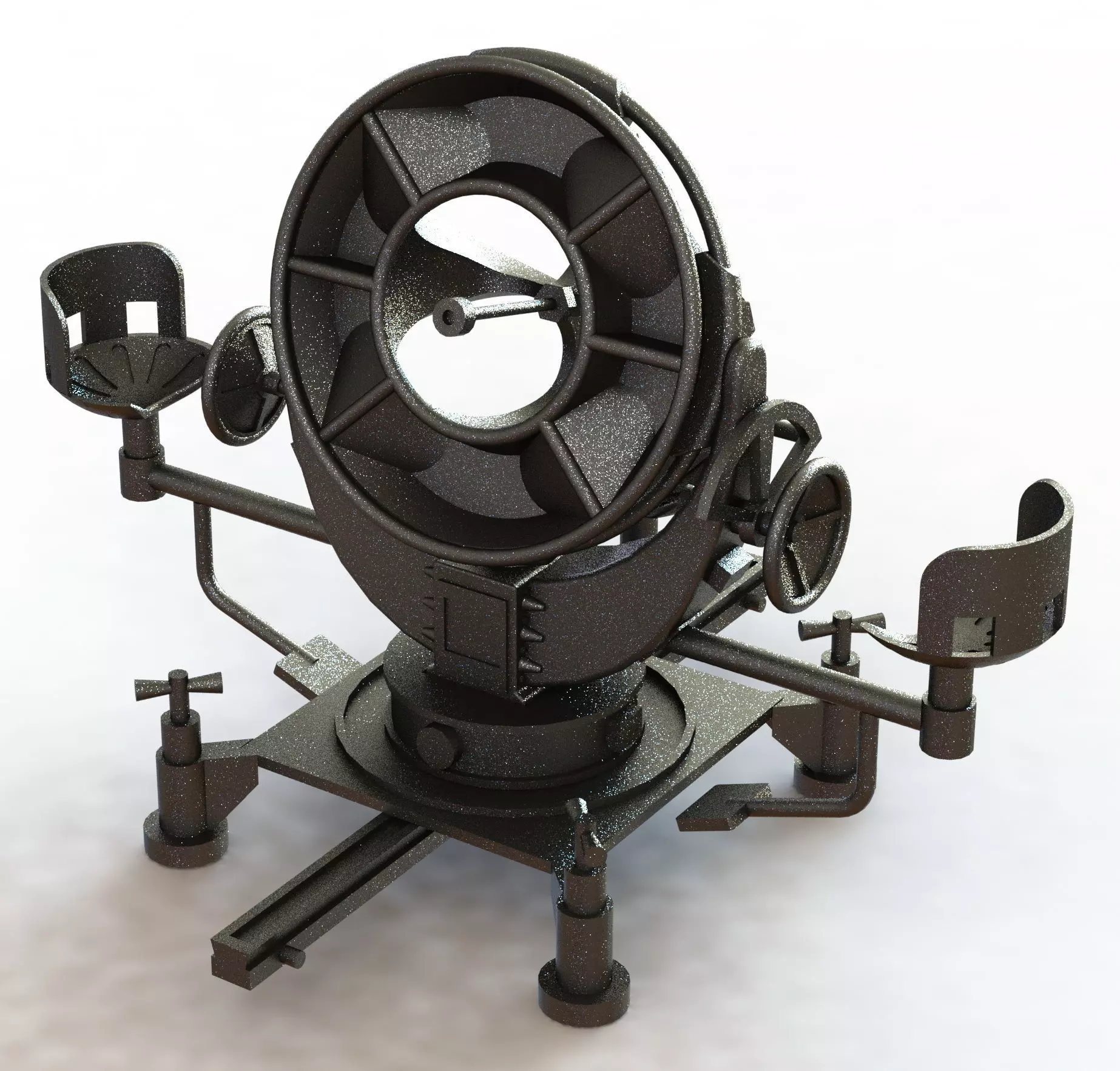
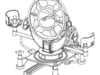
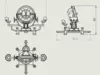
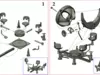
1/48 Scale model in STL, IGES, STEP and Solidworks formats.Until the beginning of the Second World War, the anti-aircraft searchlight batteries were each equipped with six to eight RRHs, which the troops called listening devices for short. These were used to acoustically detect approaching enemy aircraft at night and to roughly determine their direction of flight using two sound horns for lateral and elevation values. When both listeners had a central impression by swinging the horns, i.e. the engine noise of the aircraft being targeted then reached both ears of each listener without a time difference, they pressed a hand button independently of one another. The delay calculator on the back of the device then calculated the distance that the target had covered on the ground between the sound being emitted and the detection of it, taking into account the target movement and an estimated target speed. The new angular values were transmitted to the searchlights by telephone or electronically. This target guidance made it easier for the searchlights to find and detect the target.
The listening range of around 4 to 12 km was, however, very dependent on the weather conditions, the engine noise of the aircraft being targeted, background noises from the environment and the hearing ability of the listeners.