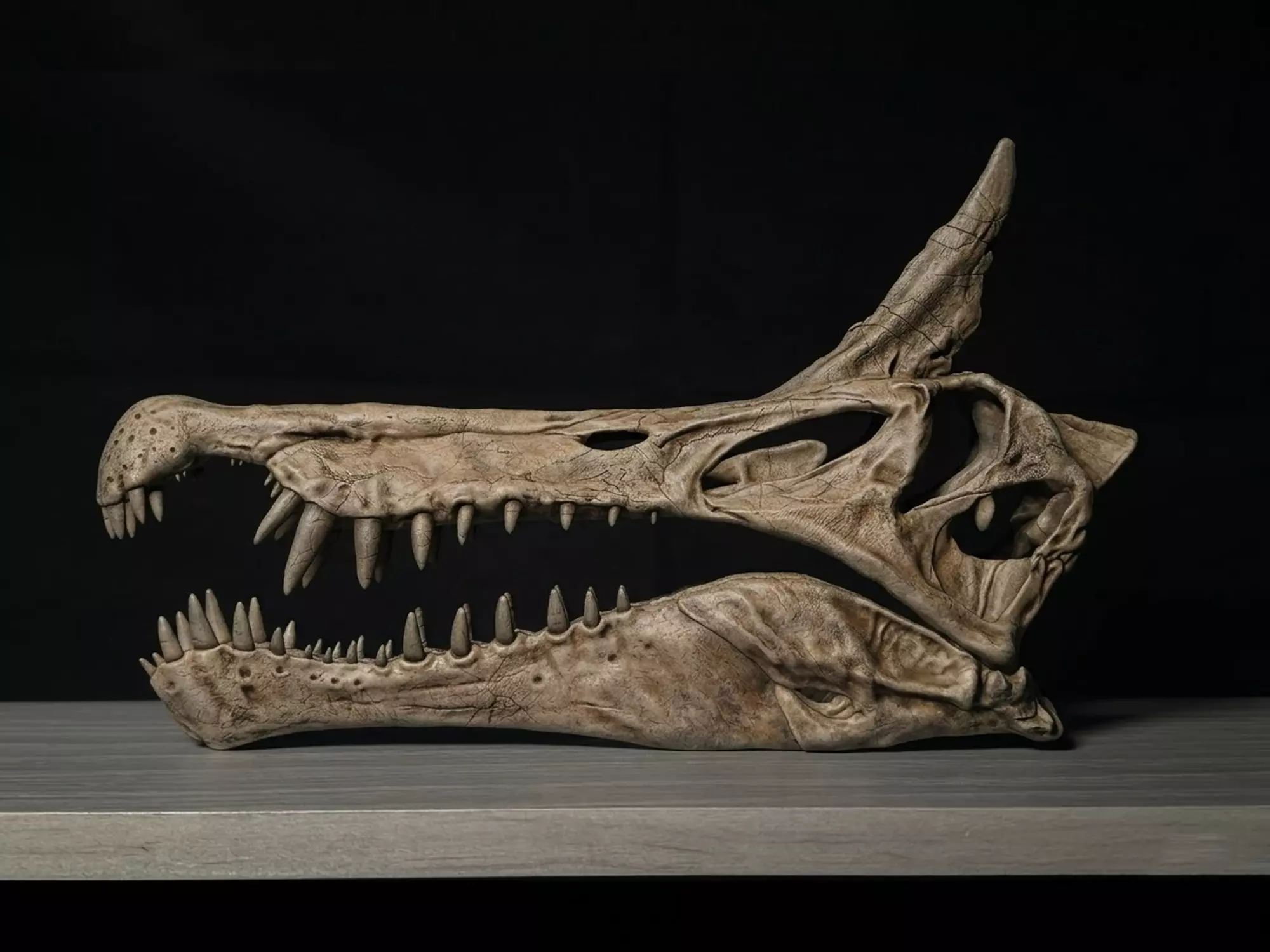
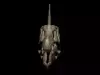
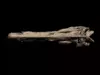
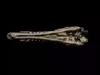
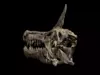
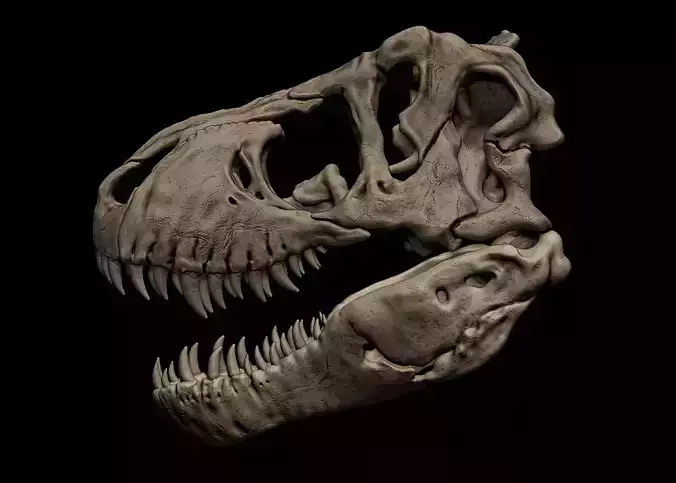
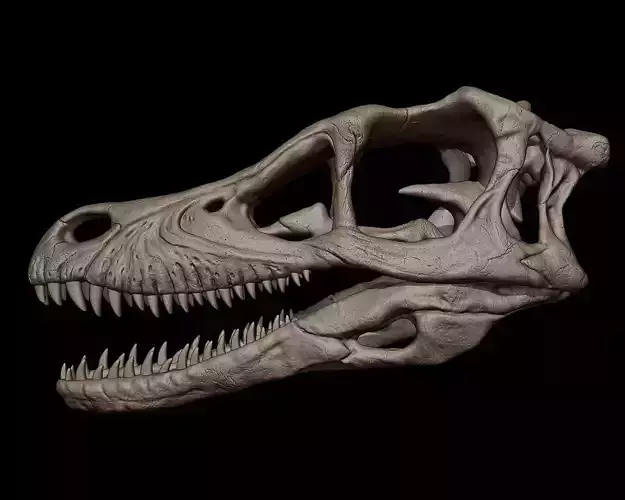
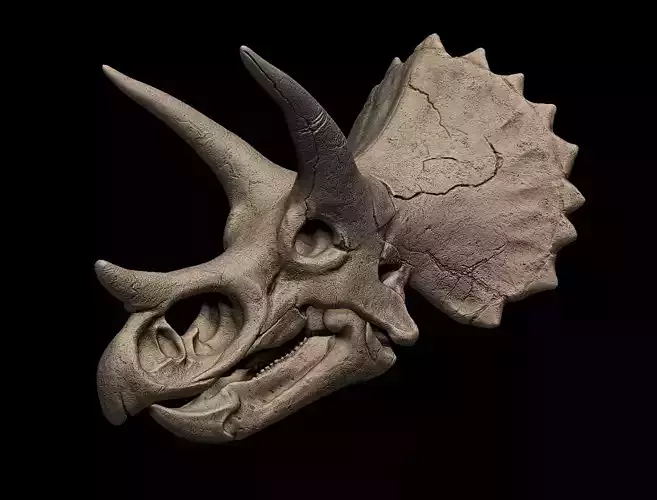
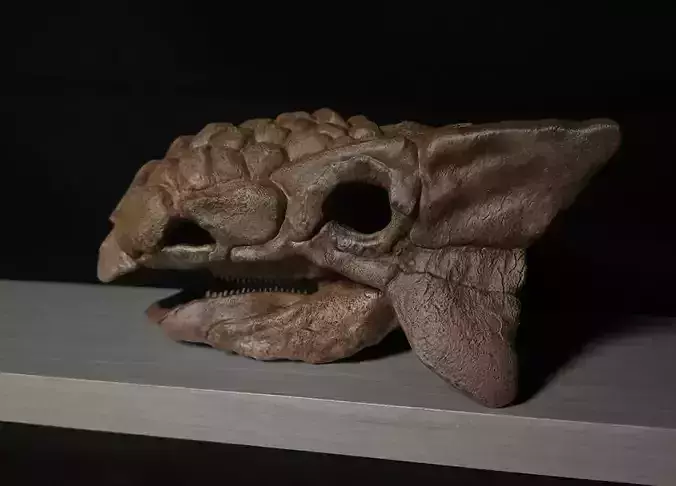
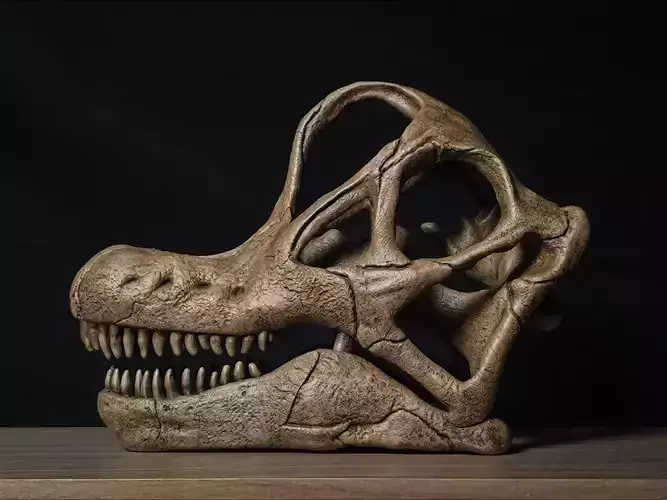
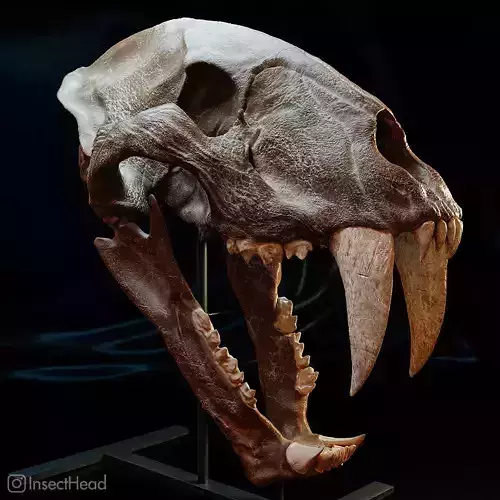
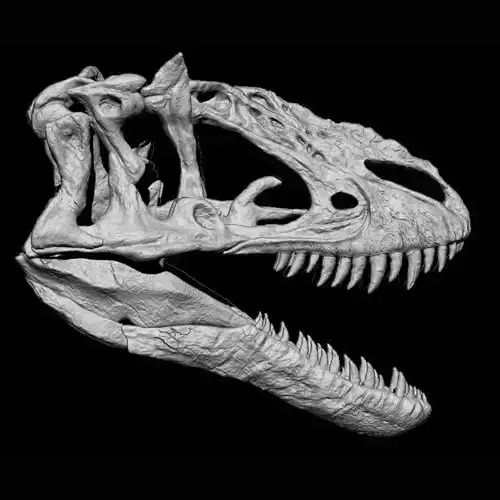
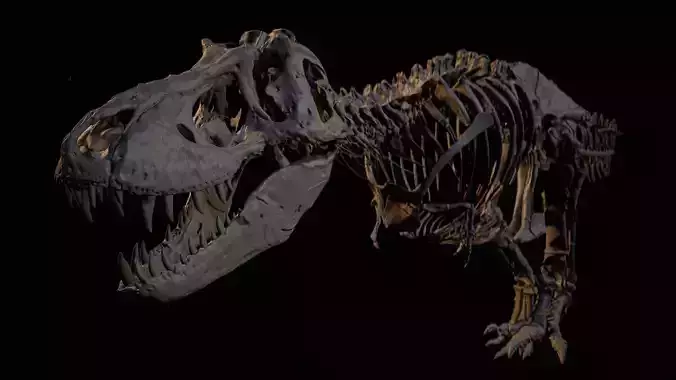
This is a life size 3d digital model skull of a Spinosaurus Mirabilis . OBJ, ZTL, PLY, FBX and STL files. jaw is seperated.
Spinosaurus mirabilis is a large extinct species of the spinosaurid theropod dinosaur genus Spinosaurus, known from the Late Cretaceous Farak Formation of Niger. The species was named and described in 2026, based on various cranial and postcranial bones collected in two localities. It is characterized by a long, low snout, a scimitar-shaped midline crest on the top of the skull, and a large sail over the back.
Fossils of Spinosaurus mirabilis were collected from outcrops of the Farak Formation of Niger during a series of excavations in 2000, 2019, and 2022, led by paleontologist Paul Sereno. Material was collected from two localities, Iguidi and Jenguebi. Most of the material comes from the former, including the holotype specimen, accessioned as MNBH JEN1, which comprises a fragmentary skull (right premaxilla, both maxillae, nasal crest, part of the right dentary, and five maxillary teeth). A second Jenguebi specimen, MNBH JEN2, includes part of a left maxilla, a nasal crest, fragments of the cervical (neck) and dorsal (back) vertebrae, part of the left ischium, and part of the left femur. Other specimens from this locality, MNBH JEN3–9, include a left maxilla, isolated teeth, another partial nasal crest, a right dentary, partial dorsal and caudal (tail) vertebrae, a partial chevron, a left tibia, and pedal phalanges (toe bones). Material from Iguidi, MNBH IGU11, 25, and 38–40, includes many isolated tooth crowns, fragments of the dorsal vertebrae, part of a caudal vertebra, and a single toe bone. As of its 2026 description, the Iguidi material is temporarily on loan to Sereno's Fossil Lab at the University of Chicago, while all other specimens, including the holotype, are held at Abdou Moumouni University in Niger.