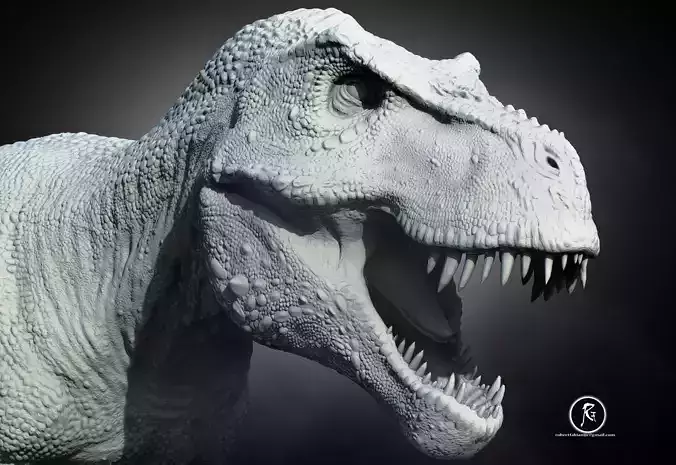
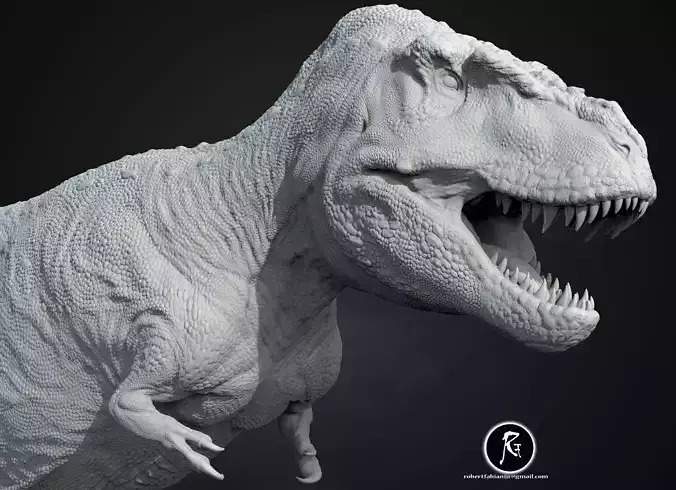
Peck’s Rex is the nickname given to a Tyrannosaurus rex fossil specimen catalogued as MOR 980, unearthed in July 1997 near Fort Peck, Montana by fossil collector Lou Tremblay while working under the supervision of paleontologist J. Keith Rigby Jr.
The discovery began on July 4th, 1997, when Tremblay recognized a bone fragment protruding from the ground — later identified as part of a T. rex stomach rib. Continued excavation over the summer revealed more substantial remains, including a relatively complete skull with jaws, vertebrae from the back and tail, hip bones, and a substantial portion of the left hind leg.
Peck’s Rex is significant for several reasons:
Relatively complete skeleton: Compared to many other T. rex specimens that are fragmentary, MOR 980 preserves a broad set of cranial and postcranial elements, giving paleontologists a fuller picture of its anatomy.
Forelimb preservation: This specimen includes both humeri and at least one digit bone from the hands — noteworthy because T. rex forelimbs are small and often absent in fossil finds.
Scientific research value: The specimen has been used in studies on limb function and evidence of parasitic infections in theropod dinosaurs, contributing to broader insights into T. rex biology.
Institutional context: The original bones are housed at the Museum of the Rockies in Bozeman, Montana, one of the major centers for research on Late Cretaceous dinosaurs.
Peck’s Rex is sometimes also colloquially called Montana’s T. rex or Rigby’s Rex in scientific and museum circles, reflecting its place of discovery and the team involved.