High-quality 3D assets at affordable prices — trusted by designers, engineers, and creators worldwide. Made with care to be versatile, accessible, and ready for your pipeline.
Included File Formats
This model is provided in 14 widely supported formats, ensuring maximum compatibility:
• - FBX (.fbx) – Standard format for most 3D software and pipelines
• - OBJ + MTL (.obj, .mtl) – Wavefront format, widely used and compatible
• - STL (.stl) – Exported mesh geometry; may be suitable for 3D printing with adjustments
• - STEP (.step, .stp) – CAD format using NURBS surfaces
• - IGES (.iges, .igs) – Common format for CAD/CAM and engineering workflows (NURBS)
• - SAT (.sat) – ACIS solid model format (NURBS)
• - DAE (.dae) – Collada format for 3D applications and animations
• - glTF (.glb) – Modern, lightweight format for web, AR, and real-time engines
• - 3DS (.3ds) – Legacy format with broad software support
• - 3ds Max (.max) – Provided for 3ds Max users
• - Blender (.blend) – Provided for Blender users
• - SketchUp (.skp) – Compatible with all SketchUp versions
• - AutoCAD (.dwg) – Suitable for technical and architectural workflows
• - Rhino (.3dm) – Provided for Rhino users
Model Info
• - All files are checked and tested for integrity and correct content
• - Geometry uses real-world scale; model resolution varies depending on the product (high or low poly)
• • - Scene setup and mesh structure may vary depending on model complexity
• - Rendered using Luxion KeyShot
• - Affordable price with professional detailing
Buy with confidence. Quality and compatibility guaranteed.
If you have any questions about the file formats, feel free to send us a message — we're happy to assist you!
Sincerely,
SURF3D
Trusted source for professional and affordable 3D models.
More Information About 3D Model :
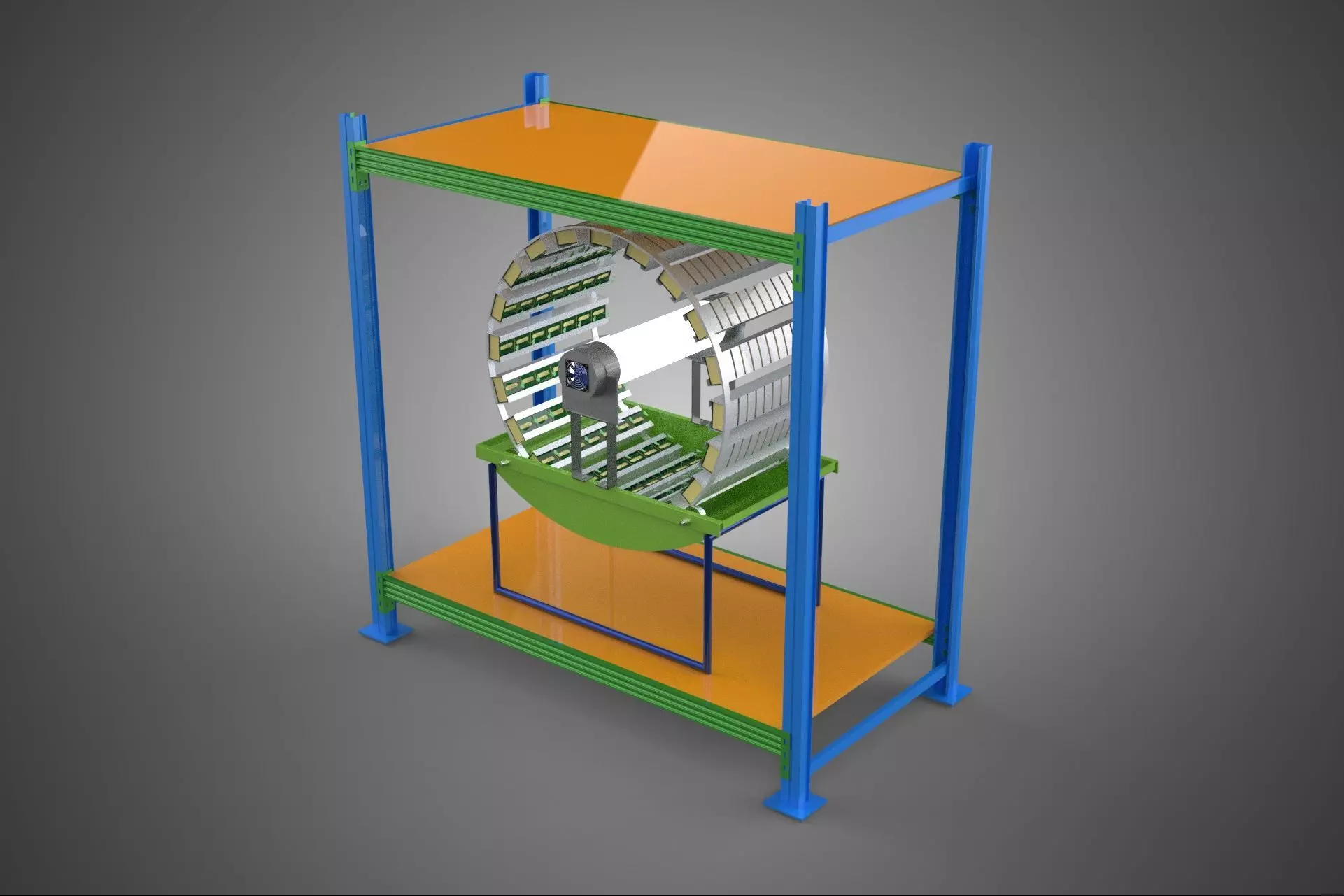
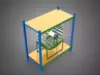
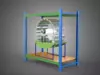
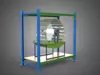
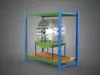
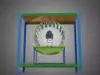
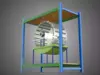
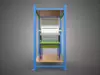
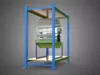
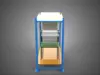
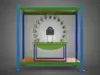
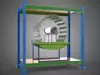
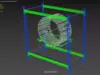
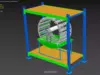
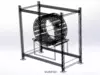
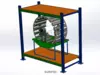
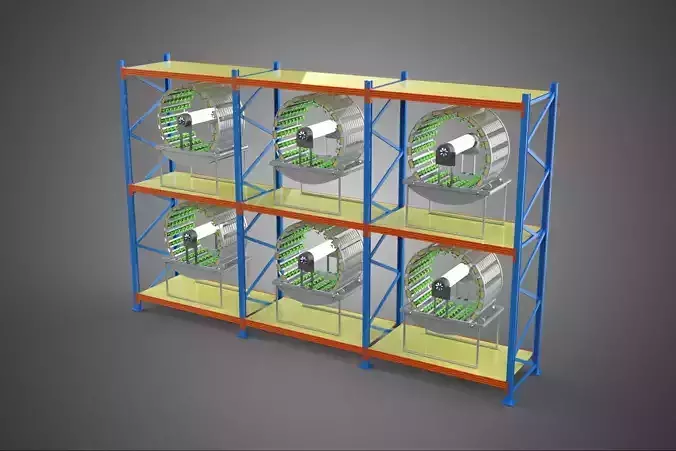
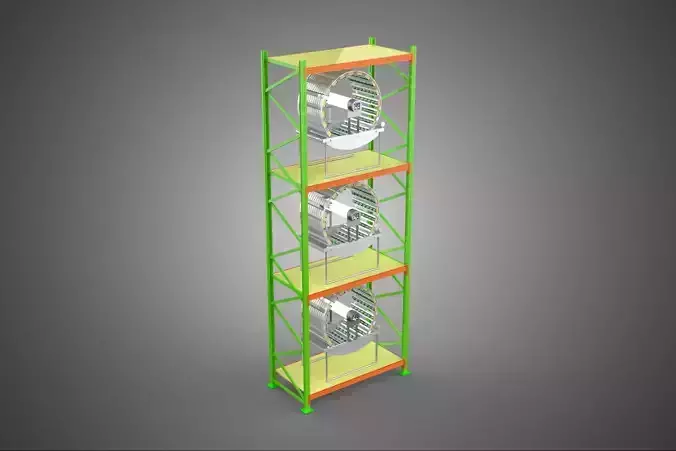
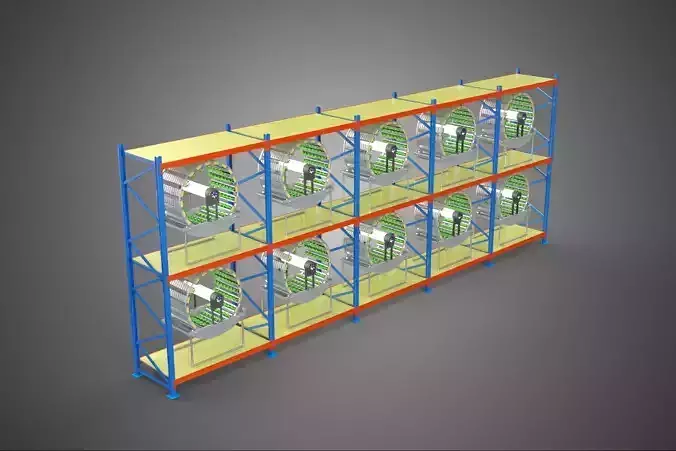
A Rotary Hydroponic Plant Farm Cage Modular Frame Shelf Rack Tray system represents a sophisticated and integrated approach to soilless plant cultivation, primarily designed for maximizing space utilization and optimizing growing conditions within controlled environments. This comprehensive system combines hydroponic principles with a mechanical rotation mechanism, all housed within a modular support structure, to facilitate efficient and high-density crop production.
At its core, the system employs hydroponics, a method of growing plants without soil, utilizing mineral nutrient solutions dissolved in water to deliver essential elements directly to plant roots. The distinguishing feature is its rotary component, which involves the continuous or intermittent movement of plant cultivation units. This rotation serves multiple critical functions:
- Optimized Light Exposure: By continuously moving plants through a centralized or multi-directional light source (typically LED grow lights), each plant receives equitable and consistent light intensity, preventing etiolation and promoting uniform growth across the cultivation area.
- Space Efficiency: Vertical stacking and rotation dramatically increase the plant density per unit of floor space, making the system ideal for urban agriculture, indoor farms, and environments with limited horizontal area.
- Enhanced Airflow and Nutrient Delivery: Rotation can facilitate better air circulation around plants, reducing the risk of fungal diseases and promoting robust growth. It can also be integrated with advanced nutrient delivery systems, such as aeroponics or nutrient film technique (NFT), where nutrient solution is sprayed or flowed directly onto rotating roots or growing media.
The physical architecture of the system is defined by its modular and robust construction:
- Modular Frame and Cage: The foundation is a modular frame, typically constructed from lightweight yet durable materials such as aluminum, stainless steel, or high-strength, food-grade plastics. Its modular nature allows for scalable designs, easy assembly, disassembly, and reconfiguration to suit various spatial constraints or production scales. The cage aspect refers to the protective and containing enclosure often integrated into or forming the outer shell of this frame. This cage provides structural integrity, supports the rotating mechanism, and can serve as a conduit for environmental controls, such as light shields, humidity barriers, or pest exclusion.
- Shelf Rack System: Within the modular frame, a shelf rack system is integrated to securely hold the plant trays. These shelves are engineered to interface with the rotary mechanism, ensuring stable and controlled movement. The racks are designed to maximize vertical growing space, with multiple tiers or levels accommodating the hydroponic trays. Materials are selected for corrosion resistance, given the humid and water-intensive hydroponic environment.
- Trays: The individual trays are the primary containers for plant growth. Fabricated from food-grade, inert plastics (e.g., ABS, PVC, HDPE), they are specifically designed for hydroponic applications. Tray designs vary depending on the hydroponic method employed—some may hold inert growing media (rockwool, coco coir) for drip or wick systems, while others feature net pots for aeroponic or deep water culture setups, or shallow channels for NFT. Their design ensures proper drainage or containment of nutrient solutions and facilitates easy plant insertion, harvesting, and maintenance.
Beyond the physical structure, the system integrates sophisticated environmental controls. Artificial lighting, predominantly energy-efficient LED grow lights, is strategically positioned to illuminate the rotating plants optimally. Nutrient solution reservoirs, precision pumps, and intricate irrigation lines are integral, delivering precisely formulated water and nutrients to the trays. Automated sensors monitor critical parameters such as pH, electrical conductivity (EC), air temperature, humidity, and CO2 levels, allowing for precise environmental control and optimization via integrated control systems. The rotation mechanism itself is typically motorized and programmable, allowing for adjustable speed and rotational patterns to suit different crop requirements.
This type of system offers significant advantages: unparalleled efficiency in utilizing vertical space (critical for urban farming and land-scarce regions), reduced water consumption compared to traditional agriculture (up to 90% less) due to recirculation, accelerated growth rates and higher yields per square foot due to consistent light exposure and optimized environmental conditions, reduced exposure to outdoor pests and diseases leading to less reliance on pesticides, and year-round production unaffected by external climatic conditions. Applications span from commercial indoor vertical farms and research facilities to educational installations and specialized high-value crop cultivation, such as leafy greens, herbs, and medicinal plants, within the broader field of Controlled Environment Agriculture (CEA).
Considerations for deployment include higher initial capital costs due to specialized equipment, energy consumption for lighting and environmental control, and the need for skilled operation and maintenance. The complexity of integrating multiple subsystems (mechanical, electrical, plumbing, environmental control, and software) requires careful engineering and management.