High-quality 3D assets at affordable prices — trusted by designers, engineers, and creators worldwide. Made with care to be versatile, accessible, and ready for your pipeline.
Included File Formats
This model is provided in 14 widely supported formats, ensuring maximum compatibility:
• - FBX (.fbx) – Standard format for most 3D software and pipelines
• - OBJ + MTL (.obj, .mtl) – Wavefront format, widely used and compatible
• - STL (.stl) – Exported mesh geometry; may be suitable for 3D printing with adjustments
• - STEP (.step, .stp) – CAD format using NURBS surfaces
• - IGES (.iges, .igs) – Common format for CAD/CAM and engineering workflows (NURBS)
• - SAT (.sat) – ACIS solid model format (NURBS)
• - DAE (.dae) – Collada format for 3D applications and animations
• - glTF (.glb) – Modern, lightweight format for web, AR, and real-time engines
• - 3DS (.3ds) – Legacy format with broad software support
• - 3ds Max (.max) – Provided for 3ds Max users
• - Blender (.blend) – Provided for Blender users
• - SketchUp (.skp) – Compatible with all SketchUp versions
• - AutoCAD (.dwg) – Suitable for technical and architectural workflows
• - Rhino (.3dm) – Provided for Rhino users
Model Info
• - All files are checked and tested for integrity and correct content
• - Geometry uses real-world scale; model resolution varies depending on the product (high or low poly)
• • - Scene setup and mesh structure may vary depending on model complexity
• - Rendered using Luxion KeyShot
• - Affordable price with professional detailing
Buy with confidence. Quality and compatibility guaranteed.
If you have any questions about the file formats, feel free to send us a message — we're happy to assist you!
Sincerely,
SURF3D
Trusted source for professional and affordable 3D models.
More Information About 3D Model :
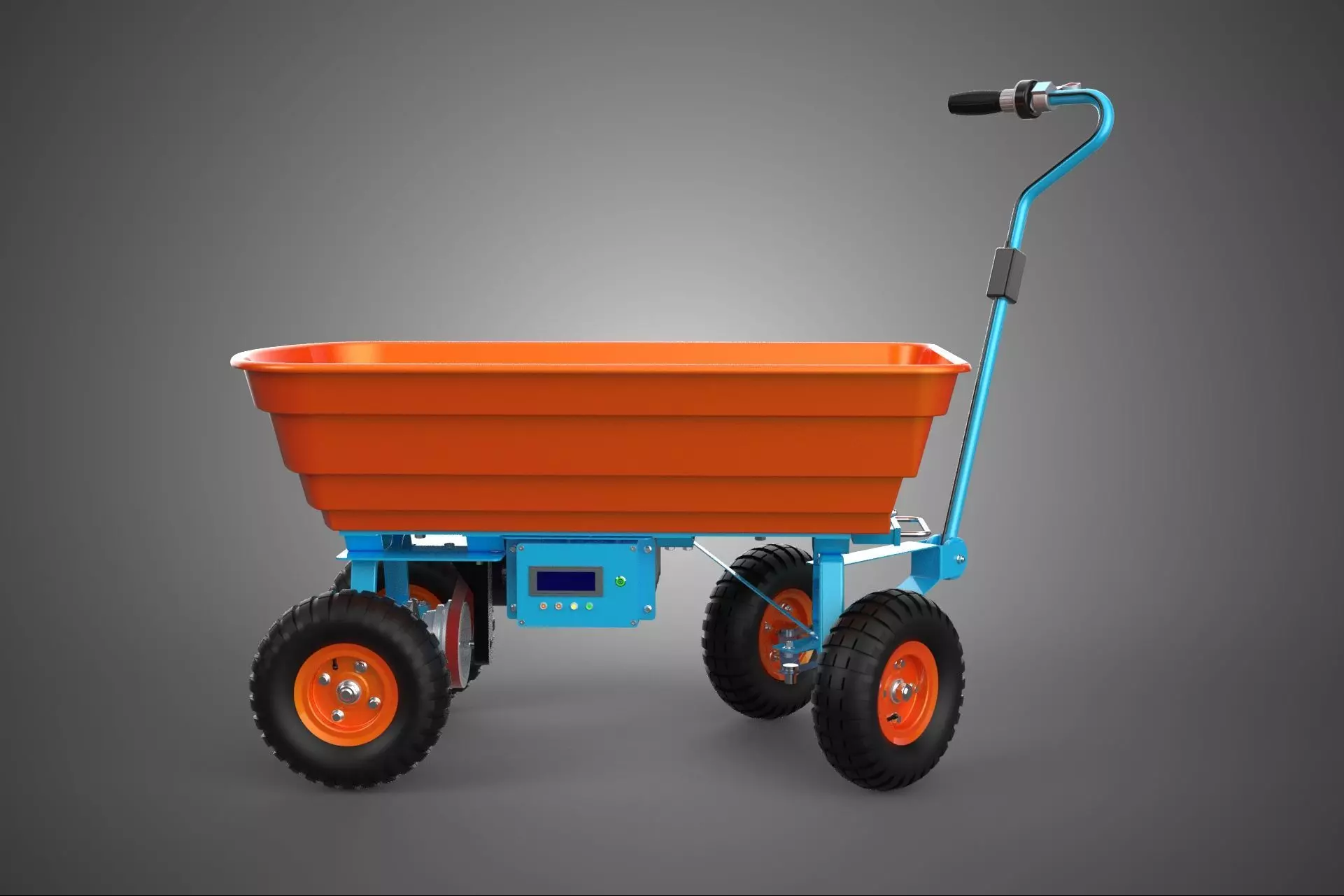
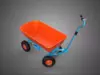
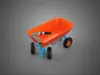
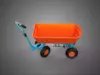
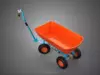
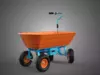
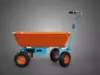
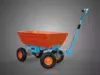
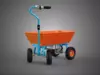
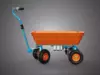
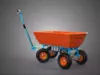
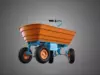
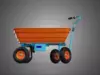
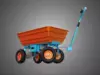
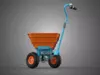
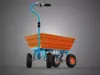
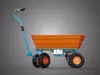
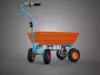
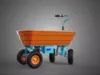
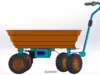
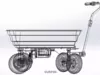
A Smart Electric Four-Wheel Utility Cart, Trolley, Wagon, or Wheelbarrow represents an advanced category of motorized material handling equipment designed for the efficient and ergonomic transport of goods across diverse environments. This versatile device integrates electric propulsion, multi-wheel stability, and intelligent control systems to enhance productivity, reduce manual labor, and improve safety in various logistical and operational tasks.
Core Components and Features:
- Electric Propulsion: At its fundamental level, the device is powered by an electric motor, typically drawing energy from rechargeable lithium-ion or lead-acid batteries. This design choice results in several environmental and operational advantages, including zero direct emissions during operation, significantly reduced noise pollution compared to internal combustion alternatives, and lower long-term operating costs. Electric motors provide instant torque, enabling smooth acceleration and efficient climbing capabilities, often complemented by regenerative braking systems that recover kinetic energy during deceleration to extend battery life.
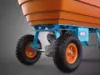
- Four-Wheel Configuration: Distinguished from traditional two-wheeled wheelbarrows, the four-wheel design offers superior stability, particularly when navigating uneven terrain or carrying heavy, unbalanced loads. This configuration typically employs either fixed axles for robust load bearing or steerable axles (e.g., automotive-style steering, articulated steering) for enhanced maneuverability in confined spaces. The four distinct contact points distribute weight more effectively, reducing ground pressure and improving traction across varied surfaces.
- Smart Capabilities: The designation smart signifies the integration of advanced technologies and sophisticated control systems. These intelligent features may include:
- Intelligent Power Management: Optimizing battery usage, displaying real-time charge levels, and facilitating efficient charging cycles to maximize operational duration.
- Variable Speed Control: Allowing precise speed adjustment, often with multiple operational modes (e.g., pedestrian speed, transport speed, turbo mode) to suit different tasks and environments.
- Sensor Integration: Incorporating an array of sensors for functionalities such as load detection, tilt monitoring, obstacle avoidance, proximity sensing, and potentially GPS for geofencing, asset tracking, or pre-programmed route following.
- Connectivity: Enabling wireless communication via Bluetooth, Wi-Fi, or cellular networks for remote control, diagnostic reporting, over-the-air firmware updates, and seamless integration with broader Internet of Things (IoT) ecosystems or centralized fleet management systems.
- Human-Machine Interface (HMI): Digital displays provide real-time operational data, diagnostic information, and intuitive user feedback, enhancing operator control and situational awareness.
- Advanced Control Algorithms: Implementing sophisticated features such as follow-me functionality (where the cart autonomously trails a designated user), semi-autonomous navigation capabilities, or dynamic braking tailored to current load and terrain conditions.
- Safety Features: Integration of emergency stop buttons, anti-tip mechanisms, audible warnings, and potentially active stability control systems to enhance operational safety and prevent accidents.
- Utility and Design Variants: The combination of cart, trolley, wagon, and wheelbarrow in its nomenclature reflects the device's inherent versatility and its capacity to encompass the functional attributes of various traditional material handling aids. These devices typically feature a robust frame constructed from durable materials like steel or aluminum, engineered to support substantial payloads. Load bed variations are common to cater to diverse material types:
- Dump Bed: Equipped with manual or electric tilting mechanisms for efficient unloading of bulk materials such as soil, gravel, sand, or waste.
- Flatbed: Designed for transporting irregularly shaped items, boxes, tools, or equipment, often featuring tie-down points for secure load management.
- Basket/Tub: Enclosed containers suitable for smaller items, gardening supplies, or waste collection.
- Modular Systems: Designs that allow for interchangeability of load beds or the attachment of specialized implements for task-specific customization.
Applications:
The comprehensive capabilities of a Smart Electric Four-Wheel Utility Cart render it suitable for an extensive spectrum of applications across various sectors:
- Construction Sites: Moving tools, building materials, and debris.
- Landscaping and Horticulture: Transporting soil, mulch, plants, logs, and garden waste.
- Agricultural Settings: Hauling feed, produce, fertilizers, and small equipment.
- Warehousing and Logistics: Material handling, order picking, and internal transport of goods.
- Industrial Facilities: Moving components, finished products, tools, and waste.
- Institutional Campuses: Maintenance, groundskeeping, and waste management in large facilities.
- Personal and Home Use: Heavy-duty yard work, moving firewood, or transporting heavy items around residential properties.
Advantages:
The adoption of such a device offers significant benefits, including a substantial reduction in physical strain on operators, improved efficiency in material transport processes, enhanced safety through intelligent features and active controls, a lower environmental impact due to electric power, and overall increased operational productivity. Its adaptability across various terrains and tasks, combined with its ergonomic design, makes it an invaluable asset in modern material handling and logistics.