High-quality 3D assets at affordable prices — trusted by designers, engineers, and creators worldwide. Made with care to be versatile, accessible, and ready for your pipeline.
Included File Formats
This model is provided in 14 widely supported formats, ensuring maximum compatibility:
• - FBX (.fbx) – Standard format for most 3D software and pipelines
• - OBJ + MTL (.obj, .mtl) – Wavefront format, widely used and compatible
• - STL (.stl) – Exported mesh geometry; may be suitable for 3D printing with adjustments
• - STEP (.step, .stp) – CAD format using NURBS surfaces
• - IGES (.iges, .igs) – Common format for CAD/CAM and engineering workflows (NURBS)
• - SAT (.sat) – ACIS solid model format (NURBS)
• - DAE (.dae) – Collada format for 3D applications and animations
• - glTF (.glb) – Modern, lightweight format for web, AR, and real-time engines
• - 3DS (.3ds) – Legacy format with broad software support
• - 3ds Max (.max) – Provided for 3ds Max users
• - Blender (.blend) – Provided for Blender users
• - SketchUp (.skp) – Compatible with all SketchUp versions
• - AutoCAD (.dwg) – Suitable for technical and architectural workflows
• - Rhino (.3dm) – Provided for Rhino users
Model Info
• - All files are checked and tested for integrity and correct content
• - Geometry uses real-world scale; model resolution varies depending on the product (high or low poly)
• • - Scene setup and mesh structure may vary depending on model complexity
• - Rendered using Luxion KeyShot
• - Affordable price with professional detailing
Buy with confidence. Quality and compatibility guaranteed.
If you have any questions about the file formats, feel free to send us a message — we're happy to assist you!
Sincerely,
SURF3D
Trusted source for professional and affordable 3D models.
More Information About 3D Model :
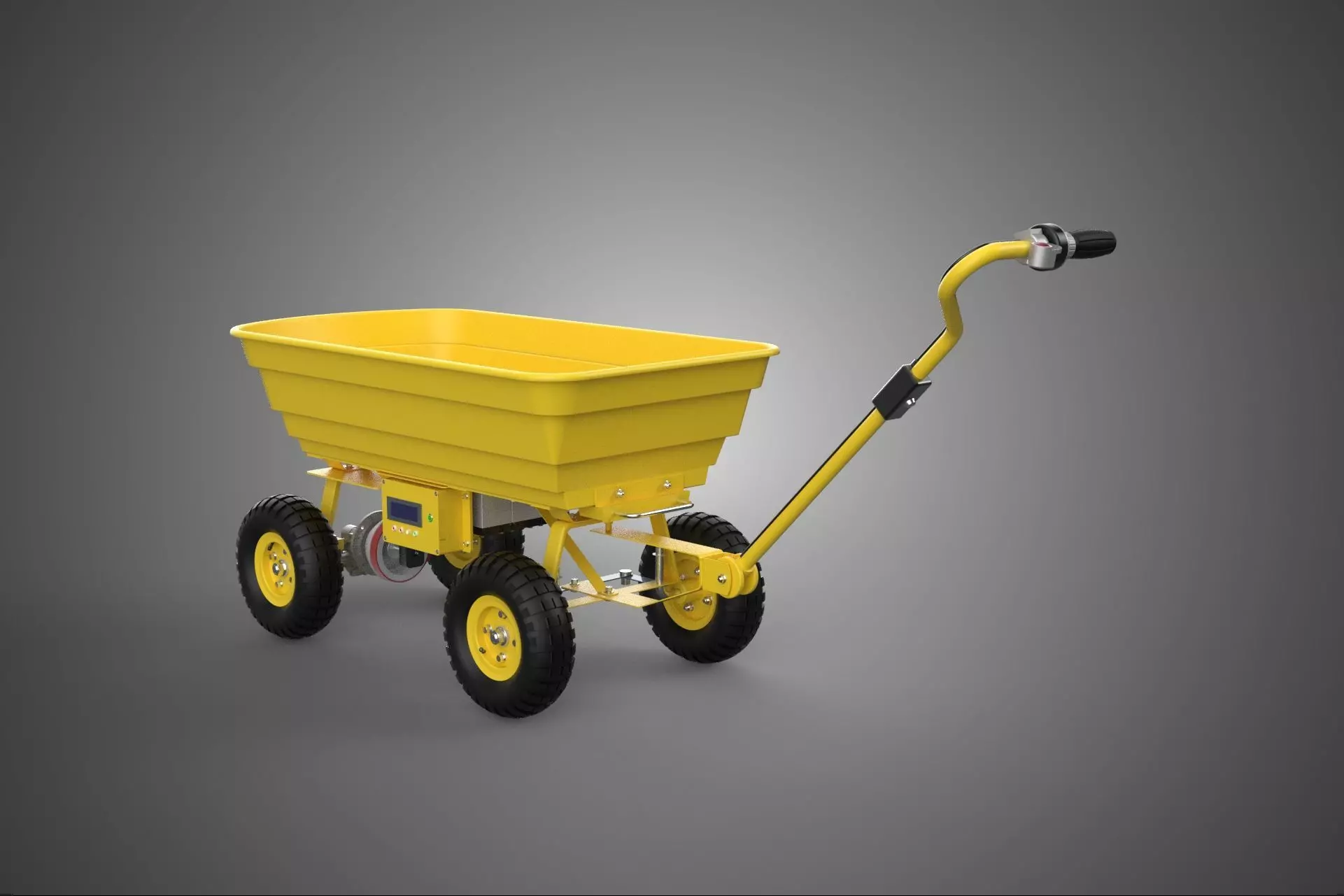
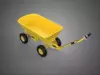
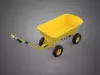
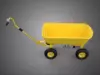
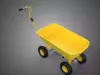
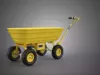
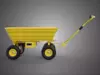
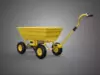
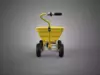
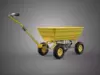
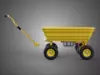
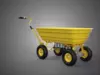
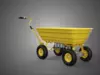
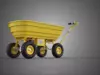
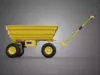
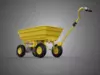
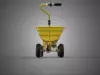
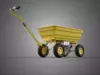
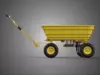
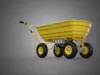
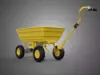
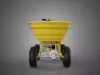
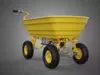
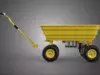
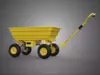
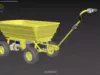
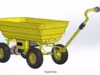
The IOT Autonomous Smart Robot Cart Trolley Wagon Wheelbarrow Garden refers to a sophisticated class of intelligent, self-operating, and interconnected mobile robotic platforms specifically engineered for diverse applications within garden and horticultural environments. This category of robotic utility vehicles integrates advanced sensor technologies, artificial intelligence, Internet of Things (IoT) connectivity, and robotic locomotion to autonomously perform tasks traditionally requiring manual labor, thereby enhancing efficiency, precision, and sustainability in gardening practices.
At its core, such a system operates with a high degree of autonomy, enabling it to navigate complex outdoor terrains, avoid obstacles, and execute pre-programmed or dynamically assigned tasks without continuous human intervention. Its smart capabilities stem from integrated AI and machine learning algorithms that facilitate environmental perception, object recognition (e.g., plants, weeds, tools), decision-making, and adaptive task execution. IoT integration ensures seamless data exchange, remote monitoring and control, and potential interoperability with other smart garden devices or cloud-based management systems. As a robot, it leverages actuators for movement and manipulation, and a comprehensive sensor suite for environmental understanding. The terms Cart, Trolley, Wagon, and Wheelbarrow collectively describe its primary function as a versatile material transport and utility platform, adaptable to various load capacities and ergonomic requirements within a garden setting.
The technological backbone comprises several synergistic components. Sensors are crucial for environmental awareness, including LiDAR or ultrasonic sensors for obstacle detection, GPS/RTK for precise localization, IMUs (Inertial Measurement Units) for orientation, and cameras for visual data processing (e.g., plant health monitoring, weed detection). Actuators, typically electric motors, drive the wheels and potentially robotic arms or specialized attachments. An onboard processing unit, often featuring edge AI capabilities, manages sensor fusion, real-time navigation (e.g., SLAM - Simultaneous Localization and Mapping), path planning, and task execution. IoT connectivity is established through protocols like Wi-Fi, Bluetooth, LoRa, or cellular networks, enabling cloud integration for data storage, analytics, firmware updates, and remote control via a user interface or smartphone application. Power systems generally rely on rechargeable batteries, often complemented by autonomous charging stations.
The primary application domain is the garden, encompassing a wide range of tasks. These robots can autonomously transport heavy or bulky items such as soil, mulch, fertilizer bags, tools, harvested crops, or waste. Beyond mere conveyance, specialized attachments can enable tasks like automated weeding (mechanical or chemical spotting), precision irrigation, seeding, and even soil quality monitoring through integrated probes. They can serve as mobile bases for other robotic tools or provide assistive support for gardeners, reducing physical strain and increasing productivity, particularly for large gardens or commercial horticultural operations.
The deployment of IOT Autonomous Smart Robot Carts offers significant advantages. It substantially reduces manual labor, mitigating physical strain and freeing up human resources for more complex tasks. Precision in navigation and task execution minimizes waste (e.g., water, fertilizer) and improves crop yield. Continuous data collection via IoT provides valuable insights into garden health and resource management, facilitating data-driven decision-making. Furthermore, these devices can enhance accessibility for individuals with limited mobility, allowing them to participate more effectively in gardening activities. Their consistent operation can also lead to more predictable and efficient garden maintenance schedules.
Despite their potential, several challenges impede widespread adoption. High initial investment costs, the complexity of integrating diverse technologies, and ensuring robust operation across varying and unpredictable outdoor environmental conditions (e.g., weather, uneven terrain, mud) are significant hurdles. Battery life and charging infrastructure remain critical considerations for extended operations. Future developments are expected to focus on improved energy efficiency, enhanced AI capabilities for more nuanced task execution, better human-robot interaction interfaces, and the development of open standards for interoperability. Miniaturization, modular design for versatile attachments, and enhanced safety protocols for co-existence with humans and pets will also drive innovation in this field.
The IOT Autonomous Smart Robot Cart Trolley Wagon Wheelbarrow Garden represents a convergence of robotics, artificial intelligence, and IoT, poised to revolutionize garden management and horticulture. By automating strenuous tasks, optimizing resource utilization, and providing intelligent assistance, these platforms embody a significant step towards smart, sustainable, and accessible gardening for the future.
KEYWORDS: IoT Robotics, Autonomous Garden Robot, Smart Horticultural Cart, Robotic Utility Vehicle, Garden Automation, AI-powered Trolley, Material Handling Robot, Outdoor Autonomous System, Precision Agriculture, Robotic Wheelbarrow, Self-Navigating Cart, Environmental Sensors, Cloud Robotics, Path Planning, Obstacle Avoidance, Remote Control, Data Analytics, Sustainable Gardening Tools, Automated Transport, Smart Farm Equipment, GPS/RTK Navigation, Machine Learning Robotics, Wireless Connectivity, Battery-powered Robot, Robotic Platform, Horticultural Robotics, Automated Weeding, Garden Maintenance Robot, Digital Horticulture, SLAM Technology