High-quality 3D assets at affordable prices — trusted by designers, engineers, and creators worldwide. Made with care to be versatile, accessible, and ready for your pipeline.
Included File Formats
This model is provided in 14 widely supported formats, ensuring maximum compatibility:
• - FBX (.fbx) – Standard format for most 3D software and pipelines
• - OBJ + MTL (.obj, .mtl) – Wavefront format, widely used and compatible
• - STL (.stl) – Exported mesh geometry; may be suitable for 3D printing with adjustments
• - STEP (.step, .stp) – CAD format using NURBS surfaces
• - IGES (.iges, .igs) – Common format for CAD/CAM and engineering workflows (NURBS)
• - SAT (.sat) – ACIS solid model format (NURBS)
• - DAE (.dae) – Collada format for 3D applications and animations
• - glTF (.glb) – Modern, lightweight format for web, AR, and real-time engines
• - 3DS (.3ds) – Legacy format with broad software support
• - 3ds Max (.max) – Provided for 3ds Max users
• - Blender (.blend) – Provided for Blender users
• - SketchUp (.skp) – Compatible with all SketchUp versions
• - AutoCAD (.dwg) – Suitable for technical and architectural workflows
• - Rhino (.3dm) – Provided for Rhino users
Model Info
• - All files are checked and tested for integrity and correct content
• - Geometry uses real-world scale; model resolution varies depending on the product (high or low poly)
• • - Scene setup and mesh structure may vary depending on model complexity
• - Rendered using Luxion KeyShot
• - Affordable price with professional detailing
Buy with confidence. Quality and compatibility guaranteed.
If you have any questions about the file formats, feel free to send us a message — we're happy to assist you!
Sincerely,
SURF3D
Trusted source for professional and affordable 3D models.
More Information About 3D Model :
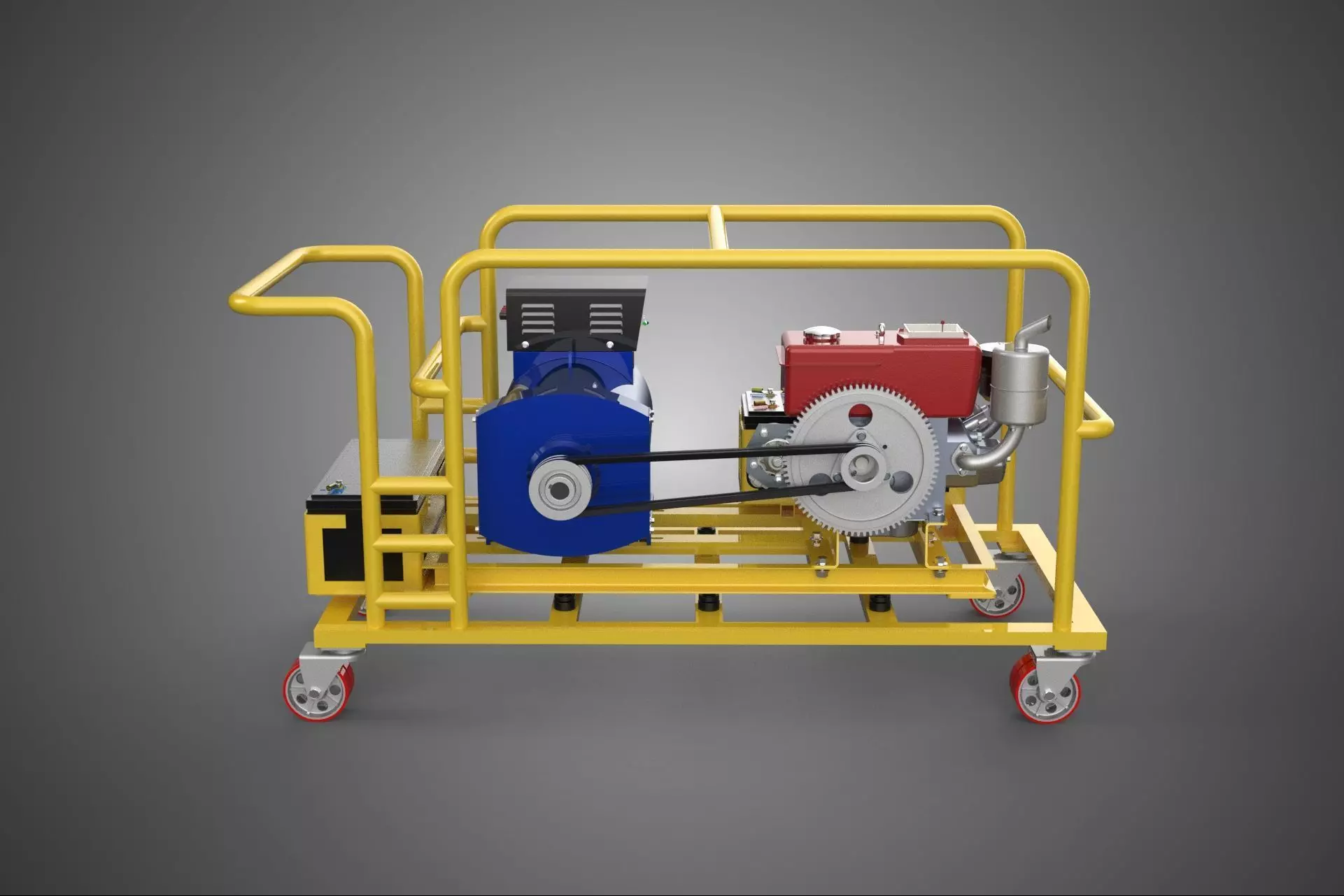
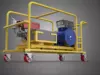
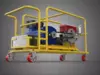
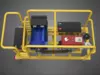
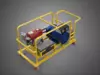
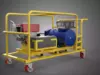
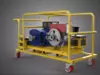
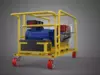
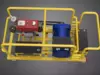
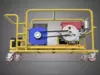
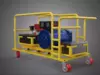
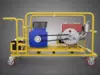
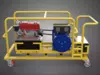
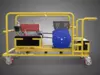
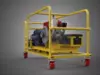
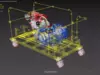
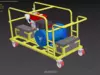
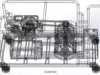
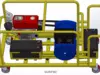
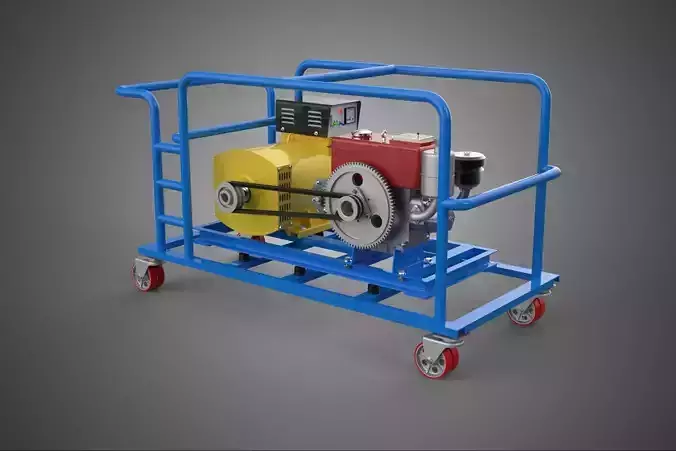
DIESEL SELF STARTER ELECTRIC MOTOR FLYWHEEL POWER GENERATOR SET
A Diesel Self Starter Electric Motor Flywheel Power Generator Set (commonly referred to as a high-inertia Genset, Rotary Uninterruptible Power Supply (RUPS), or Diesel Rotary UPS (DRUPS)) is an integrated electromechanical system designed to provide highly reliable, stable, and instantaneous electrical power, primarily for critical infrastructure applications. This configuration couples a compression-ignition diesel engine with a robust electrical generator and a high-mass flywheel, often incorporating a single electrical machine that functions interchangeably as a starting motor, a synchronous motor, and an alternator.
I. System Architecture and Definition
The core function of this integrated set is to act as a resilient, on-demand power source capable of immediate synchronization with a load upon utility power failure. Unlike standard diesel generators, which rely on electrochemical battery banks and rapid engine start-up, the inclusion of an integrated flywheel provides kinetic energy storage (KES) that serves three critical purposes: stabilizing the generator output, absorbing engine speed fluctuations, and providing power continuity during the transition phase between utility grid failure and full diesel engine operational speed.
II. Component Subsystems
The system is defined by the synergistic interaction of its four principal components:
A. Diesel Engine (Prime Mover):
The diesel engine serves as the source of mechanical power, driving the generator via the rotational coupling. It is typically a high-efficiency, multi-cylinder, four-stroke engine designed for rapid starting and load acceptance. The engine’s fuel flexibility and inherent reliability make it suitable for prolonged operation during extended utility outages.
B. Electric Motor/Self Starter:
This machine facilitates the initiation of the diesel engine. In advanced DRUPS configurations, the electric motor is often the primary component of the rotating assembly, functioning in multiple modes. When utility power is available, it operates as a synchronous motor, spinning the flywheel and generator assembly to maintain standby kinetic energy. When utility power fails, it immediately switches to generator mode, drawing power from the flywheel while simultaneously initiating the diesel engine start sequence.
C. Flywheel (Kinetic Energy Storage):
The flywheel is a specialized mass assembly integrated into the rotating shaft. Its high moment of inertia stores rotational kinetic energy proportional to the square of its angular velocity ($KE = \frac{1}{2}I\omega^2$). This stored energy is crucial for bridging the power gap—the momentary delay (typically 5 to 15 seconds) required for the diesel engine to crank, reach operating speed, and stabilize its output following a grid power failure. The flywheel also damps torsional vibrations and regulates angular velocity, improving the quality of the electrical output.
D. Power Generator/Alternator:
The generator converts the rotational mechanical energy provided by the engine (or transiently by the flywheel) into electrical energy. These are predominantly synchronous alternators, ensuring stable frequency output essential for sensitive electronics. The generator must be rated to handle the full transient load requirement immediately upon engagement.
III. Operational Principles and Power Flow
The operational cycle is highly structured to ensure zero break in power transfer:
-
Standby Mode (Utility Power Present): The electric motor draws power from the utility grid, maintaining the flywheel and generator assembly at synchronous speed, storing kinetic energy, and ensuring system readiness. The diesel engine is decoupled or maintained in a ready-to-start state.
-
Transition Mode (Grid Failure): Upon detection of a power anomaly or complete failure, the electric motor immediately ceases drawing power and transitions into a generator, utilizing the rotational energy stored in the flywheel. This kinetic energy powers the critical load for the brief period necessary to engage the diesel engine.
-
Generation Mode (Diesel Engagement): Simultaneously with the transition, the self-starter mechanism activates the diesel engine. Once the engine reaches the requisite operational speed, it is coupled mechanically or electrically to the rotating mass, taking over the drive function from the decaying flywheel energy. The engine then sustains the generator output until utility power is restored.
### IV. Applications and Advantages
The Diesel Self Starter Electric Motor Flywheel Power Generator Set excels in applications where momentary power interruptions are intolerable. Its primary advantage lies in the integration of the energy storage (flywheel) directly into the rotational mass of the generator, eliminating the need for large, high-maintenance chemical battery banks typical of static UPS systems.
Key Applications:
- Large-scale data centers and colocation facilities (Tier IV).
- Hospital operating theaters and life support systems.
- Financial trading floors and banking infrastructure.
- Telecommunications and broadcasting nodes.
Advantages:
- High Reliability: Fewer components subject to chemical degradation compared to battery UPS.
- Immediate Response: Flywheel energy discharge is virtually instantaneous, minimizing switchover time (typically $<10$ milliseconds).
- Superior Power Quality: The massive inertia of the flywheel smooths the output, reducing frequency deviations and minimizing the Total Harmonic Distortion (THD) generated by the reciprocating action of the diesel engine.
- Compact Footprint: High energy density reduces the space required compared to conventional battery-backed systems.