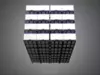
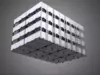
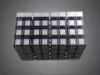
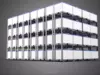
High-quality 3D assets at affordable prices — trusted by designers, engineers, and creators worldwide. Made with care to be versatile, accessible, and ready for your pipeline.
Included File Formats
This model is provided in 14 widely supported formats, ensuring maximum compatibility:
• - FBX (.fbx) – Standard format for most 3D software and pipelines
• - OBJ + MTL (.obj, .mtl) – Wavefront format, widely used and compatible
• - STL (.stl) – Exported mesh geometry; may be suitable for 3D printing with adjustments
• - STEP (.step, .stp) – CAD format using NURBS surfaces
• - IGES (.iges, .igs) – Common format for CAD/CAM and engineering workflows (NURBS)
• - SAT (.sat) – ACIS solid model format (NURBS)
• - DAE (.dae) – Collada format for 3D applications and animations
• - glTF (.glb) – Modern, lightweight format for web, AR, and real-time engines
• - 3DS (.3ds) – Legacy format with broad software support
• - 3ds Max (.max) – Provided for 3ds Max users
• - Blender (.blend) – Provided for Blender users
• - SketchUp (.skp) – Compatible with all SketchUp versions
• - AutoCAD (.dwg) – Suitable for technical and architectural workflows
• - Rhino (.3dm) – Provided for Rhino users
Model Info
• - All files are checked and tested for integrity and correct content
• - Geometry uses real-world scale; model resolution varies depending on the product (high or low poly)
• • - Scene setup and mesh structure may vary depending on model complexity
• - Rendered using Luxion KeyShot
• - Affordable price with professional detailing
Buy with confidence. Quality and compatibility guaranteed.
If you have any questions about the file formats, feel free to send us a message — we're happy to assist you!
Sincerely,
SURF3D
Trusted source for professional and affordable 3D models.
More Information About 3D Model :
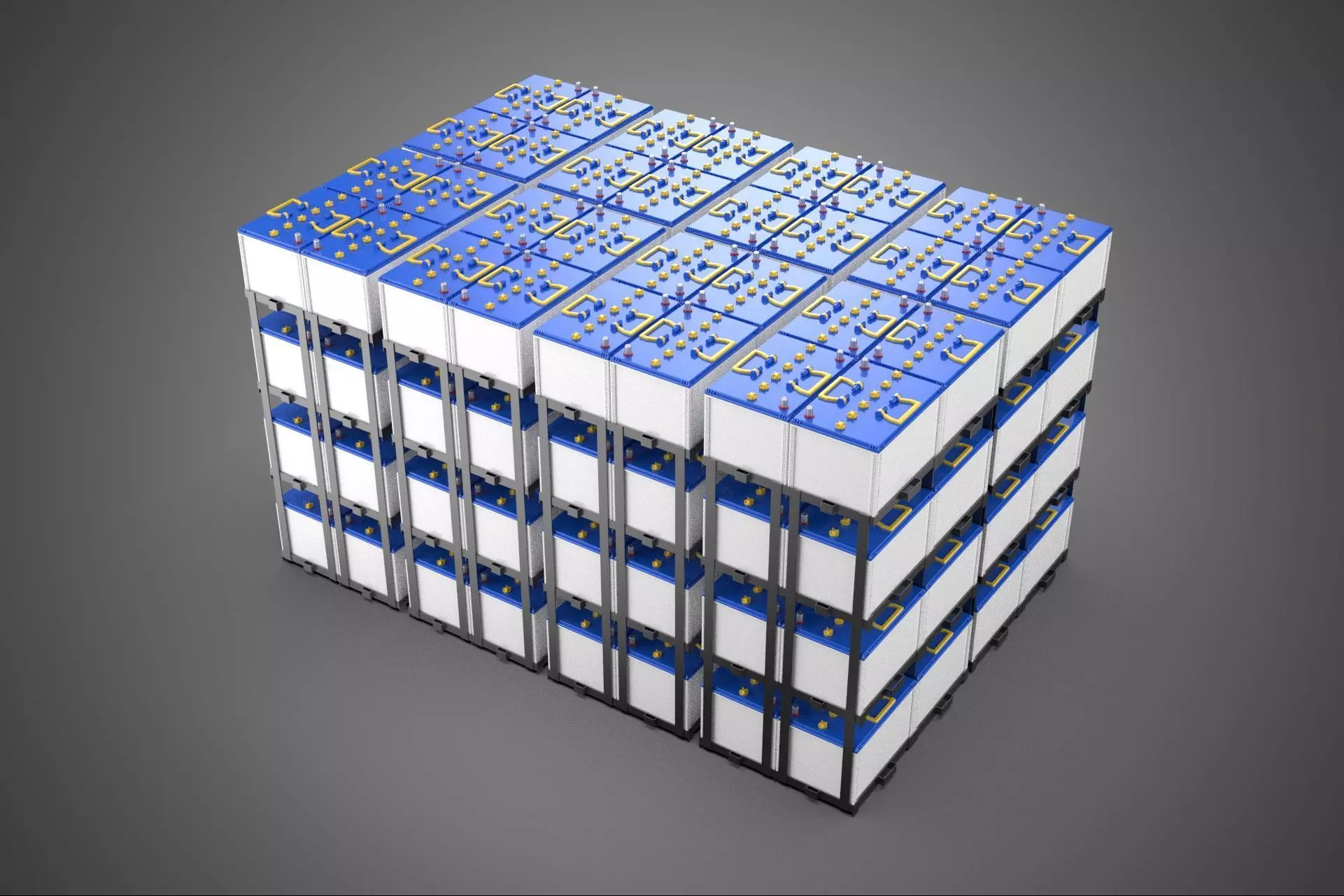
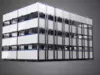
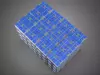
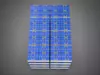
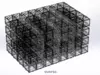
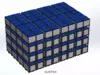
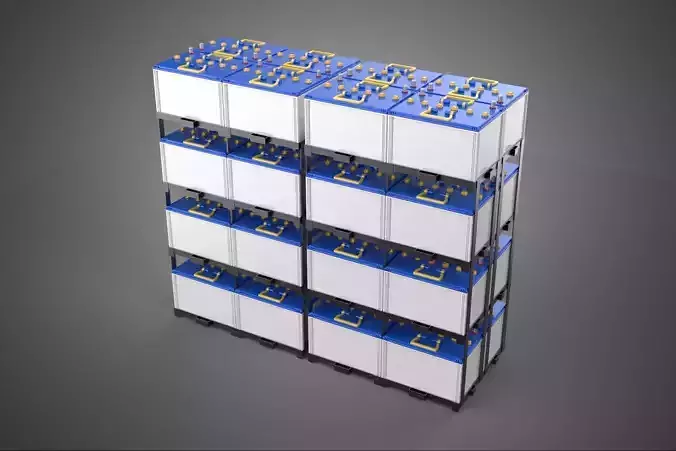
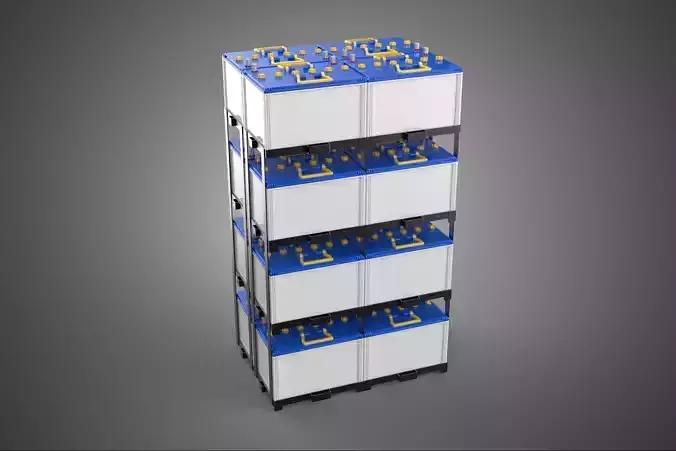
A Battery Energy Storage System (BESS), functioning as a utility-scale power plant, source bank, or supply accumulator facility, is an integrated electrical infrastructure designed to capture and store electrical energy from the grid or local generation sources and subsequently dispatch it back into the transmission or distribution network on demand. These installations represent a foundational technology in modernizing electrical grids, providing essential flexibility and stability services crucial for integrating high penetrations of variable renewable energy sources (VREs) such as solar and wind power.
Nomenclature and Definition
The subject encompasses several terms used interchangeably or synonymously, reflecting different aspects of its function. Accumulator (ACCU) and Battery Bank refer specifically to the electrochemical modules responsible for storing the energy. The descriptors Source Bank and Supply emphasize the facility's function as a dispatchable energy reservoir. The term Power Plant signifies its operational similarity to traditional generation facilities, capable of injecting significant power (measured in megawatts, MW) into the grid, although its energy is derived from prior charging rather than primary fuel conversion.
Architecture and Core Components
A typical grid-scale BESS facility comprises three main technological subsystems:
- Energy Storage Medium (Battery Modules): The core storage component is typically housed in standardized containers or dedicated buildings. While various chemistries exist—including advanced lead-acid, sodium-sulfur (NaS), and flow batteries—Lithium-ion (Li-ion) technology (primarily Nickel Manganese Cobalt, NMC, or Lithium Iron Phosphate, LFP) dominates the utility market due to its high energy density, rapid response time, and long cycle life.
- Power Conversion System (PCS): The PCS is composed of bidirectional inverters necessary to manage the flow of electricity between the direct current (DC) battery modules and the alternating current (AC) grid. The PCS controls the charge and discharge rates, ensuring synchronized voltage and frequency output compliant with grid standards.
- Plant Control and Management Systems: This critical layer includes the Battery Management System (BMS), which monitors and controls the health, temperature, voltage, and State-of-Charge (SOC) of individual cells or modules, preventing unsafe conditions and optimizing performance. The overarching Plant Controller (or Energy Management System, EMS) communicates with grid operators, executing operational decisions such as charging for arbitrage or reacting instantaneously to frequency deviations.
### Operational Functions and Grid Services
BESS facilities are integral to achieving a reliable and resilient electrical system by providing diverse ancillary services:
- Energy Arbitrage: Charging the system when wholesale electricity prices are low (often corresponding to periods of low demand or high renewable generation) and discharging it when prices are high (during peak demand), thereby maximizing asset utilization and stabilizing market pricing.
- Frequency Regulation and Inertia: Providing near-instantaneous power injection or absorption to counteract small-scale supply-demand imbalances, maintaining the required grid frequency (e.g., 50 Hz or 60 Hz). This rapid response is often superior to traditional thermal generation.
- Capacity Firming and Renewables Integration: Smoothing the volatile output of VREs. For solar plants, BESS can shift midday generation to evening peak hours (load shifting); for wind, it can mitigate rapid output drops caused by wind variability. This maximizes the predictable dispatchability of renewable assets.
- Transmission and Distribution Support: Deferring or avoiding costly infrastructure upgrades by injecting power locally during congestion or peak periods.
- Black Start Capability: The ability to initiate power restoration processes following a complete system collapse (a blackout), providing the initial power required to energize generators and restart the network.
### Performance Metrics
The capability of a BESS facility is defined by two fundamental metrics: its Power Capacity (MW), which dictates the maximum rate of instantaneous charge or discharge, and its Energy Capacity (MWh), which determines the duration that the rated power can be sustained. Efficiency is measured by Round-Trip Efficiency (RTE), the ratio of energy retrieved to energy stored, which typically ranges from 80% to 90% for contemporary Li-ion systems.
KEYWORDS: Grid, BESS, Lithium-ion, Energy Storage, Accumulator, Power Plant, Frequency Regulation, Arbitrage, Renewables, Intermittency, Utility Scale, Megawatt-hour, Inverter, PCS, BMS, Grid Flexibility, Smart Grid, Black Start, Transmission, Distribution, Source Bank, Supply, Electrochemical, Resilience, Capacity Firming, Ancillary Services, Cycling, State-of-Charge, Flow Battery, Power Conversion