High-quality 3D assets at affordable prices — trusted by designers, engineers, and creators worldwide. Made with care to be versatile, accessible, and ready for your pipeline.
Included File Formats
This model is provided in 14 widely supported formats, ensuring maximum compatibility:
• - FBX (.fbx) – Standard format for most 3D software and pipelines
• - OBJ + MTL (.obj, .mtl) – Wavefront format, widely used and compatible
• - STL (.stl) – Exported mesh geometry; may be suitable for 3D printing with adjustments
• - STEP (.step, .stp) – CAD format using NURBS surfaces
• - IGES (.iges, .igs) – Common format for CAD/CAM and engineering workflows (NURBS)
• - SAT (.sat) – ACIS solid model format (NURBS)
• - DAE (.dae) – Collada format for 3D applications and animations
• - glTF (.glb) – Modern, lightweight format for web, AR, and real-time engines
• - 3DS (.3ds) – Legacy format with broad software support
• - 3ds Max (.max) – Provided for 3ds Max users
• - Blender (.blend) – Provided for Blender users
• - SketchUp (.skp) – Compatible with all SketchUp versions
• - AutoCAD (.dwg) – Suitable for technical and architectural workflows
• - Rhino (.3dm) – Provided for Rhino users
Model Info
• - All files are checked and tested for integrity and correct content
• - Geometry uses real-world scale; model resolution varies depending on the product (high or low poly)
• • - Scene setup and mesh structure may vary depending on model complexity
• - Rendered using Luxion KeyShot
• - Affordable price with professional detailing
Buy with confidence. Quality and compatibility guaranteed.
If you have any questions about the file formats, feel free to send us a message — we're happy to assist you!
Sincerely,
SURF3D
Trusted source for professional and affordable 3D models.
More Information About 3D Model :
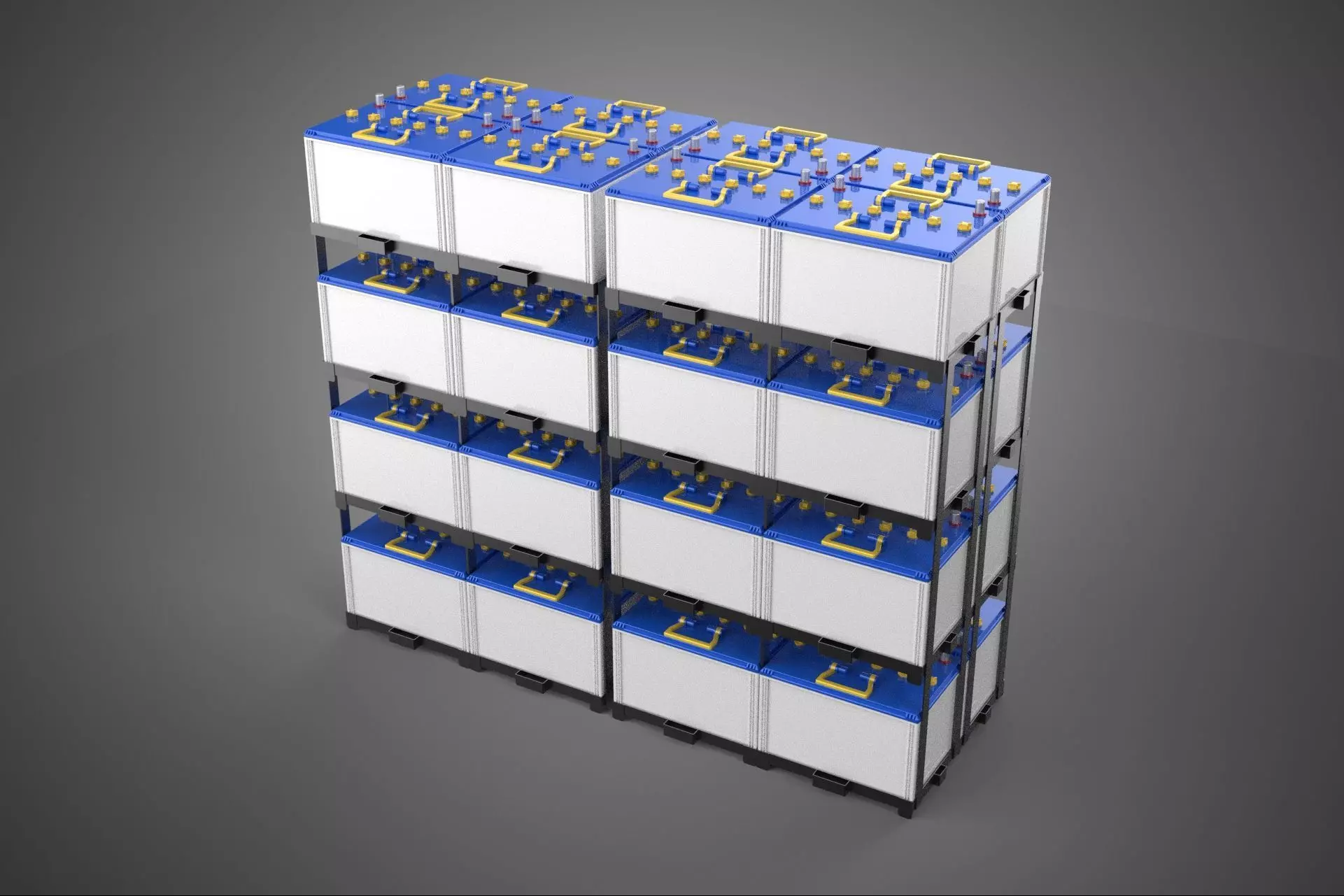
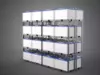
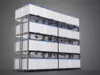
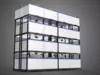
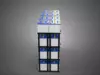
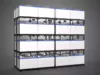
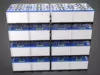
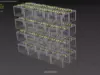
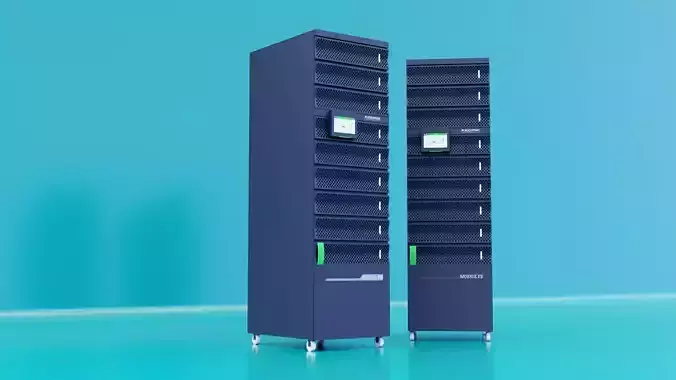
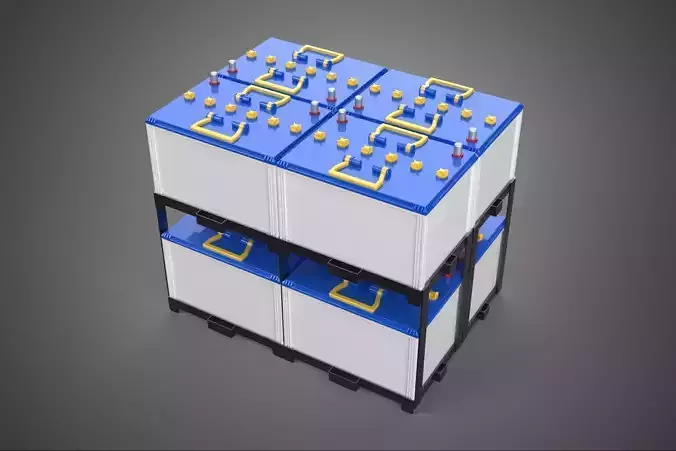
High-Capacity Uninterruptible Power Supply (UPS) Systems and Modular Energy Storage Banks
High-capacity Uninterruptible Power Supply (UPS) systems, utilizing integrated large-format battery banks—often referred to as battery accumulators (Accu) or specialized battery backup modules—represent essential infrastructure for maintaining power quality and continuity to critical electrical loads. These systems differ significantly from standard consumer power banks in scale, operational complexity, and output capacity, typically being rated in kilowatts (kW) or kilovolt-amperes (kVA), and providing extended runtimes measured in minutes or hours.
Classification and Function
A large UPS system operates primarily as a power conditioning and bridging device, ensuring zero-transfer-time switchover to stored energy upon utility grid failure. The functional architecture is generally based on either a Line-Interactive topology (for moderately large systems) or, predominantly, a Double-Conversion Online topology (for high-capacity critical loads). The latter continuously processes incoming AC power, converting it to DC to charge the battery bank and then inverting it back to clean AC power, thus isolating the load from virtually all grid disturbances.
The energy storage component, the large battery bank, is the Accu or backup unit. Due to the high demands for power density, longevity, and cyclability, two primary battery chemistries dominate this sector:
- Valve-Regulated Lead-Acid (VRLA): Reliable, cost-effective, and mature technology, frequently used in large standby applications. VRLA batteries are typically rated for float service and require structured maintenance environments (e.g., thermal management).
- Lithium-ion (Li-ion): Increasingly favored for large installations due to superior energy density, reduced footprint, longer cycle life, and lower maintenance requirements. Li-ion UPS banks require sophisticated Battery Management Systems (BMS) for safety and performance optimization.
### System Scalability and Configuration
High-capacity systems are designed for modularity and scalability. A typical installation utilizes several components working in tandem:
- Rectifier/Charger: Converts incoming AC to DC to maintain the battery charge and supply the DC bus.
- Inverter: Converts DC power from the batteries or the rectifier back into regulated AC power for the output load.
- Static Switch: Allows for immediate, automated transfer of the load to a bypass source (utility or separate generator) in the event of an internal UPS fault or operational overload.
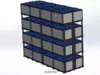
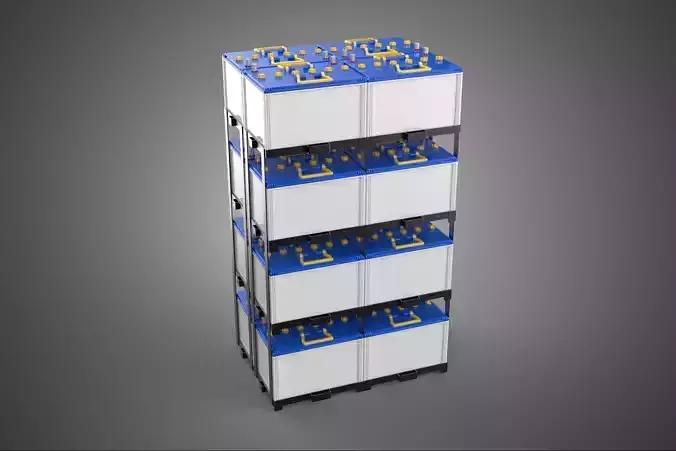
- Battery Energy Storage Modules: These are the large external components that hold the stored energy. They are often configured in series and parallel arrays to achieve the required DC voltage and total ampere-hour (Ah) capacity, directly determining the achievable runtime.
The concept of a large UPS power bank often implies a Battery Energy Storage System (BESS) designed specifically to interface with a UPS, providing supplementary power for long-duration outages beyond the standard five-to-ten minutes typically supplied by internal UPS batteries.
### Applications in Critical Infrastructure
The deployment of large UPS systems is mandatory in environments where power discontinuity leads to significant financial loss, operational failure, or threat to human safety. Key sectors include:
- Data Centers and Cloud Computing Facilities: Preventing data loss and ensuring continuous network availability.
- Healthcare Facilities and Hospitals: Supporting life support systems, surgical theatres, and critical monitoring equipment.
- Telecommunications: Maintaining central office switching equipment and cellular network connectivity.
- Industrial Control Systems: Protecting continuous manufacturing processes and safety shutdown protocols (e.g., SCADA systems).
- Financial Services: Ensuring uninterrupted transaction processing and infrastructure.
The runtime of these large systems is a critical metric, determined by the total energy stored (measured in Watt-hours, Wh) relative to the supported load (kW). Modern large UPS setups are engineered for high efficiency (often exceeding 97% in eco-mode), minimizing standby losses and maximizing the system's overall economic viability.
KEYWORDS: Uninterruptible Power Supply, UPS, Battery Backup, Energy Storage System, BESS, High-Capacity, Data Center, VRLA, Lithium-ion, Accu, Accumulator, Critical Load, Power Conditioning, Double-Conversion Online, kVA, Runtime, Battery Management System, Inverter, Rectifier, Grid Resilience, Modularity, Standby Power, Telecom Infrastructure, Energy Density, Scalability, Power Quality, DC Bus, Static Switch, Critical Infrastructure Protection, Disaster Recovery.