High-quality 3D assets at affordable prices — trusted by designers, engineers, and creators worldwide. Made with care to be versatile, accessible, and ready for your pipeline.
Included File Formats
This model is provided in 14 widely supported formats, ensuring maximum compatibility:
• - FBX (.fbx) – Standard format for most 3D software and pipelines
• - OBJ + MTL (.obj, .mtl) – Wavefront format, widely used and compatible
• - STL (.stl) – Exported mesh geometry; may be suitable for 3D printing with adjustments
• - STEP (.step, .stp) – CAD format using NURBS surfaces
• - IGES (.iges, .igs) – Common format for CAD/CAM and engineering workflows (NURBS)
• - SAT (.sat) – ACIS solid model format (NURBS)
• - DAE (.dae) – Collada format for 3D applications and animations
• - glTF (.glb) – Modern, lightweight format for web, AR, and real-time engines
• - 3DS (.3ds) – Legacy format with broad software support
• - 3ds Max (.max) – Provided for 3ds Max users
• - Blender (.blend) – Provided for Blender users
• - SketchUp (.skp) – Compatible with all SketchUp versions
• - AutoCAD (.dwg) – Suitable for technical and architectural workflows
• - Rhino (.3dm) – Provided for Rhino users
Model Info
• - All files are checked and tested for integrity and correct content
• - Geometry uses real-world scale; model resolution varies depending on the product (high or low poly)
• • - Scene setup and mesh structure may vary depending on model complexity
• - Rendered using Luxion KeyShot
• - Affordable price with professional detailing
Buy with confidence. Quality and compatibility guaranteed.
If you have any questions about the file formats, feel free to send us a message — we're happy to assist you!
Sincerely,
SURF3D
Trusted source for professional and affordable 3D models.
More Information About 3D Model :
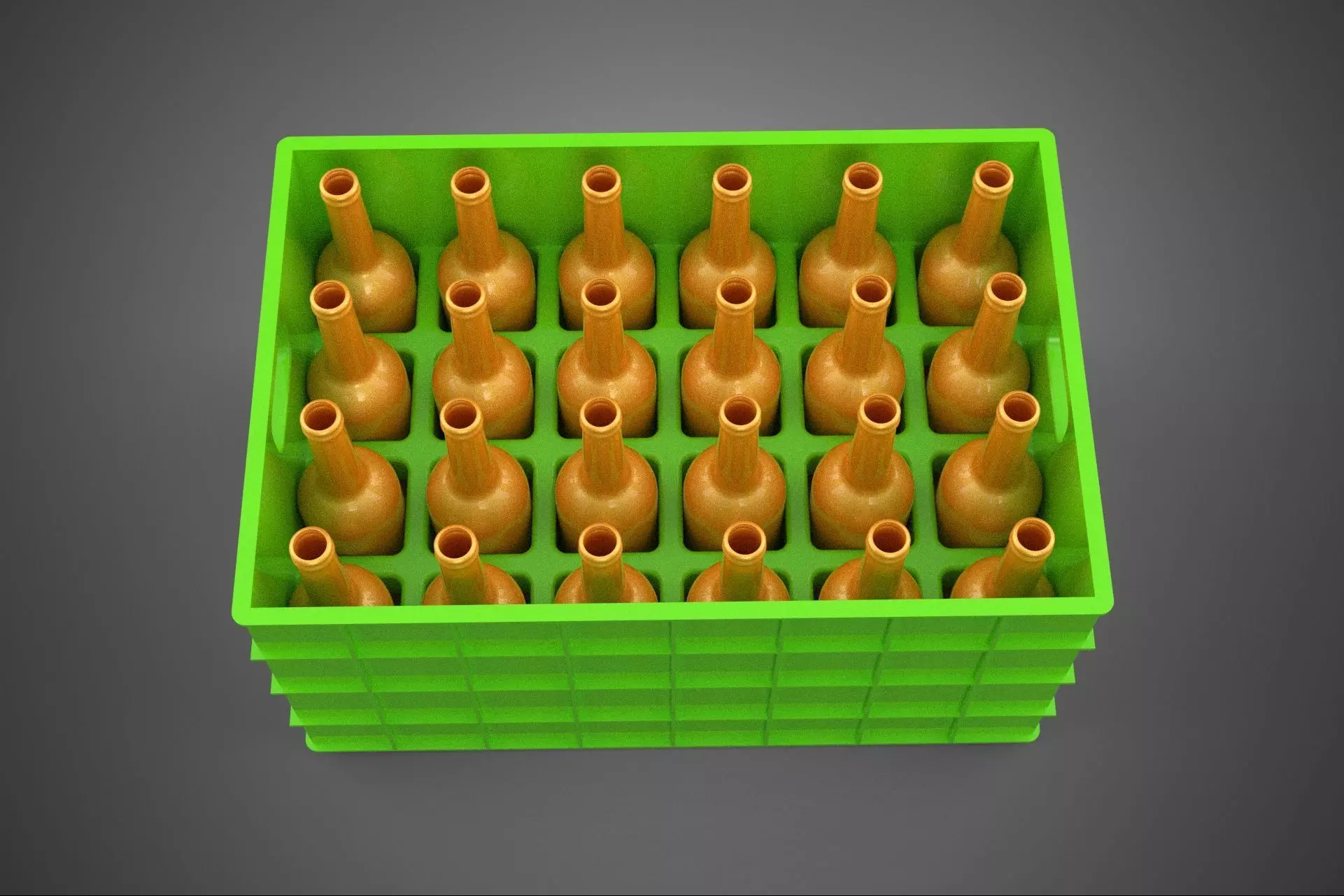
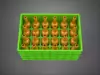
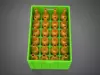
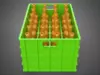
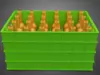
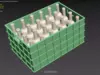
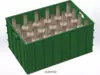
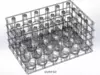
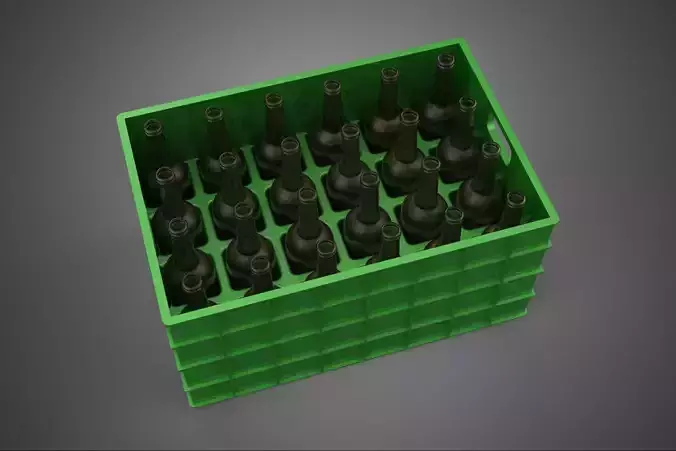
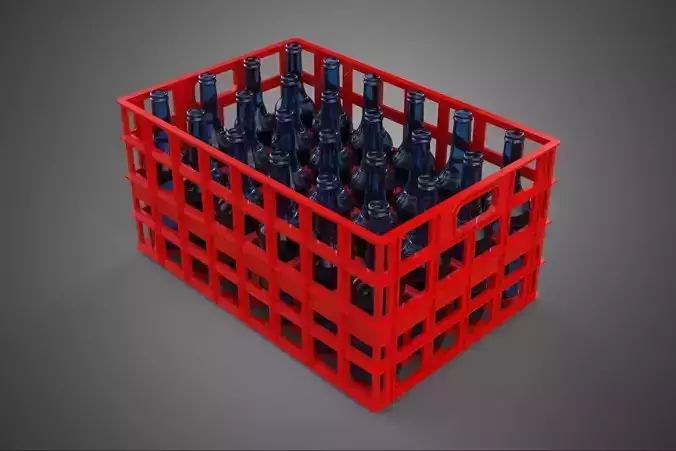
The Green Bottles Drink Crate Box Container Storage Tray Rack Array refers to a specialized, modular logistics unit standardized for the conveyance, storage, and organization of glass bottles, specifically those manufactured from green-tinted glass, within the commercial beverage supply chain. This nomenclature encompasses several specific types of receptacles, ranging from simple stacking trays (racks) to fully enclosed crates (boxes), all sharing the primary function of protecting contents during distribution and facilitating efficient automated handling.
Nomenclature and Typology
While the terms crate, box, tray, and rack are often used interchangeably in common parlance, in logistics, they define slightly different structures:
- Crate (Box): A robust, usually rectangular container offering full perimeter protection and compartmentalization (cells). Designed for long-term reusability and stacking loads.
- Tray (Rack): A lower-profile unit, often without high sidewalls, primarily designed to separate rows and columns of bottles and provide a stacking base, common in warehouse environments or for pre-packaged units like 24-packs.
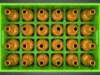
- Array: The collective arrangement or matrix (often 4x6 or 5x4 configurations) within the receptacle, defining the specific organization of the bottles.
These units are fundamental components of closed-loop systems, emphasizing durability and standardization to ensure compatibility with automated washing, filling, sorting, and palletizing machinery.
## Design and Materials
The standard container is engineered for resilience and long operational life, often enduring hundreds of transit cycles.
Material Composition: The majority of modern drink crates are fabricated via injection molding using high-density polymers, most frequently High-Density Polyethylene (HDPE) or Polypropylene (PP). These materials offer superior resistance to impact, moisture, chemical detergents (used in washing cycles), and environmental stress cracking. While historically wood or wire frames were utilized, plastic designs dominate due to lower tare weight, hygienic properties, and minimal maintenance requirements.
Structural Features:
- Compartmentalization: The interior features a grid structure or cell array tailored precisely to the diameter and height of the specific green bottle type being carried (e.g., standard long-neck beer bottles or specific soda/water containers). This compartmentalization prevents lateral bottle-to-bottle contact, significantly mitigating the risk of breakage or label abrasion during vibration and shock transit events.
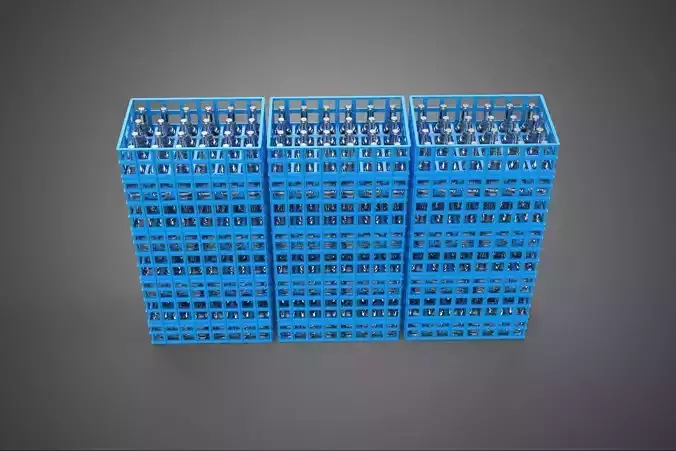
- Stacking Interlock: Crates incorporate interlocking features (ridges, recesses, or inverted cones) on the top rim and base. This mechanism ensures vertical stability, allowing for safe, high-density stacking in warehouses (often 10 to 15 layers high) and during vehicular transport.
- Footprint Standardization: To maximize efficiency in mechanized logistics, crates adhere to standard pallet dimensions, most commonly the European Pallet (Euro-pallet, 1200 mm x 800 mm) or the standard North American 48-inch x 40-inch pallet, ensuring maximal load density.
- Handling: Exterior walls typically feature reinforced hand-holds or integrated slots designed for robotic grippers and manual handling.
## The Significance of Green Bottles
The specific reference to green bottles is critical, linking the container's function directly to product preservation. Green glass is not arbitrary; it serves as a filter against specific wavelengths of light, primarily ultraviolet (UV) and blue light, which can induce photo-oxidation—a process known in brewing as lightstruck flavor development (skunking), caused by the breakdown of hopped iso-alpha acids.
The crate's design complements this protection:
- Physical Shielding: The sidewalls provide additional opacity, reducing exposure to ambient light sources during warehouse storage and transit, particularly for the portions of the bottle not covered by the label.
- Thermal Regulation: The typical open-grid construction allows for air circulation, preventing excessive thermal accumulation which could also compromise beverage integrity.
## Logistical Integration
These specialized containers are central to streamlined logistics, enabling rapid turnaround in automated bottling plants. They function as integral returnable transport packaging (RTP). In regions with mandatory deposit-return schemes (DRS), the standardized crate acts as the collection and auditing unit, simplifying the reversal of the supply chain from consumer or retailer back to the bottling facility for washing, sterilization, and refilling. The durability and modularity of the system are key economic factors contributing to the sustainability and efficiency of large-scale beverage manufacturing.
KEYWORDS: Logistics, Crate, Beverage, HDPE, Transport Packaging, Drink Container, Green Glass, Beer Bottle, Storage Rack, Modular Array, Returnable Packaging, Supply Chain, Palletization, Stacking, Injection Molding, Containerization, Distribution, Compartmentalization, Bottle Tray, Organization System, Reusable, Photo-oxidation, Lightstruck, Automated Handling, HDPE Crate, Commercial Beverage Industry, Unit Load, Warehouse Management, Packaging Engineering, Euro-pallet.