High-quality 3D assets at affordable prices — trusted by designers, engineers, and creators worldwide. Made with care to be versatile, accessible, and ready for your pipeline.
Included File Formats
This model is provided in 14 widely supported formats, ensuring maximum compatibility:
• - FBX (.fbx) – Standard format for most 3D software and pipelines
• - OBJ + MTL (.obj, .mtl) – Wavefront format, widely used and compatible
• - STL (.stl) – Exported mesh geometry; may be suitable for 3D printing with adjustments
• - STEP (.step, .stp) – CAD format using NURBS surfaces
• - IGES (.iges, .igs) – Common format for CAD/CAM and engineering workflows (NURBS)
• - SAT (.sat) – ACIS solid model format (NURBS)
• - DAE (.dae) – Collada format for 3D applications and animations
• - glTF (.glb) – Modern, lightweight format for web, AR, and real-time engines
• - 3DS (.3ds) – Legacy format with broad software support
• - 3ds Max (.max) – Provided for 3ds Max users
• - Blender (.blend) – Provided for Blender users
• - SketchUp (.skp) – Compatible with all SketchUp versions
• - AutoCAD (.dwg) – Suitable for technical and architectural workflows
• - Rhino (.3dm) – Provided for Rhino users
Model Info
• - All files are checked and tested for integrity and correct content
• - Geometry uses real-world scale; model resolution varies depending on the product (high or low poly)
• • - Scene setup and mesh structure may vary depending on model complexity
• - Rendered using Luxion KeyShot
• - Affordable price with professional detailing
Buy with confidence. Quality and compatibility guaranteed.
If you have any questions about the file formats, feel free to send us a message — we're happy to assist you!
Sincerely,
SURF3D
Trusted source for professional and affordable 3D models.
More Information About 3D Model :
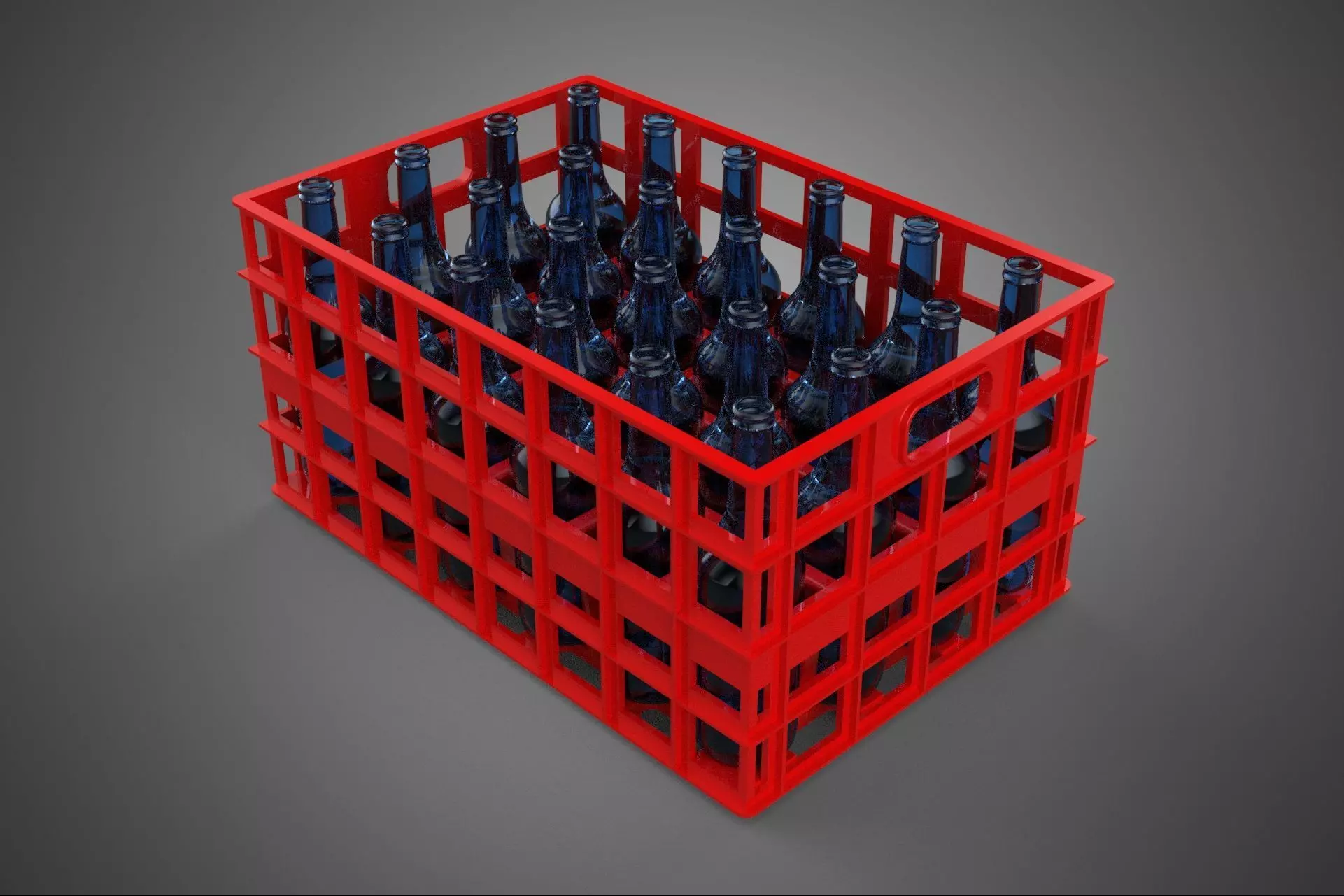
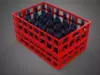
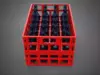
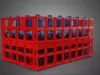
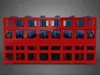
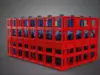
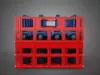
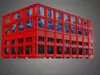
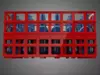
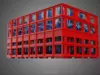
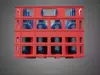
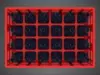
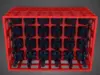
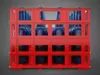
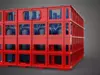
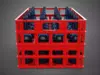
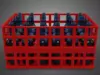
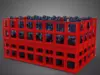
Logistical System for Specialized Unit Load Management: Red Glass Bottle, Plastic Crate, and Integrated Storage Apparatus
This description addresses a composite logistical entity comprising primary containment, standardized secondary packaging, and integrated high-density storage infrastructure. This system is designed for the secure, segregated, and efficient handling of specific materials, typically volatile, chemically sensitive, or high-value liquids, within industrial, laboratory, or specialized beverage environments.
I. Primary Containment Unit: The Red Glass Bottle
The red glass bottle serves as the primary vessel for the material being stored. The coloration, typically achieved through the introduction of specific metal oxides (such as ferric oxide or selenium) during the glass manufacturing process, is functional. Red, often manifesting as a deep ruby or amber-red tint, is crucial for attenuating specific wavelengths of ultraviolet (UV) and visible light. This is essential for protecting photo-sensitive compounds, chemicals (like nitric acid or certain reagents), or high-quality alcoholic spirits and beers, from degradation or photochemical reactions.
The material itself is soda-lime or borosilicate glass, selected for its inertness, impermeability, and thermal stability. Glass bottles are standardized by volume (e.g., liters, milliliters, drams) and fitted with specific neck finishes designed to accommodate various closures (e.g., continuous thread screw caps, ground glass stoppers, or crown caps). The fragility of the glass necessitates specialized handling protocols integrated into the subsequent packaging tiers.
II. Secondary Packaging and Unitization: The Plastic Crate/Box/Container
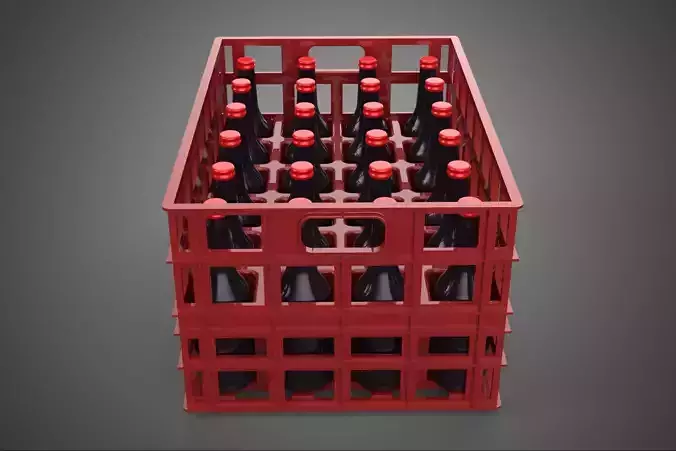
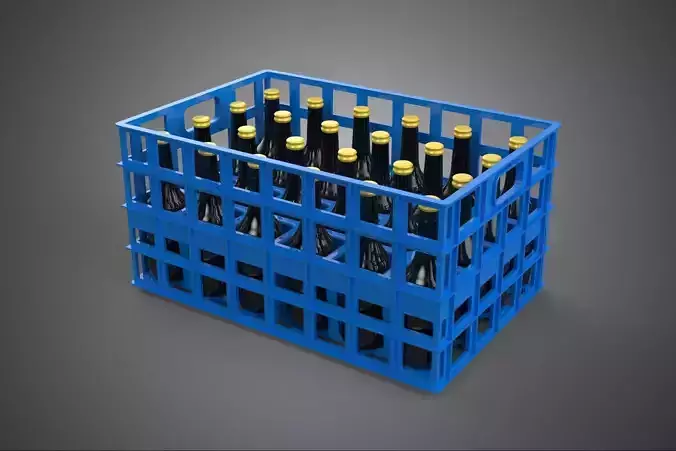
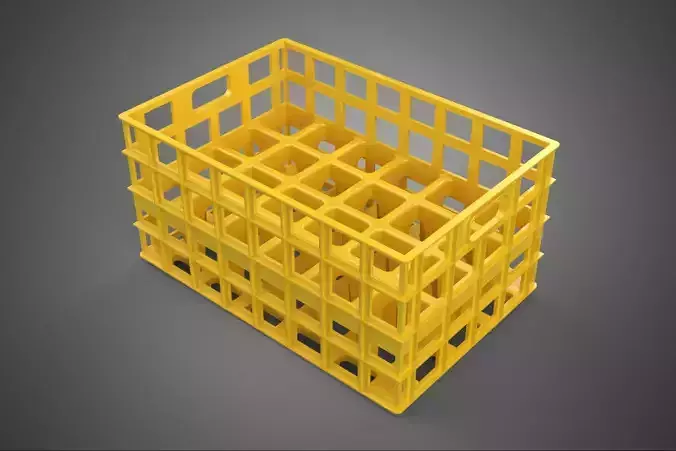
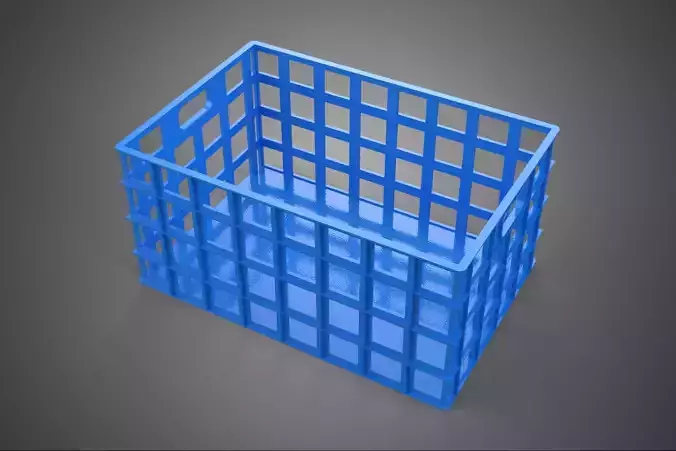
The plastic crate functions as Returnable Transit Packaging (RTP) and the fundamental unit load for mechanical handling and storage. These containers are manufactured typically from high-density polyethylene (HDPE) or polypropylene (PP), materials chosen for their durability, impact resistance, chemical compatibility, and cleanability.
The crate's design serves several critical functions:
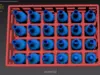
- Protection: It segregates individual glass bottles, preventing contact and reducing the risk of breakage during transit and stacking. Internal partitions (dividers or cells) are commonly incorporated.
- Unitization: It consolidates multiple primary units into a stable, standardized unit load that interfaces mechanically with automated systems, pallet jacks, and conveyor belts.
- Stackability: Crates feature reinforced rims and bases designed for secure interlocking when stacked vertically, maximizing floor space utilization and structural integrity within the storage system.
- Logistics: The dimensions of the crate are often modularized to align with international pallet standards (e.g., 600x400 mm for Euro pallets or specific dimensions for ISO pallets).
III. Tertiary Logistics Infrastructure: Storage Rack and Tray System
The storage rack and tray system represents the infrastructural component designed to house the unitized plastic crates securely and efficiently.
A. Storage Rack: This component is typically a heavy-duty, multi-level metallic structure, commonly constructed from cold-formed structural steel or high-tensile steel alloys. Rack designs vary widely but include selective pallet racking (for high accessibility), drive-in/drive-through systems (for high density), or specialized carton flow racks (gravity-fed systems suitable for high-throughput environments where crates must flow to a picking face). The rack structure ensures vertical stability and defines the inventory locations within the warehouse.
B. Tray/Shelf Component: The tray or shelf refers to the horizontal surface within the rack that directly supports the plastic crate. For industrial racking systems, this may be heavy wire decking, reinforced steel beams, or solid sheet metal trays. In automated or flow-rack systems, the tray might incorporate roller tracks or gravity slides to facilitate movement and retrieval of the crates, ensuring ergonomic access to the contents (the red glass bottles).
IV. System Integration and Functionality
The comprehensive system facilitates efficient inventory management, often employing color-coding (red for photosensitive materials) and unit-load standardization for rapid identification and handling. The combination of durable plastic crates and robust metal racking ensures that fragile primary containers are protected throughout the entire supply chain, from manufacturing to final distribution or consumption. This integrated approach is essential in industries governed by strict regulatory standards, such as pharmaceuticals, specialized chemicals, and high-end beverages.
KEYWORDS: Glassware, HDPE, Polypropylene, Logistics, RTP, Returnable Transit Packaging, Unitization, Crating, Storage System, Racking, Pallet Racking, Flow Rack, Unit Load, Primary Packaging, Secondary Packaging, Photoprotection, Ultraviolet Filtration, Industrial Storage, Containerization, Material Handling, Inventory Management, Warehouse Operations, Standardization, Glass Bottle, Red Glass, Chemical Storage, Beverage Industry, Structural Steel, Unit Load Device, Fragile Goods.