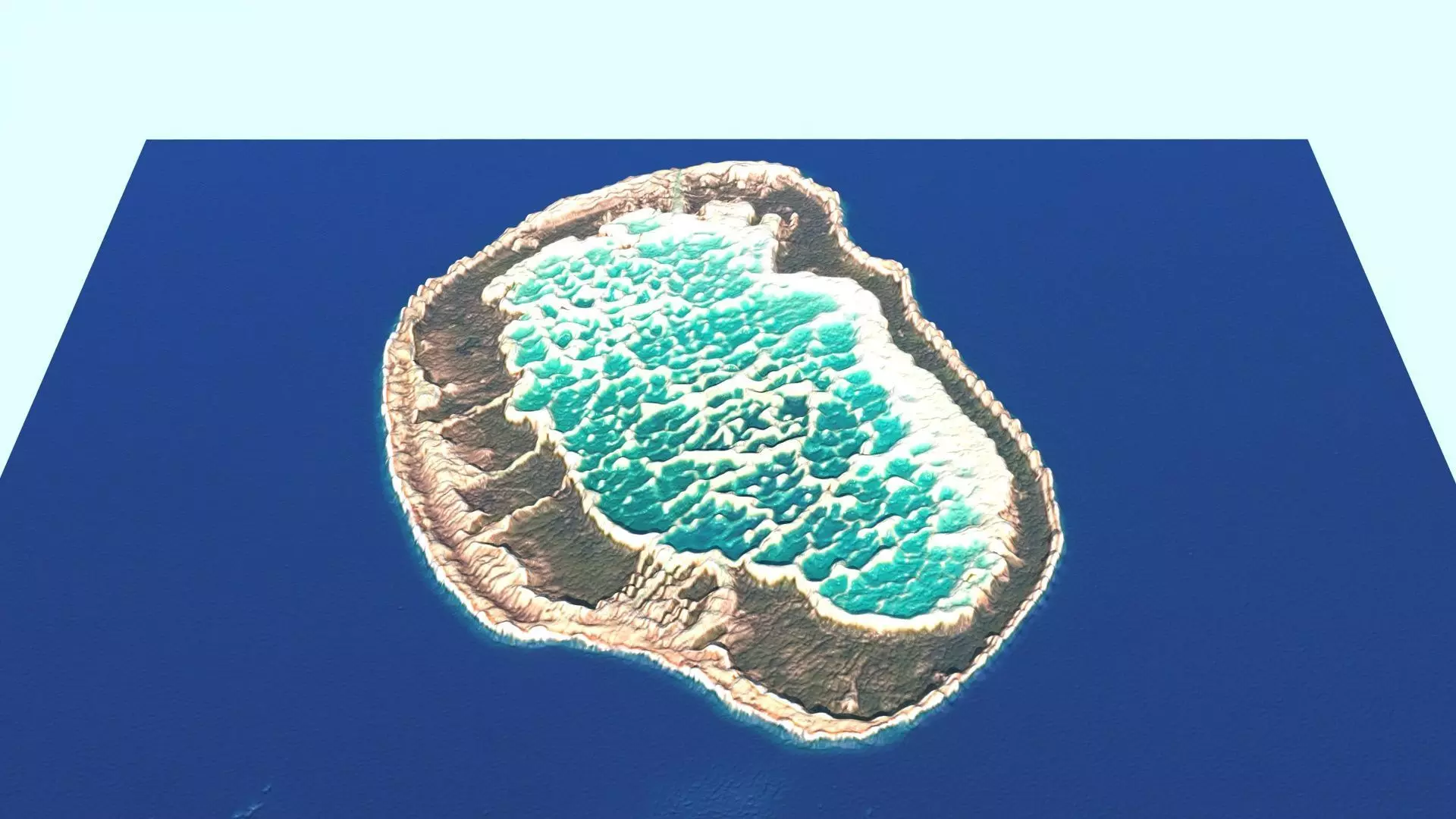
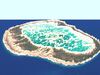
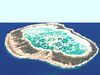
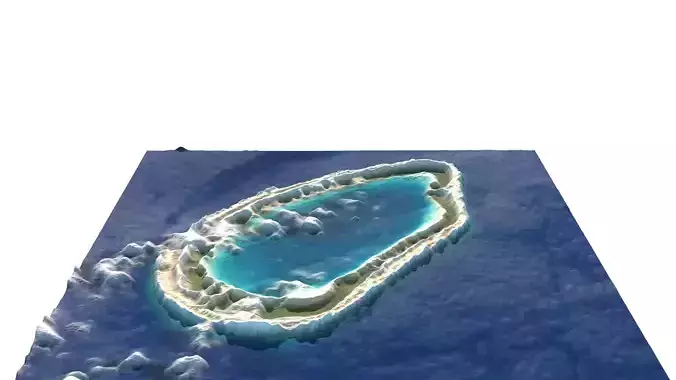
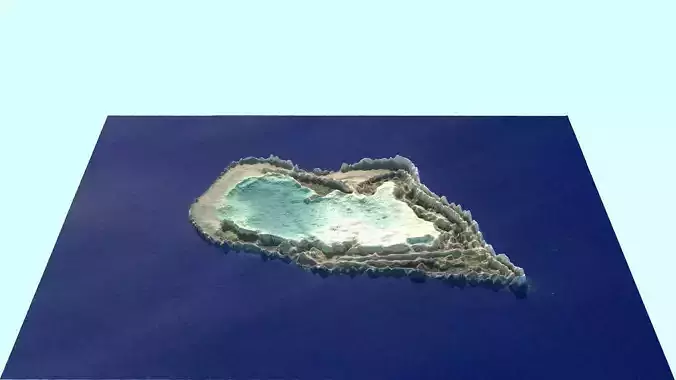
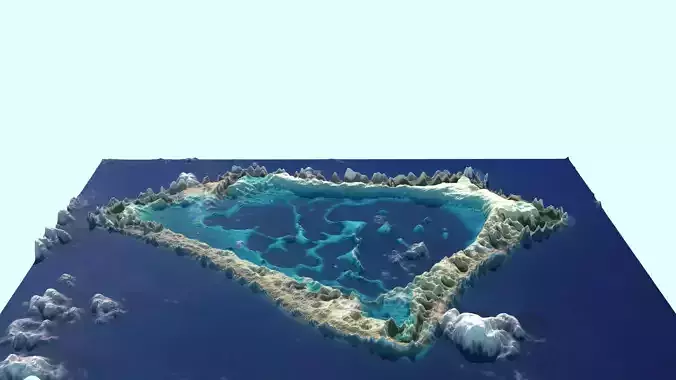
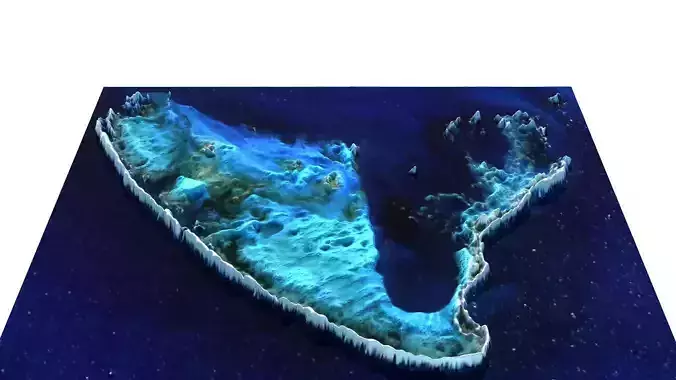
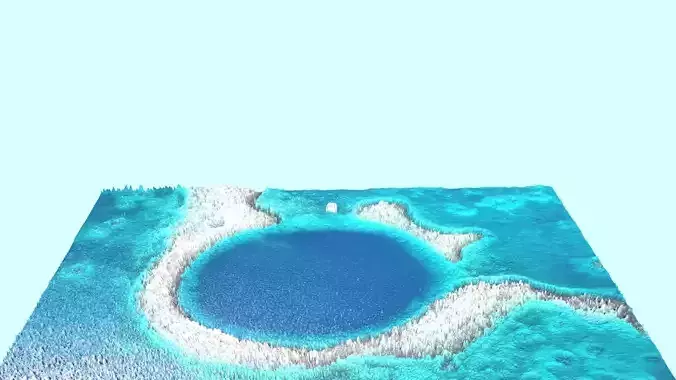
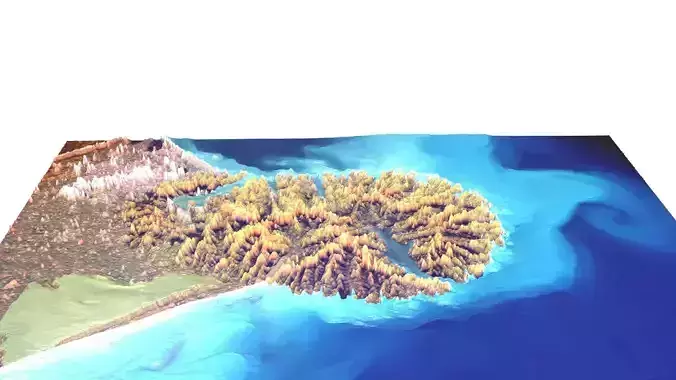
DescriptionAtoll Island. An atoll is a ring-shaped island, including a coral rim that encircles a lagoon. There may be coral islands or cays on the rim. Atolls are located in warm tropical or subtropical parts of the oceans and seas where corals can develop. Most of the approximately 440 atolls in the world are in the Pacific Ocean. Two different, well-cited models, the subsidence model and the antecedent karst model, have been used to explain the development of atolls. According to Charles Darwin's subsidence model, the formation of an atoll is explained by the sinking of a volcanic island around which a coral fringing reef has formed. Over geologic time, the volcanic island becomes extinct and eroded as it subsides completely beneath the surface of the ocean. As the volcanic island subsides, the coral fringing reef becomes a barrier reef that is detached from the island. Eventually, reef and the small coral islets on top of it are all that is left of the original island, and a lagoon has taken the place of the former volcano. The lagoon is not the former volcanic crater. For the atoll to persist, the coral reef must be maintained at the sea surface, with coral growth matching any relative change in sea level (sinking of the island or rising oceans). An alternative model for the origin of atolls is called the antecedent karst model. In the antecedent karst model, the first step in the formation of an atoll is the development of a flat top, mound-like coral reef during the subsidence of an oceanic island of either volcanic or nonvolcanic origin below sea level. Then, when relative sea level drops below the level of the flat surface of coral reef, it is exposed to the atmosphere as a flat topped island which is dissolved by rainfall to form limestone karst. Because of hydrologic properties of this karst, the rate of dissolution of the exposed coral is lowest along its rim and the rate of dissolution increases inward to its maximum at the center of the island. As a result, a saucer shaped island with a raised rim forms. When relative sea level submerges the island again, the rim provides a rocky core on which coral grow again to form the islands of an atoll and the flooded bottom of the saucer forms the lagoon within them.
Texture Resolution: 990 x 660