High-quality 3D assets at affordable prices — trusted by designers, engineers, and creators worldwide. Made with care to be versatile, accessible, and ready for your pipeline.
Included File Formats
This model is provided in 14 widely supported formats, ensuring maximum compatibility:
• - FBX (.fbx) – Standard format for most 3D software and pipelines
• - OBJ + MTL (.obj, .mtl) – Wavefront format, widely used and compatible
• - STL (.stl) – Exported mesh geometry; may be suitable for 3D printing with adjustments
• - STEP (.step, .stp) – CAD format using NURBS surfaces
• - IGES (.iges, .igs) – Common format for CAD/CAM and engineering workflows (NURBS)
• - SAT (.sat) – ACIS solid model format (NURBS)
• - DAE (.dae) – Collada format for 3D applications and animations
• - glTF (.glb) – Modern, lightweight format for web, AR, and real-time engines
• - 3DS (.3ds) – Legacy format with broad software support
• - 3ds Max (.max) – Provided for 3ds Max users
• - Blender (.blend) – Provided for Blender users
• - SketchUp (.skp) – Compatible with all SketchUp versions
• - AutoCAD (.dwg) – Suitable for technical and architectural workflows
• - Rhino (.3dm) – Provided for Rhino users
Model Info
• - All files are checked and tested for integrity and correct content
• - Geometry uses real-world scale; model resolution varies depending on the product (high or low poly)
• • - Scene setup and mesh structure may vary depending on model complexity
• - Rendered using Luxion KeyShot
• - Affordable price with professional detailing
Buy with confidence. Quality and compatibility guaranteed.
If you have any questions about the file formats, feel free to send us a message — we're happy to assist you!
Sincerely,
SURF3D
Trusted source for professional and affordable 3D models.
More Information About 3D Model :
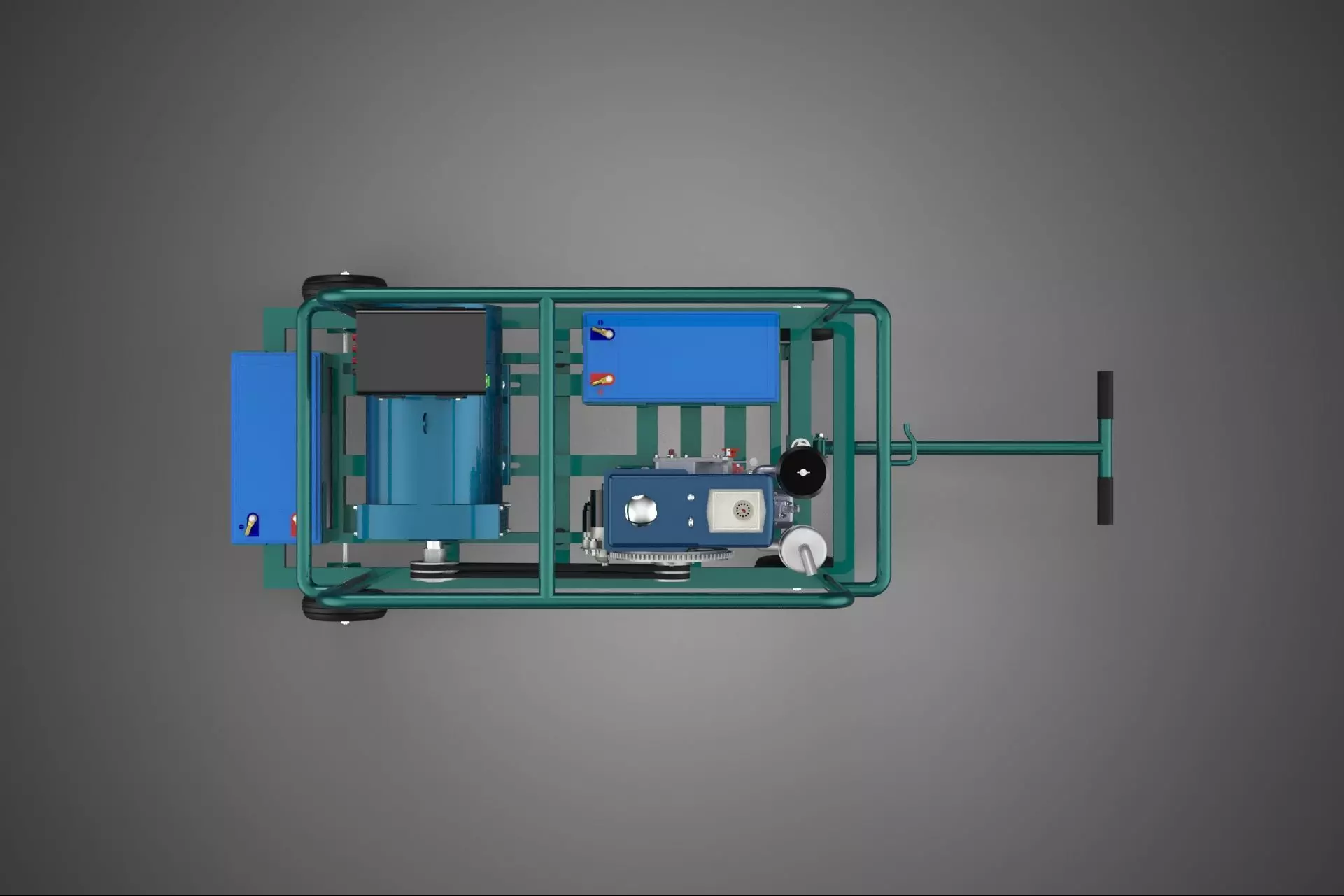
ROADSIDE MOBILE ELECTRIC VEHICLE EV CAR CHARGER GENERATOR DIESEL
---
I. Definition and Classification
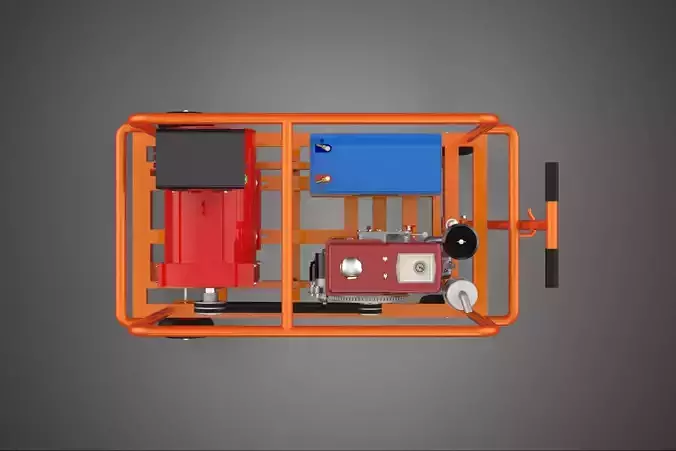
A Roadside Mobile Electric Vehicle (EV) Car Charger Generator Diesel unit is a self-contained, transportable apparatus designed to deliver electrical energy for the replenishment of propulsion batteries in battery electric vehicles (BEVs) and plug-in hybrid electric vehicles (PHEVs). This system is fundamentally an Internal Combustion Engine (ICE)-based charging solution, relying on a diesel-fueled generator set (genset) to produce the necessary power in locations devoid of fixed electrical charging infrastructure, or during grid outages. These units function as critical emergency service assets, primarily addressing scenarios involving stranded vehicles that have depleted their state of charge (SoC) beyond a serviceable range.
II. Technical Architecture and Operation
The functional mechanism of the mobile charger involves the direct conversion of the chemical energy stored in diesel fuel into high-voltage electrical energy.
A. Power Generation Subsystem: The core is a compression-ignition (diesel) engine coupled directly to an electrical alternator. The engine size and generator output capacity determine the charging speed, typically calibrated to deliver direct current (DC) fast-charging capabilities, analogous to Level 3 stationary chargers. Output capacities commonly range from 20 kW to 60 kW, facilitating rapid power transfer sufficient to enable the EV to travel to a dedicated charging station.
B. Power Conversion and Management: The raw electrical output from the generator is processed by a sophisticated Power Conversion System (PCS). This system manages voltage regulation, frequency stabilization, and rectifies the alternating current (AC) generated into the high-voltage direct current (DC) required by the vehicle battery management system (BMS). Control mechanisms ensure adherence to stringent safety protocols, balancing the generator load with the specific charging profile requested by the connected vehicle.
C. Charging Interface: The output cables utilize standardized charging connectors, most commonly the Combined Charging System (CCS), CHAdeMO, or, less frequently, Type 2 AC connections. The interface must communicate digitally with the vehicle to monitor battery temperature, SoC, and maximum acceptable charging rate, ensuring safe and efficient energy transfer.
III. Deployment and Operational Context
Mobile diesel-generator EV chargers are deployed across several key sectors:
- Emergency Roadside Assistance: This is the primary use case, addressing range anxiety and minimizing vehicle recovery time when an EV is immobilized due to battery depletion (often termed out-of-charge).
- Temporary Infrastructure: Utilized at large-scale events, construction sites, or remote locations where temporary EV fleet charging is required but permanent installation is infeasible or too costly.
- Infrastructure Backup: Serving as contingency power during planned maintenance or unplanned failures of permanent grid-connected charging hubs.
These units are typically mounted on trailers, flatbed trucks, or integrated into dedicated service vans, offering complete autonomy during deployment.
### IV. Environmental and Economic Considerations
While providing an essential logistical bridge during the expansion of EV infrastructure, the reliance on diesel fuel introduces specific environmental and ethical concerns. The operation generates localized emissions, including nitrogen oxides (NOx) and particulate matter, which contradicts the zero-emission objective of EV adoption. Consequently, this technology is often viewed as a transitional or necessary compromise.
Economically, the cost per kilowatt-hour (kWh) delivered is generally higher than fixed-station charging due to the intrinsic energy conversion losses (thermal and mechanical inefficiency), fuel consumption, and maintenance requirements associated with the diesel engine components. However, this higher operational cost is justified by the critical nature of the emergency service provided. Ongoing technological development focuses on replacing the diesel generator with alternative mobile power sources, such as battery energy storage systems (BESS) recharged via renewable sources, or hydrogen fuel cells, to mitigate the carbon footprint.
---
KEYWORDS: Mobile charging, Diesel generator, EV charging, Roadside assistance, Emergency power, DC Fast Charging, Range anxiety, BEV, PHEV, Generator set, Power Conversion System, CCS, CHAdeMO, Transitional technology, Infrastructure deficit, Autonomous charging, Field charging, Genset, Battery replenishment, High-voltage DC, Mobile Energy Storage, Telematics, Fuel efficiency, Emissions profile, Vehicle recovery, Remote charging, Fleet services, Power delivery unit, Internal combustion, Energy autonomy.