High-quality 3D assets at affordable prices — trusted by designers, engineers, and creators worldwide. Made with care to be versatile, accessible, and ready for your pipeline.
Included File Formats
This model is provided in 14 widely supported formats, ensuring maximum compatibility:
• - FBX (.fbx) – Standard format for most 3D software and pipelines
• - OBJ + MTL (.obj, .mtl) – Wavefront format, widely used and compatible
• - STL (.stl) – Exported mesh geometry; may be suitable for 3D printing with adjustments
• - STEP (.step, .stp) – CAD format using NURBS surfaces
• - IGES (.iges, .igs) – Common format for CAD/CAM and engineering workflows (NURBS)
• - SAT (.sat) – ACIS solid model format (NURBS)
• - DAE (.dae) – Collada format for 3D applications and animations
• - glTF (.glb) – Modern, lightweight format for web, AR, and real-time engines
• - 3DS (.3ds) – Legacy format with broad software support
• - 3ds Max (.max) – Provided for 3ds Max users
• - Blender (.blend) – Provided for Blender users
• - SketchUp (.skp) – Compatible with all SketchUp versions
• - AutoCAD (.dwg) – Suitable for technical and architectural workflows
• - Rhino (.3dm) – Provided for Rhino users
Model Info
• - All files are checked and tested for integrity and correct content
• - Geometry uses real-world scale; model resolution varies depending on the product (high or low poly)
• • - Scene setup and mesh structure may vary depending on model complexity
• - Rendered using Luxion KeyShot
• - Affordable price with professional detailing
Buy with confidence. Quality and compatibility guaranteed.
If you have any questions about the file formats, feel free to send us a message — we're happy to assist you!
Sincerely,
SURF3D
Trusted source for professional and affordable 3D models.
More Information About 3D Model :
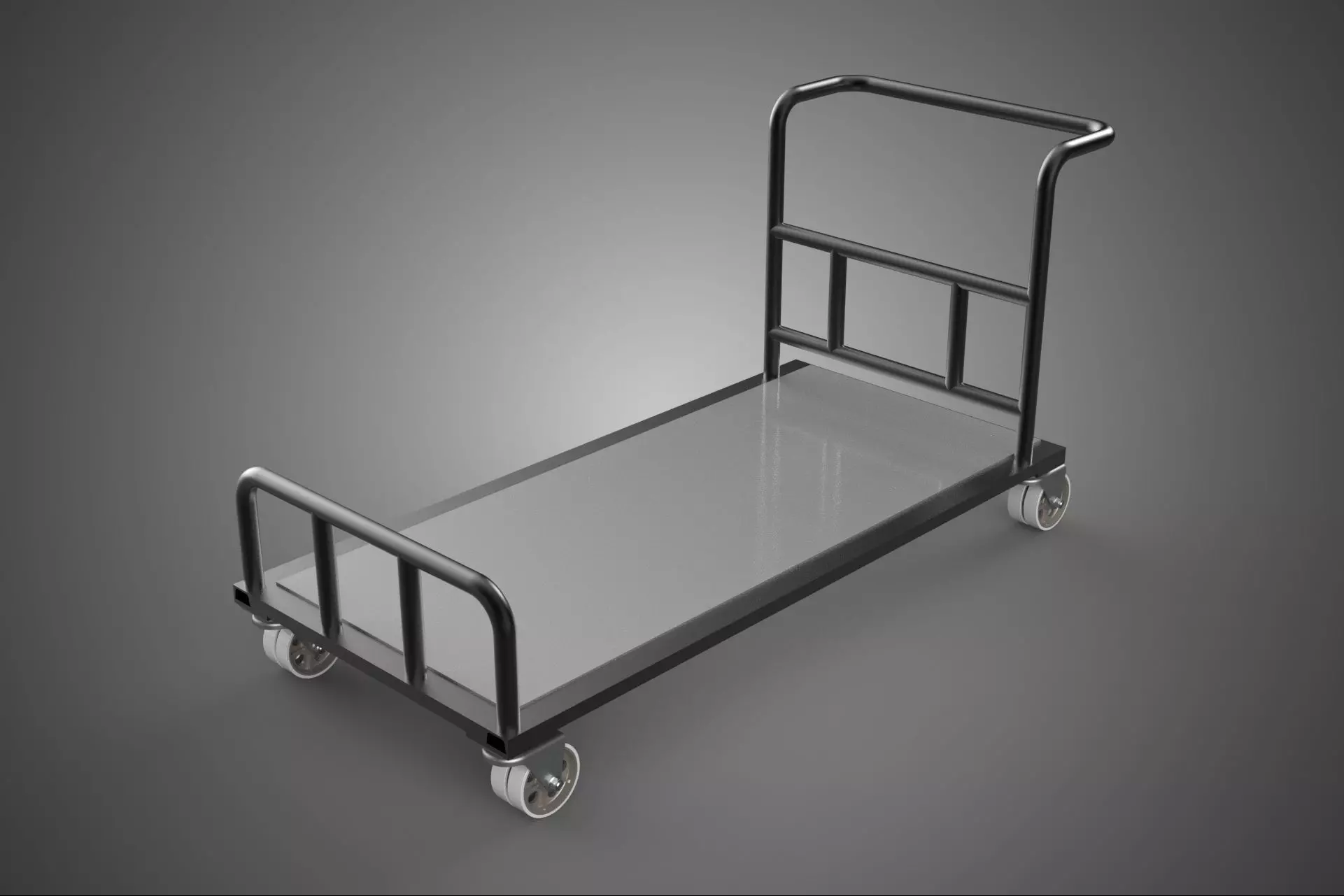
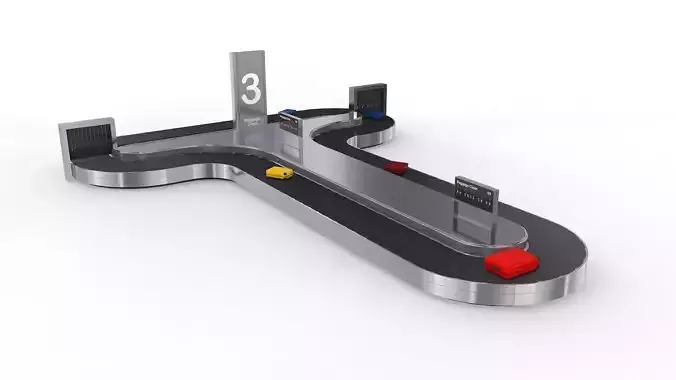
LUGGAGE TROLLEY AND BAGGAGE CONVEYANCE SYSTEMS
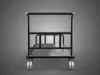
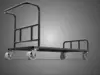
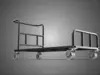
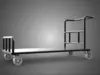
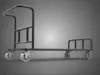
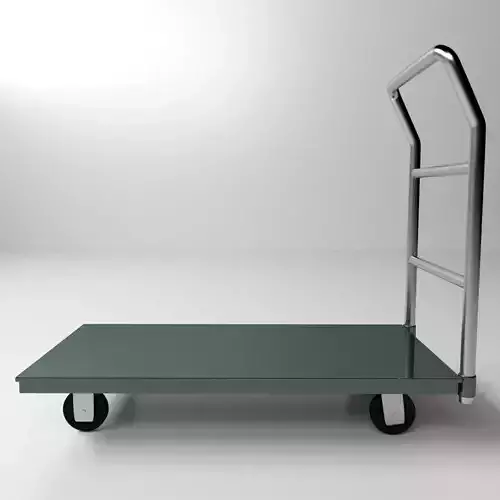
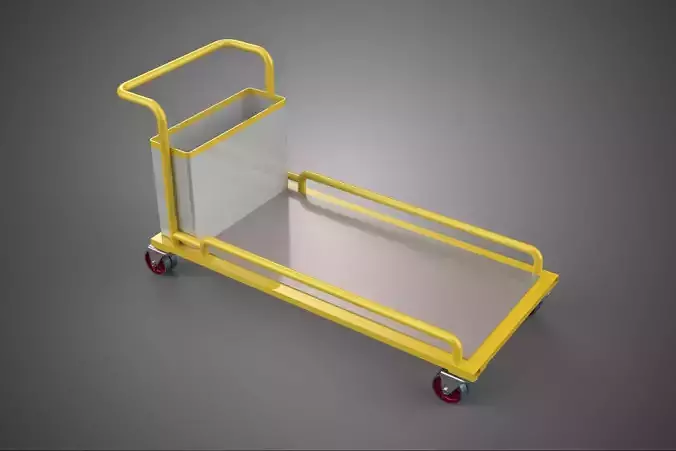
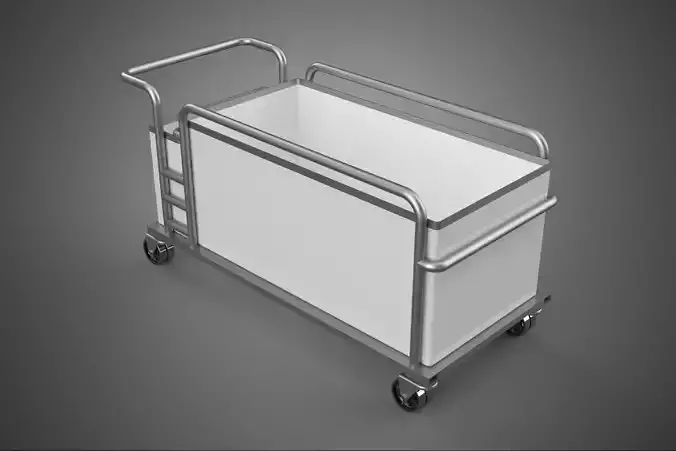
A luggage trolley, also widely referred to as a baggage cart, luggage carrier, or airport trolley, is a specialized, wheeled apparatus designed for the self-service or assisted transport (haulage) of luggage and personal belongings by travelers and personnel within high-throughput logistical hubs. These devices are integral components of the material handling infrastructure in environments characterized by significant pedestrian traffic and the necessity for efficient movement of baggage, including airports, railway stations (terminals), cruise ports, and large-scale hospitality venues (hotels and resorts).
Nomenclature and Function
The apparatus functions primarily to mitigate the physical strain associated with maneuvering heavy or multiple pieces of luggage over extended distances, thereby enhancing passenger convenience and operational efficiency. The term trolley is generally favored in British English and Commonwealth nations, while cart is more prevalent in North America. The specific design and construction of the unit are dictated by its primary operational context, requiring robustness for industrial settings (e.g., airside operations) and enhanced maneuverability and aesthetic considerations for public-facing or hospitality environments.
Design and Engineering Specifications
Luggage trolleys are typically constructed from high-strength, lightweight materials such as tubular aluminum alloys, stainless steel, or reinforced polymers, optimizing the balance between load capacity and manageability.
- Frame and Platform: The structure usually incorporates a low-profile platform or basket for item placement and a vertically extended handle structure for user control. Modern designs often incorporate a nesting capability, allowing multiple trolleys to interlock compactly when not in use. This feature is critical for maximizing floor space and simplifying collection logistics at storage points (corral zones).
- Mobility System: The wheels are crucial components, usually consisting of durable, non-marking rubber or polyurethane casters. A standard configuration involves four wheels, often comprising two fixed wheels (for directional stability) and two swivel caster wheels (for lateral maneuverability, essential in crowded airport or terminal spaces). Some heavy-duty models utilize a three-wheel configuration or fixed rear axles, while specialized hotel carts may feature larger, more decorative wheels.
- Safety and Ergonomics: Trolleys are often equipped with braking mechanisms, either manual (hand lever) or automated (pressure-sensitive, engaging when the handle is released), to prevent unintended movement on slopes or during loading. Ergonomic considerations influence handle design, ensuring comfortable grip and appropriate height for diverse users.
- Ancillary Features: Many commercial trolleys feature advertising panels, small child seats integrated into the frame, or designated slots for securing handbags or carry-on luggage.
Operational Contexts and Classification
The specific environments—airport, hotel, terminal, or corporate office—mandate distinct design variations:
- Airport Trolleys (Terminal Baggage Carts): These are standardized, high-capacity units designed for self-service by passengers (landside) or staff (airside). They must accommodate substantial weight loads (often exceeding 150 kg) and survive rigorous use, typically featuring large baskets and coin-operated or automated dispensing systems (e.g., centralized rental stations) for fleet management and security tracking.
- Hotel and Hospitality Carts (Bellman Carts): Used primarily by hotel staff (bell service) to transport guest baggage. These are often taller, equipped with vertical retaining rails, and feature polished materials (brass, chrome) and carpeted platforms to align with the aesthetic standards of the venue. Their design prioritizes maneuverability in confined corridors and elevators.
- Rail and Bus Terminal Carriers: Similar in function to airport trolleys but may be scaled differently based on typical journey duration and luggage volume associated with train or bus travel.
- Office and Commercial Use: In large corporate or exhibition centers, specialized carts may be employed for moving equipment, displays, or sensitive documents (office haulage), though these are generally less common than their transport-hub counterparts.
Logistical and Economic Management
The administration of a large fleet of luggage trolleys is a significant logistical undertaking. Operational models include: (1) Free-to-use services, subsidized by terminal revenue or advertising; and (2) Rental systems, where users pay a small, refundable deposit or non-refundable fee via automated dispensing machines. The latter system encourages users to return the equipment promptly for deposit retrieval, reducing labor costs associated with manual collection and discouraging the removal of assets from the premises. Maintenance involves regular inspection of braking systems and wheel casters to ensure operational integrity and safety compliance.
KEYWORDS: Luggage, Trolley, Cart, Baggage, Airport, Terminal, Hotel, Haulage, Conveyance, Material handling, Hospitality, Passenger aid, Self-service, Logistics, Caster wheel, Bellhop, Nesting design, Transportation, Infrastructure, Rail station, Mobility device, Fleet asset, Automated dispensing, Ergonomics, Aluminum construction, Commercial use, Storage optimization, Industrial design, Load capacity, Carrier.