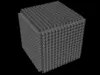
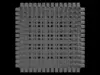
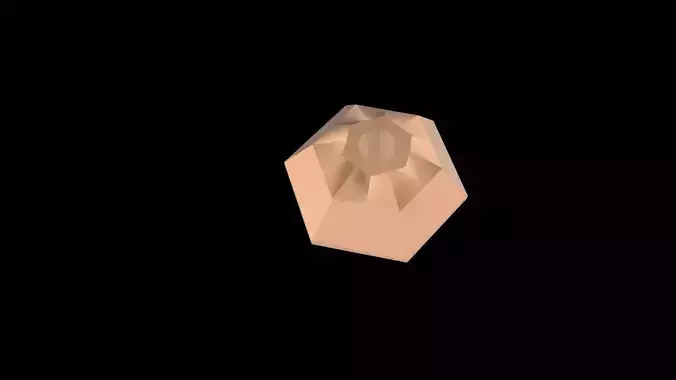
6D Matrix Resistor - Concept.
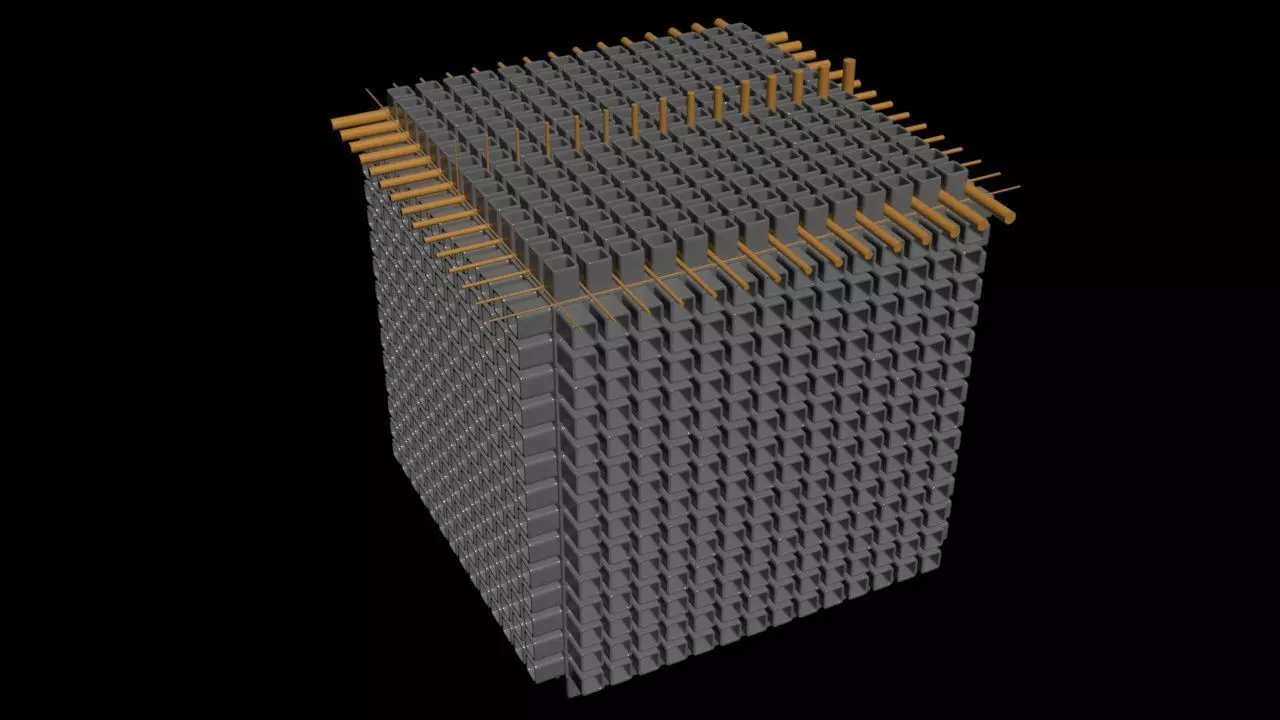
*If we 3d print the fully modelled matrix form with insulating and heat resistive plastics, we can then place copper wires inside the cubes slits and or holes which are all perfectly symmetric and opposing in and to all cardinal directions.
*if we create a thin gauge in and along one outer slit, and then increase the thickness [or number of windings] each slit, we increase the resistance if we measured it, there. Now if we lay these variable gauged wires along the X and Y dimensions, we create a resistance X-Y gradient, with a slightly different resistance to be measured on every location where the wires cross each other physically.
For example in the lower left corner there are two thin wires crossing, and in the top right corner there are two thick wires crossing, creating a local yet unique resistance. This principle can then be layered downward long the Z axis, to create a 6D Matrix resistor.
The Z axis can also be used for signal wires, measuring wires, many configurations can be thought of, tested and experimented with. Perhaps it is even possible to create some type of old-school RAM storage at home.
GG.