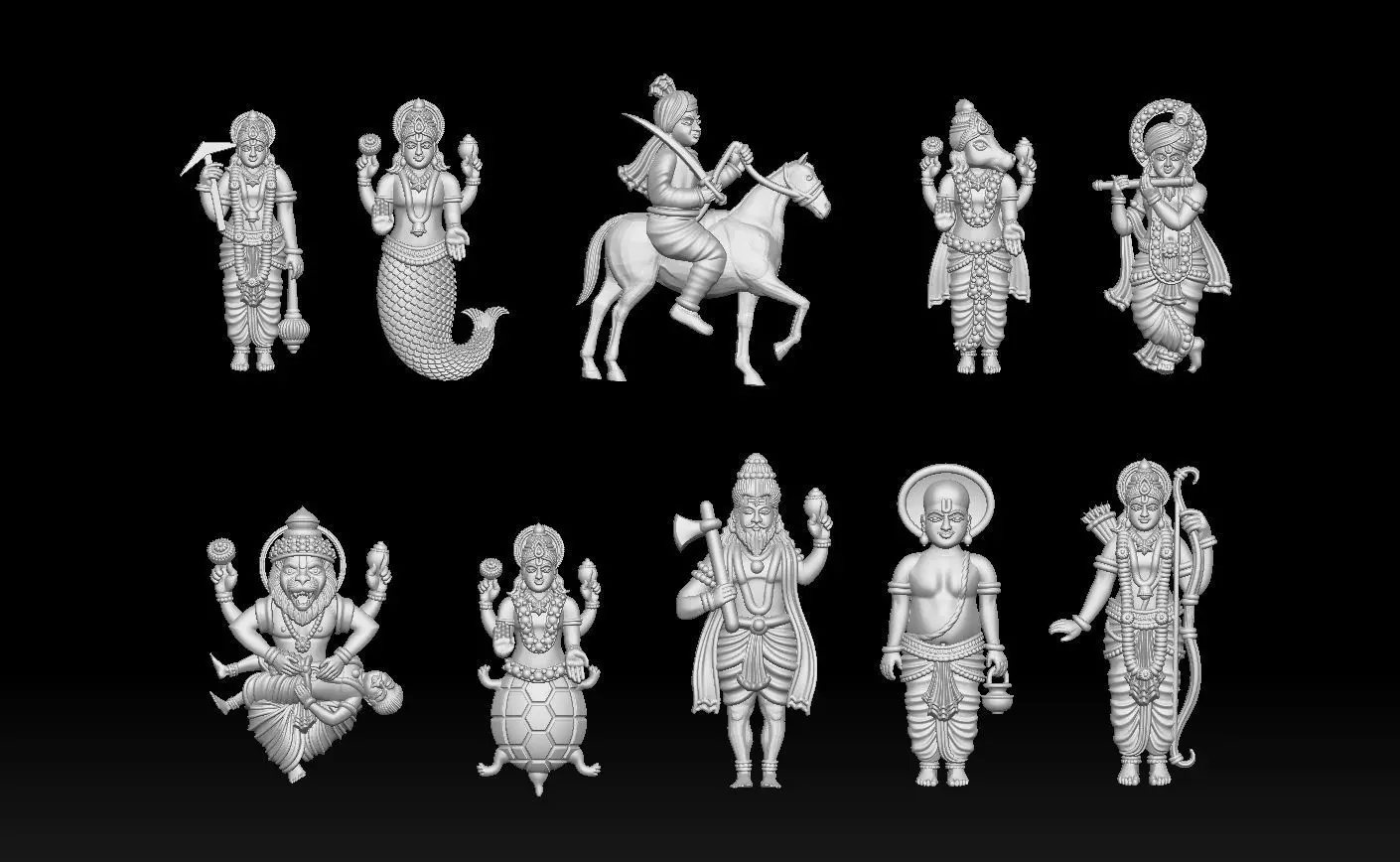
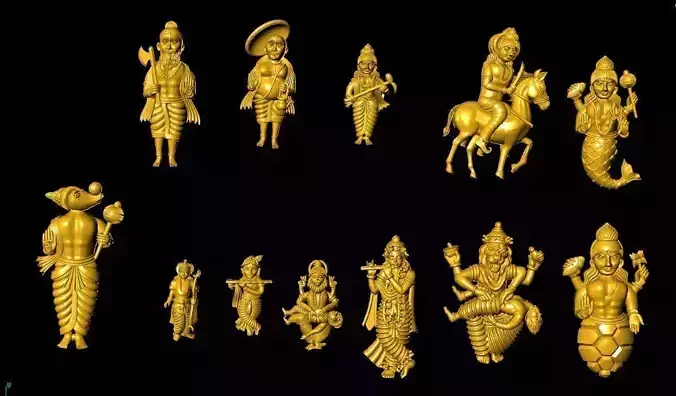
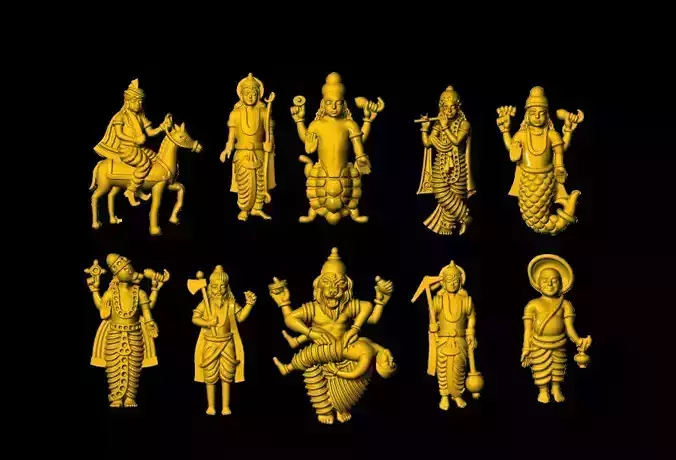
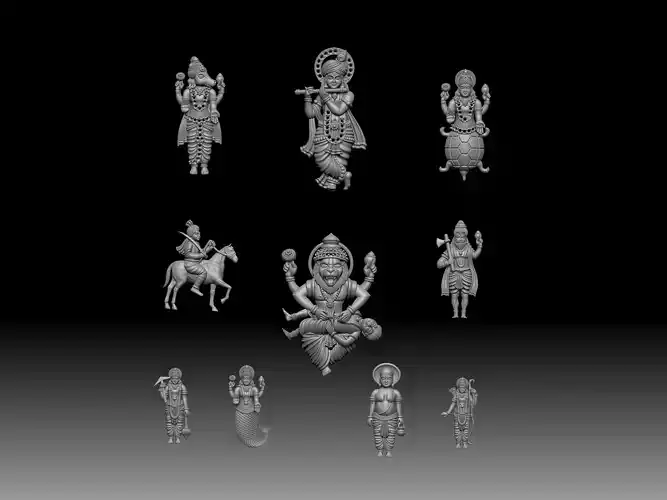
The image displays a set of 3D models representing the Dashavatara, the ten primary avatars of the Hindu god Vishnu, who descends to Earth to restore cosmic order (dharma) and destroy evil. The sequence is often interpreted as a symbolic reflection of the evolution of life and human consciousness. The traditional description and order of the ten avatars are: Matsya (The Fish): Saved humanity and the sacred Vedas from a great flood.Kurma (The Tortoise): Supported Mount Mandara during the churning of the cosmic ocean for the nectar of immortality (amrita).Varaha (The Boar): Rescued the Earth (Bhudevi) from the demon Hiranyaksha, lifting her from the depths of the cosmic ocean on his tusks.Narasimha (The Man-Lion): A fierce half-man, half-lion form that defeated the demon king Hiranyakashipu, who was nearly invincible.Vamana (The Dwarf): A Brahmin dwarf who humbled the demon king Bali by reclaiming the three worlds in three massive strides.Parashurama (The Warrior with an Axe): A warrior-sage who rid the world of corrupt and oppressive ruling kings.Rama (The Prince of Ayodhya): The ideal king and hero of the epic Ramayana, who defeated the demon king Ravana and exemplified duty (dharma).Krishna (The Divine Statesman): A central figure in the Mahabharata, known for his wisdom, playfulness, and guidance, particularly in the Bhagavad Gita.Buddha (The Enlightened One): In many traditions, included as an avatar who taught the path of non-violence (ahimsa), compassion, and inner peace. (Some traditions list Balarama, Krishna's brother, instead).Kalki (The Future Warrior): The tenth and final avatar, prophesied to appear at the end of the current age (Kali Yuga) riding a white horse to destroy evil and restore righteousness