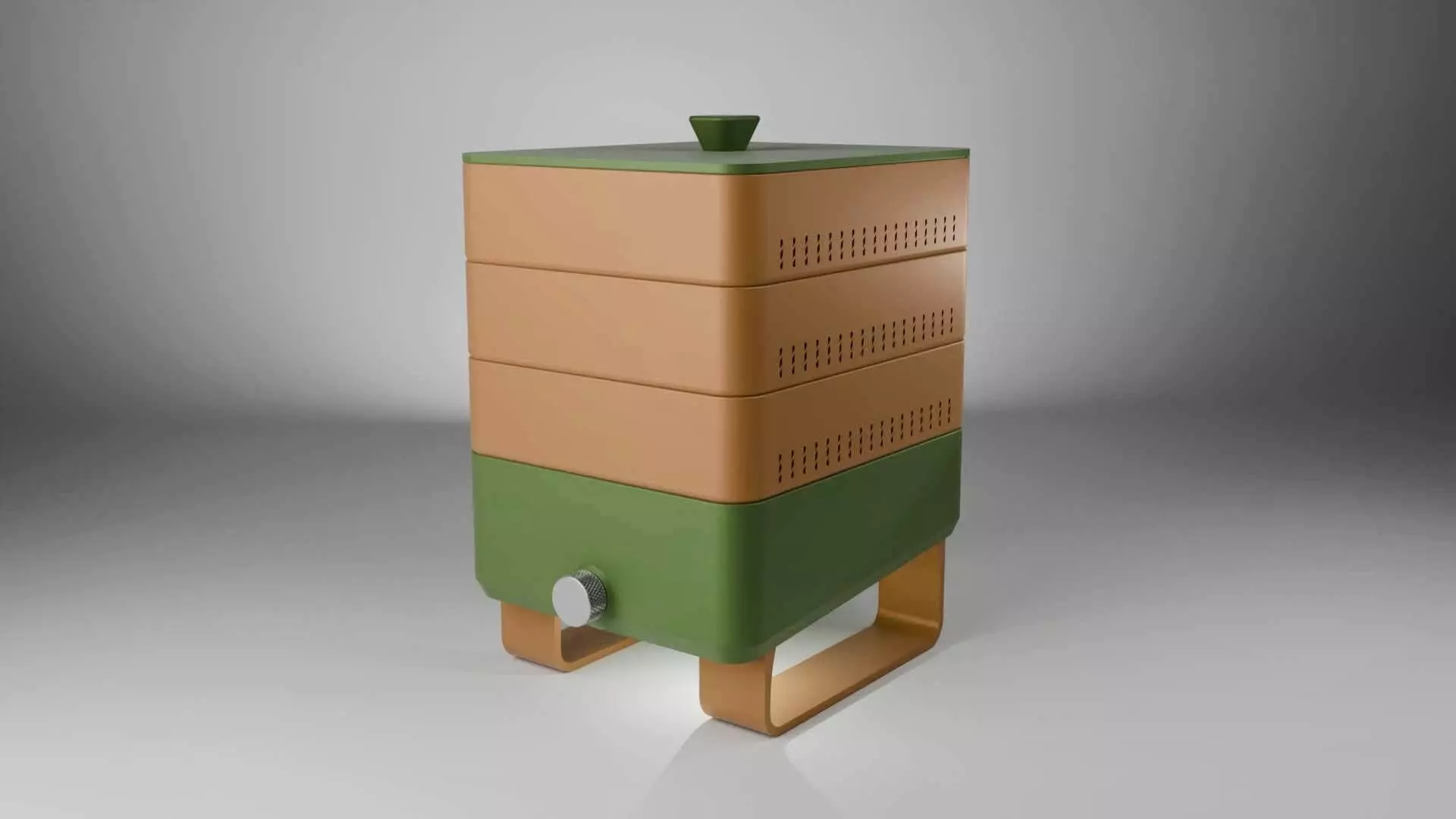
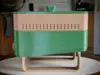
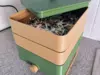
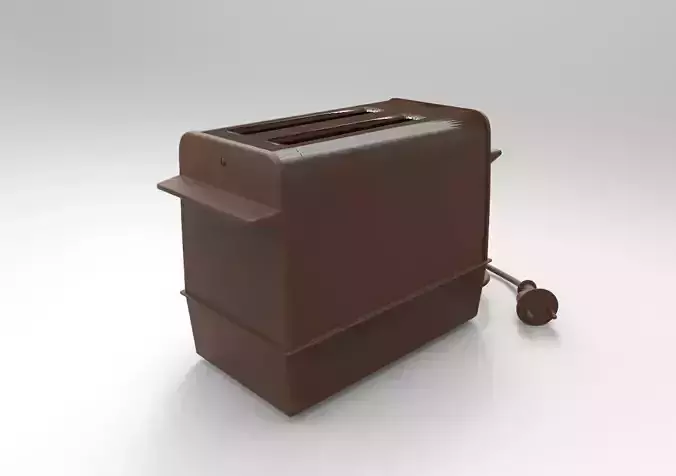
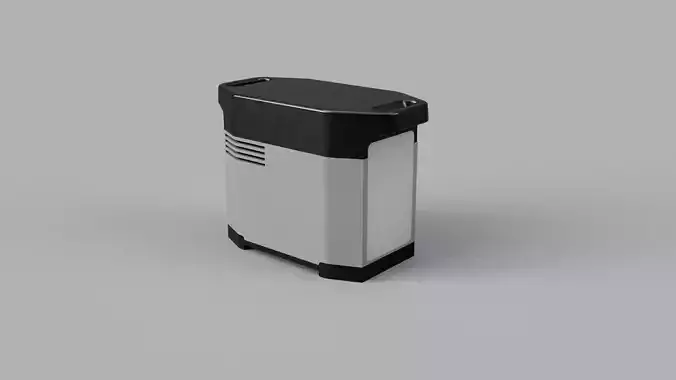
Bring sustainable composting indoors with this compact, stackable worm farm (https://en.wikipedia.org/wiki/Vermicompost), designed for apartment living. Its clean, modern look lets it blend right into your home, while providing everything your worms need to thrive and turn kitchen scraps into nutrient-rich compost. Just add worms!
Key Features
Stackable modular trays
Expand your worm farm as needed by adding extra trays. Each tray is designed with smooth, rounded corners for easy handling and cleaning.
Optimized ventilation
The side vents keep the system aerated, ensuring a healthy environment for your worms while preventing odors. Built-in slots accommodate stainless steel wire mesh (#200 / 28 micron) to block gnats from entering or escaping.
Efficient liquid management
The sloped reservoir collects worm leachate (nutrient-rich liquid fertilizer). A screw bung outlet allows easy draining, using a rubber washer to ensure a tight, leak-free seal.
User-friendly printing
Designed with 3D printing in mind: no supports required and no messy post-print cleanup. Simply print, assemble, and start composting.
Compact and stylish
Small footprint makes it ideal for apartments, balconies, or even kitchen counters, without clashing with your interior decor.
Why you’ll love it
- Reduces food waste at home
- Produces natural fertilizer for plants
- Odor-free, and space-saving
Printing Instructions
I recommend PETG for a watertight reservoir and to avoid biological breakdown.
Minimum build volume:250mm x 210mm
You'll want to print:
- 1x reservoir
- 1x bolt
- 1x lid
- 1x handle
- 1x leg (L)
- 1x leg (R)
- 8x dowels
- 2 or more trays
I printed mine on a Prusa MK4 using a 0.2 speed profile, with great results (see pictures).
Recommended print settings:
- No supports!
- 0.4mm nozzle (0.6 is ok too)
- 0.2mm layer height
- 10% infill (I used cubic)
- 3 walls for a better water seal
If you have trouble getting the dowels to stay put on your build plate, I recommend printing them right next to each other so the edge tips of the hexagons touch, then breaking them apart after, rather than using a brim, to help them to fit the holes in the legs.
If tolerance with the dowels is an issue for you, shrink them by 2 or 3% and use more glue!
There are 2 models for the legs, since they are flat on one side for better bed adhesion, but rounded on the side that is visible when assembled.
For better looks:
- Archimedean chords infill pattern for the lid's bottom layer.
- Concentric infill pattern for the handle and bolt's bottom layers.
- Align seams to a rear corner of the reservoir and trays.
Message me if you need a different size.
Assembly
To complete the worm farm, you'll need:
- 1x 14.5mm internal diameter rubber washer for sealing the reservoir.
- Stainless steel wire mesh (I used #200 or 28 micron), 2 per tray of size 195mm x 40mm. You can easily cut these from a larger sheet with sharp scissors.
- Cyanoacrylate glue (super glue), to attach the legs with the dowels.
- 2x M3 barrel-head bolts to connect the handle to the lid, any length between 15 and 30mm. CA glue would also work fine.
To attach the handle
Bolt through the lid from the underside, into the handle. The M3 bolt threads will bite into the holes in the handle.Alternatively use CA glue directly on the lid and position the handle in place. The lid doesn't need any force to lift off, so the handle attachment does not need to be super strong.
To attach the legs
Use CA glue to affix 1 dowel in each of the 4 holes on each leg, making sure you push them all the way in and clean up any excess glue before it dries. It doesn't matter which way up the dowels go.
Dry-fit the legs to the reservoir and make sure the top of the reservoir sits parallel to the floor when sitting on the legs, then remove the legs and glue them back into the reservoir.