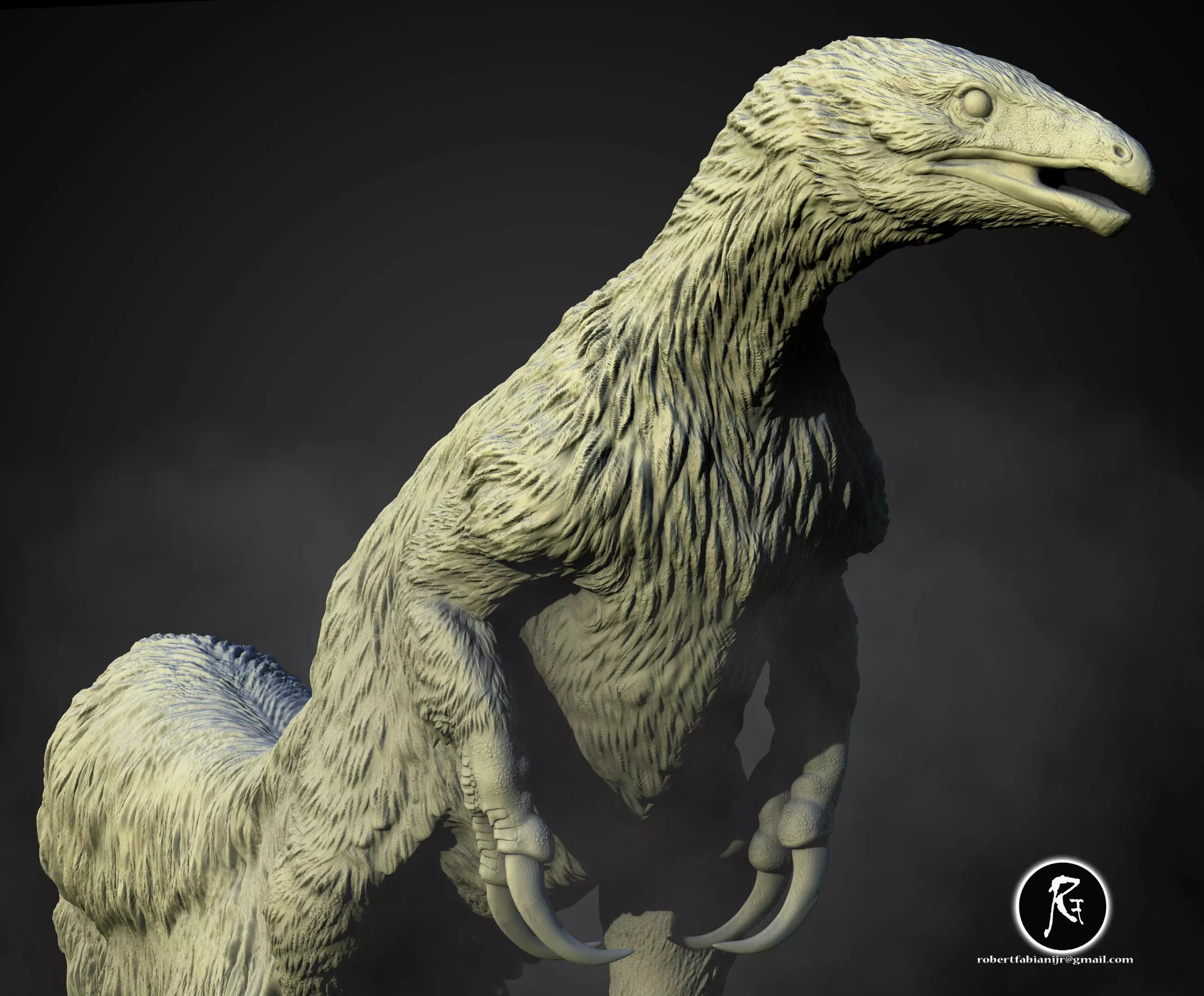
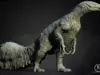
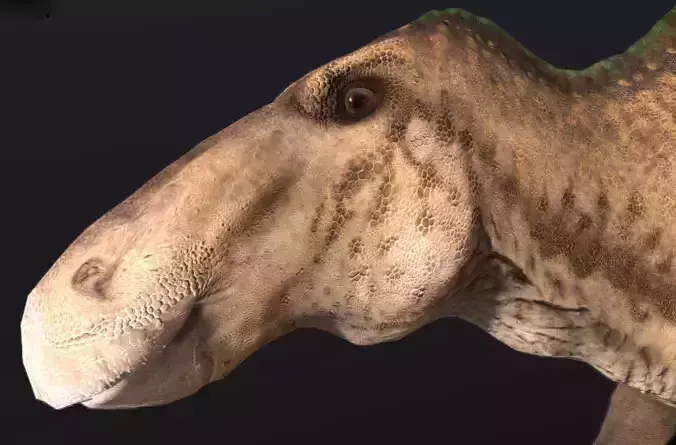
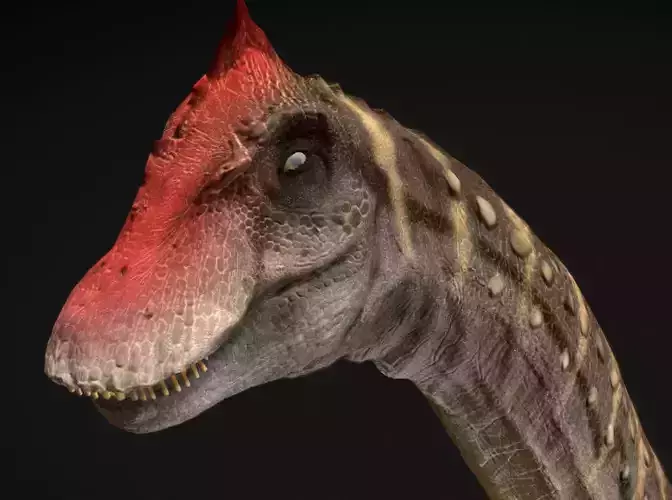
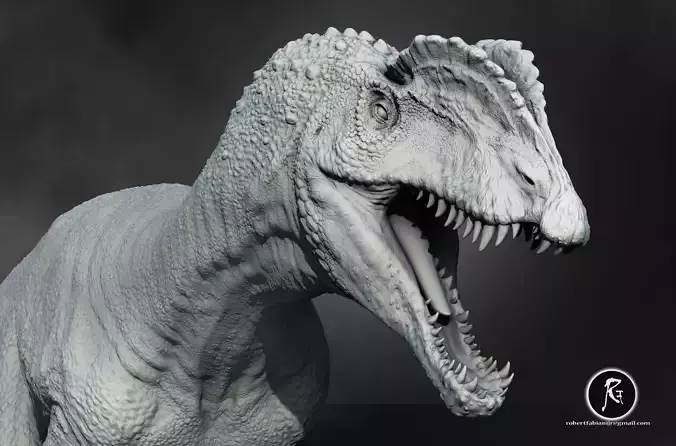
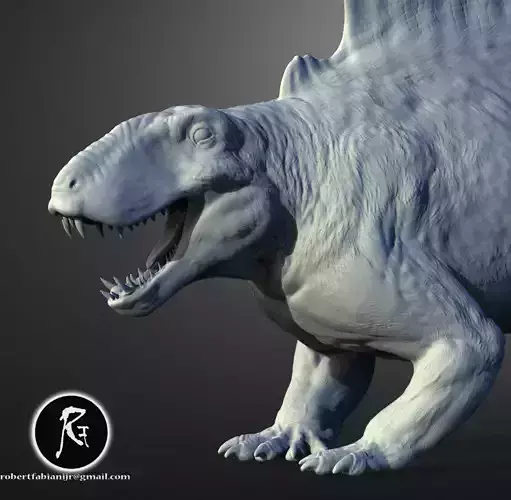
Beipiaosaurus inexpectus was a primitive therizinosaur from the Early Cretaceous (~125 million years ago) discovered in the Yixian Formation of Liaoning, China. It represents an early evolutionary stage of the therizinosaur lineage, a group of unusual theropod dinosaurs that shifted from carnivory toward herbivory. Beipiaosaurus had a relatively small head with leaf-shaped teeth suited for eating plants, a long neck, and elongated forelimbs tipped with large curved claws likely used to pull vegetation closer to the mouth. Its body proportions were lighter and more agile than the later giant therizinosaurs.
The fossil is particularly important because it preserves early feather types. The body was covered in filamentous feathers as well as distinctive elongated ribbon-like structures, an unusual feather morphology that may have functioned in display or insulation. At about 2–2.5 meters long, Beipiaosaurus provides key insight into the early evolution of feathered theropods and the transition toward herbivorous lifestyles within therizinosaurs.