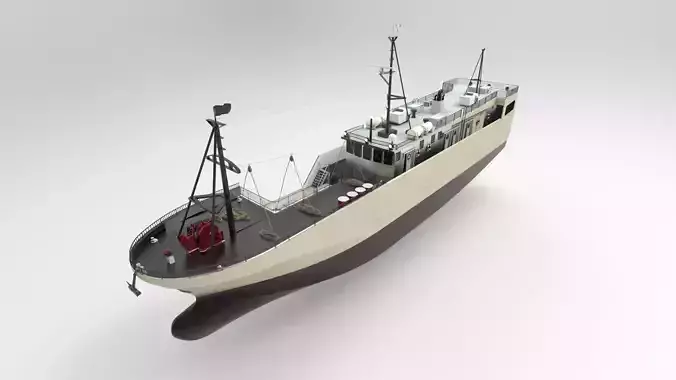
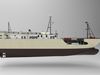
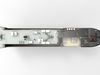
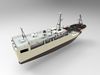
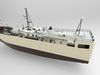
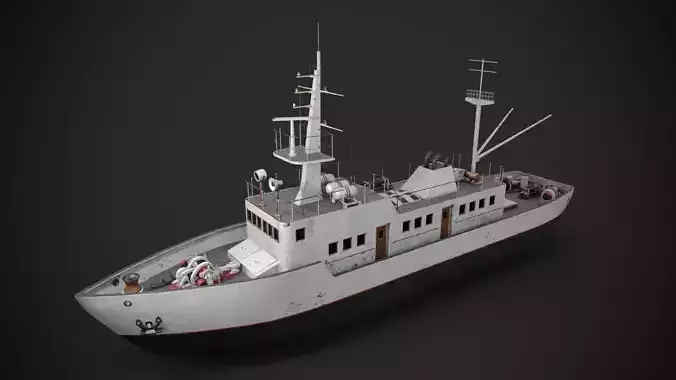
Longline fishing, or longlining, is a commercial fishing angling technique that uses a long main line with baited hooks attached at intervals via short branch lines called snoods or gangions.[1] A snood is attached to the main line using a clip or swivel, with the hook at the other end. Longlines are classified mainly by where they are placed in the water column. This can be at the surface or at the bottom. Lines can also be set by means of an anchor, or left to drift. Hundreds or even thousands of baited hooks can hang from a single line. Longliners – fishing vessels rigged for longlining – commonly target swordfish, tuna, halibut, sablefish and many other species.[2]
In some unstable fisheries, such as the Patagonian toothfish, fishermen may be limited to as few as 25 hooks per line. In contrast, commercial longliners in certain robust fisheries of the Bering Sea and North Pacific generally run over 2,500 hand-baited hooks on a single series of connected lines many miles in length.[3]
Longlines can be set to hang near the surface (pelagic longline) to catch fish such as tuna and swordfish or along the sea floor (demersal longline) for groundfish such as halibut or cod. Longliners fishing for sablefish, also referred to as black cod, occasionally set gear on the sea floor at depths exceeding 1,100 metres (3,600 ft) using relatively simple equipment. Longlines with traps attached rather than hooks can be used for crab fishing in deep waters.
Longline fishing is prone to the incidental catching and killing of dolphins, seabirds, sea turtles, and sharks,[4] but is more ecologically sustainable than deep sea trawling.[5][6]
In Hawaii, where Japanese immigrants introduced longlining in 1917, longline fishing was known as flagline fishing because of the use of flags to mark floats from which hooks were suspended.[7] The term flagline fishing persisted until local fishing vessels began to use modern monofilament mainline, line setters, and large, hydraulically powered reels, when the term longline fishing was adopted