High-quality 3D assets at affordable prices — trusted by designers, engineers, and creators worldwide. Made with care to be versatile, accessible, and ready for your pipeline.
Included File Formats
This model is provided in 14 widely supported formats, ensuring maximum compatibility:
• - FBX (.fbx) – Standard format for most 3D software and pipelines
• - OBJ + MTL (.obj, .mtl) – Wavefront format, widely used and compatible
• - STL (.stl) – Exported mesh geometry; may be suitable for 3D printing with adjustments
• - STEP (.step, .stp) – CAD format using NURBS surfaces
• - IGES (.iges, .igs) – Common format for CAD/CAM and engineering workflows (NURBS)
• - SAT (.sat) – ACIS solid model format (NURBS)
• - DAE (.dae) – Collada format for 3D applications and animations
• - glTF (.glb) – Modern, lightweight format for web, AR, and real-time engines
• - 3DS (.3ds) – Legacy format with broad software support
• - 3ds Max (.max) – Provided for 3ds Max users
• - Blender (.blend) – Provided for Blender users
• - SketchUp (.skp) – Compatible with all SketchUp versions
• - AutoCAD (.dwg) – Suitable for technical and architectural workflows
• - Rhino (.3dm) – Provided for Rhino users
Model Info
• - All files are checked and tested for integrity and correct content
• - Geometry uses real-world scale; model resolution varies depending on the product (high or low poly)
• • - Scene setup and mesh structure may vary depending on model complexity
• - Rendered using Luxion KeyShot
• - Affordable price with professional detailing
Buy with confidence. Quality and compatibility guaranteed.
If you have any questions about the file formats, feel free to send us a message — we're happy to assist you!
Sincerely,
SURF3D
Trusted source for professional and affordable 3D models.
More Information About 3D Model :
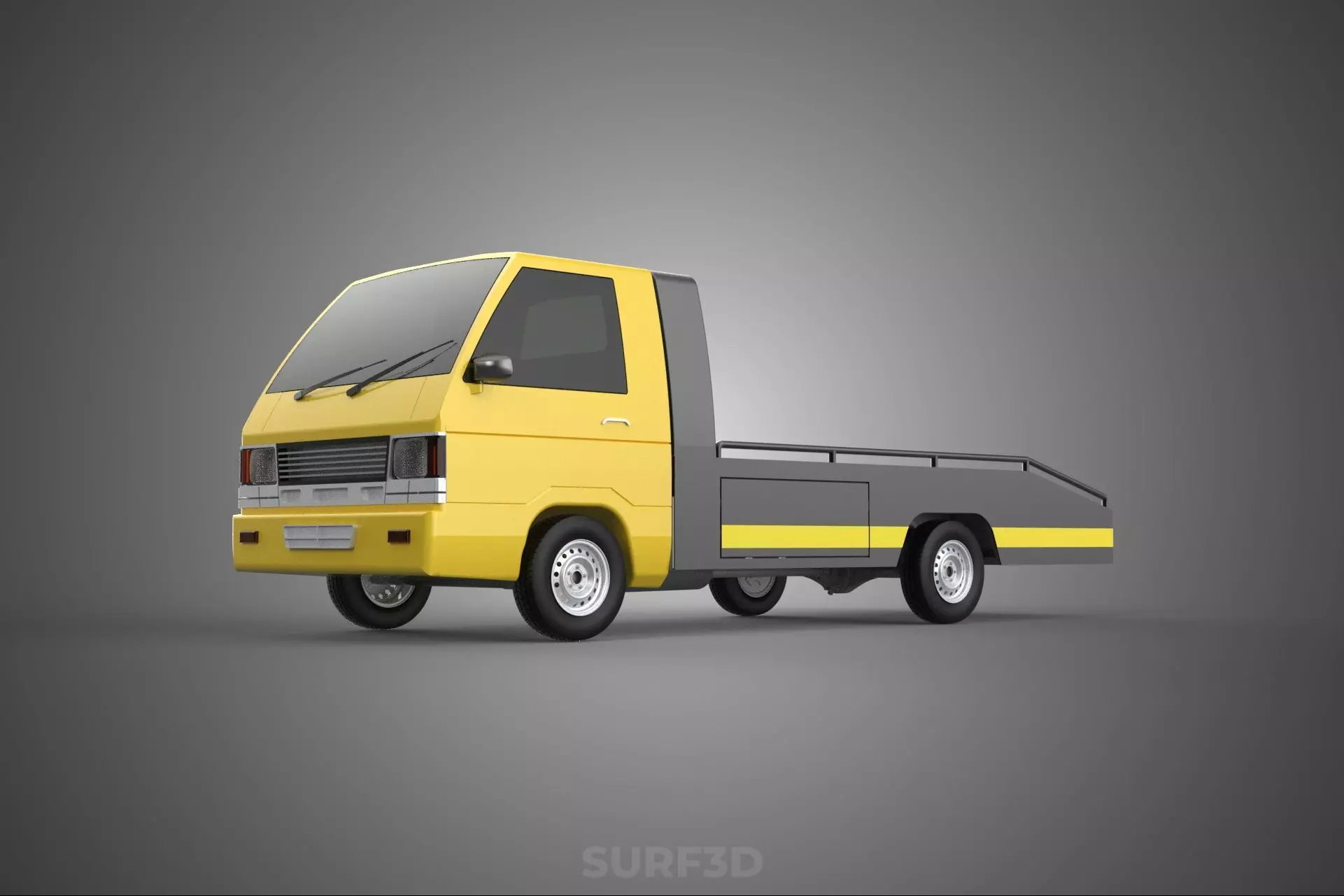
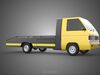
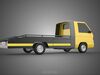
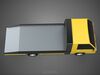
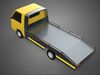
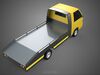
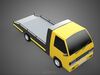
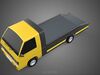
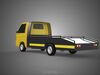
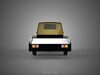
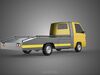
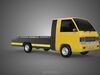
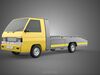
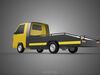
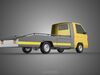
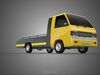
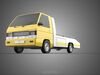
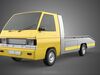
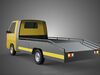
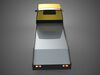
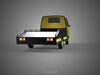
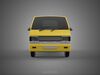
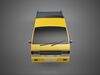
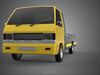
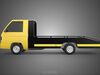
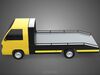
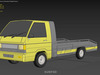
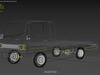
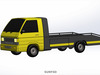
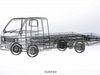
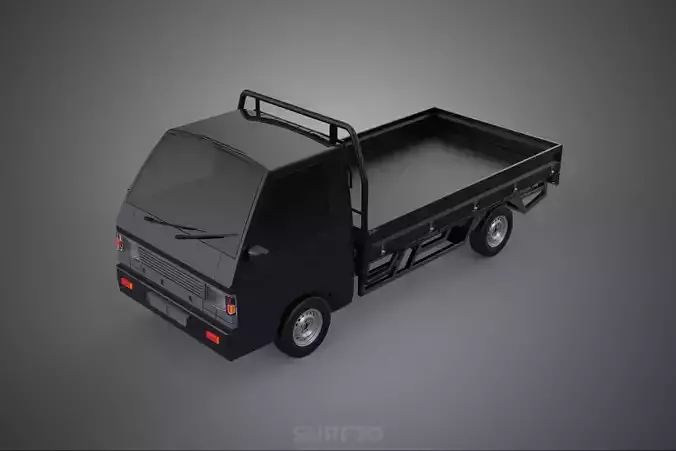
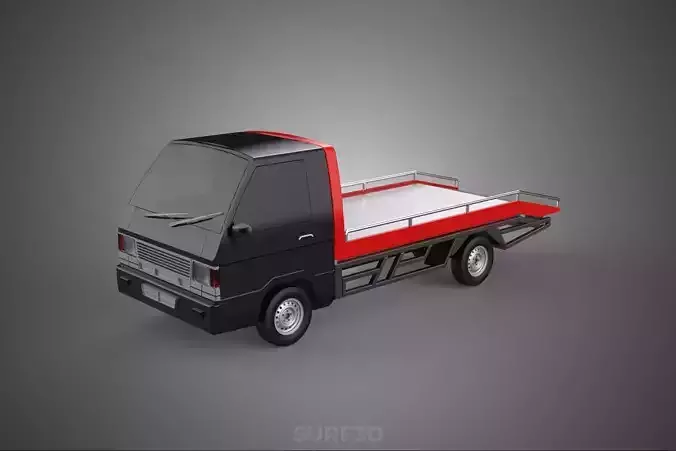
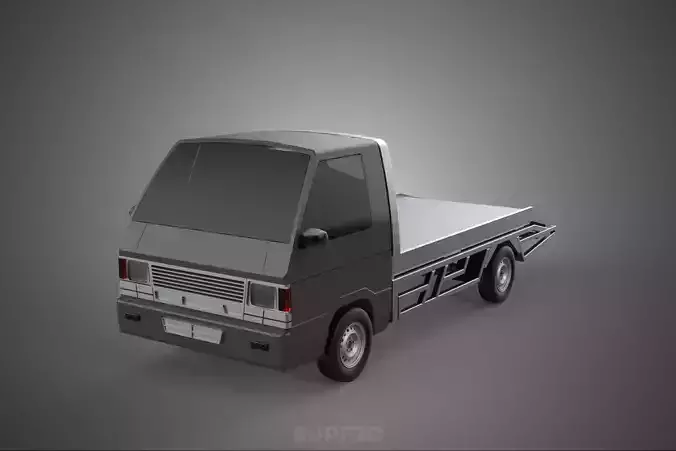
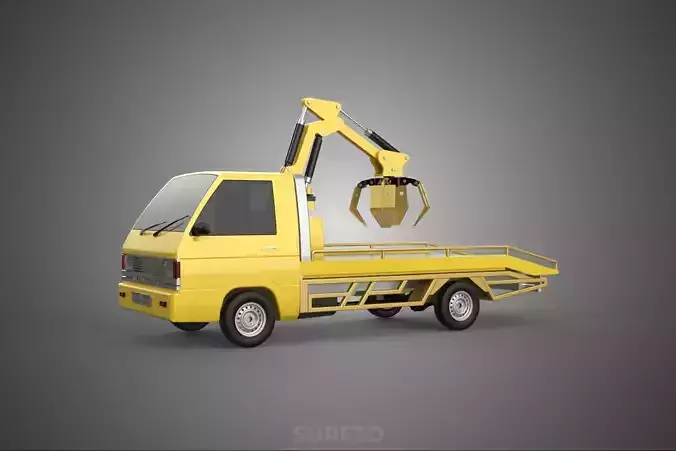
FLATBED TOW TRUCK CAR CARRIER PARKED RECOVERY SERVICE WITH BASIS OF L300 PICK UP OR CANTER
A flatbed tow truck car carrier recovery service based on the Mitsubishi L300 pickup or Mitsubishi Fuso Canter chassis represents a specific configuration of commercial vehicle utilized for the transportation of disabled, damaged, impounded, or otherwise non-operational vehicles. This type of vehicle recovery unit is distinguished by its primary structure being a flat, rigid platform onto which the vehicle requiring transport is loaded, rather than being lifted from one axle. The parked aspect within the service context typically implies the availability and readiness of such a vehicle, stationed at a base or specific location, prepared for deployment upon request for recovery operations.
The technical basis of this recovery vehicle lies in the adaptation of a standard light commercial vehicle (LCV) or light truck chassis, specifically either the Mitsubishi L300 (often the cab chassis variant) or various models of the Mitsubishi Fuso Canter. These chassis platforms are chosen due to their widespread availability, reliability, robust frame structure, and suitable Gross Vehicle Weight (GVW) ratings in many regional markets. The original cargo bed of the donor vehicle is removed and replaced with a custom-fabricated flatbed body designed specifically for vehicle transport.
Key components of such a recovery unit include:
1. Chassis: The foundational frame and powertrain derived from either the Mitsubishi L300 (generally suited for lighter loads and more confined urban environments) or the Mitsubishi Fuso Canter (offering higher load capacity and versatility for a broader range of vehicles).
2. Flatbed Platform: A structurally reinforced horizontal deck, typically constructed from steel or aluminum, providing a stable surface to carry the vehicle being recovered. These platforms often feature anti-skid surfaces and multiple tie-down points.
3. Loading Mechanism: Commonly involves hydraulic or mechanical systems to facilitate the loading of the vehicle onto the flatbed. This often takes the form of:
* Tilt-Bed: The entire flatbed deck pivots hydraulically to form a ramp.
* Slide-Bed: The flatbed deck slides horizontally and then tilts down to create a ramp.
* Rear Ramps: Stowable or foldable ramps that extend from the rear of the flatbed.
4. Winch System: An electrically or hydraulically powered winch mounted at the front of the flatbed is used to pull non-rolling or immobilized vehicles onto the deck. Winches are equipped with steel cable or synthetic rope.
5. Securing Equipment: Various types of tie-down straps, wheel nets, and chocks are used to firmly secure the transported vehicle to the flatbed, preventing movement during transit.
6. Warning and Illumination: Essential lighting, including warning beacons (often amber), work lights for night operations, and standard road lighting, are integrated for safety and operational visibility.
The recovery service aspect refers to the provision of this specialized transportation capability as a commercial service. Operators utilizing L300 or Canter-based flatbed tow trucks respond to calls from motorists, law enforcement, insurance companies, or automotive service providers to retrieve vehicles from locations where they cannot be driven, such as accident scenes, breakdown sites, parking violations, or mechanical failures. The service typically involves dispatching the appropriately sized flatbed truck, safely loading the vehicle onto the platform using the winch and loading mechanism, securing it for transport, and delivering it to a designated repair facility, impound lot, or owner's location. The choice between an L300 or Canter basis often depends on the anticipated weight and size of vehicles to be recovered, as well as operational requirements such as maneuverability in urban areas versus capacity for larger or multiple vehicles.
KEYWORDS: Flatbed tow truck, car carrier, vehicle recovery, recovery service, towing service, breakdown assistance, Mitsubishi L300, Mitsubishi Fuso Canter, LCV chassis, light truck, vehicle transport, flatbed platform, tilt-bed tow truck, hydraulic ramps, vehicle winch, auto hauling, roadside assistance, disabled vehicle transport, accident recovery, impound towing, vehicle loading, vehicle securing, commercial vehicle, specialized transport, light commercial vehicle, Canter chassis, L300 pickup, vehicle logistics, professional towing, automotive recovery.