Perfect for use in games and simulation projects.
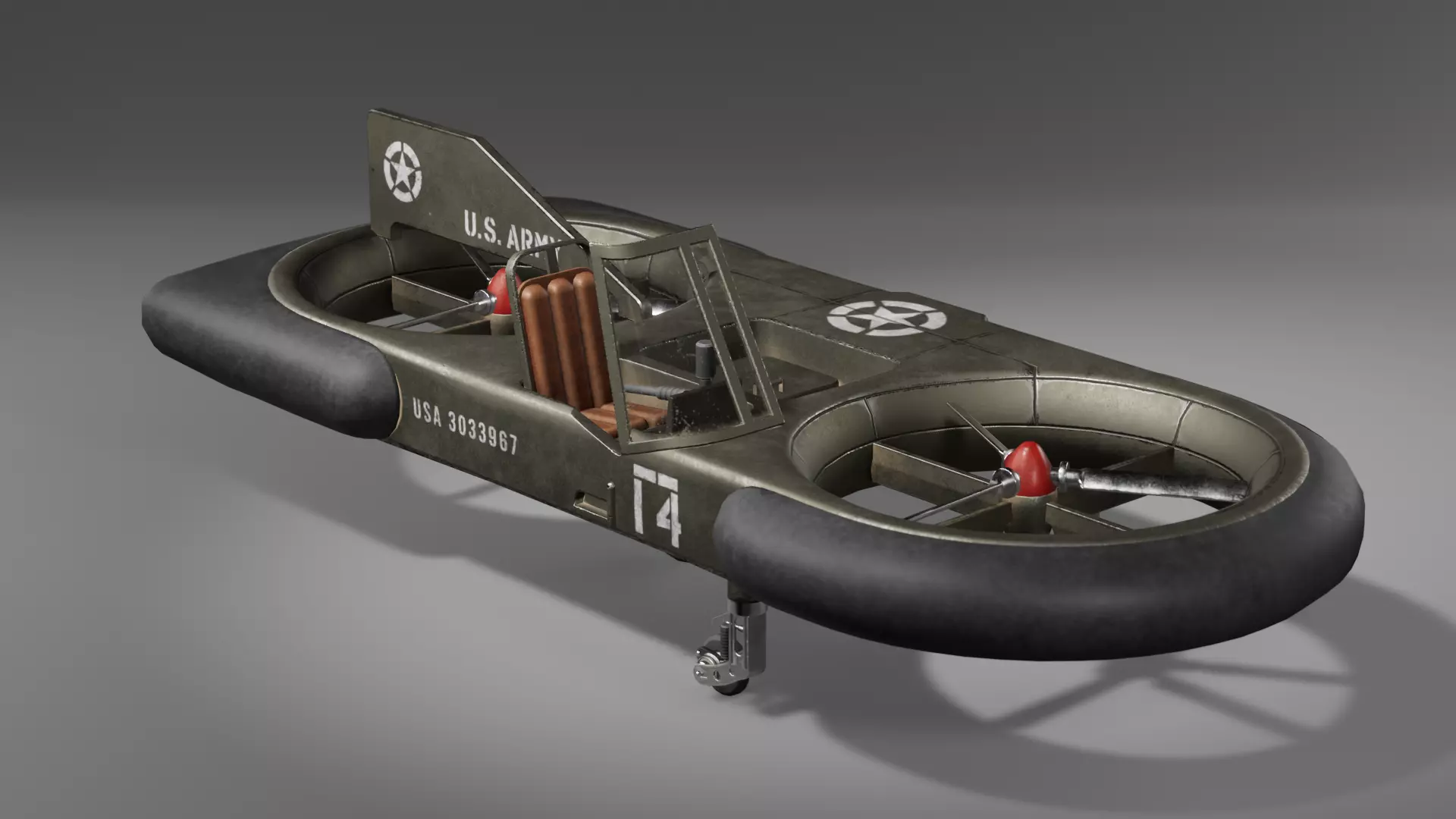
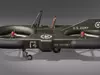
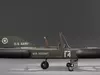
The Chrysler VZ-6, commonly referred to as the “Flying Jeep,” was an experimental VTOL (Vertical Take-Off and Landing) aircraft developed by the Chrysler Corporation in the late 1950s as part of a U.S. Army initiative to create a new category of light, air-mobile vehicles capable of operating in difficult terrain. The concept emerged from a Department of Defense program that sought to replace ground-based reconnaissance and utility vehicles with compact airborne platforms that could bypass road and terrain obstacles, offering front-line troops rapid transport and enhanced tactical flexibility. The goal was to develop a machine with the off-road mobility of a jeep combined with the vertical lift capabilities of a helicopter.
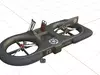
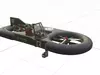
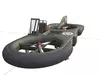
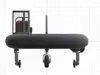
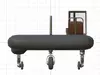
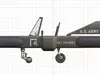
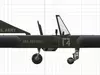
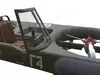
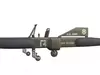
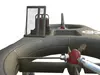
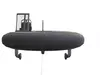
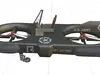
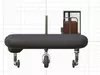
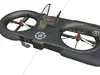
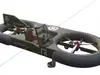
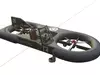
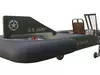
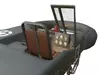
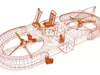
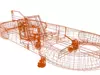
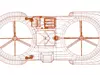
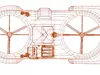
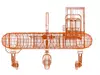
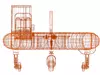
The VZ-6 was constructed as a flat, rectangular platform measuring approximately 14 feet (4.27 meters) in length and 7.5 feet (2.29 meters) in width. The total height of the vehicle, including the pilot's seat and protective fairing, was around 4 feet (1.22 meters). The airframe was primarily made of lightweight aluminum alloy to keep the overall weight manageable. The aircraft weighed roughly 1,000 pounds (454 kilograms) empty, and it had a gross takeoff weight of approximately 1,400 pounds (635 kilograms). It was designed to carry a single pilot in an open-air cockpit positioned between two large ducted fans, which were embedded into the body of the aircraft.
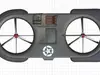
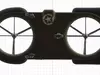
The powerplant consisted of a single Lycoming engine—reportedly the Lycoming O-435, an air-cooled, six-cylinder piston engine capable of producing up to 260 horsepower. This engine was mounted centrally and mechanically connected to the front and rear ducted fans via a transmission system. Each of the two fans measured about 4 feet (1.22 meters) in diameter and was housed within a circular shroud to increase thrust efficiency and reduce the risk of debris ingestion. These ducted fans provided the vertical lift necessary for hovering and takeoff. Directional control was attempted through differential fan thrust and vanes placed within the airflow, but the system offered limited responsiveness and stability.
Initial flight tests took place in 1959 at Chrysler’s test facilities, with the aircraft demonstrating the ability to lift off vertically, hover at low altitudes, and maneuver in a limited fashion. However, the VZ-6 quickly proved to be underpowered and aerodynamically unstable. It lacked sufficient thrust-to-weight ratio to carry any significant payload beyond the pilot, and its center of gravity was poorly balanced. The aircraft also suffered from inadequate control authority, especially in yaw and pitch, making precise maneuvering extremely difficult. One notable test flight ended in failure when the vehicle became unstable during a hover and rolled over upon landing, damaging the airframe and raising safety concerns.
Despite efforts to address these shortcomings, the design limitations proved too severe to overcome. The U.S. Army, which had commissioned multiple companies to explore the flying jeep concept—including Piasecki (VZ-8 Airgeep), Curtiss-Wright (VZ-7), and Hiller (VZ-1 Pawnee)—ultimately concluded that the Chrysler VZ-6 was not viable for further development. The vehicle was withdrawn from testing shortly after its accident and never flew again. The entire flying jeep program was eventually phased out in the early 1960s as the Army shifted focus toward more practical rotary-wing aircraft such as the Bell UH-1 Iroquois (Huey), which offered superior payload, range, and control.
Although the Chrysler VZ-6 was a technological dead end, it contributed to the evolving understanding of VTOL flight and the limitations of ducted-fan propulsion systems in compact configurations. It highlighted the importance of power-to-weight ratios, thrust vectoring, and stability control systems—lessons that would later influence the design of more successful VTOL platforms, including modern drones, tiltrotor aircraft like the V-22 Osprey, and even certain aspects of short takeoff and landing (STOL) aircraft. Today, the VZ-6 survives only in historical photographs and archival documents, serving as a symbol of a bold, if flawed, period of military aviation experimentation during the Cold War.
Formats include: OBJ, FBX. Feel free to check out the other models, just click on the user name to see the complete portfolio.