High-quality 3D assets at affordable prices — trusted by designers, engineers, and creators worldwide. Made with care to be versatile, accessible, and ready for your pipeline.
Included File Formats
This model is provided in 14 widely supported formats, ensuring maximum compatibility:
• - FBX (.fbx) – Standard format for most 3D software and pipelines
• - OBJ + MTL (.obj, .mtl) – Wavefront format, widely used and compatible
• - STL (.stl) – Exported mesh geometry; may be suitable for 3D printing with adjustments
• - STEP (.step, .stp) – CAD format using NURBS surfaces
• - IGES (.iges, .igs) – Common format for CAD/CAM and engineering workflows (NURBS)
• - SAT (.sat) – ACIS solid model format (NURBS)
• - DAE (.dae) – Collada format for 3D applications and animations
• - glTF (.glb) – Modern, lightweight format for web, AR, and real-time engines
• - 3DS (.3ds) – Legacy format with broad software support
• - 3ds Max (.max) – Provided for 3ds Max users
• - Blender (.blend) – Provided for Blender users
• - SketchUp (.skp) – Compatible with all SketchUp versions
• - AutoCAD (.dwg) – Suitable for technical and architectural workflows
• - Rhino (.3dm) – Provided for Rhino users
Model Info
• - All files are checked and tested for integrity and correct content
• - Geometry uses real-world scale; model resolution varies depending on the product (high or low poly)
• • - Scene setup and mesh structure may vary depending on model complexity
• - Rendered using Luxion KeyShot
• - Affordable price with professional detailing
Buy with confidence. Quality and compatibility guaranteed.
If you have any questions about the file formats, feel free to send us a message — we're happy to assist you!
Sincerely,
SURF3D
Trusted source for professional and affordable 3D models.
More Information About 3D Model :
MANUALLY OPERATED MATERIAL HANDLING EQUIPMENT: HAND TRUCKS, TROLLEYS, CARTS, AND PALLET JACKS
The nomenclature encompassing Hand Moving Truck Trolley Cart Wheel Pallet Delivery Load Jack refers collectively to a specialized category of Manually Operated Material Handling Equipment (MOMHE) primarily utilized in logistics, warehousing, manufacturing, and retail environments for the internal conveyance, temporary staging, and organization of goods. These devices are designed to minimize physical strain on human operators by leveraging mechanical advantage and rolling friction principles to transport heavy loads.
Classification and Nomenclature
The terms within the title distinguish different forms and functions:
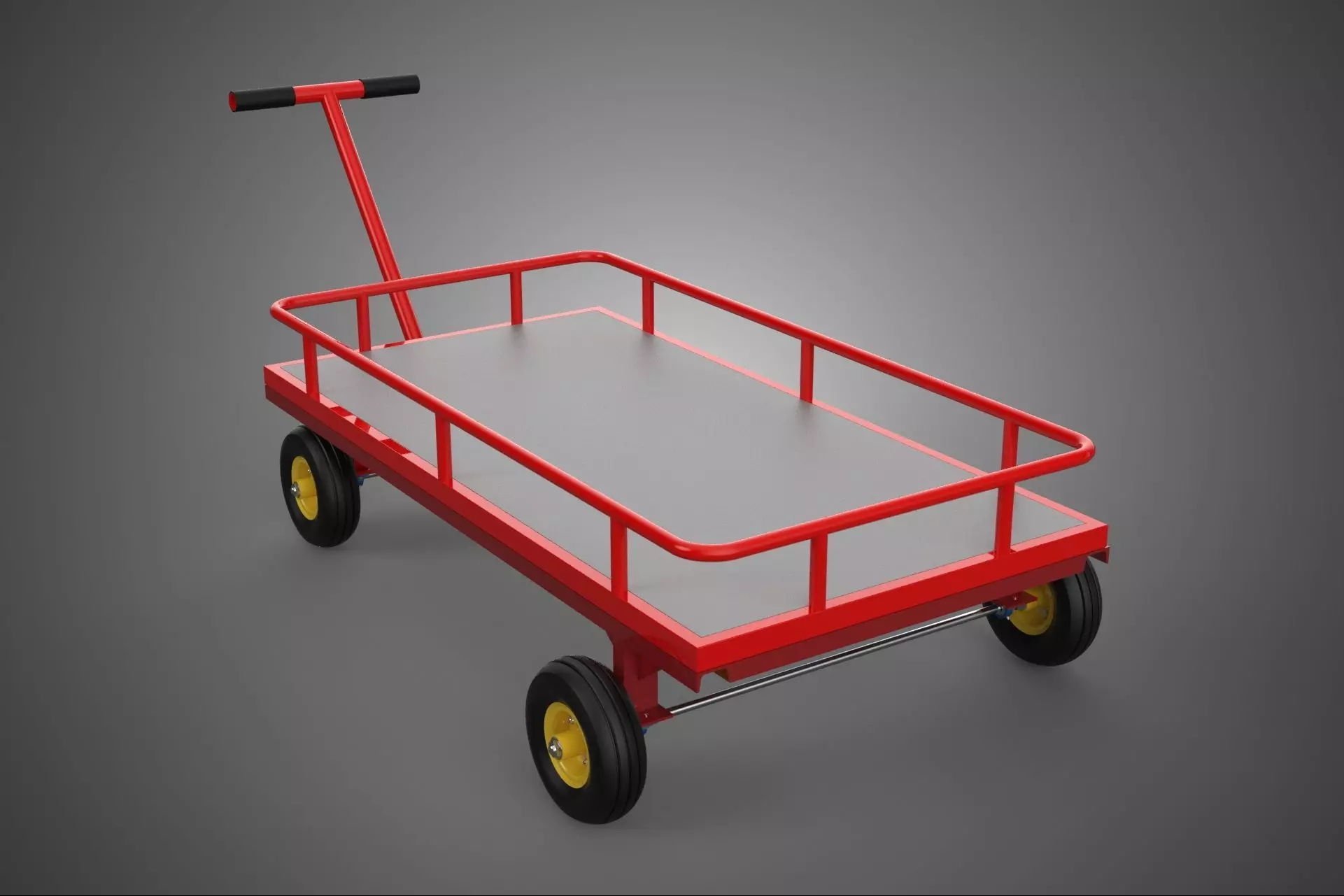
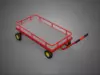
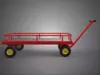
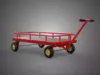
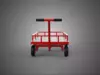
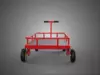
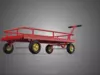
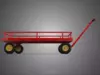
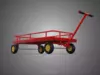
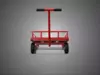
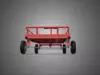
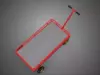
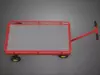
- Hand Truck / Trolley / Cart: General terms referring to non-motorized, wheeled platforms used for transporting goods. These typically include platform carts (four-wheeled vehicles with a flat deck) and two-wheeled upright trucks (dolleys), which rely on leverage to pivot and move stacked items.
- Wheel: The essential component that facilitates motion and dramatically reduces the force required for movement. Wheels are typically solid polymer, rubber, or polyurethane, often mounted as fixed wheels (rigids) or swivel wheels (casters) to facilitate steering.
- Pallet Jack / Jack Truck (The Hand Pallet Truck): This is the most specific and specialized apparatus referenced. It is a wheeled device specifically engineered to lift and transport standard industrial pallets. The term Jack denotes its primary feature—an integrated hydraulic system used to raise the load clear of the ground for transport.
The Hydraulic Hand Pallet Truck
The Hand Pallet Truck (HPT), or pump truck, is the essential tool linking the concepts of pallet, jack, and truck. It functions as a foundational piece of delivery and load management apparatus.
Mechanism and Operation:
The HPT consists of three primary components: the chassis (body and forks), the wheels (load wheels and steering wheels), and the hydraulic unit.
- Forks: Two horizontal tines designed to fit directly into the entry openings of a pallet (either stringer or block type).
- Hydraulic Jack System: The operator uses a pump handle (or tiller) in a repetitive vertical motion. This action drives hydraulic fluid into a cylinder, generating pressure that raises the load-bearing forks. This action lifts the pallet, typically 7 to 10 centimeters (3 to 4 inches), sufficient to clear ground imperfections and allow free movement.
- Steering and Movement: Once lifted, the load is maneuvered by pushing or pulling the handle, which connects to the steering wheels. A control lever on the handle manages the hydraulic release valve, allowing the operator to slowly lower the pallet back onto the floor for staging or delivery.
Load Capacity and Use:
Standard manual pallet jacks are engineered to handle loads typically ranging from 1,000 kg to 3,000 kg (2,200 lbs to 6,600 lbs). They are critical for short-distance transport within confined spaces where larger, mechanized forklifts are impractical or prohibited. Their primary function in logistics is localized load distribution and retrieval from temporary storage areas.
Trolleys and Platform Carts
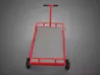
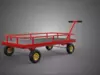
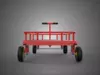
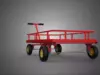
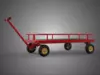
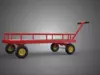
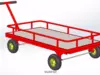
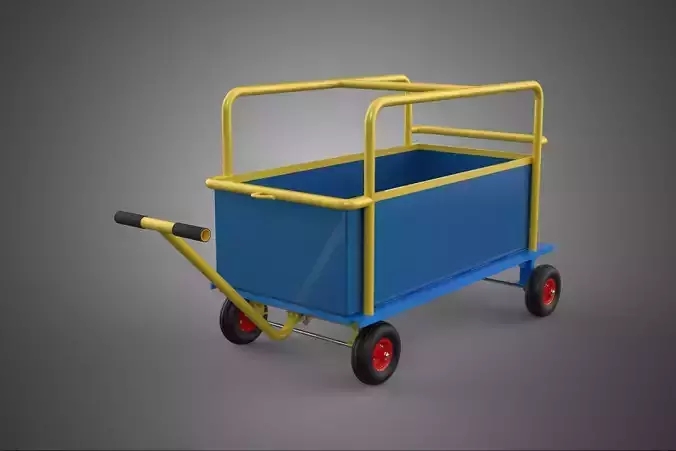
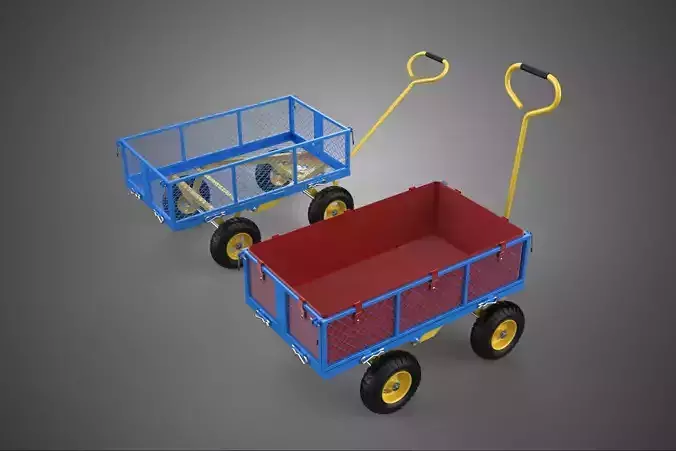
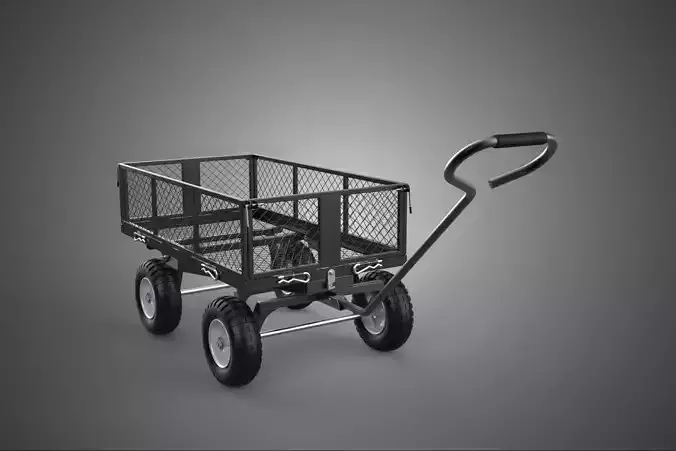
While lacking the integrated lifting jack, trolleys and platform carts are essential for handling non-palletized or irregularly shaped loads. These carts use large flat decks or side rails to contain the load. They are typically pushed (moving) by hand and are crucial for the final stages of delivery or stock replenishment. They rely on the ergonomic placement of wheels to convert human effort into efficient horizontal movement.
Operational Summary
All equipment referenced fulfills the core industrial requirement of moving goods efficiently. They embody principles of simple machines—leverage (in hand trucks) and hydraulics (in pallet jacks)—to manage the load and facilitate logistical operations, acting as the bedrock of manual material handling systems prior to or subsequent to automated processes.
KEYWORDS: Pallet Jack, Hand Pallet Truck, Trolley, Cart, Dolly, Material Handling, Warehouse Logistics, Hydraulic System, Casters, Load Capacity, Forklift Alternative, Manual Operation, Push Cart, Transport Equipment, Load Moving, Delivery, Pallet, Wheel, Chassis, Steering, Pump Truck, Inventory Management, Leverage, Industrial Equipment, Mobility, Supply Chain, Jacking Mechanism, Fork, Ergonomics, Distribution Center.