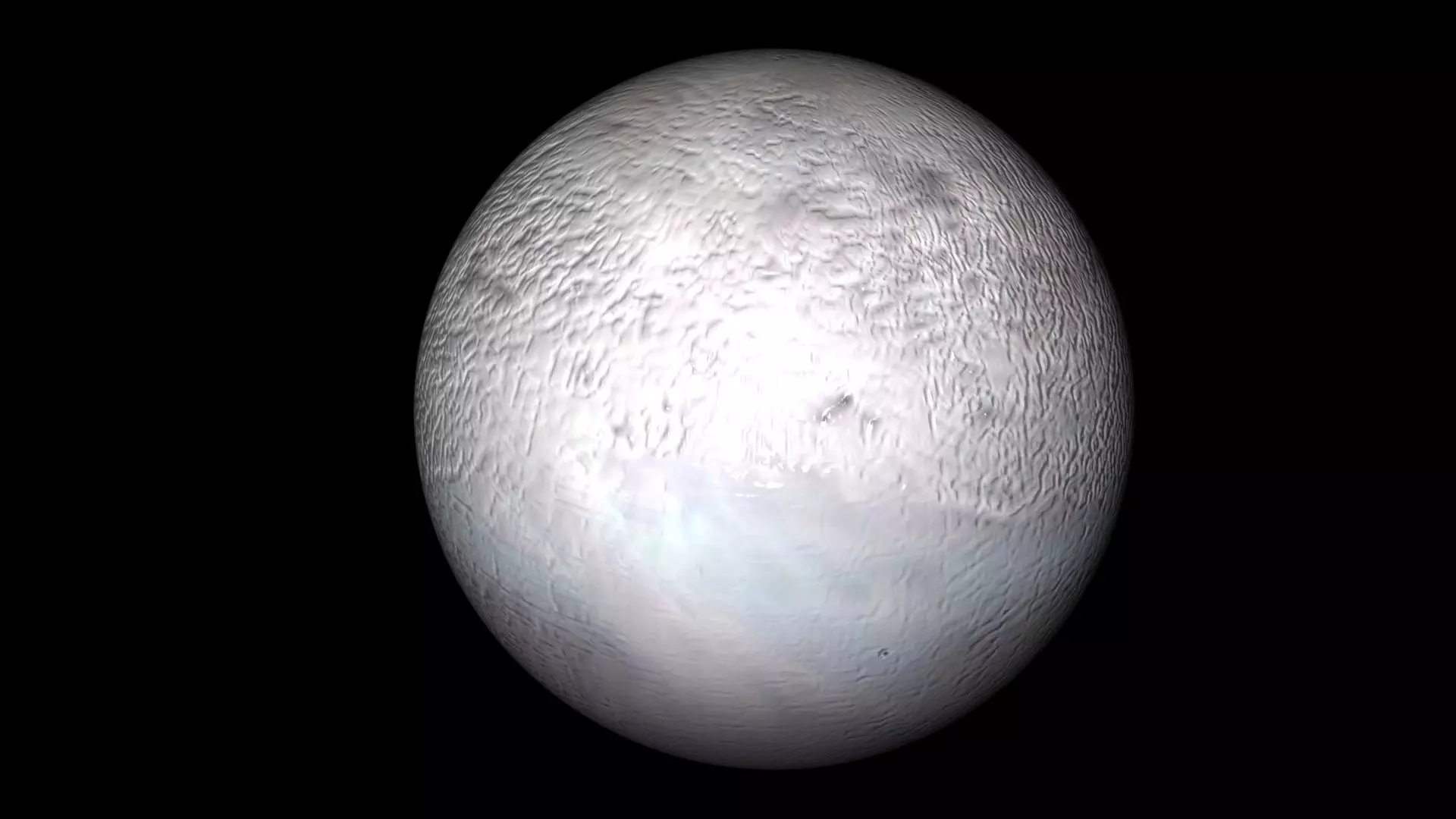
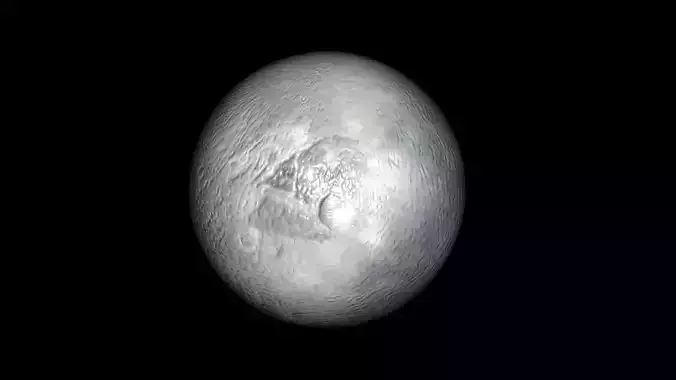
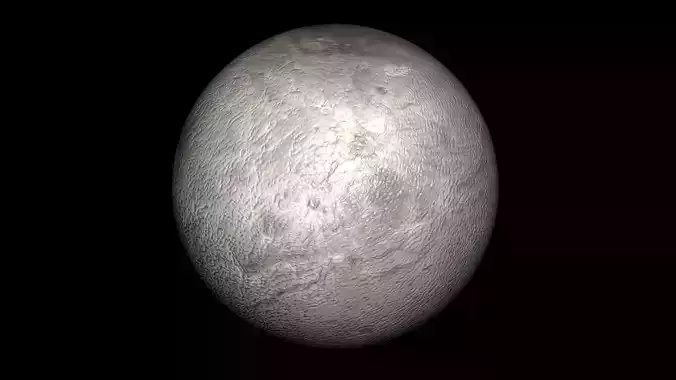
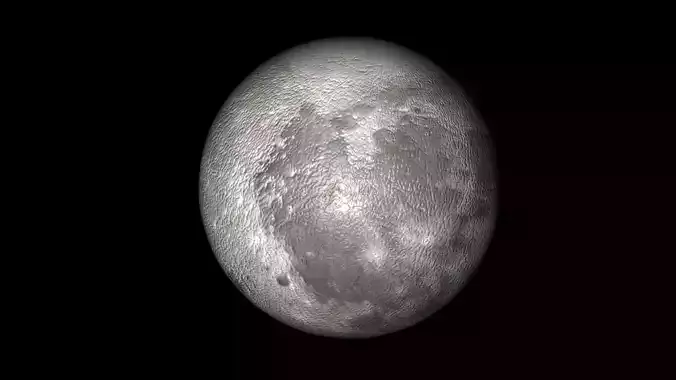
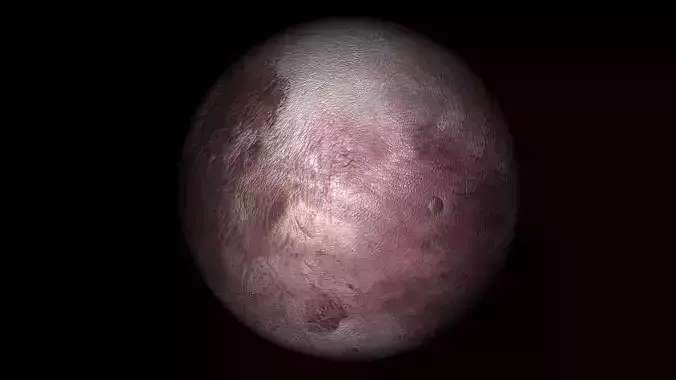
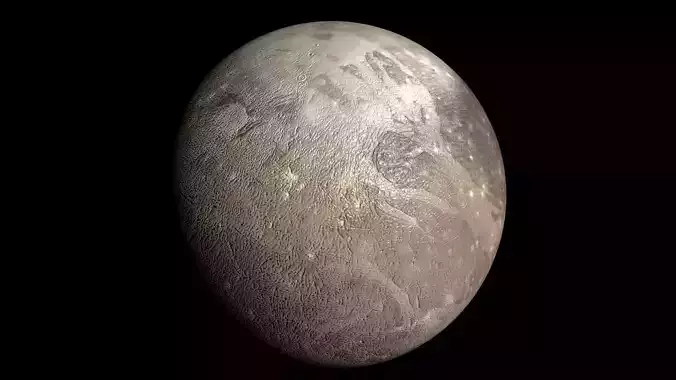
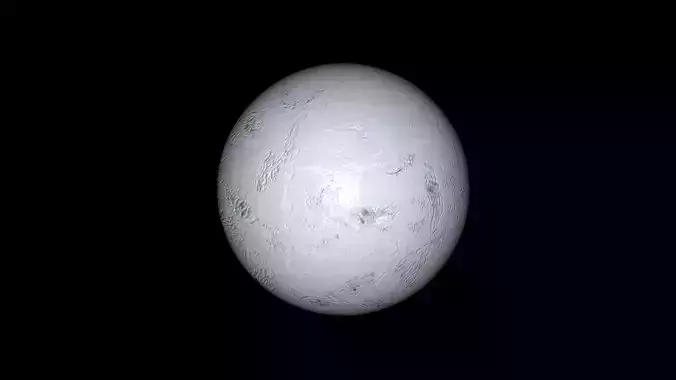
DescriptionTriton Moon is the largest natural satellite of the planet Neptune. It is the only moon of Neptune massive enough to be rounded under its own gravity and hosts a thin, hazy atmosphere. Triton orbits Neptune in a retrograde orbit—revolving in the opposite direction to the parent planet's rotation—the only large moon in the Solar System to do so. Triton is thought to have once been a dwarf planet from the Kuiper belt, captured into Neptune's orbit by the latter's gravity. At 2,710 kilometers (1,680 mi) in diameter, Triton is the seventh-largest moon in the Solar System, the second-largest planetary moon in relation to its primary (after Earth's Moon), and larger than all of the known dwarf planets. The mean density is 2.061 g/cm3, reflecting a composition of approximately 30–45% water ice by mass: 866 with the rest being mostly rock and metal. Triton is differentiated, with a crust of primarily ice atop a probable subsurface ocean of liquid water and a solid rocky-metallic core at its center. Although Triton's orbit is nearly circular with a very low orbital eccentricity of 0.000016, Triton's interior may still experience tidal heating through obliquity tides. Triton is one of the most geologically active worlds in the Solar System, with an estimated average surface age of less than 100 million years old. Its surface is covered by frozen nitrogen and is geologically young, with very few impact craters. Young, intricate cryovolcanic and tectonic terrains suggest a complex geological history. The atmosphere of Triton is composed primarily of nitrogen, with minor components of methane and carbon monoxide. Triton's atmosphere is relatively thin and strongly variable, with its atmospheric surface pressure varying by up to a factor of three within the past 30 years. Triton's atmosphere supports clouds of nitrogen ice crystals and a layer of organic atmospheric haze. Triton was the first Neptunian moon to be discovered, on October 10, 1846, by English astronomer William Lassell. The 1989 flyby of Triton by the Voyager 2 spacecraft remains the only up-close visit to the moon as of 2025. As the probe was only able to study about 40% of the moon's surface, multiple concept missions have been developed to revisit Triton. These include a Discovery-class Trident and New Frontiers-class Triton Ocean Worlds Surveyor and Nautilus.
Texture Resolution: 1024 x 512