High-quality 3D assets at affordable prices — trusted by designers, engineers, and creators worldwide. Made with care to be versatile, accessible, and ready for your pipeline.
Included File Formats
This model is provided in 14 widely supported formats, ensuring maximum compatibility:
• - FBX (.fbx) – Standard format for most 3D software and pipelines
• - OBJ + MTL (.obj, .mtl) – Wavefront format, widely used and compatible
• - STL (.stl) – Exported mesh geometry; may be suitable for 3D printing with adjustments
• - STEP (.step, .stp) – CAD format using NURBS surfaces
• - IGES (.iges, .igs) – Common format for CAD/CAM and engineering workflows (NURBS)
• - SAT (.sat) – ACIS solid model format (NURBS)
• - DAE (.dae) – Collada format for 3D applications and animations
• - glTF (.glb) – Modern, lightweight format for web, AR, and real-time engines
• - 3DS (.3ds) – Legacy format with broad software support
• - 3ds Max (.max) – Provided for 3ds Max users
• - Blender (.blend) – Provided for Blender users
• - SketchUp (.skp) – Compatible with all SketchUp versions
• - AutoCAD (.dwg) – Suitable for technical and architectural workflows
• - Rhino (.3dm) – Provided for Rhino users
Model Info
• - All files are checked and tested for integrity and correct content
• - Geometry uses real-world scale; model resolution varies depending on the product (high or low poly)
• • - Scene setup and mesh structure may vary depending on model complexity
• - Rendered using Luxion KeyShot
• - Affordable price with professional detailing
Buy with confidence. Quality and compatibility guaranteed.
If you have any questions about the file formats, feel free to send us a message — we're happy to assist you!
Sincerely,
SURF3D
Trusted source for professional and affordable 3D models.
More Information About 3D Model :
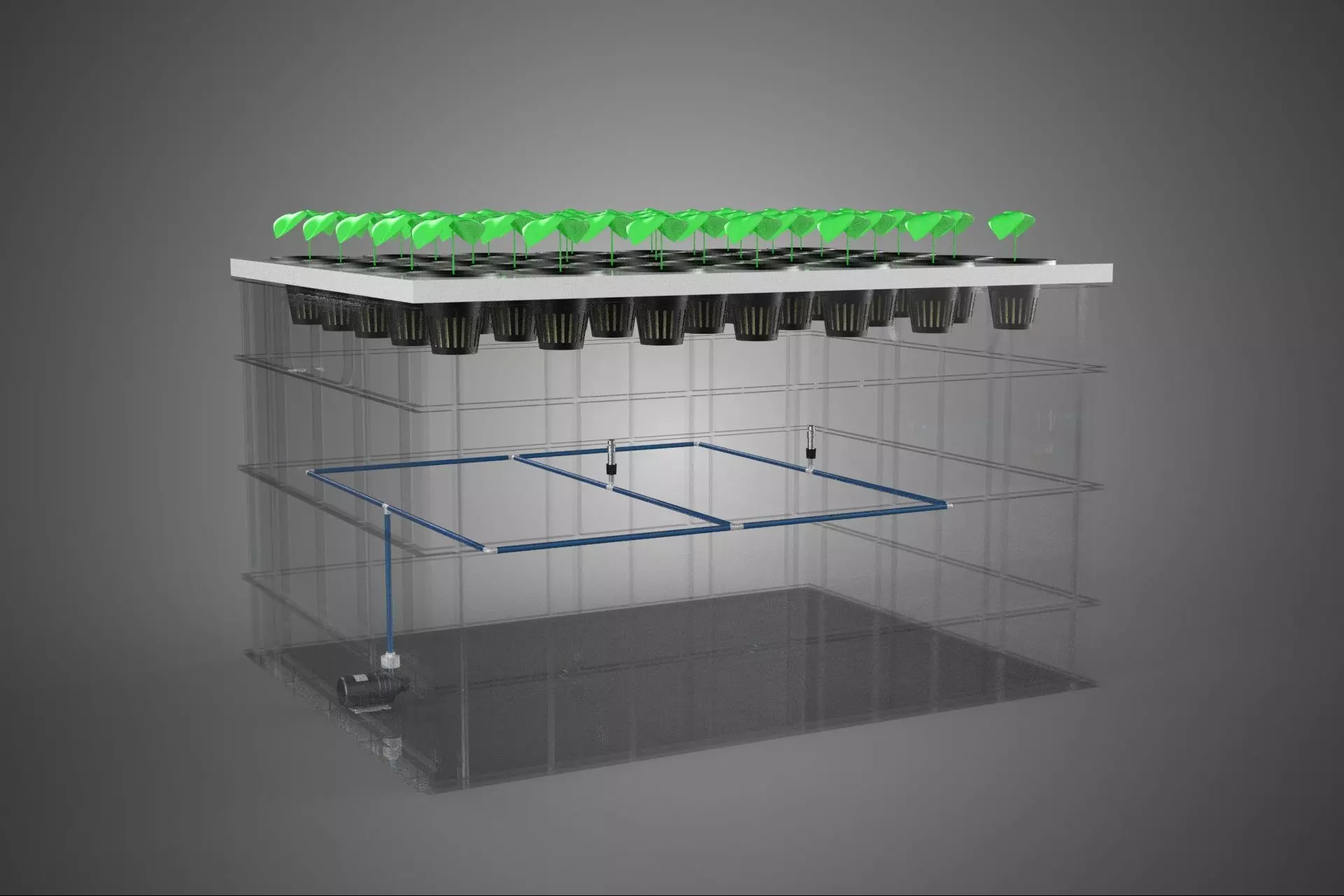
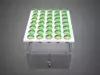
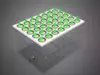
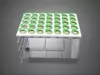
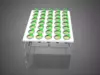
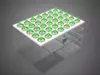
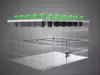
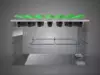
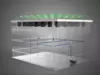
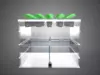
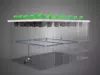
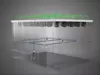
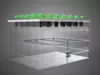
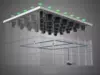
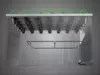
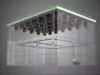
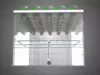
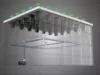
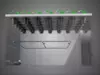
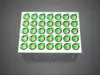
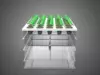
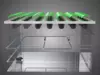
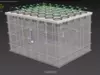
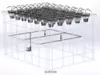
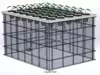
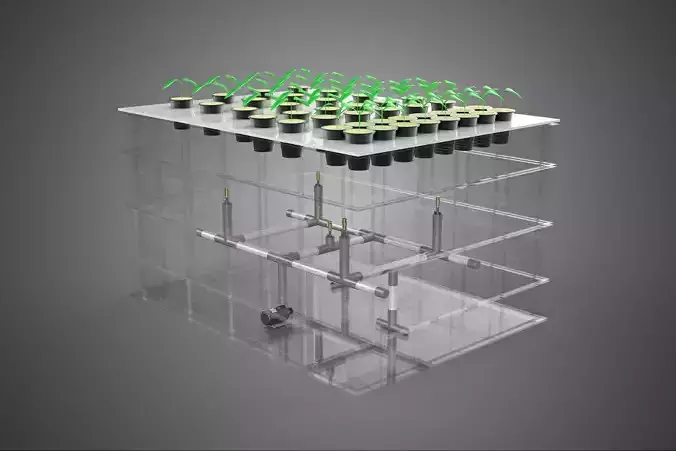
The apparatus described, a Transparent Aeroponic Plant Crop Tank Net Pots Pump Growing Tray, defines a specialized, high-performance iteration of controlled environment agriculture (CEA). This integrated system utilizes true aeroponics—a soilless cultivation technique where plant roots are suspended in an enclosed environment and nourished by the aerosolization of nutrient-rich water.
System Configuration and Function
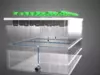
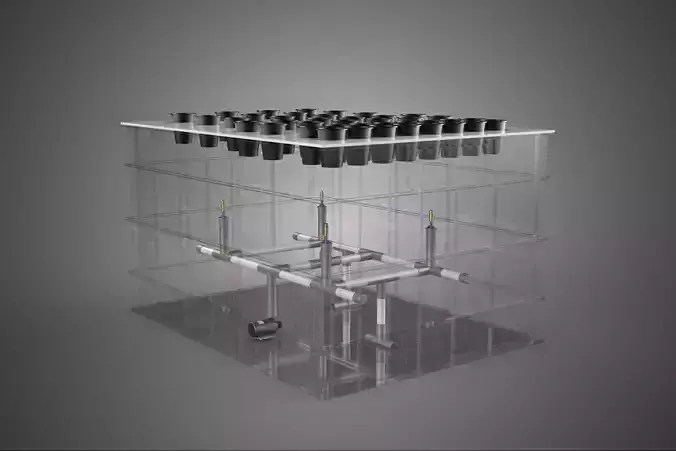
The system is fundamentally a recirculating, closed-loop aeroponic unit optimized for intensive plant growth and root-zone monitoring. It consists of four primary functional components: the reservoir, the delivery mechanism, the growing chamber, and the support structure.
- Transparent Tank (Reservoir): This component serves as the nutrient solution storage vessel. Its crucial characteristic, transparency (typically achieved using food-grade, light-stabilized polymers such as clear acrylic or polyethylene terephthalate glycol, PETG), facilitates immediate, non-destructive visual inspection of the nutrient level, pH indicator stability, and the overall solution clarity. This feature is vital for identifying precipitate formation or microbial contamination (e.g., algal bloom) early, enhancing overall system management and horticultural research capabilities.
- Pump and Delivery System: A submersible or external electric Pump draws the formulated nutrient solution from the Tank. The pump pressurizes the fluid, which is then delivered through manifold lines to high-pressure misting or fogging nozzles strategically positioned beneath the Growing Tray. These nozzles atomize the solution into fine aerosolized droplets (ideally 5–50 micrometers in diameter), which are optimal for maximum root surface area absorption, nutrient uptake efficiency, and gaseous exchange.
- Growing Tray (Root Chamber): This is the sealed chamber where the root zone is maintained. The tray secures the plants above the misting zone. It must be light-impermeable on its internal surface (often achieved via coating or dual-layer construction) to prevent light penetration to the roots, which inhibits algal growth and protects the delicate root system from phototoxicity, unless the transparency is specifically utilized for root observation research.
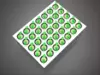
- Net Pots: These small, perforated plastic mesh cups act as the mechanical anchor for the plant structure. Inserted into apertures in the Growing Tray, Net Pots secure the stem base, often utilizing minimal inert rooting media (such as rock wool or expanded clay pebbles) to stabilize the seedling until the primary root mass descends into the aeroponic chamber. The open mesh design ensures maximum root exposure to the nutrient mist.
### Operational Advantages
The incorporation of transparent components offers significant operational benefits, particularly for experimental horticulture and educational purposes:
- Diagnostic Capabilities: Transparency allows for continuous, real-time monitoring of root health, development rate, biomass accumulation, and the presence of root diseases (e.g., Pythium) or nutrient deficiency symptoms without needing to disturb the root chamber seal.
- Oxygenation: Aeroponics inherently maximizes oxygen exposure to the roots (gas-phase nutrient delivery), leading to superior respiration rates compared to hydroponic methods like deep water culture (DWC).
- Water and Nutrient Efficiency: The closed-loop system recirculates unused nutrient solution, making the system highly efficient in water use, often achieving 98% efficiency compared to traditional soil farming.
This precise, modular, and visually accessible aeroponic setup is widely employed in research laboratories, commercial vertical farms focusing on high-value crops, and sophisticated indoor cultivation environments where rigorous control over environmental factors and root diagnostics is paramount.
KEYWORDS: Aeroponics, Soilless Cultivation, CEA, Transparent Tank, Root Observation, Net Pots, Nutrient Delivery, Closed-Loop System, Plant Crop, Recirculation, Hydroponics, Horticultural Research, Plant Physiology, Nutrient Mist, Growing Tray, Pump System, Root Zone Management, Water Efficiency, Vertical Farming, Controlled Environment, Atomization, Polymer Construction, Monitoring System, Crop Production, Root Health, Submersible Pump, High-Pressure Aeroponics, Diagnosis, Greenhouse Technology, Food Grade Materials.