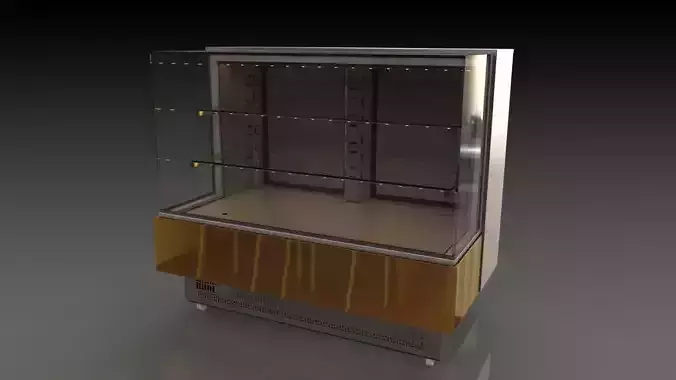
High-quality 3D assets at affordable prices — trusted by designers, engineers, and creators worldwide. Made with care to be versatile, accessible, and ready for your pipeline.
Included File Formats
This model is provided in 14 widely supported formats, ensuring maximum compatibility:
• - FBX (.fbx) – Standard format for most 3D software and pipelines
• - OBJ + MTL (.obj, .mtl) – Wavefront format, widely used and compatible
• - STL (.stl) – Exported mesh geometry; may be suitable for 3D printing with adjustments
• - STEP (.step, .stp) – CAD format using NURBS surfaces
• - IGES (.iges, .igs) – Common format for CAD/CAM and engineering workflows (NURBS)
• - SAT (.sat) – ACIS solid model format (NURBS)
• - DAE (.dae) – Collada format for 3D applications and animations
• - glTF (.glb) – Modern, lightweight format for web, AR, and real-time engines
• - 3DS (.3ds) – Legacy format with broad software support
• - 3ds Max (.max) – Provided for 3ds Max users
• - Blender (.blend) – Provided for Blender users
• - SketchUp (.skp) – Compatible with all SketchUp versions
• - AutoCAD (.dwg) – Suitable for technical and architectural workflows
• - Rhino (.3dm) – Provided for Rhino users
Model Info
• - All files are checked and tested for integrity and correct content
• - Geometry uses real-world scale; model resolution varies depending on the product (high or low poly)
• • - Scene setup and mesh structure may vary depending on model complexity
• - Rendered using Luxion KeyShot
• - Affordable price with professional detailing
Buy with confidence. Quality and compatibility guaranteed.
If you have any questions about the file formats, feel free to send us a message — we're happy to assist you!
Sincerely,
SURF3D
Trusted source for professional and affordable 3D models.
More Information About 3D Model :
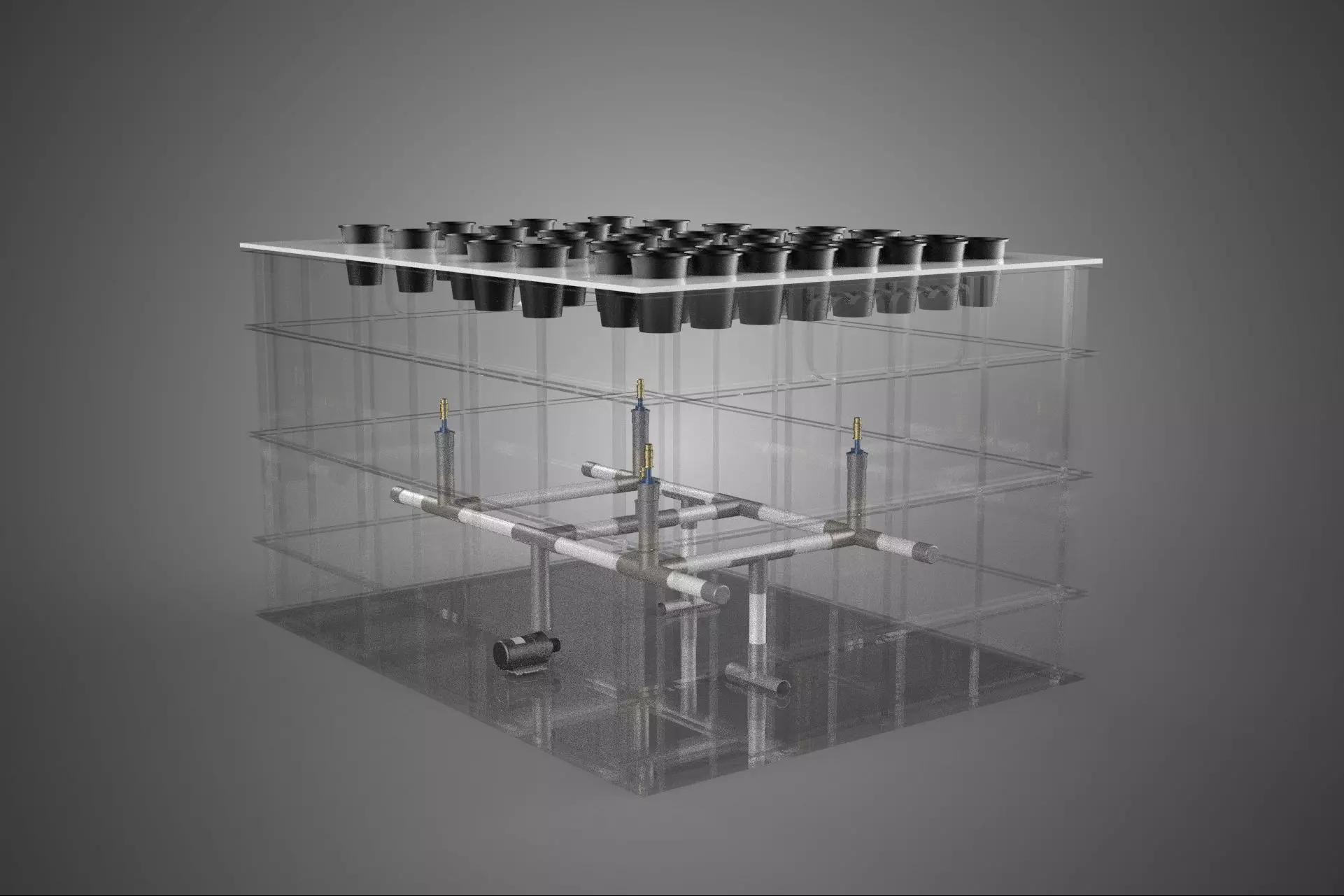
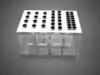
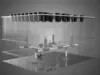
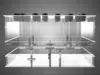
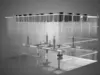
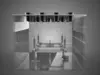
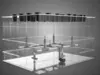
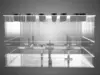
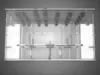
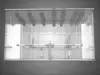
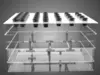
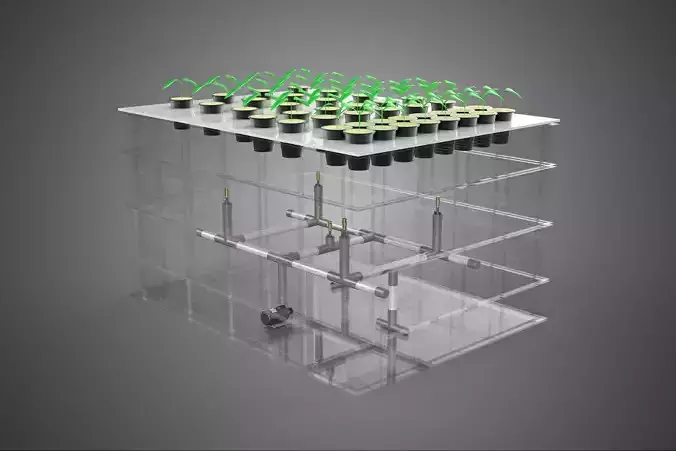
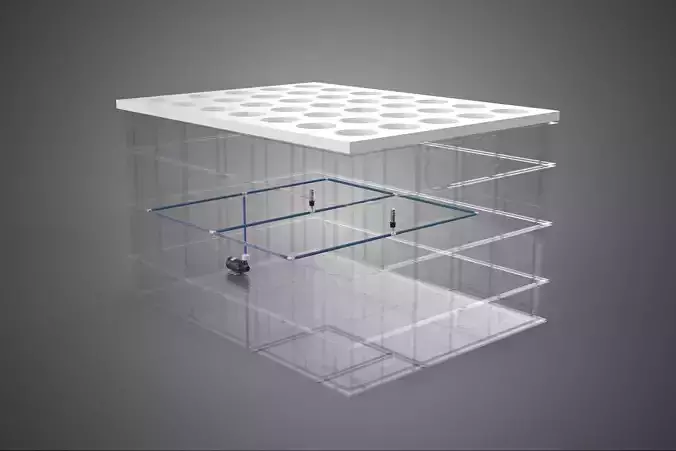
The Farm Garden Aeroponic Misting Chamber Nutrient Delivery Sprayer, frequently referenced as an atomizing nozzle or nebulizer system, is a critical electromechanical apparatus utilized in advanced controlled environment agriculture (CEA), specifically high-pressure or low-pressure aeroponics (AP) systems. Its primary function is the precise mechanical transformation of a liquid nutrient solution into a fine aerosol or mist, optimized for efficient uptake by plant roots suspended within an enclosed growth chamber.
Definition and Operational Context
Aeroponics is a soilless cultivation technique where plants are suspended in air and delivered nutrients via nebulized water. The effectiveness of the system relies directly on the characteristics of the nutrient aerosol, making the sprayer—or delivery nozzle—a key determinant of crop health and yield efficiency. The system is designed to maximize gas exchange (oxygenation) around the roots while ensuring continuous access to dissolved inorganic salts necessary for growth.
The context of Farm Garden implies scalability, ranging from small-scale horticultural units to commercial vertical farm installations, necessitating durable, reliable components capable of continuous duty cycles. The enclosed space receiving the spray is termed the misting chamber or root zone chamber.
Principles of Atomization and Droplet Dynamics
For optimal nutrient absorption via root hairs, the generated mist must fall within a specific droplet size range, typically between 5 and 70 microns (µm). Droplets larger than this range tend to coalesce and saturate the roots, leading to anaerobic conditions, root death, and mineral buildup. Droplets smaller than 5 µm often evaporate too quickly before adequate root contact can be achieved.
The sprayer mechanism typically employs one of two primary methods to achieve this critical micronization:
- Hydraulic Pressure Atomization: This is the most common method in high-pressure aeroponics (HPA). A specialized high-pressure pump forces the nutrient solution through a tiny orifice (the sprayer tip) at pressures generally ranging from 50 to 120 PSI (345–827 kPa). The sudden pressure drop and high velocity cause the liquid stream to shatter into the required fine mist cone.
- Ultrasonic Atomization: Less common for direct root spraying in large commercial farms, but sometimes utilized in low-pressure systems or humidity control. These systems use piezoelectric transducers to vibrate at high frequencies, creating surface tension waves that shear the nutrient solution into a fog.
### Design and Componentry
The nutrient delivery sprayer is engineered for resistance against chemical corrosion, mineral scaling, and biofouling inherent to recirculating nutrient solutions.
Key components include:
- Nozzle Tip (Orifice): Constructed typically from corrosion-resistant materials such as stainless steel, ceramic, or specialized plastics (e.g., PTFE). The orifice size is the primary factor controlling flow rate and droplet size distribution under fixed pressure.
- Anti-Drip Mechanism: A critical feature, usually involving an integrated check valve (spring-loaded mechanism) that seals the orifice when the pump pressure drops below a defined threshold. This prevents weeping or dripping, which leads to localized root saturation and inconsistent delivery.
- Filtration System: Though not structurally part of the sprayer nozzle itself, an in-line mesh filter or screen is essential immediately upstream of the nozzle manifold to prevent particulate matter from clogging the micro-orifice, which could severely compromise spray patterns.
- Mounting Manifold: Allows for precise positioning within the misting chamber, ensuring the spray cone evenly coats the entire root structure.
### Function and System Integration
The nutrient sprayer operates intermittently, controlled by an electronic cycle timer (often employing pulse-width modulation, PWM). This cyclical operation is fundamental to aeroponics, ensuring the roots receive periods of hydration (misting phase) followed by periods of complete air exposure (dry phase). Typical cycles might involve spraying for 1 to 5 seconds every 3 to 15 minutes, depending on the crop, environmental conditions, and growth phase.
In a farm or garden setup, multiple sprayers are strategically placed to ensure uniform delivery across large root mass arrays, balancing flow rates and preventing spatial variations in nutrient availability (a phenomenon known as nutrient heterogeneity). Maintenance protocols require regular cleaning, often utilizing weak acid solutions or sterilization methods, to prevent the growth of pathogens or mineral accumulation that degrades spray performance.
***
KEYWORDS: Aeroponics, Atomizing Nozzle, Nutrient Delivery, Misting Chamber, Controlled Environment Agriculture, CEA, High-Pressure Aeroponics, HPA, Nebulizer, Hydroponics, Soilless Cultivation, Micronization, Root Zone, Plant Physiology, Check Valve, Anti-Drip, Orifice, Stainless Steel, Recirculating System, Crop Yield, Pulse-Width Modulation, Electromechanical, Root Oxygenation, Environmental Control, Farm Technology, Hydraulic Atomization, Vertical Farming, Root Hair, Nutrient Solution, Scaling, Horticulture.