High-quality 3D assets at affordable prices — trusted by designers, engineers, and creators worldwide. Made with care to be versatile, accessible, and ready for your pipeline.
Included File Formats
This model is provided in 14 widely supported formats, ensuring maximum compatibility:
• - FBX (.fbx) – Standard format for most 3D software and pipelines
• - OBJ + MTL (.obj, .mtl) – Wavefront format, widely used and compatible
• - STL (.stl) – Exported mesh geometry; may be suitable for 3D printing with adjustments
• - STEP (.step, .stp) – CAD format using NURBS surfaces
• - IGES (.iges, .igs) – Common format for CAD/CAM and engineering workflows (NURBS)
• - SAT (.sat) – ACIS solid model format (NURBS)
• - DAE (.dae) – Collada format for 3D applications and animations
• - glTF (.glb) – Modern, lightweight format for web, AR, and real-time engines
• - 3DS (.3ds) – Legacy format with broad software support
• - 3ds Max (.max) – Provided for 3ds Max users
• - Blender (.blend) – Provided for Blender users
• - SketchUp (.skp) – Compatible with all SketchUp versions
• - AutoCAD (.dwg) – Suitable for technical and architectural workflows
• - Rhino (.3dm) – Provided for Rhino users
Model Info
• - All files are checked and tested for integrity and correct content
• - Geometry uses real-world scale; model resolution varies depending on the product (high or low poly)
• • - Scene setup and mesh structure may vary depending on model complexity
• - Rendered using Luxion KeyShot
• - Affordable price with professional detailing
Buy with confidence. Quality and compatibility guaranteed.
If you have any questions about the file formats, feel free to send us a message — we're happy to assist you!
Sincerely,
SURF3D
Trusted source for professional and affordable 3D models.
More Information About 3D Model :
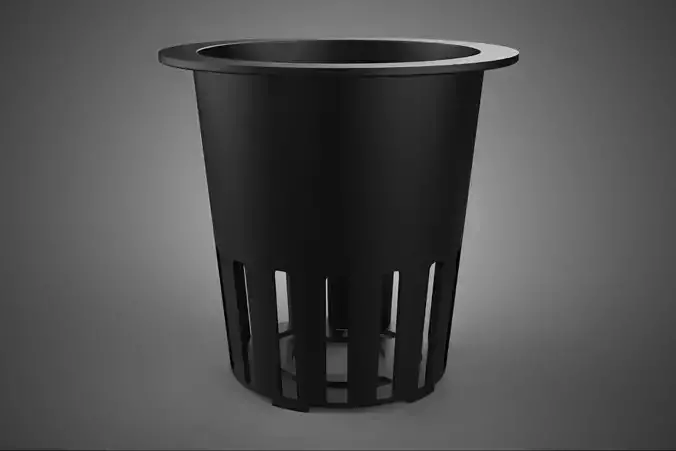
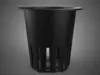
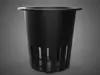
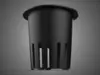
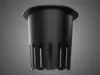
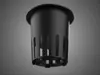
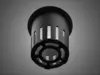
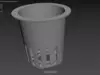
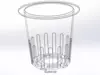
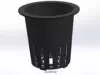
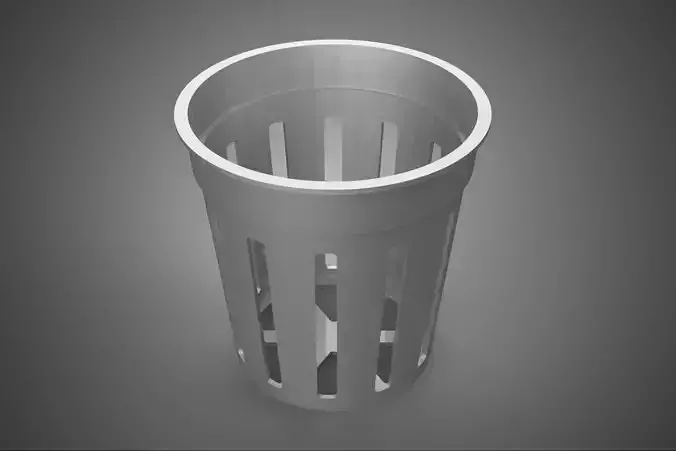
Black Plastic Net Pot Growth Mesh Cup Basket Root Hydroponic DWC
The black plastic net pot, also frequently referred to as a growth mesh cup, root basket, or slotted hydroponic container, is a specialized horticultural implement engineered for soilless cultivation systems, particularly Deep Water Culture (DWC) and other forms of hydroponics. These containers serve as the primary structural interface between the developing plant roots and the circulating nutrient solution.
Nomenclature and Definition
The term net pot describes the container's defining characteristic: a latticed or slotted wall structure designed to maximize aeration and facilitate unimpeded root proliferation. Unlike traditional solid-walled nursery pots, the net pot acts primarily as a physical support matrix for the initial rooting substrate (such as rockwool, coco coir, or expanded clay aggregate (hydroton)), rather than retaining soil. The inclusion of DWC in the descriptor highlights its principal function within recirculating or static reservoir systems where the base of the pot and the substrate are typically submerged or perpetually moist.
Physical Characteristics and Material Science
Net pots are almost exclusively manufactured from durable, inert thermoplastic polymers, most commonly High-Density Polyethylene (HDPE) or Polypropylene (PP). These materials are chosen for their chemical resistance to standard pH-buffered nutrient solutions, structural rigidity, and longevity under continuous moisture exposure.
Design Elements:
- Mesh Structure: The body of the pot features numerous apertures (slots, holes, or a mesh lattice) spanning the sides and base. This design is crucial for allowing roots to easily penetrate the container walls and descend into the oxygenated nutrient reservoir.
- Rim/Lip: A broad, structural rim around the top edge provides support, allowing the pot to rest securely in corresponding openings (lids, buckets, or channels) of the hydroponic system without falling into the reservoir.
- Size Variability: Net pots are produced in various standard diameters, typically ranging from 2 inches (5 cm) to 8 inches (20 cm), to accommodate different plant sizes and growth phases.
#### Color Rationale (Black Plastic):
The utilization of black plastic is a functional necessity in hydroponics, serving to block photosynthetic light transmission. Preventing ambient light from reaching the nutrient solution within the reservoir inhibits the growth of phototrophic organisms, particularly algae and cyanobacteria. Algal blooms are detrimental as they compete with the plant roots for dissolved oxygen and essential nutrients, potentially fostering anaerobic conditions, root pathogens (e.g., Pythium), and necessitating frequent reservoir sanitation.
### Functional Mechanics in Hydroponic Systems
The net pot’s primary function is to secure the plant crown while simultaneously exposing the root zone to the nutrient solution.
#### Deep Water Culture (DWC):
In DWC, the net pot is often suspended directly over a large, aerated reservoir. The net pot bottom extends deep enough so that the nutrient solution maintains contact with the substrate, facilitating capillary action (wicking) to deliver water and nutrients to the young roots. As the roots mature, they grow through the mesh and into the body of the reservoir, where they uptake nutrients directly from the oxygen-rich water.
#### Other Applications:
Net pots are also utilized in:
- Nutrient Film Technique (NFT): Though less common than specialized collars, small net pots can support seedlings in the gullies or channels.
- Ebb and Flow (Flood and Drain): The containers retain the growing medium during the flooding phase and allow efficient drainage during the ebb phase.
- Aeroponics: The pots provide initial stabilization, although the roots are primarily suspended in air and misted.
### Maintenance and Lifespan
Due to their inert material composition, black plastic net pots are highly reusable. They are typically cleaned between crop cycles to remove residual root matter and mineral deposits. Sterilization methods often involve soaking in dilute hydrogen peroxide or chlorine solutions to prevent the transmission of pathogens to subsequent crops.
KEYWORDS: Hydroponics, Deep Water Culture, DWC, Net Pot, Mesh Cup, Soilless Culture, Root Basket, Growth Medium, Polypropylene, HDPE, Nutrient Solution, Algal Inhibition, Aeration, Plant Support, Root Egress, Seedling Stage, Cultivation Container, Slotted Pot, Hydroton, Expanded Clay, Rockwool, Nursery Supplies, Crop Cycle, Reservoir, UV Resistance, Black Plastic, Horticulture, Passive Hydroponics, Ebb and Flow, Root System.