High-quality 3D assets at affordable prices — trusted by designers, engineers, and creators worldwide. Made with care to be versatile, accessible, and ready for your pipeline.
Included File Formats
This model is provided in 14 widely supported formats, ensuring maximum compatibility:
• - FBX (.fbx) – Standard format for most 3D software and pipelines
• - OBJ + MTL (.obj, .mtl) – Wavefront format, widely used and compatible
• - STL (.stl) – Exported mesh geometry; may be suitable for 3D printing with adjustments
• - STEP (.step, .stp) – CAD format using NURBS surfaces
• - IGES (.iges, .igs) – Common format for CAD/CAM and engineering workflows (NURBS)
• - SAT (.sat) – ACIS solid model format (NURBS)
• - DAE (.dae) – Collada format for 3D applications and animations
• - glTF (.glb) – Modern, lightweight format for web, AR, and real-time engines
• - 3DS (.3ds) – Legacy format with broad software support
• - 3ds Max (.max) – Provided for 3ds Max users
• - Blender (.blend) – Provided for Blender users
• - SketchUp (.skp) – Compatible with all SketchUp versions
• - AutoCAD (.dwg) – Suitable for technical and architectural workflows
• - Rhino (.3dm) – Provided for Rhino users
Model Info
• - All files are checked and tested for integrity and correct content
• - Geometry uses real-world scale; model resolution varies depending on the product (high or low poly)
• • - Scene setup and mesh structure may vary depending on model complexity
• - Rendered using Luxion KeyShot
• - Affordable price with professional detailing
Buy with confidence. Quality and compatibility guaranteed.
If you have any questions about the file formats, feel free to send us a message — we're happy to assist you!
Sincerely,
SURF3D
Trusted source for professional and affordable 3D models.
More Information About 3D Model :
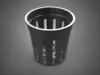
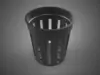
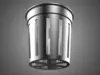
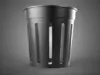
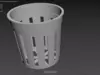
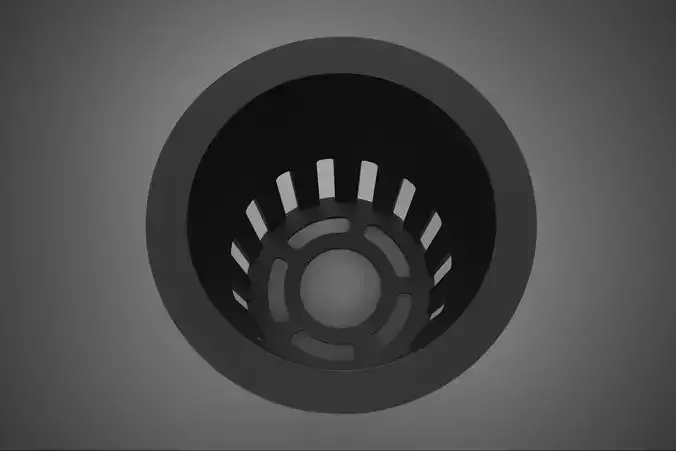
The Net Pot, also commonly referred to as a Plastic Mesh Plant Basket, Hydroponic Cup, or Aeroponic Cup, is a specialized container component integral to various Controlled Environment Agriculture (CEA) techniques, predominantly within hydroponic and aeroponic cultivation systems. Its fundamental purpose is to provide structural support and anchorage for seedlings and mature crops while allowing the root mass unrestricted access to nutrient solutions, oxygen, and water, in the absence of traditional soil substrates.
Design and Material Specifications
Net pots are typically fabricated from durable, inert, and non-toxic plastics, such as High-Density Polyethylene (HDPE) or Polypropylene (PP), materials selected for their resistance to chemical corrosion from nutrient salts, pH stabilizers, and resistance to ultraviolet (UV) degradation when exposed to artificial or natural light cycles.
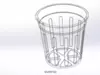
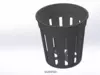
The defining characteristic of the net pot is its lattice-work or mesh structure. The sides and base of the container are highly perforated, maximizing the surface area dedicated to gaseous and liquid exchange. This mesh design stabilizes inert growing media (such as coco coir, rockwool cubes, perlite, or clay expanded aggregate/hydroton) within the cup while ensuring that the emergent root system can easily penetrate the container walls to access the external environment.
Net pots are standardized globally, ranging in common diameters from 2 inches (50 mm) to 6 inches (150 mm), often featuring a wide lip or collar designed for secure placement within pre-drilled apertures on reservoir lids, channel systems (raceways), or customized support structures. The typical color is black, which helps inhibit light penetration into the reservoir, mitigating algal growth that could compete with the plant for nutrients.
Functional Integration in Soilless Systems
The plastic mesh basket serves a crucial function across different methodologies of soil-less cultivation:
- Deep Water Culture (DWC): In DWC systems, the net pot anchors the plant, with the base often partially submerged in the continuously aerated nutrient solution reservoir. The roots grow through the mesh directly into the solution, facilitating high rates of nutrient and water uptake.
- Nutrient Film Technique (NFT): The net pot sits in the NFT channel, allowing the thin, constantly circulating film of nutrient solution to flow over the exposed base of the mesh. This method ensures continuous nutrient delivery while maximizing root exposure to atmospheric oxygen within the channel.
- Ebb and Flow (Flood and Drain): In these systems, the net pot holds the root medium within the cultivation tray. The mesh design allows for rapid drainage after the periodic flooding cycle, preventing root saturation and ensuring proper aeration.
- Aeroponics: The open mesh structure is essential for aeroponic environments. The net pot holds the stem structure above the rooting chamber, ensuring the root mass hangs freely in the air. This lack of obstruction allows high-pressure mist nozzles to directly atomize and deliver precise doses of nutrient fog (aerosolized solution) onto the roots, maximizing oxygen exchange and nutrient absorption efficiency.
### Horticultural Advantages
The mesh basket design provides significant horticultural advantages compared to traditional solid containers:
- Superior Aeration: The highly porous structure ensures maximum oxygen availability for the roots, a critical factor in preventing root diseases (such as pythium) and promoting vigorous growth.
- Air Pruning: As roots grow outward through the mesh and encounter the air outside the growing chamber, their tips naturally cease extension (air pruning). This process stimulates the formation of dense, fibrous lateral feeder roots, resulting in a healthier, more efficient root system optimized for nutrient uptake.
- Scalability and Hygiene: Net pots facilitate easy sterilization, rapid transplanting, and standardized automation across large-scale commercial operations.
***
KEYWORDS: Hydroponics, Aeroponics, Net Pot, Mesh Basket, Plastic Cup, Plant Container, Soilless Culture, Deep Water Culture, DWC, Nutrient Film Technique, NFT, Growing Media, Root System, Air Pruning, Controlled Environment Agriculture, CEA, Polypropylene, HDPE, Rockwool, Clay Pebbles, Hydroton, Perlite, Root Anchorage, Aeration, Reservoir, Cultivation, Standardization, Crop Support, Transplanting, Hydroponic Hardware.