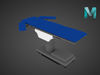
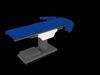
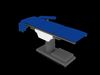
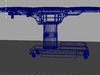
DESCRIPTION

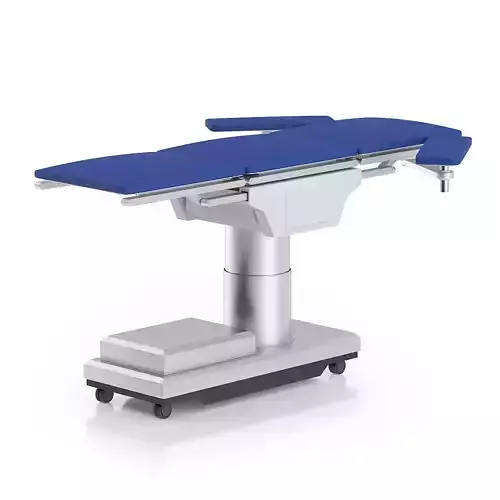
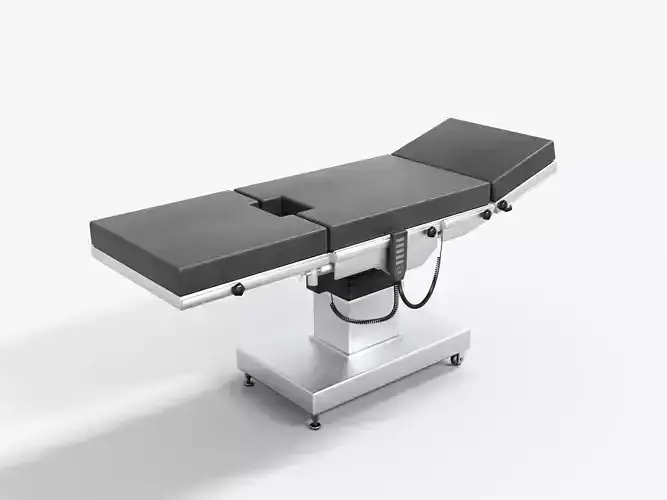
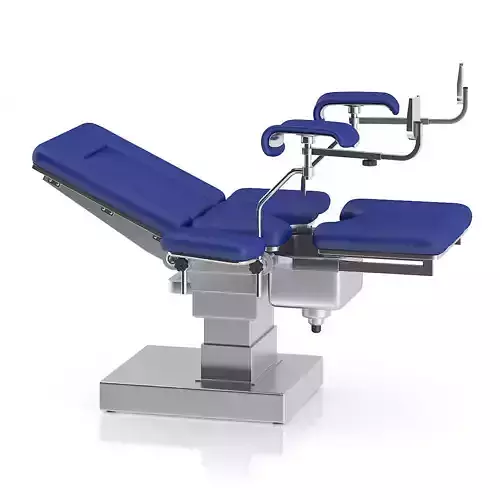
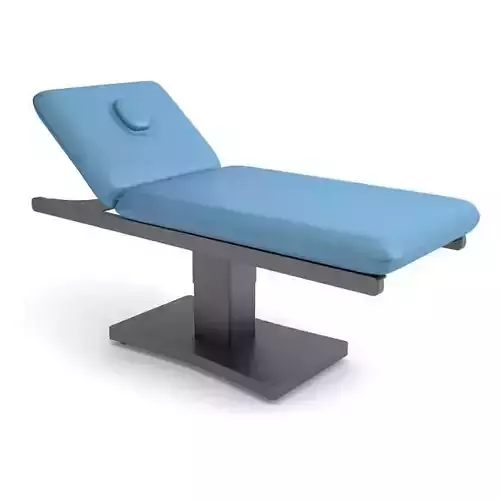
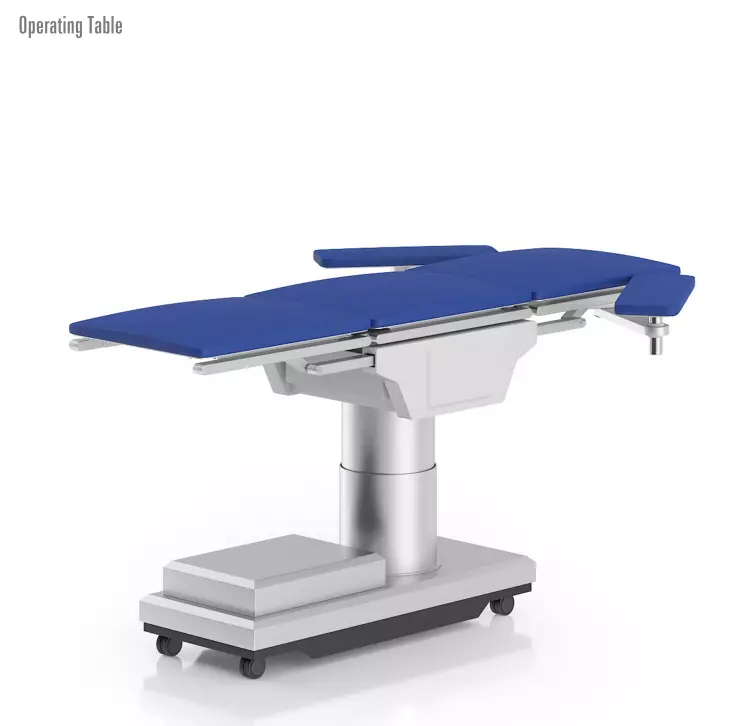
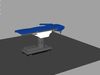
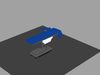
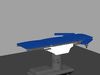
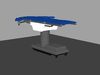
The Operating Table is a highly versatile and advanced piece of medical equipment designed to provide optimal patient positioning and support during surgical procedures. It offers a range of adjustable features and ergonomic design elements to ensure the comfort and safety of both patients and medical staff.

The operating table is constructed with high-quality materials that meet rigorous medical standards. It provides a sturdy and stable platform for patients to lie on during surgery, accommodating various body types and sizes. The table's surface is typically padded with a comfortable yet durable material, ensuring patient comfort throughout the procedure.

One of the key features of an operating table is its adjustable positioning capabilities. It allows medical professionals to easily and precisely adjust the table's height, tilt, and lateral tilt to achieve the optimal position for the patient. This flexibility enables access to the surgical site and ensures proper alignment for the specific procedure being performed.

Additionally, the operating table may offer specialized attachments and accessories to further enhance its functionality. These can include adjustable headrests, leg supports, armrests, and body straps to secure the patient in the desired position. The table may also have integrated sliding mechanisms or sections that can be detached or rotated for specific surgical requirements.

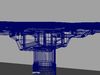
Safety is a top priority when it comes to operating tables. They are equipped with features such as locking mechanisms to secure the desired position, sturdy support columns, and weight-bearing capacity to ensure patient stability. The table's design also allows for easy cleaning and maintenance to maintain a sterile environment.

Operating tables are designed to be compatible with various surgical equipment and imaging systems. They offer clear access for C-arm imaging devices, ensuring accurate intraoperative imaging without compromising patient positioning. The table may have built-in channels or platforms for the integration of surgical accessories like anesthesia machines or surgical lights.

The Operating Table is an essential component of any modern operating room, providing the necessary support and adjustability required for successful surgical procedures. Its ergonomic design, adjustable features, and focus on patient safety make it an invaluable tool for healthcare professionals.

REVIEWS & COMMENTS

See what other buyers think about this model - real feedback on quality,
accuracy, and usability.
There are no reviews or comments yet. Please be the first one to write it.

Operating Table 3D model

Royalty Free License
Hire
Like this model to show appreciation to the designer.
See how many times this model was viewed.
Share this model to support the designer and boost their visibility.
File formats
OBJ
OBJ | 2 files<br />File Size: 39.2 MB
FBX
Autodesk FBX<br />File Size: 35.5 MB
MA
Autodesk Maya<br />File Size: 21.3 MB
Verified by CGTrader
Verified models are of higher quality as they have
passed CGT Standard technical and visual checks,
making them more professional-grade 3D assets.
Learn more.
FBX
This FBX file has successfully passed the CGT Standard technical and visual checks. The verification results are detailed in the section below.
File & scene
Binary FBX
Binary FBX file is more compact and faster to load and process.
Learn more
No unsupported objects
Unsupported objects:
- Lights
- Cameras
Learn more
Geometry
No N-gons
N-gons are polygons with five or more sides which might cause issues in certain processes like rendering or animation. Learn more
No faceted geometry
Faceted geometry uses flat surfaces without smoothing, which can look unrealistic on curves.
Learn more
Manifold geometry
Manifold geometry ensures all surfaces are properly connected, avoiding issues like edges shared by more than two faces.
Learn more
Textures & material
PBR textures
PBR textures simulate how light interacts with materials, making the model look realistic under different lighting.
Required PBR textures:
- Base Color
- Roughness
- Metalness
- Normal
Learn more
No embed textures
Embedded textures are stored inside the model file, increasing its size and sometimes causing compatibility issues.
Learn more
Square textures
Texture aspect ratio is the width-to-height ratio of a texture. Expected texture aspect ratio: 1:1
Learn more
Power of 2 texture sizes
Textures with dimensions in power of two (e.g. 512x512px, 1024x1024px) are used to optimize performance and memory usage.
Learn more
Assigned materials
Materials are applied to the 3D model to allow visualize a model's surface properties and appearance.
Learn more
UVs & naming
No UV overlaps
UVs overlap when multiple points on the 3D model's surface are mapped to the same point on the UV island causing texture stretching.
Learn more
UV unwrapped model
A UV unwrapped model means its 3D surface is flattened into 2D space, allowing textures to be applied accurately.
Learn more
Allowed characters
Allowed ASCII characters: a-zA-Z0-9-_
Learn more
Provided by designer
Information and details shared directly by the model's designer.
3D Features
The model includes animations (movement or actions) that can be played in supported software or engines.
The model has a skeleton or bone structure, making it ready for posing or animation.
PBR
Uses Physically Based Rendering materials, which give the model realistic lighting and surface properties.
Textures
The model includes image files (textures) that add color, patterns, or detail to its surfaces.
Materials
The model has material settings that define how surfaces look (color, shine, transparency, etc.).
UV Mapping
The model's surfaces are mapped to a 2D image, allowing textures to display correctly.
Plugins Used
Some external plugins were used to create the model. These may be required for full functionality.
3D printing
Indicates whether the designer marked this model as suitable for 3D printing.
Model is not 3D printable
The designer indicates this model is intended for digital use only (rendering, animation, or AR/VR) and not for 3D printing.
Geometry
Polygon mesh
A model built from polygons (triangles or quads) connected in a mesh.
152610 polygons
The total number of polygons (flat shapes) that make up the 3D model.
/ 148544 vertices
The number of points (corners) that define the shape of the model's polygons.
Unwrapped UVs
Publish date
Model ID
Chat