High-quality 3D assets at affordable prices — trusted by designers, engineers, and creators worldwide. Made with care to be versatile, accessible, and ready for your pipeline.
Included File Formats
This model is provided in 14 widely supported formats, ensuring maximum compatibility:
• - FBX (.fbx) – Standard format for most 3D software and pipelines
• - OBJ + MTL (.obj, .mtl) – Wavefront format, widely used and compatible
• - STL (.stl) – Exported mesh geometry; may be suitable for 3D printing with adjustments
• - STEP (.step, .stp) – CAD format using NURBS surfaces
• - IGES (.iges, .igs) – Common format for CAD/CAM and engineering workflows (NURBS)
• - SAT (.sat) – ACIS solid model format (NURBS)
• - DAE (.dae) – Collada format for 3D applications and animations
• - glTF (.glb) – Modern, lightweight format for web, AR, and real-time engines
• - 3DS (.3ds) – Legacy format with broad software support
• - 3ds Max (.max) – Provided for 3ds Max users
• - Blender (.blend) – Provided for Blender users
• - SketchUp (.skp) – Compatible with all SketchUp versions
• - AutoCAD (.dwg) – Suitable for technical and architectural workflows
• - Rhino (.3dm) – Provided for Rhino users
Model Info
• - All files are checked and tested for integrity and correct content
• - Geometry uses real-world scale; model resolution varies depending on the product (high or low poly)
• • - Scene setup and mesh structure may vary depending on model complexity
• - Rendered using Luxion KeyShot
• - Affordable price with professional detailing
Buy with confidence. Quality and compatibility guaranteed.
If you have any questions about the file formats, feel free to send us a message — we're happy to assist you!
Sincerely,
SURF3D
Trusted source for professional and affordable 3D models.
More Information About 3D Model :
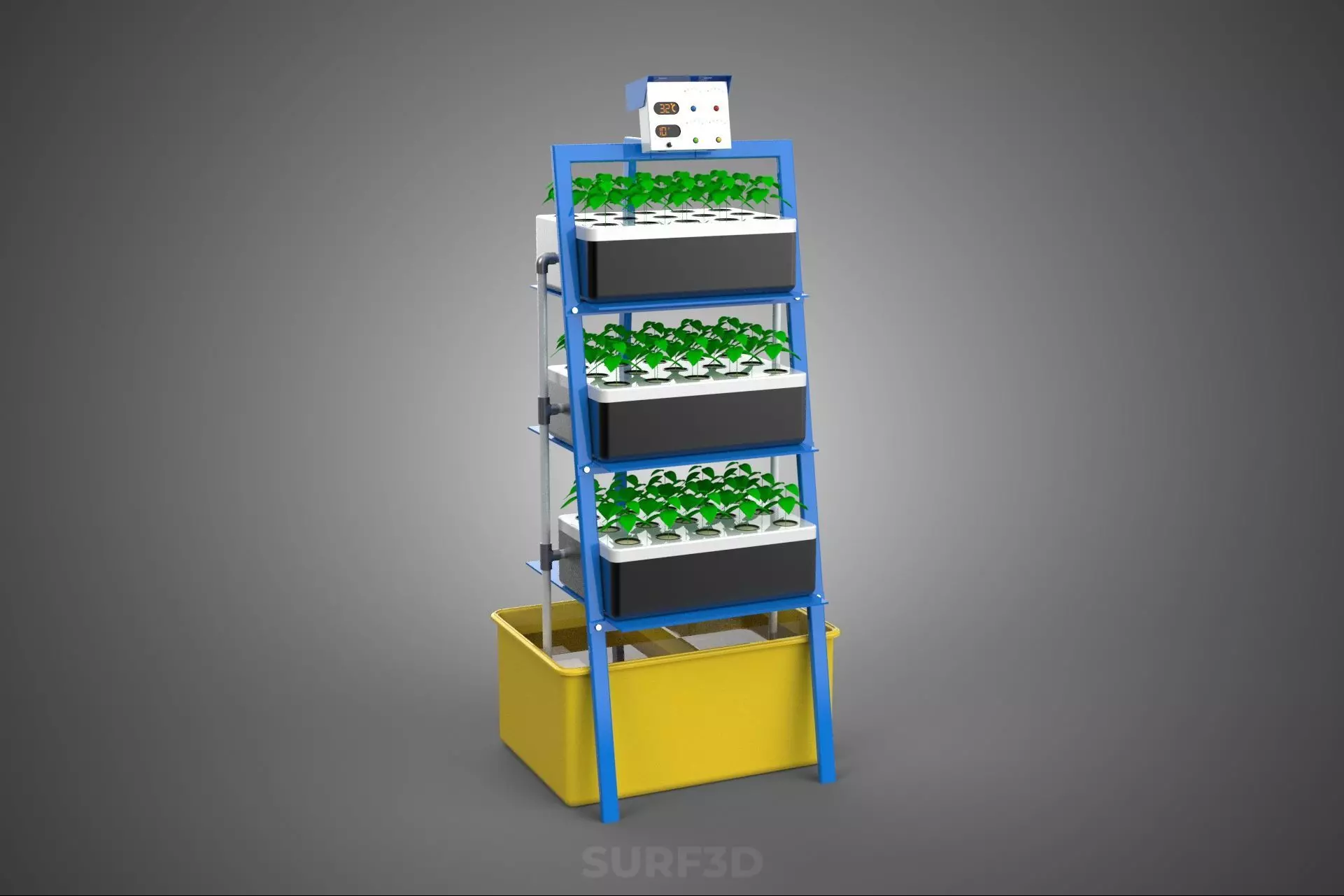
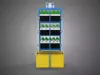
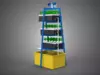
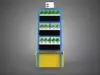
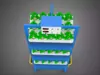
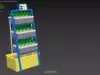
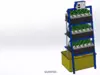
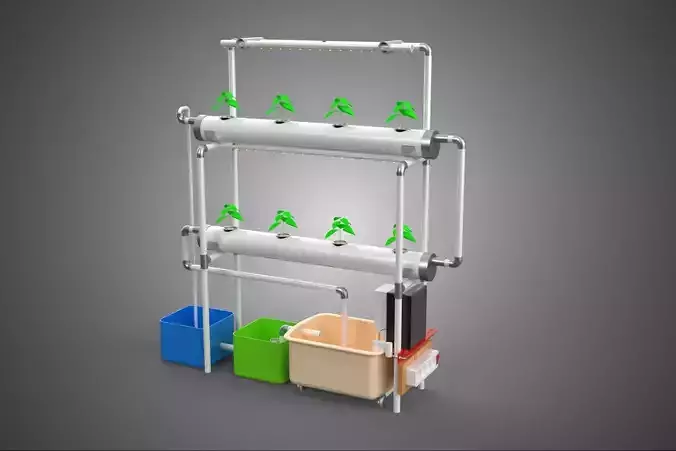
A SMART HOME IOT NFT HYDROPONIC PLANT FARM CULTIVATION MONITORING system represents an advanced, integrated approach to automated indoor agriculture within a residential setting. It synergistically combines Internet of Things (IoT) technologies, hydroponic cultivation methods, and Non-Fungible Tokens (NFTs) to enable precise, data-driven monitoring and management of plant growth. This sophisticated ecosystem aims to optimize resource utilization, enhance crop yield, and provide users with unprecedented control and transparency over their home-based horticultural endeavors.
IoT Framework for Cultivation Monitoring:
At its core, the system relies on an extensive Internet of Things (IoT) network. This network comprises an array of interconnected sensors and actuators deployed within the hydroponic environment. Key sensors continuously monitor critical environmental parameters such as water pH, Electrical Conductivity (EC) for nutrient concentration, air temperature, humidity, light intensity (PAR/PPFD), water levels, and potentially CO2 levels. Data collected by these sensors is transmitted wirelessly, often via Wi-Fi, Zigbee, or Bluetooth, to a central hub or cloud-based platform. Actuators, controlled either automatically by predefined rules or remotely by the user, manage essential operations like nutrient solution dosing, water pumping cycles, LED grow light schedules, ventilation fans, and environmental controls. This real-time data acquisition and remote actuation capabilities form the foundation for automated and optimized plant cultivation.
Hydroponic Plant Farm:
The cultivation method employed is hydroponics, a soilless farming technique where plants are grown in nutrient-rich water solutions. Hydroponic systems offer significant advantages such as faster growth rates, higher yields, reduced water consumption, and the elimination of soil-borne pests and diseases. While NFT in the context of hydroponics can also refer to Nutrient Film Technique, a common method known for its water efficiency and aeration, in this integrated high-tech title, the preceding SMART HOME IOT strongly indicates Non-Fungible Token as the primary intended meaning. Regardless of the specific hydroponic variant (e.g., Deep Water Culture, Drip Systems, Aeroponics, or Nutrient Film Technique), all benefit from comprehensive IoT monitoring.
Smart Home Integration:
Integration into a smart home ecosystem allows the hydroponic farm to operate seamlessly alongside other smart devices. Users can monitor and control the farm through a unified smart home interface, such as a dedicated mobile application or voice assistant. This integration provides convenience, accessibility, and the potential for advanced automation scenarios, such as adjusting grow light intensity based on time of day and external weather data, or receiving alerts directly through smart home notifications. Data from the farm can also be leveraged for holistic home energy management or personalized consumption insights, contributing to a more sustainable household.
Non-Fungible Token (NFT) Layer:
The inclusion of Non-Fungible Tokens (NFTs) introduces a unique digital asset layer to the physical hydroponic farm. NFTs, stored on a blockchain, represent unique digital certificates of ownership or provenance for specific assets or data. In this context, an NFT could serve several functions:
- Digital Twin/Ownership: Representing the digital ownership or unique identity of the physical hydroponic farm itself, or specific batches of produce. This could facilitate fractional ownership or transfer of farm units digitally.
- Provenance and Traceability: Providing an immutable, verifiable record of a crop's cultivation journey, from seed to harvest. This includes environmental conditions, nutrient schedules, and growth metrics, offering unprecedented transparency for consumers regarding the origin and quality of their food.
- Data Rights and Monetization: NFTs could grant access rights to the comprehensive cultivation data generated by the IoT sensors, potentially enabling data-sharing marketplaces or allowing users to monetize insights derived from their farm's performance.
This NFT layer aims to enhance trust, transparency, and potentially liquidity within the ecosystem of smart agriculture and personalized food production.
Cultivation Monitoring and Optimization:
The monitoring aspect is paramount. The system continually gathers data on plant health indicators and environmental factors. This data is processed and analyzed to provide insights into plant growth trends, identify potential issues (e.g., nutrient deficiencies, pH imbalances), and inform optimization strategies. Users receive real-time alerts for critical events, enabling timely intervention. Predictive analytics, potentially leveraging machine learning, can forecast growth trajectories and recommend adjustments to environmental parameters, nutrient formulations, or lighting schedules to maximize yield and plant vigor. Dashboards and reports visualize historical and real-time data, empowering users to make informed decisions for their hydroponic garden.
Benefits:
The integrated system offers numerous benefits, including significantly reduced water consumption compared to traditional agriculture, optimized nutrient delivery, accelerated plant growth, higher yields in limited spaces, and reduced labor requirements through automation. The NFT component adds layers of verifiable provenance, potential for unique digital asset management, and enhanced transparency in the food supply chain. Smart home integration provides unparalleled convenience and remote management capabilities, contributing to sustainable urban living and personalized food security.
Challenges and Future Outlook:
Challenges include the initial investment cost, the technical complexity of integrating disparate systems, ensuring data security and privacy, and the energy consumption associated with blockchain technologies for NFT minting and transactions.