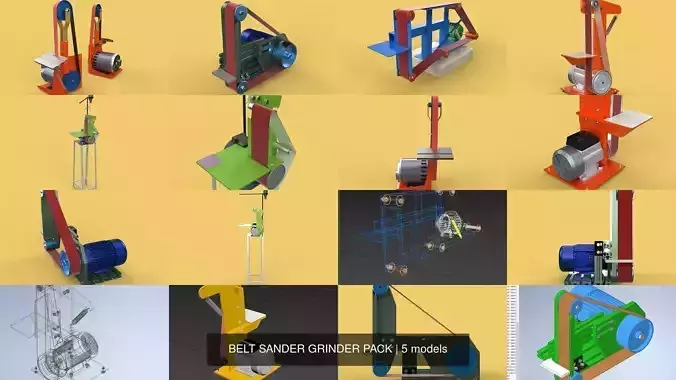
High-quality 3D assets at affordable prices — trusted by designers, engineers, and creators worldwide. Made with care to be versatile, accessible, and ready for your pipeline.
Included File Formats
This model is provided in 14 widely supported formats, ensuring maximum compatibility:
• - FBX (.fbx) – Standard format for most 3D software and pipelines
• - OBJ + MTL (.obj, .mtl) – Wavefront format, widely used and compatible
• - STL (.stl) – Exported mesh geometry; may be suitable for 3D printing with adjustments
• - STEP (.step, .stp) – CAD format using NURBS surfaces
• - IGES (.iges, .igs) – Common format for CAD/CAM and engineering workflows (NURBS)
• - SAT (.sat) – ACIS solid model format (NURBS)
• - DAE (.dae) – Collada format for 3D applications and animations
• - glTF (.glb) – Modern, lightweight format for web, AR, and real-time engines
• - 3DS (.3ds) – Legacy format with broad software support
• - 3ds Max (.max) – Provided for 3ds Max users
• - Blender (.blend) – Provided for Blender users
• - SketchUp (.skp) – Compatible with all SketchUp versions
• - AutoCAD (.dwg) – Suitable for technical and architectural workflows
• - Rhino (.3dm) – Provided for Rhino users
Model Info
• - All files are checked and tested for integrity and correct content
• - Geometry uses real-world scale; model resolution varies depending on the product (high or low poly)
• • - Scene setup and mesh structure may vary depending on model complexity
• - Rendered using Luxion KeyShot
• - Affordable price with professional detailing
Buy with confidence. Quality and compatibility guaranteed.
If you have any questions about the file formats, feel free to send us a message — we're happy to assist you!
Sincerely,
SURF3D
Trusted source for professional and affordable 3D models.
More Information About 3D Model :
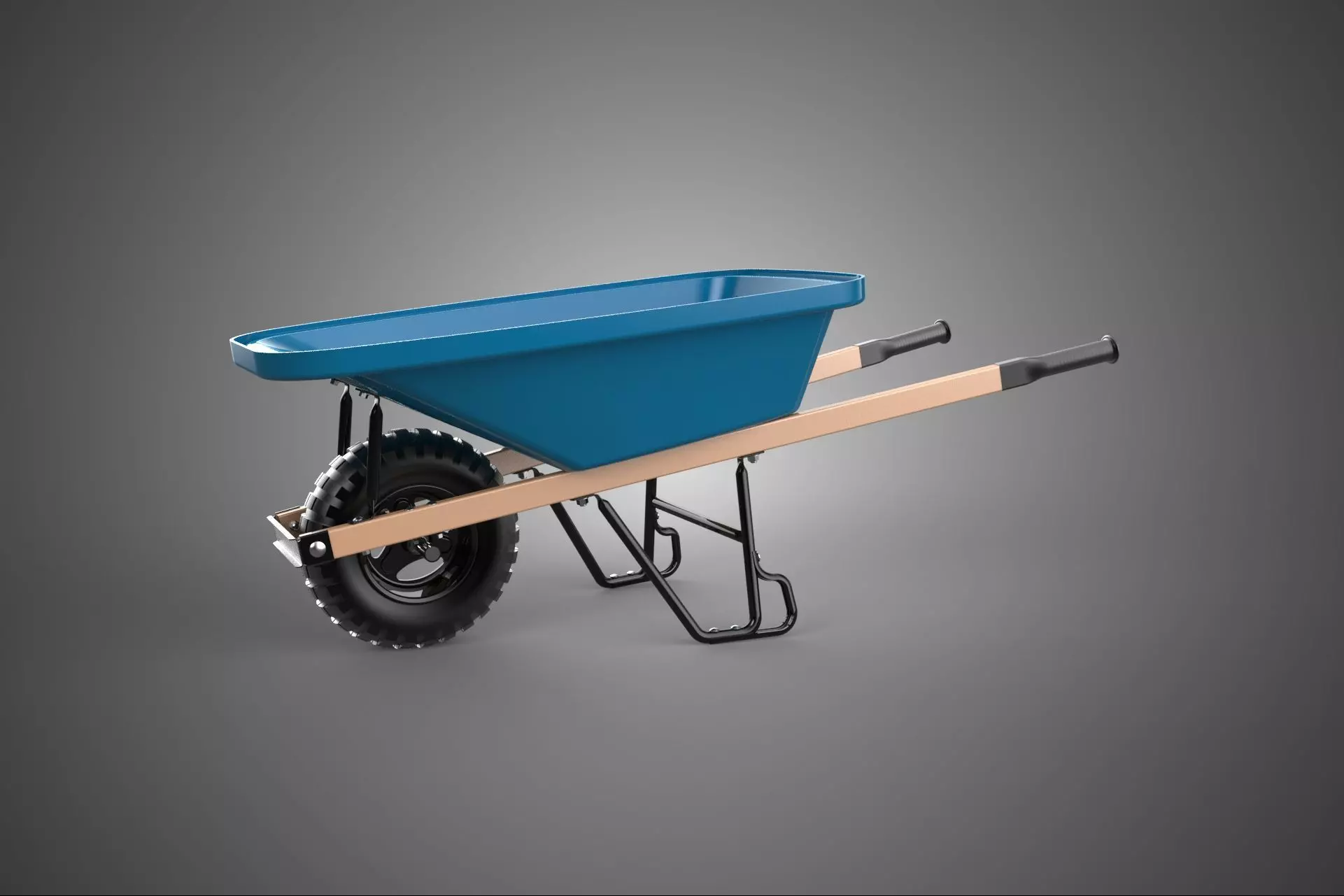
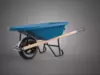
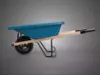
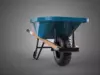
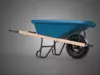
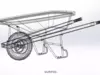
A wheelbarrow configuration characterized by a primary structure of a welded steel frame supporting a steel load basin (hopper) and featuring leverage members constructed from or capped by wood is classified as a robust, contractor-grade manual transport device. This design maximizes durability and load capacity while integrating ergonomic features for user comfort and vibration mitigation.
Definition and Function
The apparatus, commonly referred to as a wheelbarrow, is a manual single-wheel cart utilized for transporting bulk materials across short distances, primarily within construction, gardening, or agricultural environments. The single-wheel design facilitates superior maneuverability in confined or uneven terrain compared to multi-wheeled carts, relying on the operator to distribute the load between the wheel and the integrated handles.
Structural Components and Materials
This specific configuration relies on a composite material structure, combining the strength of ferrous metals with the resilience and tactile properties of hardwoods.
1. The Steel Frame (Chassis)
The foundational structure is the steel frame, typically manufactured from continuous tubular steel (often 18-gauge or 16-gauge) or, in heavy-duty models, angle iron. This frame serves three crucial roles:
- Load Bearing: It connects the wheel axle assembly directly to the hopper and provides rigid support for the load weight.
- Support Legs (Stands): The rear section of the frame extends downward, often reinforced, to act as static supports, allowing the wheelbarrow to rest stably while being loaded or unloaded.
- Leverage Integration: The steel struts extend backward, often running parallel to the ground, forming the main structural foundation to which the wooden handles are secured. Joints are generally welded or bolted for maximum stability under dynamic stress. The steel components are typically finished with a powder coating or industrial paint to resist corrosion and abrasion.
#### 2. The Wooden Handle Assembly
The incorporation of wood (specifically hard materials such as ash, hickory, or sometimes oak) for the handle components distinguishes this design from all-steel industrial versions. The wooden handles are bolted or otherwise firmly affixed to the rear extensions of the steel frame.
The selection of wood is primarily ergonomic and functional:
- Vibration Dampening: Wood possesses inherent viscoelastic properties that absorb and dissipate low-frequency vibrations transmitted from the ground (especially when traversing gravel or rough concrete), reducing operator fatigue and potential joint strain compared to rigid metal handles.
- Thermal Comfort: Wood remains thermally neutral relative to bare steel, offering a comfortable grip in environments of extreme heat or cold.
- Grip and Leverage: The natural porosity of wood provides a superior tactile grip, often shaped ergonomically to distribute force across the user’s hands during lifting and maneuvering.
#### 3. The Steel Hopper (Tray)
The receptacle for the payload is almost universally constructed of stamped or pressed steel sheet metal (often galvanized or heavy-duty polyurethane-coated). The thickness of the steel (measured in gauge) dictates the durability and ultimate payload capacity, typically ranging from 5 to 10 cubic feet in volume. The forward edge of the hopper is often rolled or reinforced to facilitate easy dumping and prevent material hang-up.
#### 4. The Wheel and Axle
The single wheel, situated near the front, defines the apparatus. Modern standard configurations utilize either pneumatic tires (requiring inflation, providing cushioning) or semi-pneumatic/solid polyurethane tires (puncture resistant, but offering less shock absorption). The axle, a critical steel component, is securely bolted to the central V-point of the steel frame, directly beneath the maximum load point.
### Applications and Advantages
The wood-handled, steel-framed wheelbarrow remains the standard design for general construction and landscaping due to its optimal balance of weight, capacity, durability, and reparability. While heavier than plastic or aluminum variants, the steel frame provides the necessary rigidity for transporting dense materials like concrete, rocks, soil, and masonry aggregates, enduring severe operational stresses without deformation. The modular design allows for independent replacement of damaged components—specifically, the wooden handles or the steel tray—extending the lifespan of the unit far beyond disposable models.
KEYWORDS: Wheelbarrow, Steel Frame, Wooden Handles, Construction Equipment, Material Transport, Haulage Device, Hand Cart, Manual Labor, Ergonomics, Ash Wood, Hickory, Vibration Dampening, Load Bearing, Tubular Steel, Steel Hopper, Single Wheel, Pneumatic Tire, Galvanized Steel, Builder's Barrow, Contractor Grade, Chassis, Axle Assembly, Leverage, Structural Integrity, Sheet Metal, Garden Tool, Heavy Duty, Repairable, Outdoor Use, Utility Cart.