High-quality 3D assets at affordable prices — trusted by designers, engineers, and creators worldwide. Made with care to be versatile, accessible, and ready for your pipeline.
Included File Formats
This model is provided in 14 widely supported formats, ensuring maximum compatibility:
• - FBX (.fbx) – Standard format for most 3D software and pipelines
• - OBJ + MTL (.obj, .mtl) – Wavefront format, widely used and compatible
• - STL (.stl) – Exported mesh geometry; may be suitable for 3D printing with adjustments
• - STEP (.step, .stp) – CAD format using NURBS surfaces
• - IGES (.iges, .igs) – Common format for CAD/CAM and engineering workflows (NURBS)
• - SAT (.sat) – ACIS solid model format (NURBS)
• - DAE (.dae) – Collada format for 3D applications and animations
• - glTF (.glb) – Modern, lightweight format for web, AR, and real-time engines
• - 3DS (.3ds) – Legacy format with broad software support
• - 3ds Max (.max) – Provided for 3ds Max users
• - Blender (.blend) – Provided for Blender users
• - SketchUp (.skp) – Compatible with all SketchUp versions
• - AutoCAD (.dwg) – Suitable for technical and architectural workflows
• - Rhino (.3dm) – Provided for Rhino users
Model Info
• - All files are checked and tested for integrity and correct content
• - Geometry uses real-world scale; model resolution varies depending on the product (high or low poly)
• • - Scene setup and mesh structure may vary depending on model complexity
• - Rendered using Luxion KeyShot
• - Affordable price with professional detailing
Buy with confidence. Quality and compatibility guaranteed.
If you have any questions about the file formats, feel free to send us a message — we're happy to assist you!
Sincerely,
SURF3D
Trusted source for professional and affordable 3D models.
More Information About 3D Model :
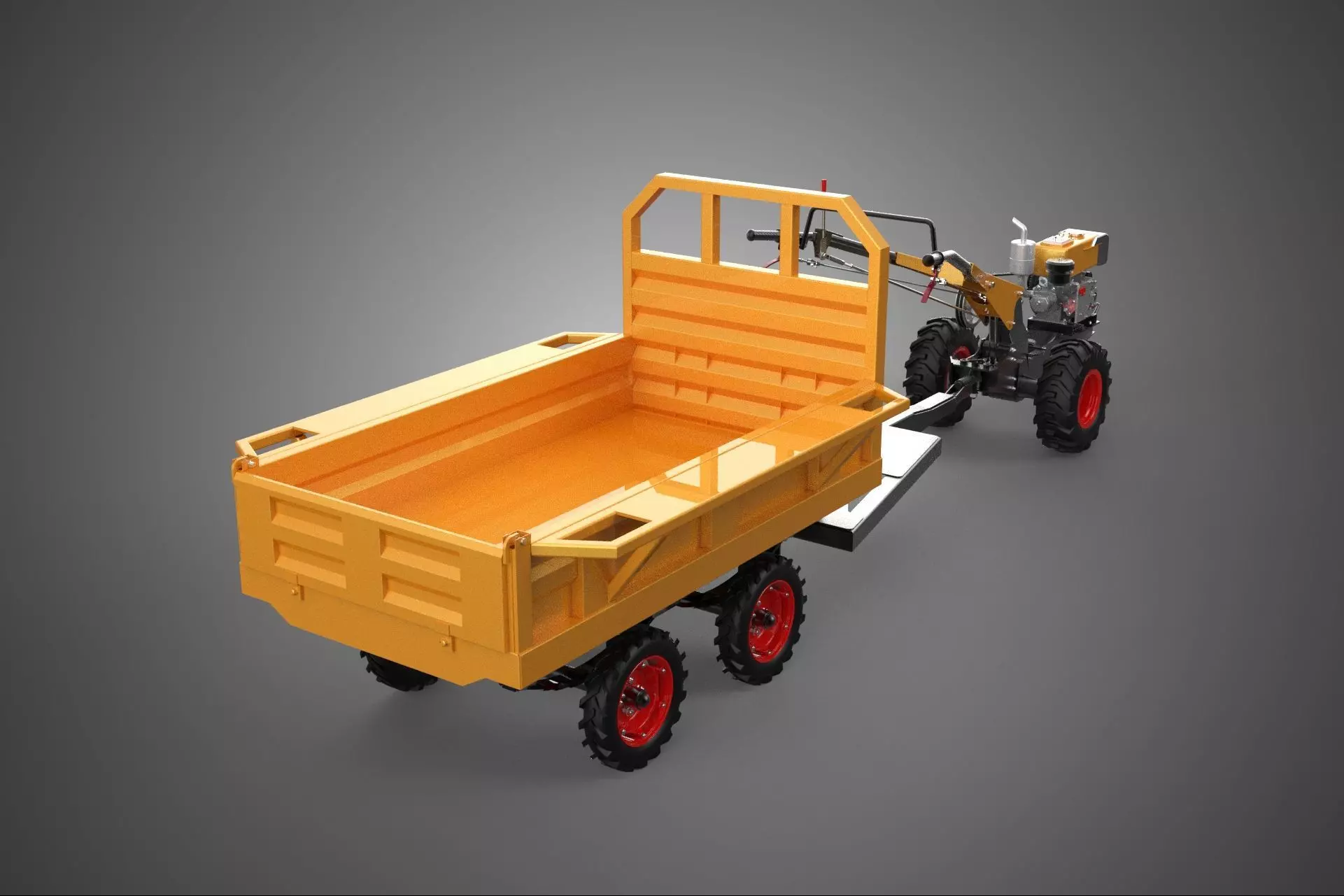
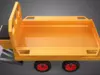
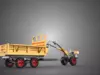
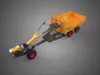
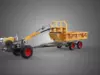
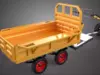
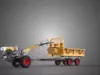
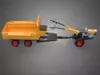
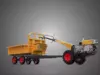
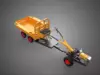
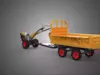
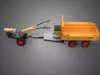
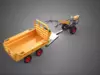
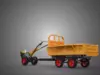
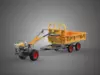
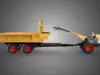
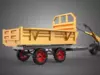
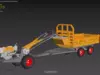
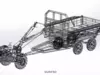
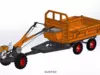
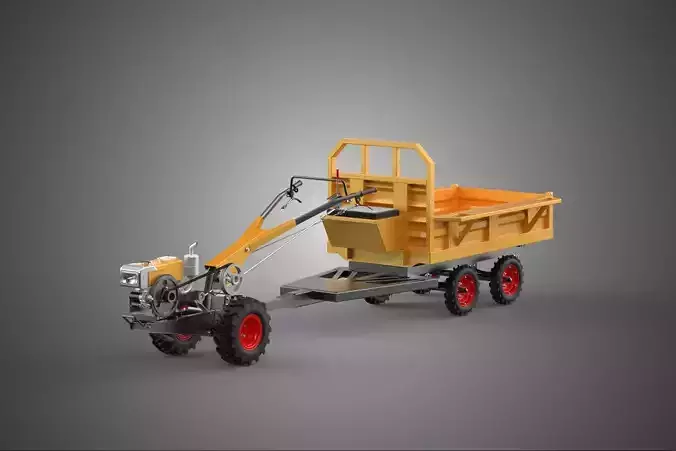
The apparatus described is an articulated heavy goods vehicle (HGV) system specifically engineered for the transportation and rapid discharge of bulk materials. Commonly referred to as a Tandem Axle Dump Rig or Tractor-Trailer Dump Combination, this configuration unites a powered prime mover (tractor unit) with a specialized semi-trailer featuring a hydraulic tipping mechanism and a dual-axle rear assembly.
I. System Overview and Nomenclature
The complete system comprises two primary units joined by a fifth-wheel coupling (pintle hitches are less common for heavy-duty dump applications). The primary function is bulk hauling, prevalent in civil engineering, mining, aggregate distribution, waste management, and heavy construction sectors.
The terminology encapsulated in the title describes the functional features:
- Tractor: The powered cab unit responsible for propulsion and supplying pneumatic and hydraulic power to the trailer.
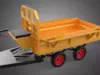
- Trailer/Cart/Trolley: The towed chassis unit carrying the payload.
- Cargo Load Bed: The structure designed to contain the material, typically constructed from high-tensile steel or aluminum for durability and weight optimization.
- Dump: The operational method of discharge, facilitated by powerful hydraulic cylinders that tilt the load bed, allowing gravity to empty the contents.
### II. Tandem Axle Configuration
The defining structural characteristic is the Tandem Axle grouping, which refers to two axles placed sequentially and closely together (typically spaced between 1.02 and 1.83 meters, depending on jurisdiction).
The tandem arrangement on the trailer is critical for three reasons:
- Weight Distribution: It effectively distributes the immense static and dynamic weight of the cargo across four wheel ends, crucial for meeting stringent governmental Federal Bridge Formula regulations concerning legal axle weight limits.
- Payload Capacity: Tandem setups significantly increase the legally permissible gross vehicle weight (GVW) and payload capacity compared to single-axle trailers.
- Stability and Braking: The arrangement enhances stability, reduces tire stress, and improves braking performance by distributing inertial forces over a larger contact patch during deceleration. The axles typically employ air suspension systems to equalize load distribution dynamically.
### III. Operational Mechanism (The Dump Function)
The hydraulic tipping function is the primary operational distinction of this vehicle type. Discharge is achieved via a robust high-pressure hydraulic system powered by the tractor unit’s engine, usually through a Power Take-Off (PTO) mechanism.
- Hydraulic Power: The PTO drives a hydraulic pump on the tractor, supplying pressurized fluid through specialized high-flow hoses connecting to the trailer’s hydraulic reservoir and cylinder assembly.
- Tipping Action: Actuation causes single or multiple telescoping hydraulic cylinders, mounted beneath the trailer bed or at the front bulk-head, to extend. This rotation pivots the load bed around a rear hinge (trunnion points) until a sufficient angle (typically 45° to 60°) is achieved for gravity discharge.
- Safety: Modern dump trailers incorporate safety measures, including cab-controlled hydraulic locking mechanisms and tilt indicators, to prevent accidental deployment or operation on unstable or uneven ground. The design requires clearance above the trailer, making overhead obstructions a primary operational concern.
### IV. Applications and Variations
The Tandem Axle Dump Rig is a staple in infrastructure development. While the End Dump (where the trailer tips rearward) is the most common variant described by this configuration, specialized versions exist:
- Side Dumps: Utilize lateral tipping for discharging material quickly without the height restrictions of end dumps.
- Belly Dumps (Bottom Dumps): Employ clam-shell gates beneath the trailer bed to discharge material in a controlled linear windrow, often used for road base or paving aggregates.
The system is engineered for arduous duty cycles and high material throughput, maximizing efficiency in large-scale haulage operations where the load bed capacity typically ranges from 15 to 35 cubic yards, depending on the material density and legal constraints.
KEYWORDS: Dump Trailer, Tandem Axle, Articulated Vehicle, Tractor Unit, Payload Capacity, Heavy Goods Vehicle, Bulk Hauling, Cargo Bed, Hydraulic System, Tipping Mechanism, Fifth Wheel, Semitrailer, Axle Weight Limit, Civil Engineering, Construction Logistics, Aggregate Transport, Dump Truck, Prime Mover, PTO, Power Take-Off, Suspension System, Load Distribution, Trunnion, Chassis, Articulation, Discharge, Haulage, Tandem Configuration, Bridge Formula, Heavy Duty.