High-quality 3D assets at affordable prices — trusted by designers, engineers, and creators worldwide. Made with care to be versatile, accessible, and ready for your pipeline.
Included File Formats
This model is provided in 14 widely supported formats, ensuring maximum compatibility:
• - FBX (.fbx) – Standard format for most 3D software and pipelines
• - OBJ + MTL (.obj, .mtl) – Wavefront format, widely used and compatible
• - STL (.stl) – Exported mesh geometry; may be suitable for 3D printing with adjustments
• - STEP (.step, .stp) – CAD format using NURBS surfaces
• - IGES (.iges, .igs) – Common format for CAD/CAM and engineering workflows (NURBS)
• - SAT (.sat) – ACIS solid model format (NURBS)
• - DAE (.dae) – Collada format for 3D applications and animations
• - glTF (.glb) – Modern, lightweight format for web, AR, and real-time engines
• - 3DS (.3ds) – Legacy format with broad software support
• - 3ds Max (.max) – Provided for 3ds Max users
• - Blender (.blend) – Provided for Blender users
• - SketchUp (.skp) – Compatible with all SketchUp versions
• - AutoCAD (.dwg) – Suitable for technical and architectural workflows
• - Rhino (.3dm) – Provided for Rhino users
Model Info
• - All files are checked and tested for integrity and correct content
• - Geometry uses real-world scale; model resolution varies depending on the product (high or low poly)
• • - Scene setup and mesh structure may vary depending on model complexity
• - Rendered using Luxion KeyShot
• - Affordable price with professional detailing
Buy with confidence. Quality and compatibility guaranteed.
If you have any questions about the file formats, feel free to send us a message — we're happy to assist you!
Sincerely,
SURF3D
Trusted source for professional and affordable 3D models.
More Information About 3D Model :
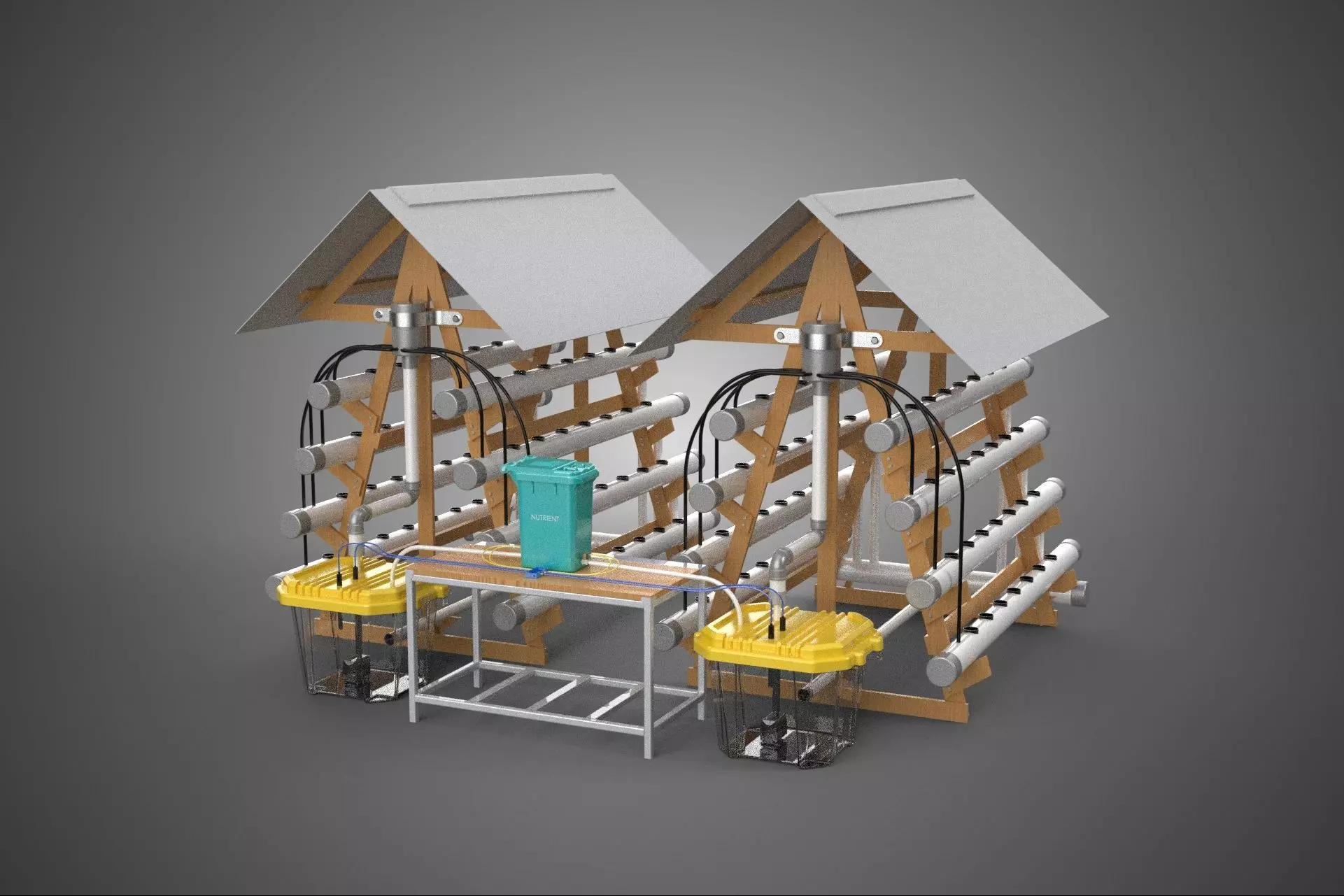
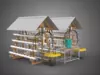
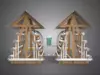
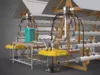
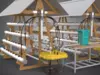
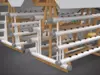
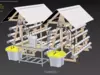
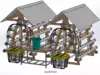
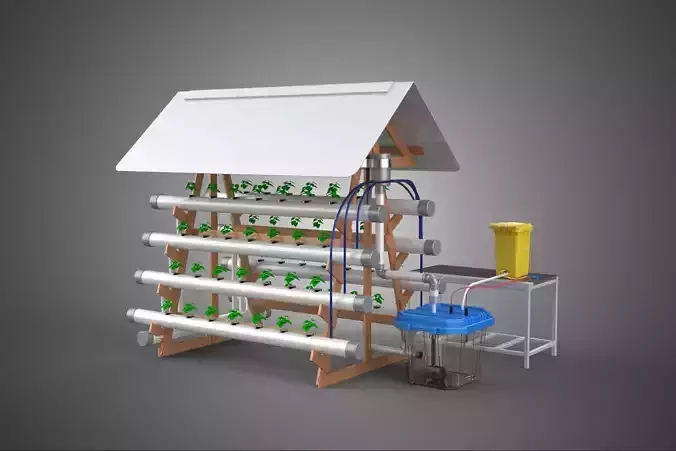
SMART IoT Auto Control Nutrient Hydroponic Plant Farm Monitoring describes a sophisticated agricultural paradigm that integrates intelligent automation, Internet of Things (IoT) technology, and precise nutrient management within a hydroponic cultivation environment. This system is engineered for the autonomous monitoring, control, and optimization of critical environmental and nutrient parameters essential for plant growth, thereby significantly enhancing efficiency, productivity, and sustainability in controlled environment agriculture (CEA).
At its core, such a system comprises several integrated components:
- IoT Sensor Network: A distributed array of sensors collects real-time data on environmental factors (e.g., air temperature, relative humidity, CO2 levels, light intensity and spectrum) and nutrient solution parameters (e.g., pH, Electrical Conductivity (EC), dissolved oxygen (DO), temperature). Advanced systems may also incorporate plant-centric sensors for physiological monitoring.
- Actuators and Control Devices: These components execute commands based on sensor data and programmed logic, facilitating physical adjustments within the farm. Examples include precision nutrient pumps, water valves, dimmable LED grow lights, HVAC systems, ventilation fans, humidifiers/dehumidifiers, and CO2 injectors.
- Connectivity and Communication Protocols: IoT devices transmit collected data via various wireless or wired protocols such as Wi-Fi, LoRaWAN, Zigbee, Bluetooth, or cellular networks (e.g., 4G/5G) to a central gateway or cloud-based platform.
- Data Processing and Analytics Platform: A centralized server or cloud infrastructure is responsible for the collection, storage, and processing of extensive sensor data. This platform frequently employs artificial intelligence (AI) and machine learning (ML) algorithms for advanced data analysis, pattern recognition, predictive modeling, and the generation of optimization recommendations.
- Automated Control System (ACS): Utilizing sophisticated feedback loops, the ACS continuously adjusts environmental and nutrient delivery parameters. This involves comparing real-time sensor readings against predefined setpoints or dynamic optimal ranges derived from AI models, ensuring conditions remain ideal for plant development.
- Precision Nutrient Delivery System: Specifically designed for hydroponic applications, this sub-system accurately mixes and delivers water and nutrient solutions to the plants, often employing peristaltic or diaphragm pumps for precise dosing of concentrated stock solutions.
- User Interface (UI) and Monitoring Dashboard: Provides operators with a comprehensive, real-time overview of the farm's operational status, historical data trends, alert notifications, and remote control capabilities, accessible via web or mobile applications.
The primary functionalities include:
- Real-time Monitoring: Continuous collection and visualization of all critical cultivation parameters.
- Autonomous Environmental Control: Automated regulation of temperature, humidity, CO2, and light parameters to cultivate a microclimate perfectly suited for specific plant species and their growth stages.
- Precision Nutrient Management: Automatic adjustment of nutrient solution pH, EC, and concentration based on precise plant requirements and growth phases, minimizing waste and ensuring optimal nutrient uptake.
- Predictive Analytics and Optimization: AI/ML models can forecast future plant growth, identify potential stressors, and predict resource needs, enabling proactive adjustments for yield optimization.
- Remote Management and Alerts: Operators can supervise and control farm operations from any location, receiving instant notifications for deviations from optimal conditions or critical events.
- Resource Efficiency: Optimized utilization of water (through recirculation), nutrients, and energy (via dynamic LED lighting and climate control) based on data-driven insights.
The implementation of such a system yields significant benefits:
- Increased Yield and Quality: Consistent optimal growth conditions lead to accelerated growth rates, higher yields, and improved produce quality (e.g., nutritional content, shelf-life, appearance).
- Enhanced Resource Efficiency: Substantial reductions in water consumption (up to 90% less than traditional field agriculture), efficient nutrient utilization, and optimized energy consumption.
- Reduced Labor Costs: Automation minimizes manual monitoring and adjustment tasks, allowing human resources to focus on more complex management and strategic roles.
- Year-round and Local Production: Cultivation in controlled environments is independent of external climate, facilitating continuous production and enabling local food sourcing, thereby reducing food miles.
- Minimized Pest and Disease Risk: Controlled environments significantly reduce exposure to pests and pathogens, often eliminating the need for chemical pesticides.
- Data-driven Decision Making: Comprehensive data collection provides actionable insights for continuous process improvement and the optimization of crop-specific recipes.
- Scalability and Adaptability: Modules can be scaled to various farm sizes, and crop recipes can be easily adapted for different plant varieties, offering significant operational flexibility.
Despite its advantages, the deployment of SMART IoT Auto Control Nutrient Hydroponic Plant Farms presents several challenges:
- High Initial Capital Investment: The sophisticated technology, extensive sensor networks, actuators, and required infrastructure demand substantial upfront financial outlay.
- Technical Complexity and Expertise: Requires specialized knowledge spanning horticulture, automation, IoT, and data science for effective setup, operation, and maintenance.