High-quality 3D assets at affordable prices — trusted by designers, engineers, and creators worldwide. Made with care to be versatile, accessible, and ready for your pipeline.
Included File Formats
This model is provided in 14 widely supported formats, ensuring maximum compatibility:
• - FBX (.fbx) – Standard format for most 3D software and pipelines
• - OBJ + MTL (.obj, .mtl) – Wavefront format, widely used and compatible
• - STL (.stl) – Exported mesh geometry; may be suitable for 3D printing with adjustments
• - STEP (.step, .stp) – CAD format using NURBS surfaces
• - IGES (.iges, .igs) – Common format for CAD/CAM and engineering workflows (NURBS)
• - SAT (.sat) – ACIS solid model format (NURBS)
• - DAE (.dae) – Collada format for 3D applications and animations
• - glTF (.glb) – Modern, lightweight format for web, AR, and real-time engines
• - 3DS (.3ds) – Legacy format with broad software support
• - 3ds Max (.max) – Provided for 3ds Max users
• - Blender (.blend) – Provided for Blender users
• - SketchUp (.skp) – Compatible with all SketchUp versions
• - AutoCAD (.dwg) – Suitable for technical and architectural workflows
• - Rhino (.3dm) – Provided for Rhino users
Model Info
• - All files are checked and tested for integrity and correct content
• - Geometry uses real-world scale; model resolution varies depending on the product (high or low poly)
• • - Scene setup and mesh structure may vary depending on model complexity
• - Rendered using Luxion KeyShot
• - Affordable price with professional detailing
Buy with confidence. Quality and compatibility guaranteed.
If you have any questions about the file formats, feel free to send us a message — we're happy to assist you!
Sincerely,
SURF3D
Trusted source for professional and affordable 3D models.
More Information About 3D Model :
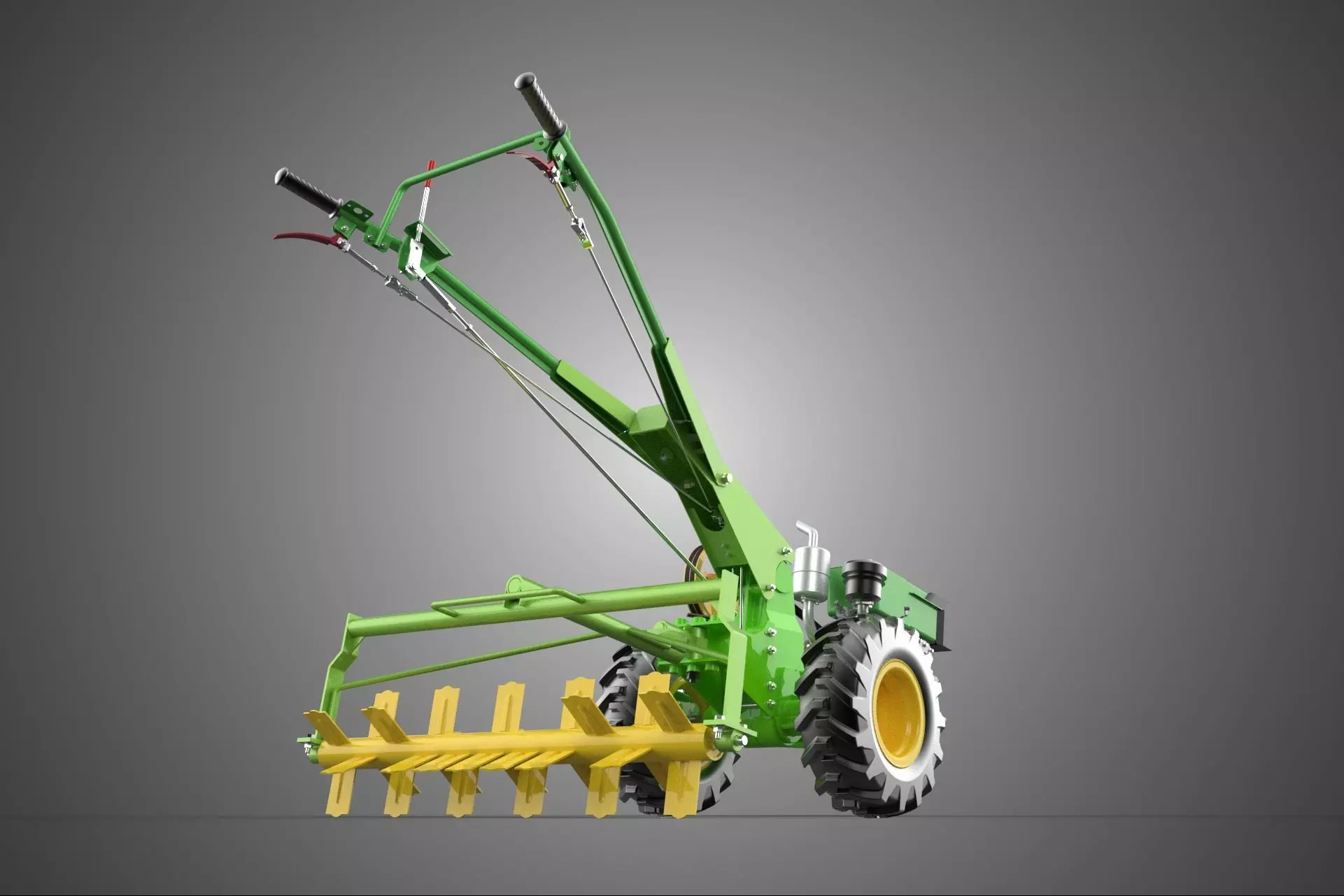
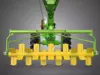
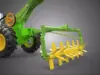
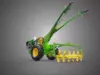
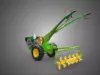
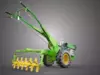
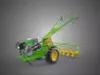
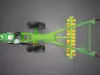
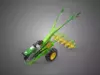
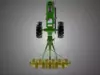
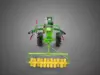
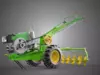
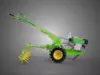
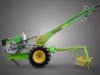
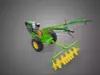
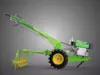
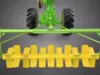
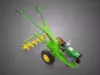
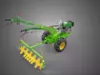
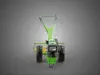
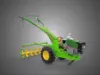
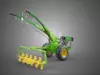
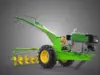
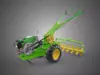
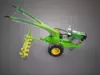
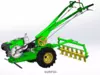
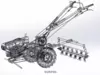
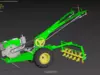
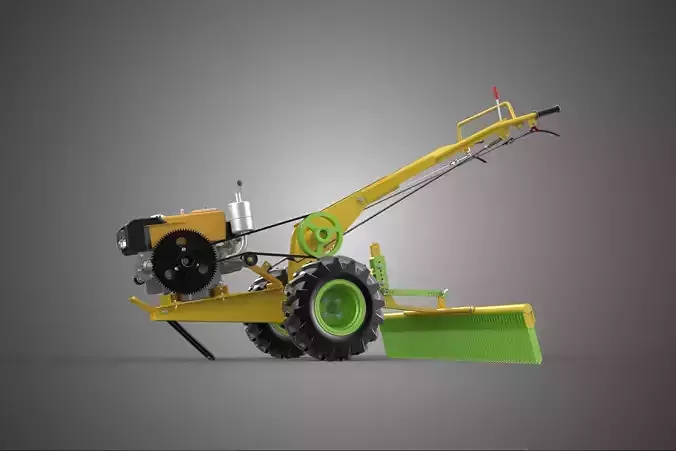
The Hand Tractor, formally known as a power tiller or walking tractor, is a versatile, single-axle agricultural machine widely utilized in small and marginal farming operations globally, particularly across Asia, Africa, and parts of Latin America. The specific configuration described—featuring a two-wheel chassis with pneumatic rubber tires—denotes a highly maneuverable machine designed for both field work and limited road transport.
Design and Nomenclature
The fundamental structure of the Hand Tractor comprises an internal combustion engine (typically gasoline or diesel, ranging from 5 to 20 horsepower), a gear transmission system providing multiple forward and reverse speeds, and a pair of steerable handlebars used by the operator walking behind the machine. The two large, rubber-tired wheels provide traction and support during transport and dry tillage. For specialized wet-land operations, these pneumatic tires are often temporarily replaced with metallic cage wheels, which enhance grip on muddy, saturated soil. Power is delivered to the ground wheels and to auxiliary implements via a Power Take-Off (PTO) shaft.
Functional Attachments
The Hand Tractor’s utility lies in its capacity to drive various implements, allowing a single machine to perform multiple seasonal tasks. The combination of a roto puddler and a blade cultivator ensures comprehensive soil preparation under both wet and dry conditions.
Roto Puddler
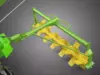
The roto puddler attachment is specialized equipment for primary tillage in submerged fields, primarily for rice cultivation. The process, known as puddling, is critical for creating an optimized environment for rice transplanting.
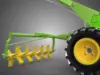
- Mechanism: The roto puddler features a horizontal shaft fitted with a series of specially curved steel blades (tines) that rotate rapidly via the PTO connection.
- Function: As the machine moves through the flooded paddy, the rotating blades aggressively churn the soil and water, reducing the soil structure to a homogenized mud consistency. This action serves two main purposes: it incorporates organic matter and fertilizers evenly, and crucially, it destroys the soil macro-pores, creating a relatively impermeable layer (hardpan) beneath the surface. This impermeability minimizes water percolation losses, which is vital for the water-intensive growth cycle of rice. The design often includes a trailing board or float to simultaneously level the field surface, facilitating uniform water depth management.
#### Blade Cultivator
The blade cultivator (or tiller) is a secondary tillage implement typically used in dry or semi-dry conditions, distinct from the intense wet mixing of the puddler.
- Mechanism: The cultivator employs a rigid frame from which multiple shanks are suspended. These shanks are terminated by various types of blades—such as sweep blades, duckfoot shovels, or curved tines—depending on the desired result.
- Function: The primary uses of the blade cultivator include weed control, soil aeration, and the preparation of a fine, loose seedbed (often following initial plowing). The blades penetrate the soil to specific depths, cutting or uprooting weeds while simultaneously shattering clods and loosening the upper soil layer. This improves water infiltration and root growth conditions for subsequent crops like maize, wheat, or vegetables.
### Operational Context and Advantages
The two-wheel rubber tire configuration offers significant advantages in maneuverability and transportation efficiency compared to larger four-wheel tractors. The Hand Tractor is relatively inexpensive to purchase and maintain, making it a sustainable mechanization option for farmers with smaller landholdings. The ability to quickly swap between the high-traction roto puddler for rice paddies and the general-purpose blade cultivator for dry crops ensures the machine maximizes utility across different agricultural seasons and crop rotations, contributing significantly to improved farm productivity and reducing reliance on manual labor.
KEYWORDS: Power Tiller, Walking Tractor, Agricultural Machinery, Two-Wheel Tractor, Rotary Tillage, Puddling, Wet-Land Preparation, Rice Cultivation, Blade Cultivator, Soil Aeration, Tillage Implements, PTO Shaft, Small Farm Mechanization, Engine-Driven, Secondary Tillage, Rotavator, Pneumatic Tires, Cage Wheels, Field Preparation, Agricultural Engineering, Sweep Blades, Hand Steering, Seedbed Preparation, Water Management, Soil Homogenization, Diesel Engine, Farm Equipment, Soil Working, Farm Efficiency, Cultivation Blades.