High-quality 3D assets at affordable prices — trusted by designers, engineers, and creators worldwide. Made with care to be versatile, accessible, and ready for your pipeline.
Included File Formats
This model is provided in 14 widely supported formats, ensuring maximum compatibility:
• - FBX (.fbx) – Standard format for most 3D software and pipelines
• - OBJ + MTL (.obj, .mtl) – Wavefront format, widely used and compatible
• - STL (.stl) – Exported mesh geometry; may be suitable for 3D printing with adjustments
• - STEP (.step, .stp) – CAD format using NURBS surfaces
• - IGES (.iges, .igs) – Common format for CAD/CAM and engineering workflows (NURBS)
• - SAT (.sat) – ACIS solid model format (NURBS)
• - DAE (.dae) – Collada format for 3D applications and animations
• - glTF (.glb) – Modern, lightweight format for web, AR, and real-time engines
• - 3DS (.3ds) – Legacy format with broad software support
• - 3ds Max (.max) – Provided for 3ds Max users
• - Blender (.blend) – Provided for Blender users
• - SketchUp (.skp) – Compatible with all SketchUp versions
• - AutoCAD (.dwg) – Suitable for technical and architectural workflows
• - Rhino (.3dm) – Provided for Rhino users
Model Info
• - All files are checked and tested for integrity and correct content
• - Geometry uses real-world scale; model resolution varies depending on the product (high or low poly)
• • - Scene setup and mesh structure may vary depending on model complexity
• - Rendered using Luxion KeyShot
• - Affordable price with professional detailing
Buy with confidence. Quality and compatibility guaranteed.
If you have any questions about the file formats, feel free to send us a message — we're happy to assist you!
Sincerely,
SURF3D
Trusted source for professional and affordable 3D models.
More Information About 3D Model :
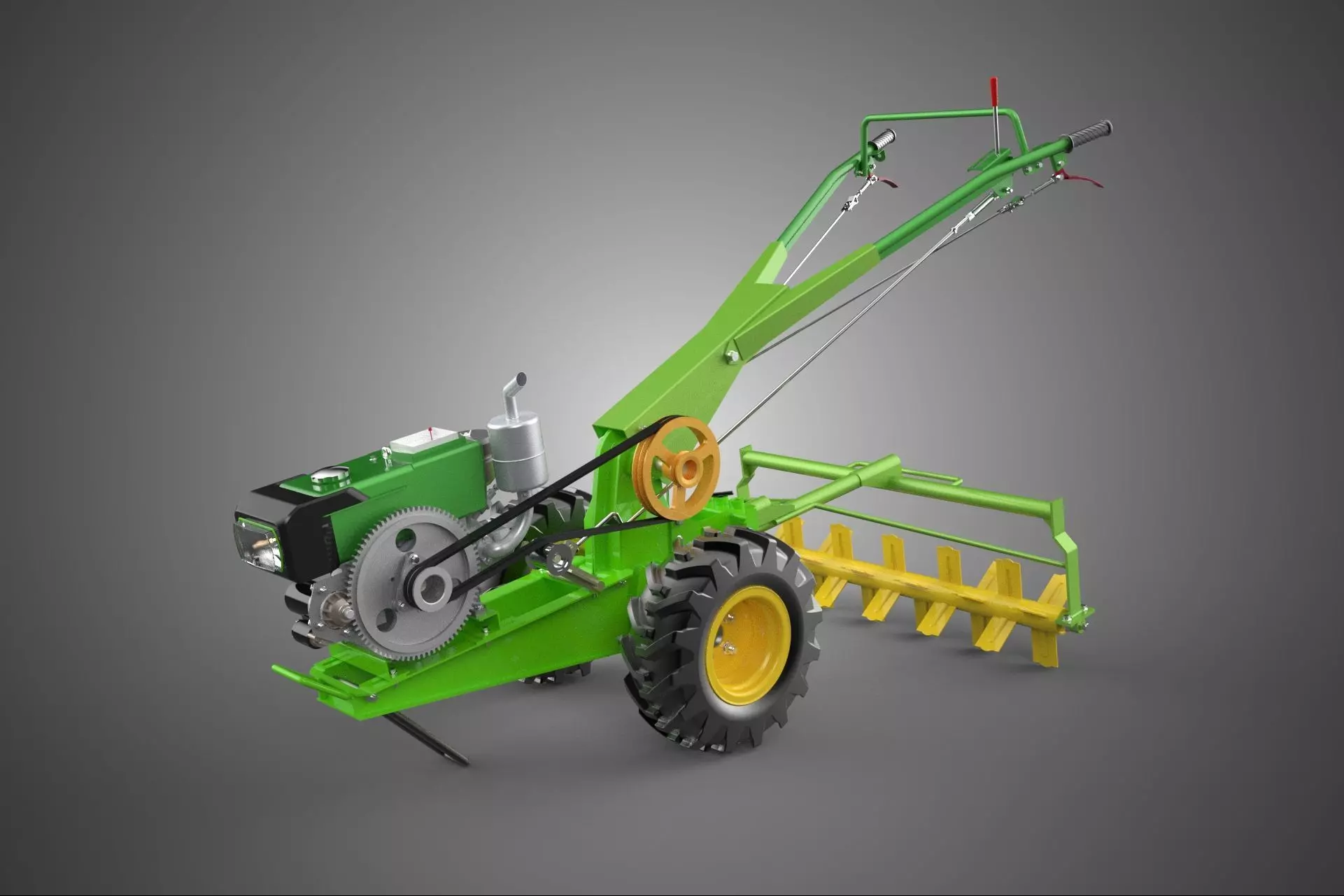
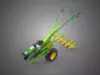
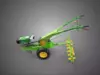
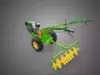
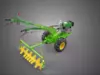
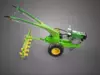
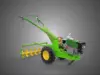
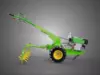
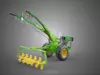
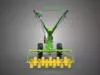
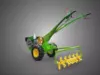
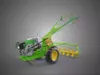
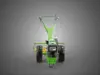
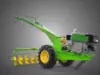
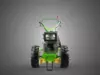
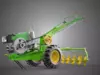
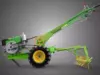
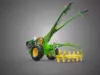
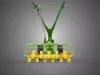
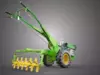
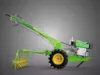
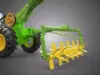
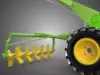
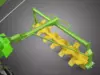
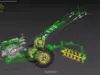
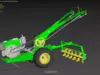
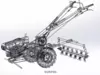
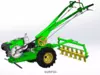
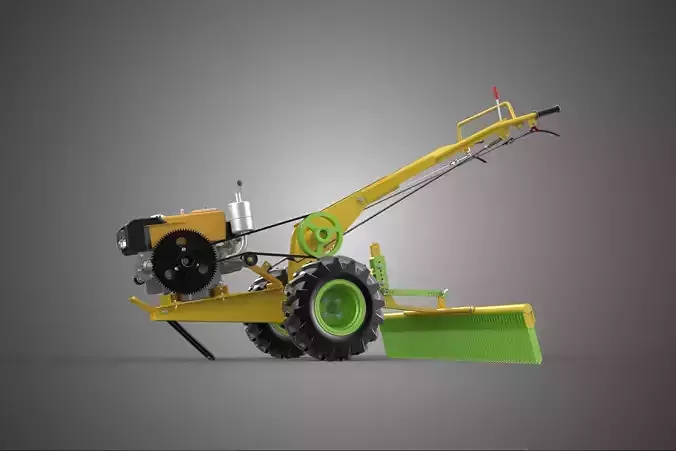
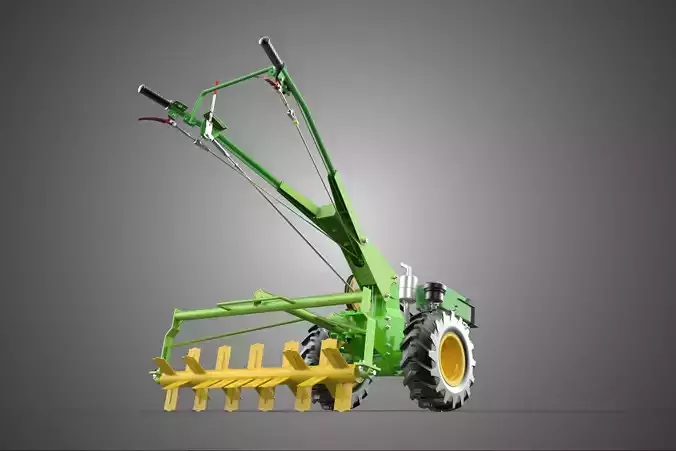
A Walk-Behind Tractor, frequently designated by the specific attachment it utilizes as a Power Tiller or Rotary Rotavator, is a fundamental type of two-wheel agricultural prime mover designed for operation by a pedestrian operator controlling the machine from the rear via handlebars. This category of machine occupies a critical niche in agricultural mechanization, particularly in small-scale farming, market gardening, and specialized high-intensity cultivation.
Nomenclature and Classification
The machine is known by numerous aliases, reflecting its function or configuration, including Hand Tractor, Two-Wheel Tractor, Walking Tractor, and the general term Power Tiller. While Walk-Behind Tractor refers to the entire drive unit (engine, transmission, and chassis), Power Tiller or Rotavator specifically denotes the soil-working implement that attaches to the machine's Power Take-Off (PTO) shaft. The primary function of the rotavator is tillage—the mechanical preparation of the soil by utilizing rotating tines to break up clods, aerate the earth, and incorporate crop residues or organic matter, preparing a fine seedbed.
Mechanical Design and Operation
Structurally, the unit is characterized by a single drive axle supported by two large pneumatic wheels, a robust engine housing, and a pair of control handlebars.
Power Unit: The engines are predominantly single-cylinder internal combustion types, utilizing either gasoline (petrol) or diesel fuel. Horsepower ratings typically range from 3 to 20 horsepower (2.2 to 15 kW), selected based on the size of the operation and the intensity of the soil work required. Diesel engines are common in professional and heavier-duty models due to their higher torque and fuel efficiency.
Drivetrain and Transmission: Power is transferred from the engine through a clutch to a gearbox, which provides multiple speed selections (often 2 to 4 forward gears and at least one reverse gear). A crucial feature for soil cultivation is the differential lock, which, when engaged, ensures both wheels receive equal power, preventing slippage when working heavy ground or climbing.
Controls and Ergonomics: The handlebars facilitate steering and throttle control. Modern professional models often feature adjustable handlebars that can pivot horizontally (swinging the offset) and vertically. Horizontal adjustment allows the operator to walk alongside the freshly tilled soil, preventing immediate compaction, and is also necessary when operating offset implements such as sickle-bar mowers or snow blowers.
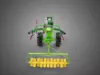
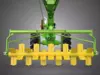
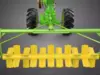
The Rotavator Implement: The rotavator attachment is driven directly by the rear PTO shaft. It consists of a series of L-shaped or C-shaped tines mounted on a horizontal axle. These tines rotate rapidly against the direction of travel (or sometimes in the same direction, depending on the desired aggression of the till), actively milling the soil. Depth control is achieved via an adjustable depth stake or skid situated behind the tines, which also helps to regulate the forward speed and ground engagement.
Versatility and Applications
The defining feature of the Walk-Behind Tractor is its modularity, enabled by standardized PTO and implement hitch systems. While tillage remains its primary use, the unit is transformed by various attachments for use in all stages of the agricultural cycle, including:
- Soil Working: Primary and secondary tillage, hilling, furrowing, and ditching.
- Mowing and Forage: Sickle bar mowers, brush cutters, and flail mowers.
- Transport: Small trailers, utilizing the tractor's power to pull payloads on roads or fields.
- Utility: Water pumps, generators, snow removal (snow blowers or plows), and specialized seeding equipment.
Due to their compact footprint, high maneuverability, and lower cost relative to four-wheel tractors, Walk-Behind Rotavators are the preferred method of mechanization in regions characterized by small, terraced, or fragmented land parcels, particularly across Southeast Asia, China (often termed the hand-held farm cultivator), and parts of Europe and Africa.
KEYWORDS: Two-Wheel Tractor, Power Tiller, Rotavator, Hand Tractor, Walking Tractor, Agricultural Machinery, Soil Cultivation, Tillage, PTO, Walk-Behind, Single-Axle, Engine, Transmission, Handlebars, Small Farm Equipment, Subsistence Farming, Mechanization, Tines, Differential Lock, Seeding, Furrowing, Rice Paddy, Cultivator, Rotary Hoe, Compact Tractor, Implement, Gearbox, Mower, Diesel Engine.