High-quality 3D assets at affordable prices — trusted by designers, engineers, and creators worldwide. Made with care to be versatile, accessible, and ready for your pipeline.
Included File Formats
This model is provided in 14 widely supported formats, ensuring maximum compatibility:
• - FBX (.fbx) – Standard format for most 3D software and pipelines
• - OBJ + MTL (.obj, .mtl) – Wavefront format, widely used and compatible
• - STL (.stl) – Exported mesh geometry; may be suitable for 3D printing with adjustments
• - STEP (.step, .stp) – CAD format using NURBS surfaces
• - IGES (.iges, .igs) – Common format for CAD/CAM and engineering workflows (NURBS)
• - SAT (.sat) – ACIS solid model format (NURBS)
• - DAE (.dae) – Collada format for 3D applications and animations
• - glTF (.glb) – Modern, lightweight format for web, AR, and real-time engines
• - 3DS (.3ds) – Legacy format with broad software support
• - 3ds Max (.max) – Provided for 3ds Max users
• - Blender (.blend) – Provided for Blender users
• - SketchUp (.skp) – Compatible with all SketchUp versions
• - AutoCAD (.dwg) – Suitable for technical and architectural workflows
• - Rhino (.3dm) – Provided for Rhino users
Model Info
• - All files are checked and tested for integrity and correct content
• - Geometry uses real-world scale; model resolution varies depending on the product (high or low poly)
• • - Scene setup and mesh structure may vary depending on model complexity
• - Rendered using Luxion KeyShot
• - Affordable price with professional detailing
Buy with confidence. Quality and compatibility guaranteed.
If you have any questions about the file formats, feel free to send us a message — we're happy to assist you!
Sincerely,
SURF3D
Trusted source for professional and affordable 3D models.
More Information About 3D Model :
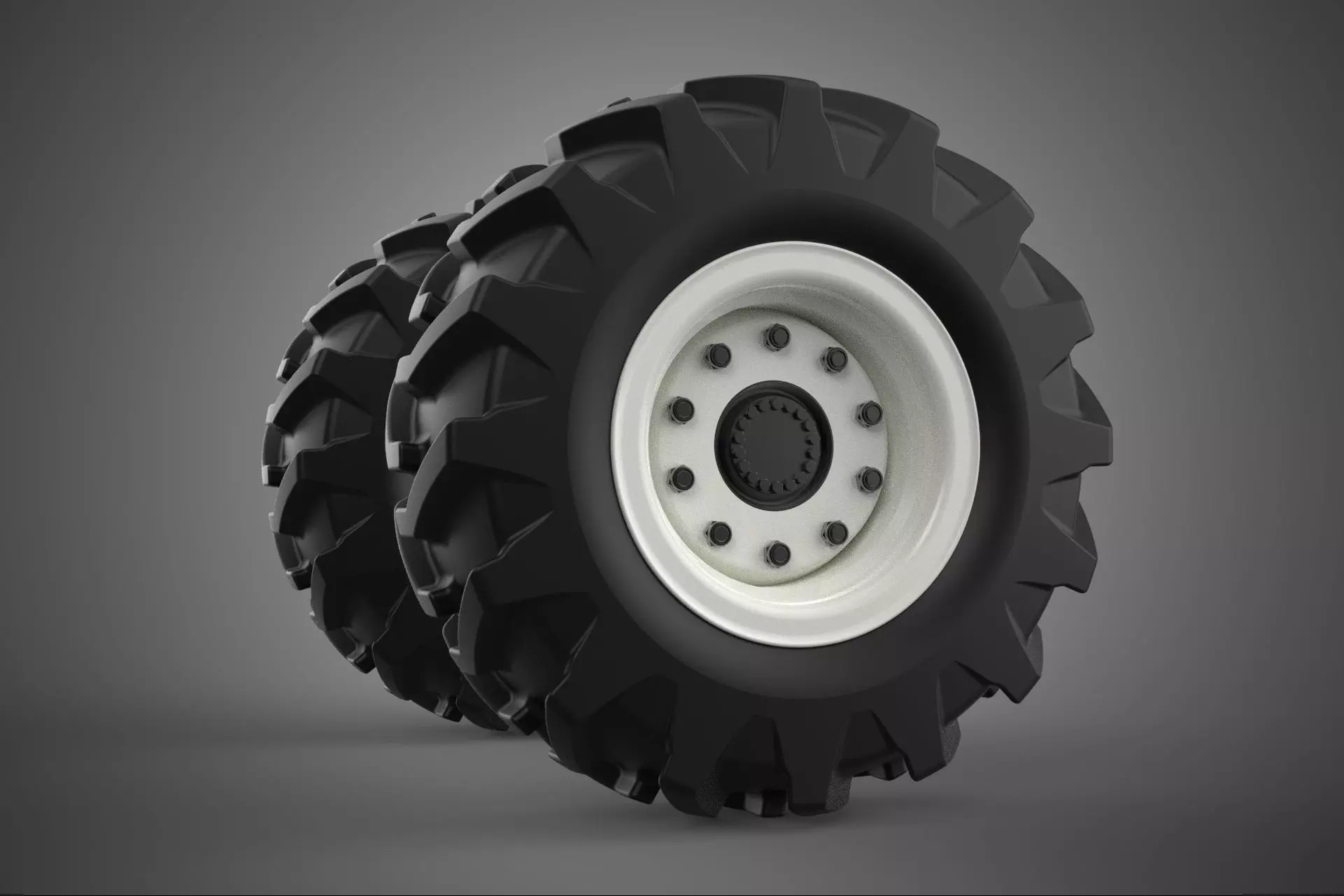
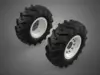
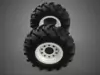
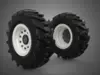
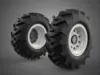
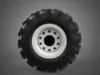
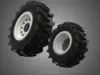
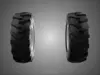
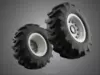
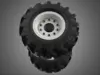
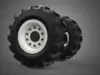
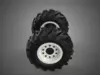
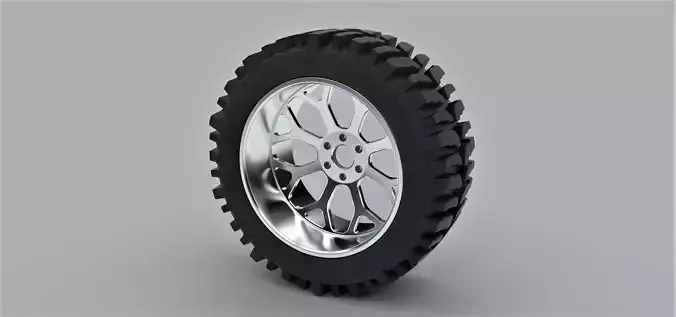
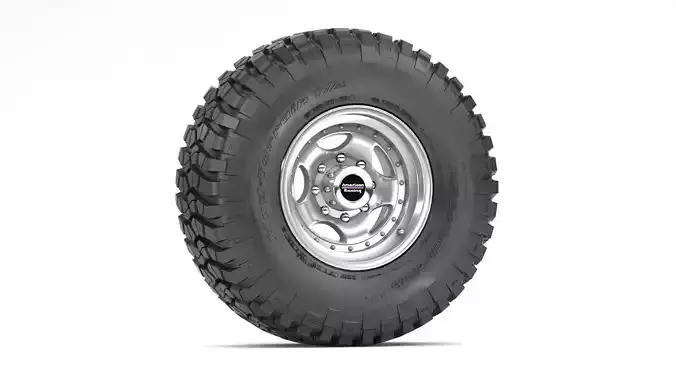
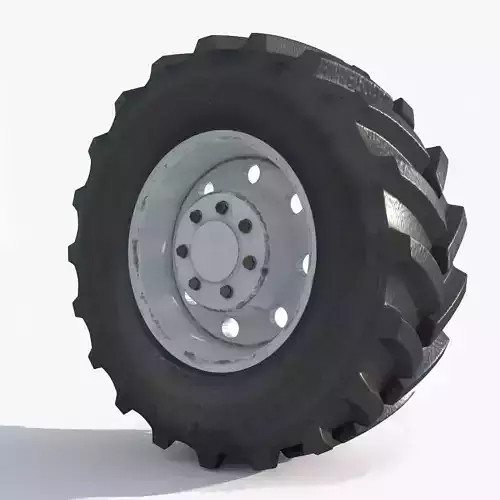
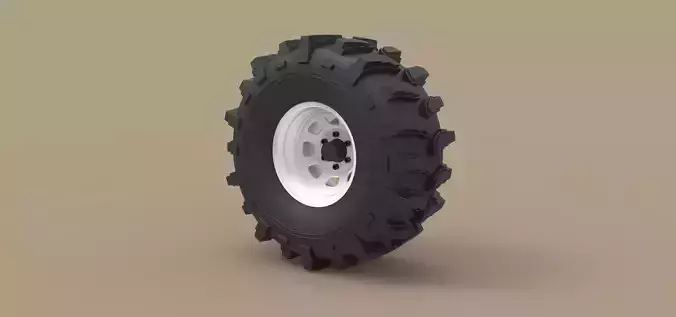
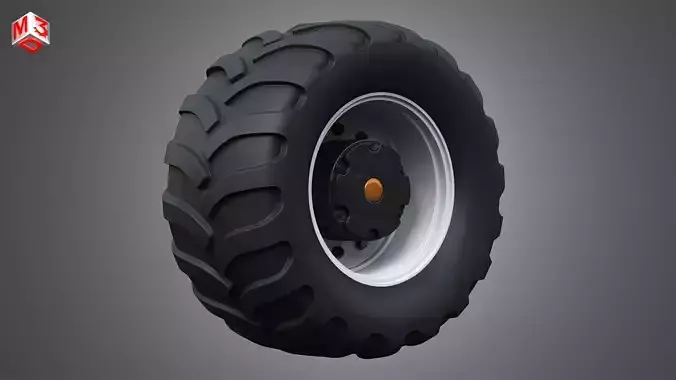
The farm tractor tire assembly constitutes a highly specialized mechanical system engineered to provide superior tractive effort (grip) necessary for agricultural machinery operating in diverse, often challenging, off-road environments. This composite unit integrates a pneumatic rubber tire (or tyre), a dedicated metallic wheel (rim), and a deeply profiled tread pattern characterized by prominent lugs. The design prioritization is centered on maximizing drawbar pull, minimizing dynamic slip, and managing ground contact pressure to mitigate detrimental soil compaction.
Nomenclature and Construction
The core of the assembly is the pneumatic tire, constructed from durable rubber compounds—natural and synthetic—reinforced internally by plies (cord layers) made of materials such as polyester, nylon, or steel. Two primary construction types dominate agricultural applications:
- Bias-Ply (Cross-Ply): Cord layers run diagonally from bead to bead, resulting in a stiff sidewall and tread.
- Radial-Ply: Cord layers run perpendicular to the direction of travel, with stabilizing belt layers beneath the tread. Radial construction typically yields a larger footprint, lower rolling resistance, and superior flotation characteristics, making it preferred for high-horsepower modern tractors.
The tire mounts onto the wheel (rim), generally constructed of heavy-gauge steel. The rim is crucial for structural integrity, providing the seating surface for the tire beads to maintain inflation pressure and secure the assembly against rotational forces and severe lateral loads encountered during field work.
### Tread Geometry and Traction Mechanism (The Lug)
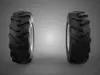
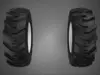
The distinguishing feature of the farm tire is its aggressive tread geometry, defined by projecting bars known as lugs (or cleats). This design is classified under the R-series system:
- R-1 (Standard): Deep tread for general farming.
- R-1W: Deeper version of R-1, providing enhanced performance in wet conditions.
- R-2: Extra-deep tread (often twice the depth of R-1), specific to marshy, rice-paddy, or extremely soft soil environments.
- R-4: Industrial tread, shallower and more blocky, used on utility tractors and loaders where both off-road grip and hard-surface durability are required.
The primary function of the lug is to transmit power through soil shear displacement. The leading edge of the lug penetrates the soil structure, generating traction against the internal cohesive and frictional resistance of the medium. Lugs are typically angled (commonly 45 to 55 degrees relative to the centerline) to optimize the balance between maximum forward grip and the critical function of self-cleaning. This angle, combined with the relative spacing (void ratio), facilitates the centrifugal ejection of mud and debris as the tire rotates, ensuring the lug surface remains exposed and capable of generating continuous grip.
### Operational Parameters and Performance
Agricultural tire performance is assessed by several metrics essential to efficient operation:
- Traction Efficiency: The ratio of drawbar pull developed to the total torque applied, accounting for parasitic losses like rolling resistance and slip.
- Dynamic Slip: The difference between the theoretical speed based on engine RPM and the actual forward speed. Excessive slip (typically desired range is 8–15% depending on task) wastes fuel, accelerates tire wear, and causes soil smearing.
- Flotation and Ground Pressure: The large overall diameter and wide cross-section are designed to spread the tractor’s weight over a greater contact area. This reduces the ground pressure (psi or kPa), minimizing localized stress on the soil, which is crucial for preserving soil structure and long-term crop yield potential.
The rubber compound used is highly resilient, formulated to resist cutting, impact, and fatigue under severe thermal and mechanical stresses, distinguishing it fundamentally from standard on-road tire technology. The entire assembly provides the necessary, durable interface for high-torque, low-speed motive tasks crucial to modern agriculture.
KEYWORDS: Tractor, Farm, Tyre, Tire, Tread, Lug, Grip, Off-Road, Radial, Bias-ply, Drawbar pull, Traction, Soil compaction, R-series, Cleat, Shear, Self-cleaning, Rim, Wheel, Agricultural, Pneumatic, Rubber, Compound, Flotation, Axle, Torque, Ground pressure, Heavy duty, MFWD, Traction efficiency, Steel belt, Void ratio.